


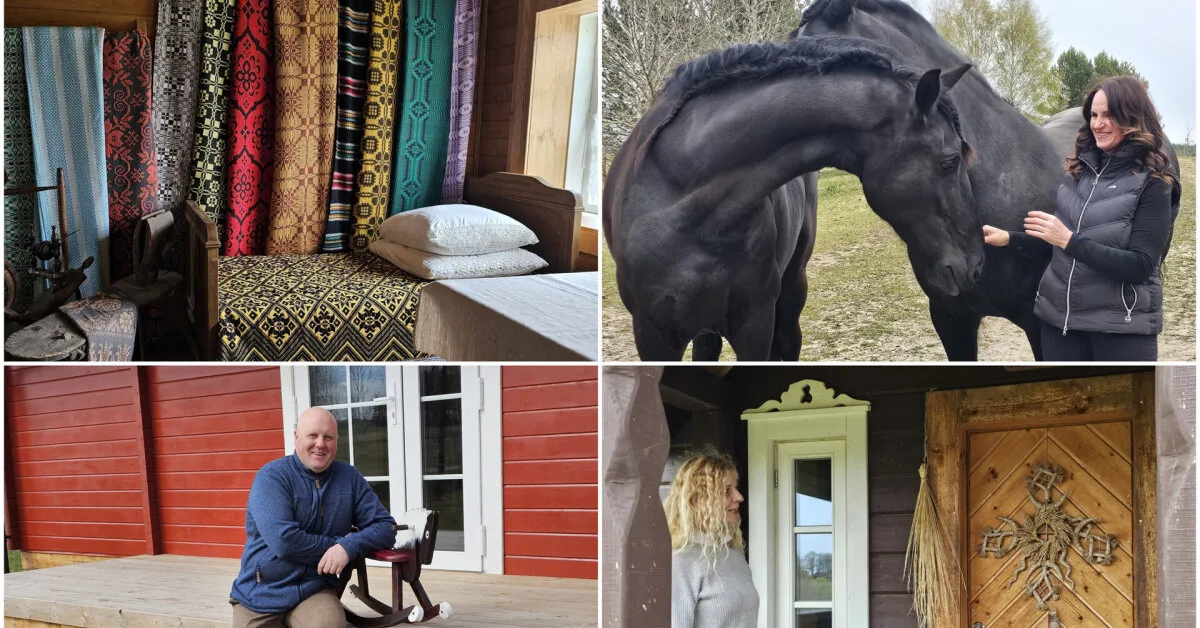
The surroundings of Molėtai are becoming not only a weekend getaway but also a real center of attraction for those who are tired of the city pace. Here, people create new lives – not out of necessity, but out of a desire to live differently. Some are drawn by horses, others by folklore, and still others by the simple desire to breathe fresh air and feel the earth beneath their feet.
Ramunė’s family and 13 horses that became part of the family
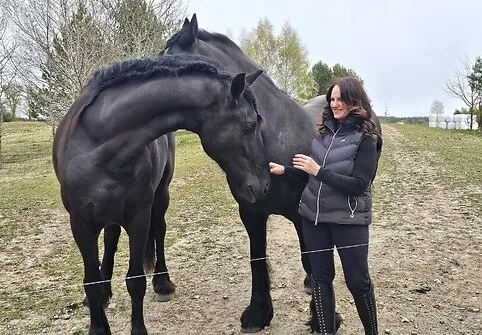
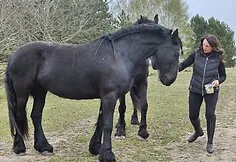
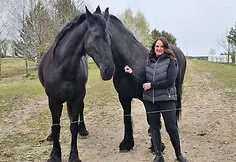
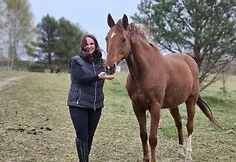
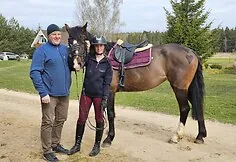
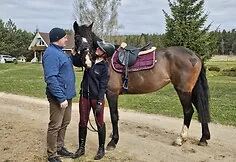
The inspirers of “Horse Oasis” are Ramunė and Šarūnas Radavičiai. They have been living in Kačergai village for 12 years, 9 of them with horses. When their second daughter was born, the family decided to leave Vilnius, where Ramunė had worked as a hair stylist for many years, and move to her husband’s parents’ homestead. They used to only spend summers there.
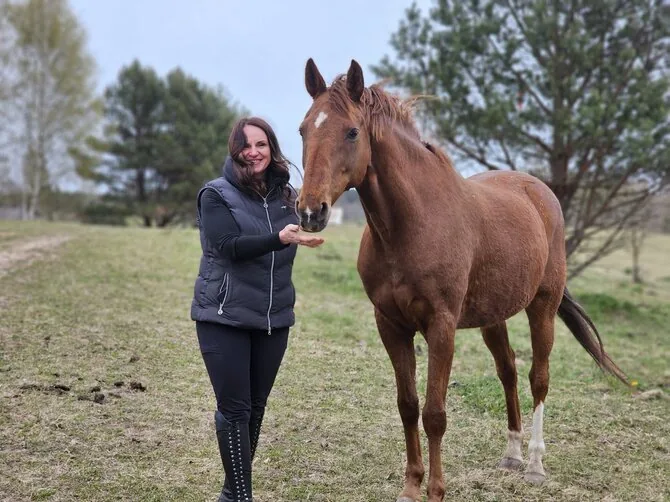
“We decided that we want to live in nature, breathe fresh air. Now my main job is to be a mother, and horses are a hobby. We aim for the horses to sustain themselves – they only work enough to sustain themselves in winter and feel good. Mostly, they just live freely,” says Ramunė.
Ramunė’s connection with horses has been with her since childhood – her parents worked on a collective farm in Širvintos district and kept several horses. “When we moved here, there was an endless desire to return to horses. We acquired one, I rode around Labanoras Park, discovering wonderful places. Then we decided we wanted more horses. They became part of the family,” Ramunė smiles.
We decided that we want to live in nature, breathe fresh air.
Today, Ramunė’s family consists of her husband, three daughters, two grandmothers, thirteen horses, three dogs, and a cat. Five horses were rescued: one from a stable, one stray that wandered in Raseiniai, and several acquired at an auction from the mounted police. “It’s a pity that the former riders don’t come to visit them, even though they follow their progress on social media,” Ramunė mentions.
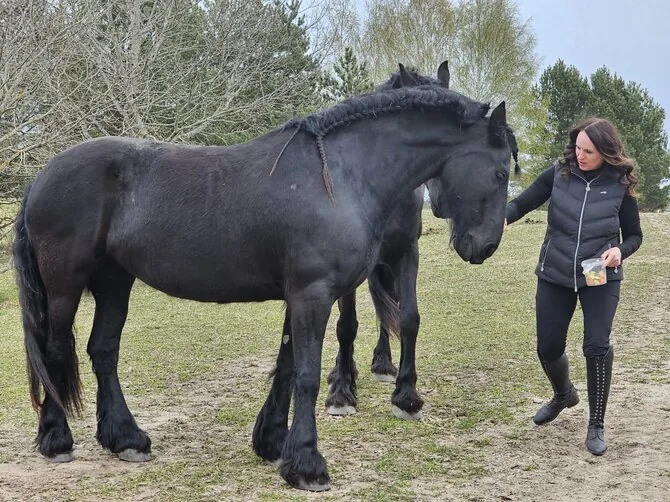
Her husband Šarūnas is like the least visible person, managing all the farm affairs. Their daughters attend Molėtai pro-gymnasium and gymnasium, and spend their free time with horses.
Riding only safely and responsibly
“You can ride with us, but for those who don’t know how to ride, we lead the horses. There are stables that allow inexperienced riders to manage on their own – we don’t do that. A person doesn’t know how to stop or direct a horse, and incorrectly pulled reins can cause pain to the animal. An understanding rider does not cause pain to the horse,” Ramunė mentioned.
The culmination is a trip to the lake and swimming with horses.
In summer, guests from all over Lithuania visit here – from Vilnius to the seaside. Young people and seniors come, there are hen parties, engagements. “We try to fulfill wishes, but we do not tolerate inappropriate behavior towards horses,” said Ramunė.
In summer, she organizes children’s camps, the culmination of which is a trip to the lake and swimming with horses.
From Norway to equestrian sports in Lithuania
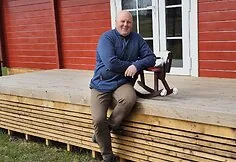
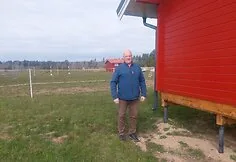
Darius Pumputis was born and raised in Molėtai district, Vilijočiai village. After finishing school, he studied in Vilnius, worked in advertising and printing, and simultaneously helped on his parents’ farm. “Then I felt the need to farm. Later, it became the main source of income,” Darius explains.
The man had a timber business, building wooden houses, but after the company went bankrupt, Darius left for Norway. He spent 8 years there. In Norway, he felt in his place, but after earning money and repaying debts, he decided to return to Lithuania.
I felt the need to farm.
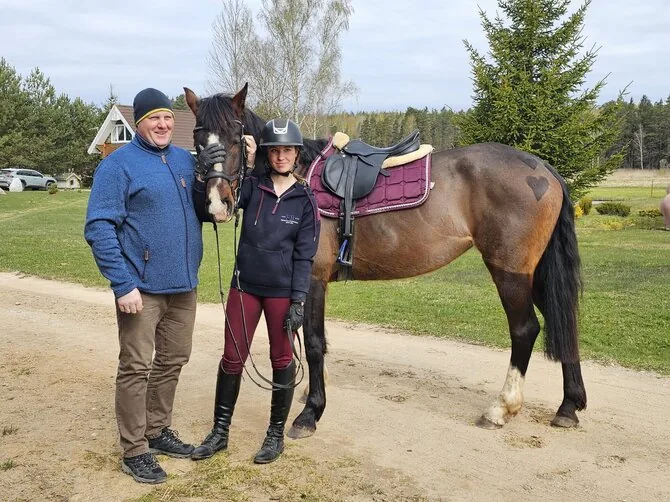
There was already one horse in the family, and his daughter Tija trained at stables in Vilnius. During the pandemic, the homestead became their permanent residence. “A horse cannot live alone – it needs company. My daughter asked for another one. I thought – what’s the difference, two or four, it’s not difficult to prepare feed. Now we have six,” Darius says.
Darius’s daughter Tija is an exceptional rider. “She is the youngest in Lithuania with such experience. She is now 19 years old and has been riding since 3.5.
“We are representatives of show jumping. An inexperienced rider cannot be placed on horses being prepared for competitions – their mistakes would need months to correct. A horse very quickly senses a weak link,” says the founder of “Baltadvaris Horses”.
Read more A car was ablaze in Lentvaris, officials are investigating arson
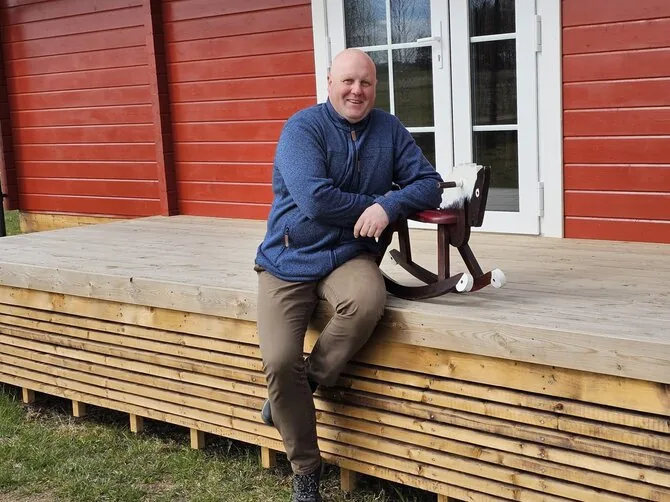
Darius does not plan a large business – the activity will revolve around breaking in horses, preparing them for competitions, and participating in them. “Baltadvaris Horses” is like an oasis of self-awareness. The nearby Baltadvaris burial mounds testify to the ancient Lithuanian connection with horses – a separate burial place is dedicated to them there.
Stories told in “Fairy Tale Village”
Similar is the path of Džiuljeta Mankauskaitė, a singing teacher from Vilnius, to the Molėtai region. In Padvarniai village, she founded the Lithuanian Regional Household Museum “Fairy Tale Village”.
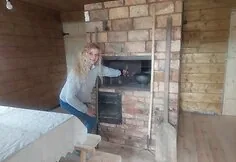
At the homestead, you can stay and feel the spirit of the late 19th – early 20th century. Here you’ll find furniture, textiles, and household items from Aukštaitija, Žemaitija, Lithuania Minor, Sūduva, and Dzūkija. In the yard, there are “gnome” houses made from tree stumps, a summer kitchen with ovens, and an ancient smoke sauna on the bank of the Virinta river.
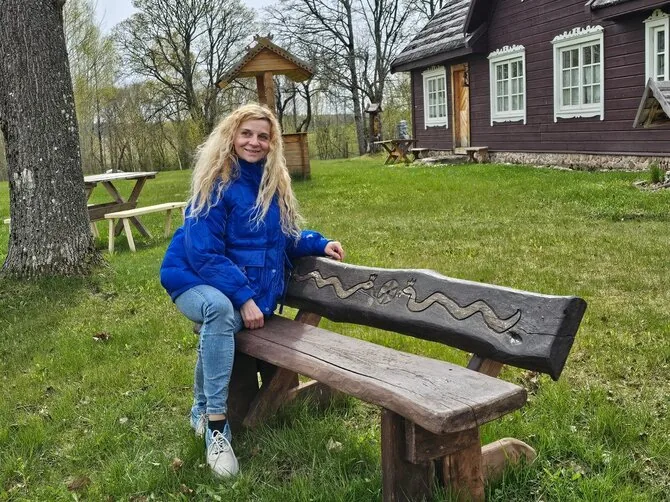
The village is very dear to the singing teacher, and her passion for folklore is simply a natural part of it.
“Folklore has been a value to me since childhood; I sang folk songs. I have a private children’s singing studio ‘Mes pasaulis’ (We are the World) and a large festival of the same name,” Džiuljeta recounted.
Authentic interior – primarily for oneself
The acquired homestead had a brick house with a log room. Now the entire rebuilt house is made of logs. “In the village, everything must be rustic, authentic. I created the interior for myself – I couldn’t imagine any other furniture. The shingle roof is an ancient memory, and it also needs to be preserved,” Džiuljeta explained.
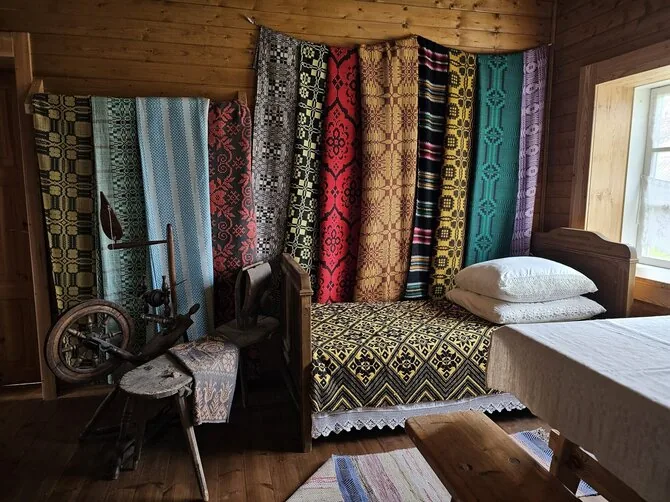
After settling into the homestead, the number of items kept growing. Džiuljeta started collecting them. “I thought – why not establish a museum? I live amidst the nation’s history, and perhaps others want to experience it too,” Džiuljeta shared her thoughts.
The museum has four rooms – each dedicated to one ethnographic region. Guests stay here for several weeks. After resting in ethnographic beds, in the mornings they “restore the museum” – they re-make the beds with lace bedspreads.
Life in the village – therapy
“Here I rest from everything. My head and soul clear. I do physical work, and I feel great,” rejoices the homestead owner. In summer, Džiuljeta lives here from June to September, and on weekends during other seasons.
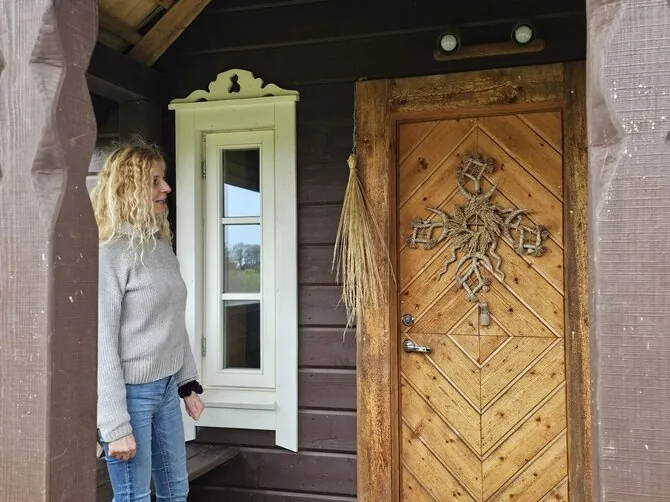
At first, she didn’t even know what to do in Padvarniai village. “I’m a city person; I hadn’t grown anything. Every bean or tomato was a discovery for me. Now I do it every year. I started growing medicinal herbs – I believe in them and heal myself with them,” says Džiuljeta, enchanted by the village.
Educations, camps and “Laumių pieva” (Meadow of Fairies)
Džiuljeta plans educational activities about Lithuanian regions, cooking in an oven, art events, plein airs, and starting from 2027 – children’s camps.
There is even a desire to organize a women’s camp “Laumių pieva” (Meadow of Fairies) – with sports, singing, swimming in the river, walks to Verpetas hill, Alanta manor, to Valiulis stone, or therapy by the trees during folklore evenings.
“I dream of moving here permanently someday. Then I’ll have chickens and black-headed sheep,” says Džiuljeta.
Read more Drunk man who ‘mined’ a sports club did not escape responsibility: ended up behind bars