„We are talking about normalizing consumption. A completely different motivation, a completely different perception of what is normal, what is good, what is bad, whether consumption is bad, whether it harms health. It is a completely different world,“ said R. Badaras in the podcast „Lithuania is Healing“, hosted by Laura Dabulytė.
Read more Hapoel, having handed a solid contract to the defender, is already looking for a new club for him
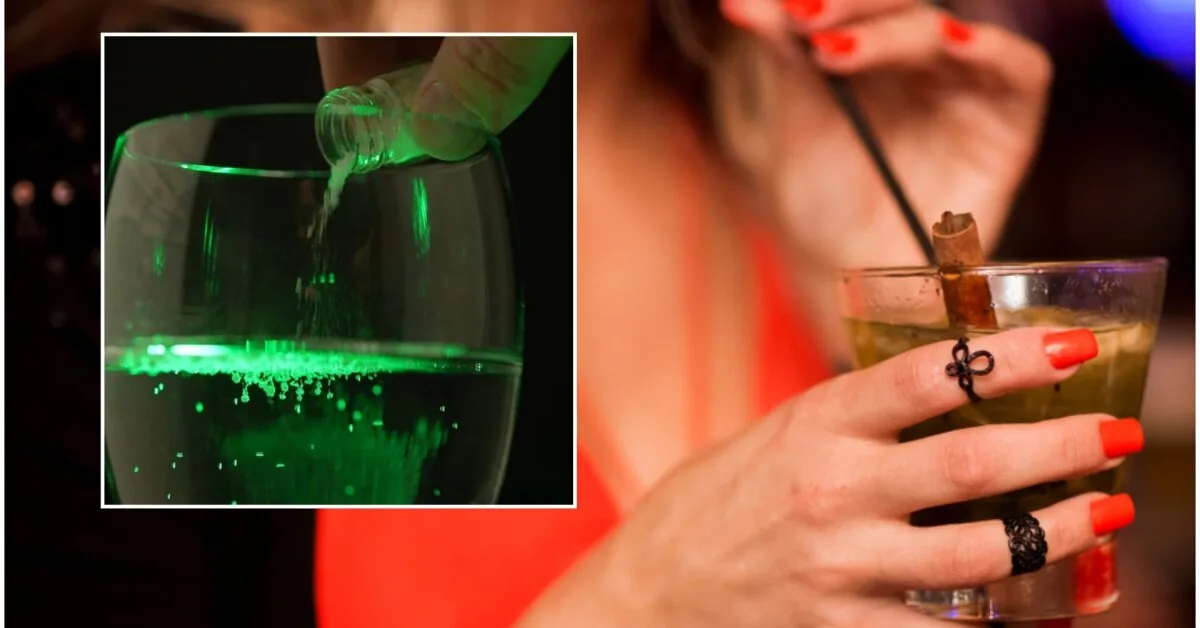
According to the toxicologist, the number of poisoned patients is not decreasing – on the contrary, the number of patients in the Toxicology Center inpatient ward is gradually increasing, although the patient profile itself is changing. Alcohol remains one of the most common causes of poisoning, but alongside it, medicines and new psychoactive substances are taking up an increasing place.
About 400 new substances on the market
Until quite recently, when talking about narcotic substances, a fairly clear list was usually mentioned. Today the situation is much more complicated. According to R. Badaras, about 400 new psychoactive substances circulate on the European market at the same time, and some of them cannot be detected by regular tests.
„We still talk about classic substances out of inertia, although the world has already changed. About 400 new substances actually circulate in Europe. And the classics were six or seven. The problem is that the usual test is only indicative – it can give both false positive and false negative results,“ explains the professor.
This also changes the work of doctors. According to R. Badaras, in Lithuania, for a long time only a few classic substances were searched for, so a negative result could give the impression that the patient had not consumed anything. Now there are already laboratories capable of detecting a much wider range of new substances.

„We were looking for one of the seven substances, but we simply did not look for those four hundred and said they did not exist. Now there are laboratories that are gradually starting to do these things. Opportunities are emerging to investigate and better understand what the younger generation consumes,“ says the toxicologist.
The biggest change is not the substance, but the attitude
However, the professor is most concerned not only about the number of new substances. According to him, the very relationship with consumption is changing – what previous generations perceived as risky behavior is becoming a natural part of the environment for some young people.
R. Badaras recalls the story of a 19-year-old patient. After consuming a substance, the young man developed psychosis, was violent towards relatives, his blood pressure was extremely high – about 200, and his body temperature approached 40 degrees. However, after recovery, the young man did not see the situation as proof that the substance was dangerous, but as a sign that he had chosen the wrong amount.
R. Badaras recalls the story of a 19-year-old patient. After consuming a substance, the young man developed psychosis, was violent towards relatives.
„He does not think that consumption itself is bad. He thinks he just used it incorrectly, too much. And then you hear: Everyone uses it. This is a very clear example of social normalization,“ says R. Badaras.

Electronic cigarettes – the first hook
Speaking about teenagers, the professor pays special attention to electronic cigarettes. According to him, they are important not only because of nicotine – a young person is primarily influenced by peers, social environment, advertising, attractive flavors, and the product’s image itself.
„Why do young people use electronic cigarettes? First of all – peer influence, advertising, flavors. And nicotine is only in the last place. At first, peer pressure, social networks, advertising, and flavors work – an image is formed, and only then comes the nicotine itself,“ says the professor.
Read more «Riverside Kitchen» is going bankrupt: all employees have been laid off
Why do young people use electronic cigarettes? First of all – peer influence, advertising, flavors. And nicotine is only in the last place.
According to him, it is important to evaluate this in a broader context: today a teenager faces a much larger and more diverse supply than previous generations. Therefore, the parents’ argument „we also tried it in our youth“ does not always reflect the current reality.
„When I was growing up, the supply was very simple – cigarettes or alcohol. There was practically nothing else, or it was accessible only to those who really sought it. Now children are taken to hospitals and children die. This is a different caliber of supply. Some offers are irreversible,“ emphasizes R. Badaras.
Now children are taken to hospitals and children die. This is a different caliber of supply. Some offers are irreversible.
A teenager’s brain is still learning to control impulses
The vulnerability of teenagers, according to the toxicologist, is also determined by biology. Impulse control is fully formed only in young adulthood, so during the period when peer recognition and the sense of reward are especially important, substances with a strong effect become even more dangerous.
„Impulse control is fully formed around the age of 25. And in adolescence, there is a very fragile balance between impulse control, reward, and danger. By consuming certain substances, we get a reward related to dopamine release, and some substances affect this system very strongly,“ explains R. Badaras.
According to him, this is why addiction cannot be explained solely by a lack of willpower or a person’s choice. The professor paradoxically describes the mechanism of addiction: a person may no longer like the substance but still want it.
„The essence of addiction – ‘wanting’ does not mean ‘liking’. Patients used to tell me: ‘I don’t like it, but I use it.’ It sounds like nonsense, but when you understand this mechanism, you start to look at addiction very differently,“ he says.
The brain can react even after a year
To illustrate that addiction is not just a conscious decision, R. Badaras refers to neuroscience research. He tells about a person treated for cocaine addiction who did not use the substance for a year and sincerely claimed that the substance no longer interested him. However, brain scans showed that certain brain areas still actively reacted when seeing images related to consumption.
„The person tells the truth – he really does not like it. But what happens in the brain? The dopamine systems still react. We can say ‘like’, ‘dislike’, ‘good’, ‘bad’, but deeper brain structures change much more slowly,“ explains the professor.
According to him, this helps to understand why addiction treatment is a long process and why the mere fact that a person has not used for some time does not mean that the biological addiction mechanisms have disappeared.
Read more Šaulių sąjunga dismisses 33 employees
You can find the episode of the show on the „Lithuania is Healing“ YouTube channel.