As it turned out, their leaders were agents connected to the Russian military intelligence, known as the GRU. According to intelligence officers from three countries who described this activity, their goal was to develop a core of disciplined hitmen trained to interfere in elections.
Read more 44-year-old Simas Jasaitis does not put a period in his career
The target – small Moldova. A country with about 3 million inhabitants, of special importance to Kremlin host Vladimir Putin.
The Kremlin campaign included methods already familiar to other Western countries, such as cyberattacks and disinformation campaigns. However, in Moldova this intervention went perhaps the furthest – except for Ukraine itself. According to three Western intelligence officers, this is one of the broadest and most brazen conspiracies recorded so far, as V. Putin seeks to destabilize the West.
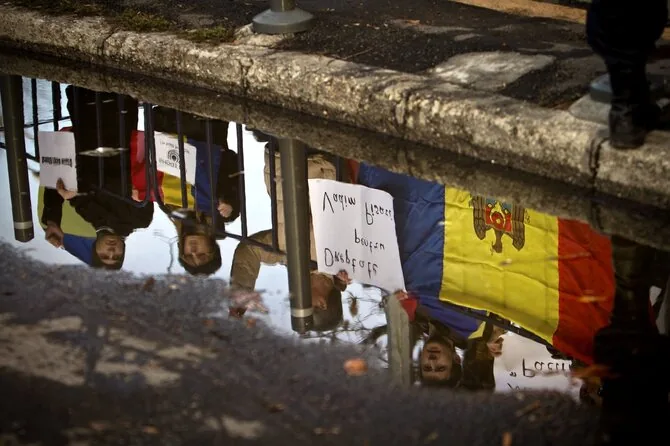
Besides the camp in Serbia, Russian agents conducted training programs in Bosnia and Herzegovina and Moscow, aiming to turn pro-Russian Moldovan citizens into ordinary foot soldiers.
Moscow paid hundreds of Moldovan Orthodox clergy to recruit voters and spread Russian propaganda narratives from their pulpits. In addition, it spent hundreds of millions of dollars on a complex vote-buying scheme financed by a Moldovan millionaire living abroad, devised and managed from Skolkovo – a settlement near Moscow dubbed the Kremlin’s “Silicon Valley” copy.
The Kremlin campaign did not stop. This spring, Russian missiles targeted energy infrastructure facilities supplying Moldova, contaminating water bodies and damaging power supply networks.
This “The New York Times” article is based on interviews with activists involved in Russian activities, high-ranking Moldovan law enforcement and security officials, and a dozen European and U.S. intelligence officers.
Journalists also analyzed thousands of documents related to Russian attempts to interfere in Moldovan elections. Many interviewees preferred to speak anonymously. Their motivation was twofold: some discussed secret security operations that are not allowed to be talked about, while others feared retaliation.
Although information about Russian actions targeting Moldova emerged from court cases and local media reports, the real scope of this campaign, including the vote-buying scheme and the role of Russian intelligence services, had not been previously revealed.
Russian officials publicly denied interfering in Moldova’s internal affairs and rejected accusations that Moscow was somehow trying to harm the West. Last December, V. Putin, addressing his war commanders, harshly criticized European leaders for “stoking hysteria” over what he claimed was a supposed threat from Russia.
However, as revealed by officials from two countries, he soon held another secret meeting with his commanders to convey a completely opposite message. According to sources, V. Putin stated that their goal this year is to internally destroy NATO and the European Union.
Moldova plays a key role in this Russian plan. According to Western intelligence officers, the Kremlin’s priority list places the conquest of Ukraine first, and the takeover of control in Moldova second. Although this country belongs neither to the European Union nor NATO, its geographical position is critically strategic – it is squeezed between NATO and Ukraine.
Moldova could become an ideal springboard for Russia preparing further aggression against Ukraine or the West, the newspaper’s interlocutors added, emphasizing that V. Putin still hopes to conquer part of Ukraine’s southern territories to create a land bridge connecting Russia with Moldova.
At the start of the war, the authoritarian Belarusian leader Alexander Lukashenko publicly released a map showing the planned movement of the Russian army. It also showed Russian forces pushing into Transnistria – a Moldovan separatist region where a Russian military contingent is deployed. However, this plan did not work out for Moscow.
“Russia wants to use Moldova as a springboard for hostile actions against Ukraine, as well as against the country’s main defense and financial supporter – the European Union,” noted Stanislav Secrieru, national security and defense advisor to the Moldovan president.
“For these goals,” he said, “Russia has allocated unprecedented resources over the past few years.”
Asked to comment on the accusations of Russian interference in Moldova’s internal affairs, Kremlin press secretary Dmitry Peskov stated that “these are completely false claims with no basis.”
The pro-Western Moldovan president’s government prioritizes European Union membership. Because of this, it became a target of the Kremlin. In every election in Moldova – presidential, parliamentary, referendum on EU membership – Moscow allocated resources to overthrow Maia Sandu and her “Action and Solidarity” (PAS) party.
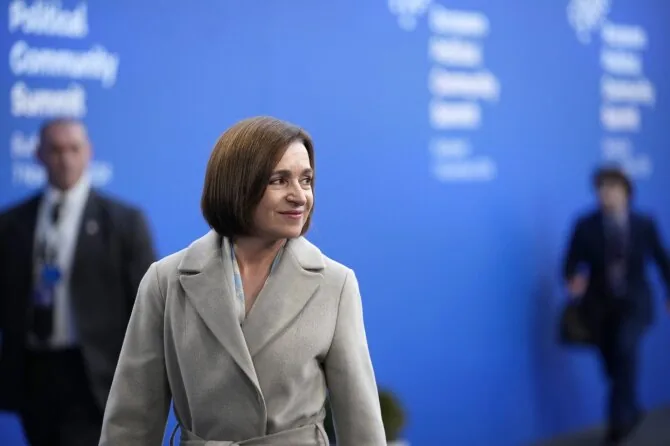
Russia sought the same during the decisive parliamentary elections in Moldova last autumn, when it was to be determined whether M. Sandu’s party would retain power or it would pass to a Moscow-backed coalition.
For this, the Kremlin prepared for months. Its cyber warriors infiltrated the election commission, vote-buying and propaganda campaigns were in full swing, and teams of rookies trained in Serbia were ready to sow chaos in the country.
Sergius Zamas, a high-ranking Moldovan prosecutor who has been investigating cases related to election interference for over a year, noted that a few recruits were enough to disrupt voting.
“There was no goal to find a thousand people to commit crimes,” he said. “It was enough to spark a flame.”
Refused – got a blow
In the summer of 2025, a few months before the parliamentary elections, the Russians established their training camp in one of the resorts in western Serbia. According to S. Zamas, participants, mostly from Moldova, were paid 345 euros each for attending three- to four-day courses – a large sum by Moldovan standards.
Videos made at the camp, which Moldovan prosecutors and the country’s intelligence say were seized from participants’ phones, captured men wearing camouflage clothes and bulletproof vests training with automatic rifles.
The camp in Serbia was one of several organized by Russian agents. Similar training was held near Moscow, where more than 100 young Moldovans learned “to make and use incendiary devices and homemade explosives” and operate drones “with special attachments for explosives or ignition,” according to a statement by Moldovan prosecutors.
Two Western intelligence officers said the training was supervised by the GRU.
Yuriy Vitneanski, a Moldovan political activist who participated in the camp near Moscow, denied engaging in any anti-government or subversive activities. In an interview, he explained that his aim was to establish friendly, cooperation-based relations with young Russian politicians. The activist refused to comment further.
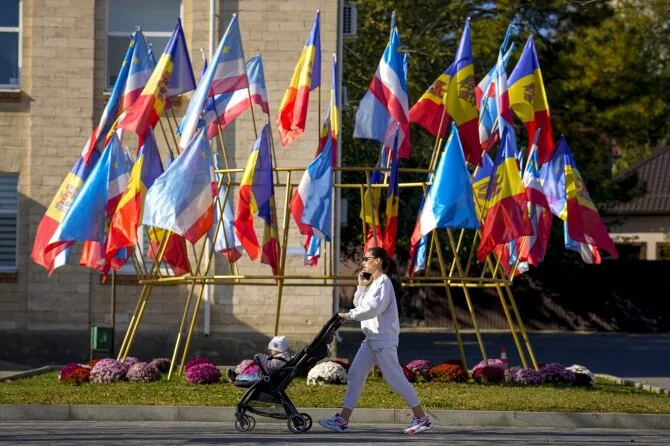
The man added he did not know the camp was supervised by Russian intelligence. Moldovan authorities also acknowledged that not every camp participant knew the true goals.
Some participants claimed they refused to join the training. Maksim Rosca, who attended the camp in Bosnia and Herzegovina, later testified in a Moldovan court that he told a Russian instructor he would not participate and was hit in the face and lost a tooth for that.
In October 2024, three participants from the camp in Bosnia and Herzegovina were detained returning to Moldova. Prosecutors said they were carrying drone parts, including those designed to drop grenades. Prosecutors noted the detainees also had a manual titled “Russian Kitchen: The Basics of Homemade Terrorism.”
Money for votes
When protesters gathered, the sun was blazing hot. They waved brooms and posters painted with anti-government slogans. The protest in the town of Taraclia in the Moldovan province in July 2025 seemed spontaneous.
J. Vitneanski – a political activist who had been at the camp near Moscow – also participated. In an interview with local TV, he described the protest as a “local residents’ initiative.”
In fact, it was organized about 1255 km away, in Moscow, by subordinates of Israeli-Moldovan oligarch Ilan Shor.
A few days before the planned protest, the oligarch’s accomplices contacted thousands of Moldovans via the Telegram platform, promising them money if they came to the city council building with brooms. These were intended as a symbol to “sweep out such guys.”
“Travel expenses and per diems will be reimbursed,” the messages stated.
As “The New York Times” notes, these messages are part of a set of documents obtained from a financial services company based in Moscow owned by I. Shor, which helps Russian companies circumvent Western sanctions. The documents also named activists employed in the oligarch’s operation, their locations, and contact information. The data revealed that more than 150,000 Moldovans were recruited.
Among the documents were hundreds of pages of message exchanges between I. Shor’s agents, in which the oligarch himself used the nickname “Travolta.”
According to Western intelligence officers and Moldovan prosecutors, all this constituted a large-scale operation coordinated by I. Shor aimed at influencing the country’s politics. And this operation far exceeded the limits of a single protest. Recruited individuals received instructions to post certain material online for a fee, join staged rallies urging Moldovan citizens to vote against President M. Sandu, her party, and the country’s membership in the European Union.
Read more Week’s weather: it will rain almost every day
This data was stored in a virtual folder belonging to one of I. Shor’s programmers, accessible online to anyone interested. “The New York Times” journalists also reviewed its contents. They confirmed the database’s authenticity by contacting individuals listed in it, checking links to social media posts provided in the data, and tracking GPS coordinates that led directly to the developer’s home address near the Skolkovo innovation center on the outskirts of Moscow.
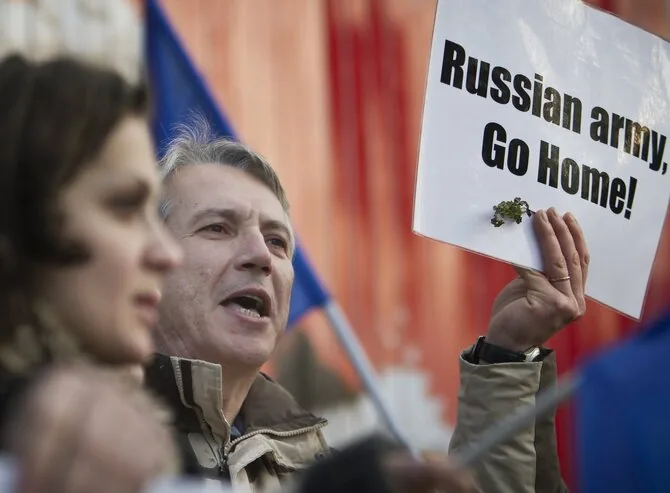
After “The New York Times” journalists contacted the programmer living in Russia, this information was removed.
Other leaked online documents about I. Shor’s operations revealed that over four months in 2024 leading up to the referendum on European Union membership, a total of 38,000 activists were paid nearly 17.29 million euros. Journalists contacted some of these activists by phone to confirm their identities, while others are publicly known.
Information about the existence of such documents and their contents was first published by “Ziarul de Gardă” (ZDG) – Moldova’s investigative journalism leader. Later, the documents were removed from the internet, but “The New York Times” gained access to them through a person who managed to save them before deletion.
I. Shor is well known to Moldovan authorities. He fled the country in 2019 when he was charged with a nearly 1 billion euro bank fraud scheme. He then settled in Russia, where, according to three Western intelligence officers, he reports directly to Sergei Kiriyenko – a high-ranking V. Putin administration official responsible for countries the Kremlin considers within its sphere of influence, including Moldova. In 2025, the United States imposed sanctions on I. Shor’s company.
I. Shor himself did not respond to journalists’ messages requesting comments.
The analyzed database shows that using the Telegram platform, I. Shor’s team created 240 different chat bots for recruiting and coordinating rookies.
A strict verification process was also applied to filter out impostors and police informants. New members were called “supporters.” Above them were 35,000 “activists,” and the highest level in this hierarchical structure consisted of 1,200 local leaders.
The operation expanded pyramidally: nearly 99,000 members were registered by persons already involved in the operation.
I. Shor’s agents monitored progress using spreadsheets showing that new recruits from Moldova posted thousands of messages on social networks condemning the referendum on the European Union and President M. Sandu. New members also praised I. Shor, who, speaking Russian, promised Moldovans free gas.
Russia was almost never mentioned in these messages. However, one widely spread advertisement warned that closer relations with the West would lead to a “repeat of the Ukraine scenario.”
“The result?” the advertisement said. “War. Death. Tears.”
In June, the European Union imposed sanctions on four Moldovans connected to I. Shor’s efforts to sabotage the 2025 parliamentary elections. Among them was J. Vitneanski, who, according to European officials, receives a salary from I. Shor every month and was involved in “attempts to destabilize and overthrow the constitutional order.”
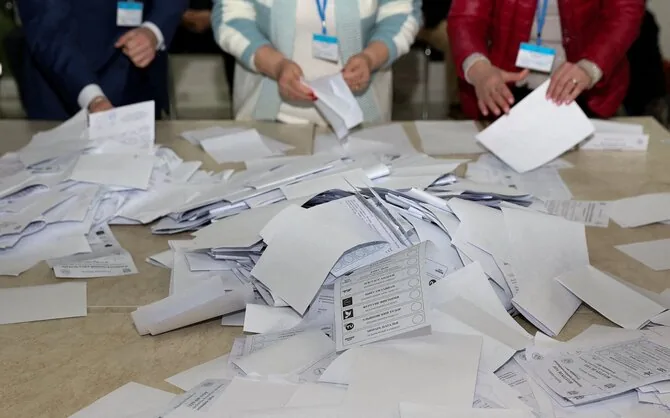
Data obtained by hacking shows that J. Vitneanski was paid about 1988 euros.
Propaganda from the pulpit
Priests were also involved in this Kremlin campaign. Since summer 2024, hundreds of them traveled to Russia, visited holy sites, and met with high-ranking church leaders.
Before returning home, each priest signed a contract for a debit card issued by the Russian bank “Promsvyazbank,” which has ties to the country’s defense ministry and owns 49% of I. Shor’s financial services company shares.
In contracts reviewed by “The New York Times” journalists, clergy identified themselves as employees of the organization “Evrazia” – a Kremlin-linked organization that, according to Western intelligence officers, promotes pro-Russian policies in former Soviet states. I. Shor is a board member of this organization.
Priests received about 865 euros to urge their parishioners to vote negatively in the referendum on Moldova’s European Union membership and campaign against pro-Western policies. Moldovan officials say hundreds of clergy chose the money.
Documents record one priest, Gheorghe Tursulet, identified as a “reliable informant,” who was assigned the mentioned payment. A high-ranking Moldovan official confirmed that this clergyman participated in “pilgrimage trips” to Russia.
Another Moldovan priest, Pavel Petrov, although belonging to a group of priests known for pro-Russian views, did not participate in “pilgrimage trips,” the official said. However, a few weeks before the 2024 elections, he delivered a sermon from the pulpit condemning the European Union.
“Democracy? What kind of democracy imposes all that filth they bring from Europe on you?” he asked, even criticizing schools with shared toilets.
“What do we, the people, want? Sodom and Gomorrah? Or do we want God to burn us alive? He will burn us,” he explained. His sermon was filmed on a mobile phone and later published by the local news portal “NordNews.” “The New York Times” confirmed its authenticity.
Priests G. Tursulet and P. Petrov did not respond to requests for comment.
Orhei Archbishop Father Iulian stated in an interview that neither he nor the priests under his leadership “conducted any direct campaign and did not support any candidate in the elections.”
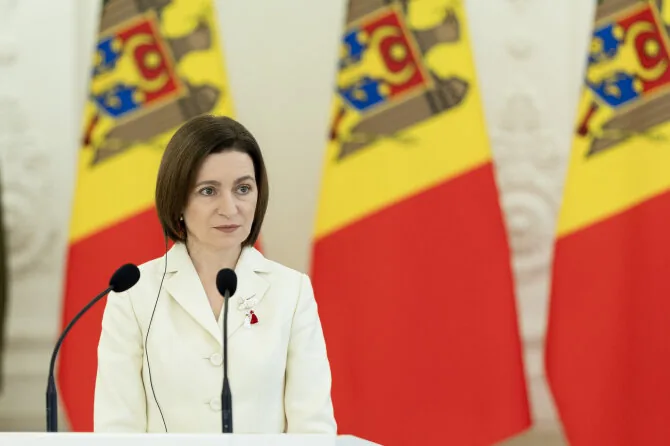
Nevertheless, the archbishop is openly an opponent of M. Sandu’s government, which he accused of persecuting priests like him loyal to the Russian Orthodox Church. He admitted participating in “pilgrimage trips” to Moscow and emphasized that he would do the same again. According to the clergyman, the political situation will again turn in his favor.
“We will wait,” he noted. “Two years remain until the next elections.”
An unpredictable path to the future
Russia almost succeeded. On the day of the parliamentary elections, September 28, 2025, they concentrated all their forces.
Agents trained in Serbia were ready to cause chaos in Chisinau and other cities. According to prosecutor S. Zamas, they wore yellow and blue armbands on their hands to recognize each other in the crowd. He said some of them had incendiary devices.
Meanwhile, Russian hackers infiltrated Moldova’s Central Election Commission and took over thousands of personal routers, a high-ranking Moldovan official said.
But Moldovan authorities were prepared.
Weeks before voting day, the country’s police raided hundreds of homes and detained individuals who had attended Russian camps or taken money from I. Shor.
Moldovan cybersecurity experts, aided by Western allies, controlled hacker attacks. Although protests erupted in the country, a more serious outbreak of violence was avoided.
When police detained several individuals suspected of inciting violence, they claimed that the incendiary devices found with them were intended for a baby gender reveal party, recalled S. Zama.
M. Sandu’s party won the elections with just over 50% of the vote – mostly thanks to the country’s diaspora living abroad.
It is unlikely that her victory was a failure for the Kremlin. The Moldovan government had to spend significant amounts of money and allocate large law enforcement resources to prevent Russian interference. Meanwhile, Kremlin allies used mass arrests of M. Sandu’s opponents for propaganda purposes, presenting them as evidence of authoritarian repression.
Since then, Moscow has only intensified its efforts. In early March, Russia attacked a hydroelectric power plant in Ukraine near the border with Moldova, contaminating water for a large number of consumers in both countries.
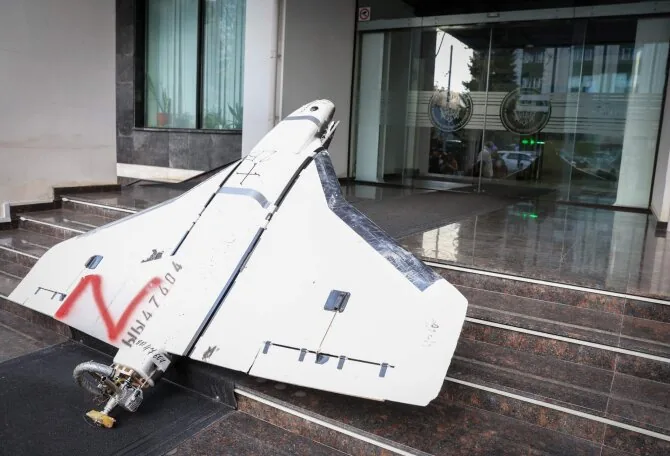
Later, Russian forces’ drones shelled a high-voltage power line in western Ukraine, which supplies up to 70% of Moldova’s electricity, automatically causing power supply disruptions.
When we visited some government buildings, including the president’s palace, the lights were often turned off to save electricity, and employees walked through windowless corridors with flashlights.
Moldovan officials are convinced that Moscow is playing a long game.
“We won the battle,” said Mihai Lupascu, director of Moldova’s cybersecurity agency. “But we have not yet won the war.”
Read more Surprise at the start of the season: Lens defeated PSG and won the French Super Cup
This article was published in The New York Times.
© 2026 The New York Times Company