








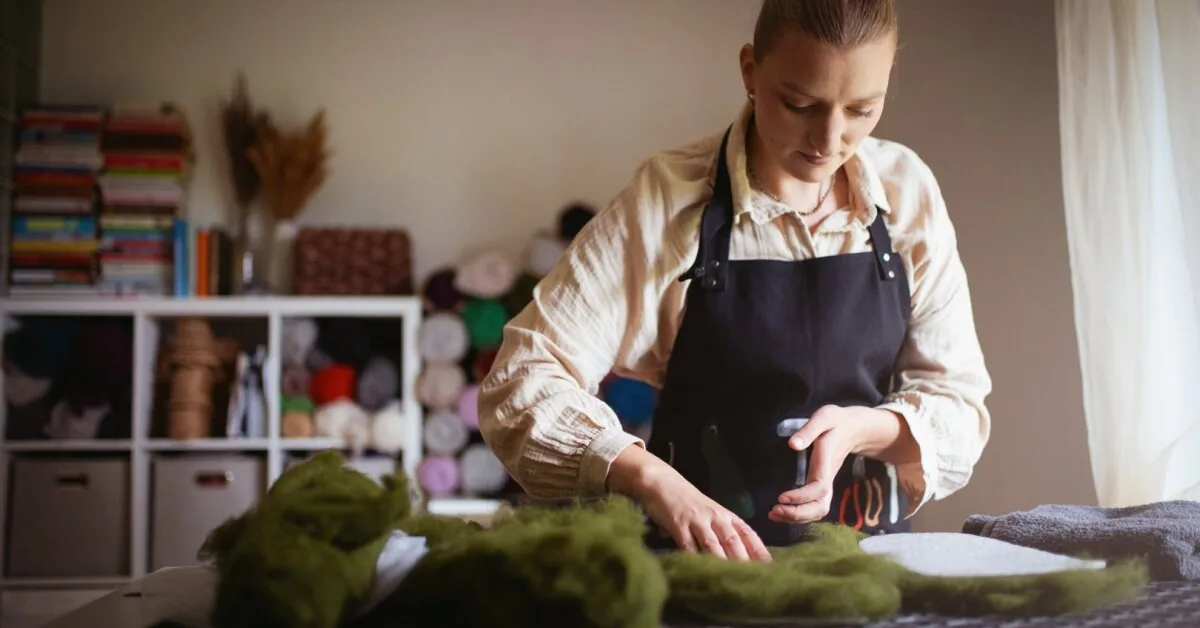
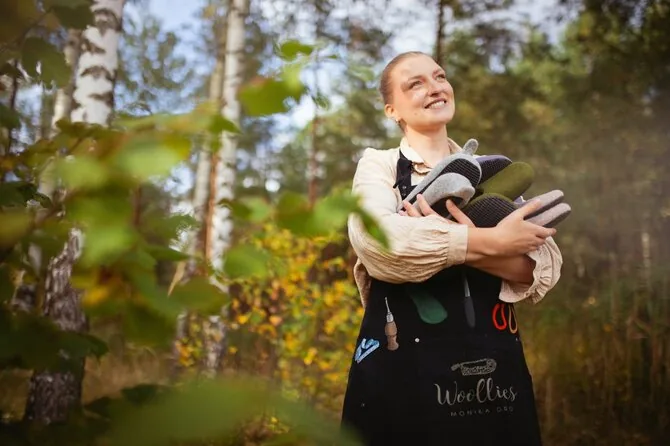
This is how the love for felt was born, which has lasted for almost a decade. Today, the creator known to social media followers as “Woolies by Monika Dro” felts slippers, repairs them, organizes educational sessions, and teaches others to tame wool. Sometimes she gets so absorbed in her work that she loses track of time, but she does not hide the fact that it is still difficult to make a living solely from this craft.
Read more The tennis legend, losing for the 13th time in a row, faced criticism: «It’s time to retire»
However, Monika believes that felt slippers, born slowly and lovingly by hand, are one of the coziest gifts for oneself or a loved one. For her, wool means more than just a craft. It is warmth, softness, and security, which she especially lacked during her adolescence after losing her mother. Creativity liberates and heals.
– Monika, let’s go back to the past. How did the idea of felting slippers come about?
– In childhood, I played basketball, but I always loved handicrafts as well. At school, I really enjoyed craft lessons and was always happy to create something – embroider, weave, make various crafts.
I got acquainted with wool during my studies. I remember we went to the Kaziukas Fair and I saw felt slippers there. They immediately caught my eye. I asked the price – 50 litas. At that time, I received that amount for a whole week to live on. My mother had already passed away, my father was raising three children alone, so I couldn’t afford to buy such slippers.
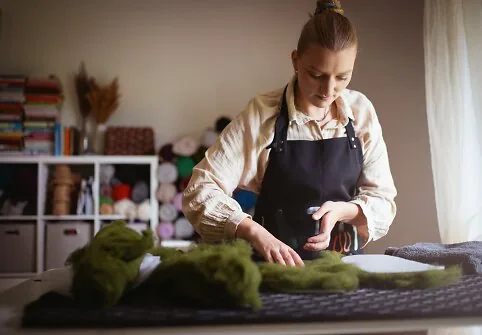
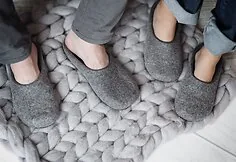
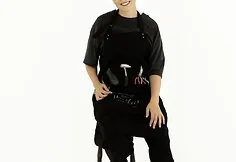
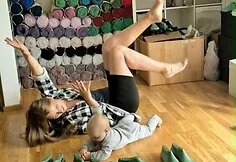
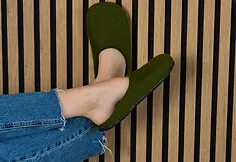
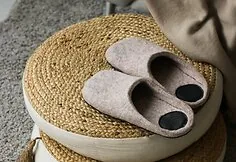
But then I thought: if I like handicrafts, maybe I can make them myself? I found a teacher in Vabalninkas, near Biržai. She held classes for children from socially sensitive families. I took the bus several times to those classes. The children felted small items, and I really wanted to felt slippers.
My mother had already passed away, my father was raising three children alone, so I couldn’t afford to buy such slippers.
After a few tries, I succeeded! I really liked both the process and the feeling that I could do it myself. Those first slippers stood on the shelf for almost a year; I didn’t wear them. Later, the desire to felt returned – I bought the first lasts, wool, and made another pair.
At that time, I had a small Facebook page where I showed my woven friendship bracelets. When I posted a photo of the felt slippers I had gifted, I unexpectedly received the first orders. I didn’t advertise – people just liked them. That was in 2016, so ten years have passed since the first slippers.
– How did you manage to befriend the craft and continue to improve?
– At first, I did everything in the evenings and weekends. I worked a salaried job, and when I came home, I felted at the kitchen table. All my free time was dedicated to wool. I really liked the felting itself, so the activity gradually grew.
An interesting coincidence is that at that time I worked in a rubber shoe factory – first in sales, later with e-commerce and marketing. Now I laugh that even my salaried job was related to footwear.
In winters, orders increased, so I often thought that maybe I should quit my salaried job and try to devote more time to my own activity… For a long time, I just lacked courage.
– Monika, how did it happen that while being interested in felting technique, you ended up in a school desk learning shoemaking?
– About four years ago, I decided to deepen my knowledge and enrolled in the Kaunas vocational school, where shoemaking is taught. I wanted to understand how leather is worked with, how shoes are designed and made.
At that time, I worked a salaried job, later felted slippers and studied. It was really a very difficult period, but I really liked the studies.
Now I have made several pairs of shoes, have a leather sewing machine and other tools. Basically, I could repair footwear, but I don’t do it seriously – I usually only fix my own or my father’s shoes.
True shoemaking is a very complex craft. It requires precision, meticulousness, and a lot of skill. While studying, I made one shoe model for about four months.
True shoemaking is a very complex craft. It requires precision, meticulousness, and a lot of skill.
– Why did you still stick to wool and slippers?
– While coping with the loss of my mother, I touched on this topic in therapy, and it brought me a lot of clarity. Wool means warmth, coziness, softness to me. It seems to give what I greatly lacked after losing my mother…
My mother died when I was 16 years old. She had breast cancer and passed away very young. After her loss, I felt like an empty vessel for a long time. So now I understand that by creating, I try to regain that warmth. Even if no one paid for it, I still wouldn’t stop doing it…
Shoemaking is also very meaningful. Shoes are what connect a person to the ground. Feet are our foundation, support. I myself lacked such an inner foundation, security, grounding. Now I see a very clear connection between my life experience and what I create.
After shoemaking studies, I started offering felt repair services because we learned not only to create but also to repair footwear. When I first repaired my felt slippers, I thought: why throw them away if you can give them another life?
Sustainability is very important to me. I wear clothes for a very long time myself. Financially, repair is not profitable, but for me, it is a value. When I started offering repair services, I realized how long people actually wear them. On average – from two to five years.
– Can it be said that felt helped you heal?
– Definitely. Therapy helped a lot to come to terms with what I experienced, but creativity itself is healing.
When my mother died, my brother was five, so I had to take on a lot of responsibility very early, almost becoming a mother myself. We went through a lot. And now I can say very simply – I still miss my mother very much. Nothing will replace that. I notice that I always form a very beautiful connection with older women. It seems they somehow sense and nurture me. This connection is very important to me.
Read more Dagestanis started producing «Martini»: it turned out who is the person behind it
– How did it happen that creativity became your main activity?
– I always dreamed of working for myself. I wanted to try and always wondered how it would go if I could devote more time only to my own activity? It happened that after maternity leave, I did not return to my previous workplace. I can’t say yet that I make a living from it, but I am optimistic, believe in what I do, and want to go all the way.
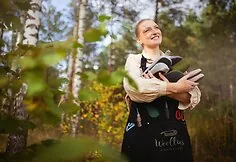
When I went on maternity leave, I didn’t stop creating. Even when my son was very small, sometimes I felted while he slept close to me in a sling. I was so drawn to wool – as soon as he fell asleep, I returned to work. It’s like that – if I don’t felt for a longer time, I miss wool a lot and want to touch it as soon as possible.
– What does a workday look like now and how much of it is felting?
– I used to work practically non-stop and didn’t count the time at all. But I realized I have a sensitive nervous system and need rest. I want to be a good mother, spend time with my family.
Now I try to work on weekdays while the child is at kindergarten. Evenings and weekends I dedicate to family, child, home. I would like more time for creativity because I have many ideas, but I consciously seek balance.
I feel that I can completely disappear in this activity. I remember before my first fair, I decided to make a hundred pairs of slippers. I asked a few women for help and for several months I only saw the child and slippers. No social life at all. The fair took place in Kaunas, at the “Žalgiris” arena. The plan worked – I had made a hundred pairs of slippers, completely exhausted, and sold only six…
The plan worked – I had made a hundred pairs of slippers, completely exhausted, and sold only six…
After that, I felt complete burnout for about a year… The family also suffered a lot. Thank God I had a child – because of him, I got out of bed. On the other hand, it helped me set priorities and define boundaries that I can’t do everything at any cost.
– Felt slippers are a seasonal product. How do you manage to maintain activity all year round?
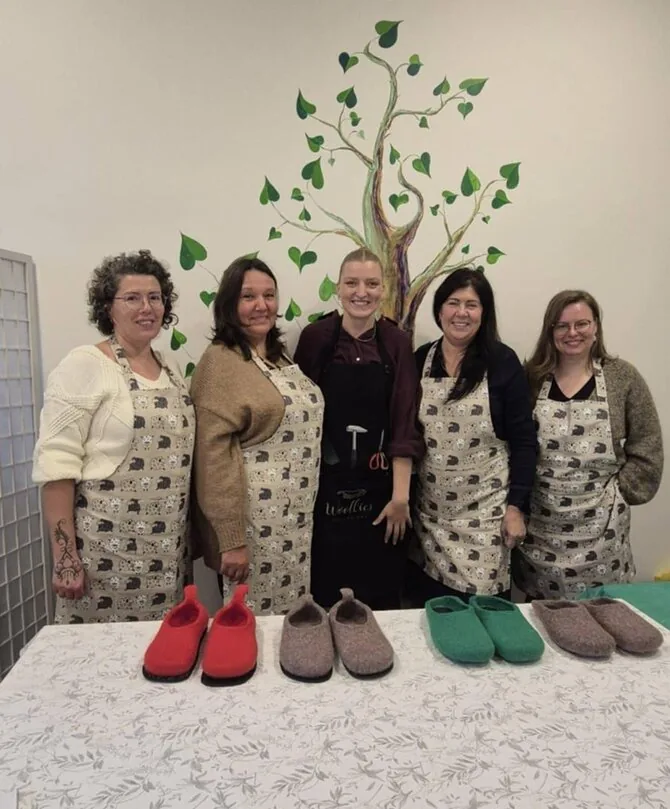
– Seasonality is definitely felt. Because of that, I started making mats, toys, tried to expand the assortment, but I realized it’s not for me. That’s how education was born. I invite those interested to my home, have held felting sessions in Kaunas, went to a mindfulness camp where anyone could felt a souvenir. I felt that I like teaching. It’s nice to see that people like it too. After almost ten years of activity, I definitely have something to share.
– How long does it take to make one pair of felt slippers?
– The process consists of several stages. Drying alone takes two or three days, so if I start an order today, I can send it in about five days.
Previously, the making itself took six or seven hours. Now, after so many years of practice, I work faster. Felting itself takes about three or four hours, depending on the model. Then the soles need to be sewn on, details attached. If leather is used, there is even more work. On average, I still devote five or six hours to one pair – almost a whole workday.
– How do your felt slippers differ from others?
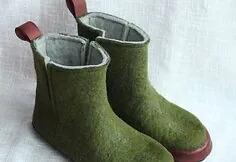
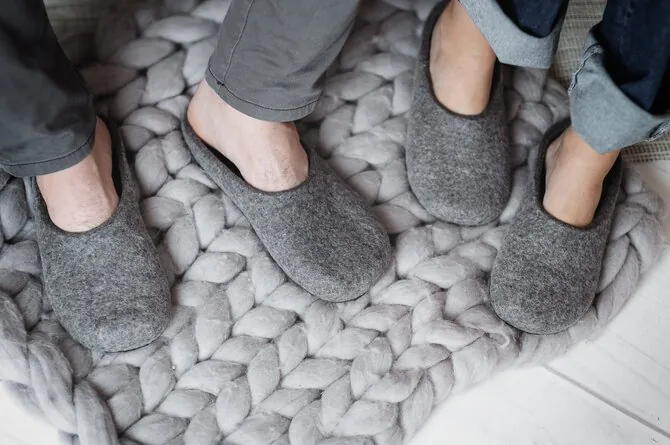
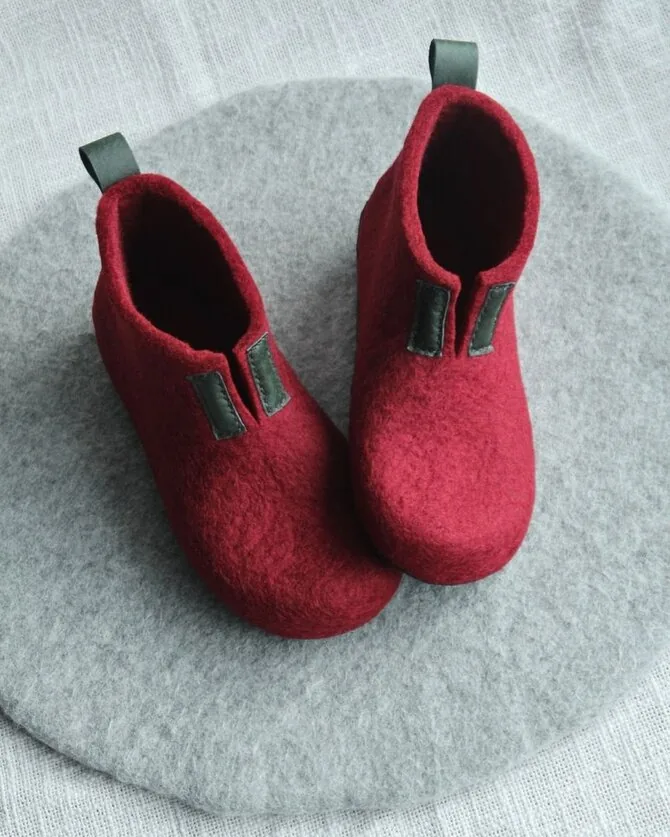
– After shoemaking studies, I started thinking about what I could offer for the comfort of the human foot. That’s how I discovered “barefoot” footwear. It is footwear with a wider front part, giving toes more space and freedom. Some joke that such shoes look like clown shoes because the front is wide. I ordered specially made “barefoot” lasts in all sizes and started felting slippers according to them.
There are many “barefoot” shoes in the world, and there are slippers of this type, but they are usually sewn. Felting is a very old technology. It is important for me to maintain the traditional craft and at the same time adapt it to a modern model that gives the foot more freedom.
In childhood and youth, I played basketball and often wore shoes that were too small. They rubbed, I had deformed and even bleeding toes. So now it is very important to me that the foot is comfortable and free. When I started making “barefoot” models, about 95 percent of clients began choosing them.
– Do people buy more for themselves or as gifts?
– Some buy for themselves and don’t spare themselves, while others buy slippers only as gifts because they feel sorry to spend on themselves. I think it’s a very beautiful gift. It’s not fast or mass-produced – someone spent several hours creating it by hand, thinking about the person it is intended for. Such items give a different feeling and energy.
– Handmade slippers are not a cheap purchase.
– There are people who sell felt slippers for about 40 euros. Mine cost about 100 euros, so the difference is really big.
I have specifically bought cheaper slippers from “Vinted” to see how they look in real life. The quality difference was very big. To make them similar to my products, it would take at least two more hours of felting.
The felt structure itself differs. When you put a lot of physical strength and work into the process, the wool shrinks well, the felt becomes stiff, strong, and does not stretch quickly. Cheaper slippers sometimes resemble socks – they are soft, not fully felted, and quickly lose their shape.
I don’t want to belittle others’ work, but it’s sad when a person buys a low-quality product, wears it for a year, and decides that all felt slippers are bad. A lot really depends on how they are made.
In general, 40 euros for so many hours of work is very modest… After all, the biggest part of the price is time. You also need to consider electricity, water, materials. Not to mention other activities – I photograph myself, create content for social networks.
– Currently, you create living in the countryside. Felt and countryside – sounds like a perfect tandem.
– My life path is quite colorful – I was born in Šiauliai, grew up in Biržai, lived in Vilnius for ten years, briefly in Kaunas, and now I am here, in the Šakiai district.
I really like it here. In general, I like the countryside – it’s peace, space. In the city, I get tired quickly, even a shopping center exhausts me. And in the countryside, it seems easier to breathe. Maybe that’s why wool fits so well here. It requires time, patience, you can’t rush it, just like yourself.
Read more Do not throw away cherry and sour cherry pits: you won’t believe where they can be used at home