At a forum held by the Munich Security Conference this week discussing the future of European military cooperation, defense officials warned that Europe is currently not prepared for a prolonged war with Russia.
European defense planners cooperating with NATO said that a longer conflict would not only lack military readiness but also the public will to endure it.
The discussions also expressed concern that Russia may strengthen its position in the so-called hybrid war with the West – using cyberattacks, sabotage, disinformation, and political interference. This could weaken NATO’s ability to prepare for a possible military conflict.
The growing support for populist political forces in the largest European countries could also hinder the plan for five countries, including the United Kingdom, to take closer coordination of the continent’s defense. This plan is being considered as the United States prepares to reduce its military contribution to European defense.
Defense officials speaking at the Munich Security Conference said that European society may not have the desire to support a prolonged war. Therefore, NATO plans should be oriented towards a relatively short conflict.
The public does not understand the scale of hybrid conflict
A former British government minister admitted that Western countries have done very poorly in explaining to the public the scale of the hybrid conflict with Russia. Another British diplomat said that several consecutive UK prime ministers did nothing to help the public understand the scale of the threat.
According to them, ministers now face a very uncomfortable task – convincing unprepared voters to reduce social spending and allocate more money to defense.
“The level of discussion was like in a kindergarten,” admitted the British diplomat.
This criticism was reinforced by the UK government’s failure to implement the call made in the 2025 strategic defense review to start a national discussion about the scale of the security threat facing Europe and to strengthen societal resilience.
Another diplomat said that the disappearance of the dividing lines between the West and Russia that existed during the Cold War gave Moscow the opportunity to exploit fears rising in European societies on both the left and right sides of the political spectrum.
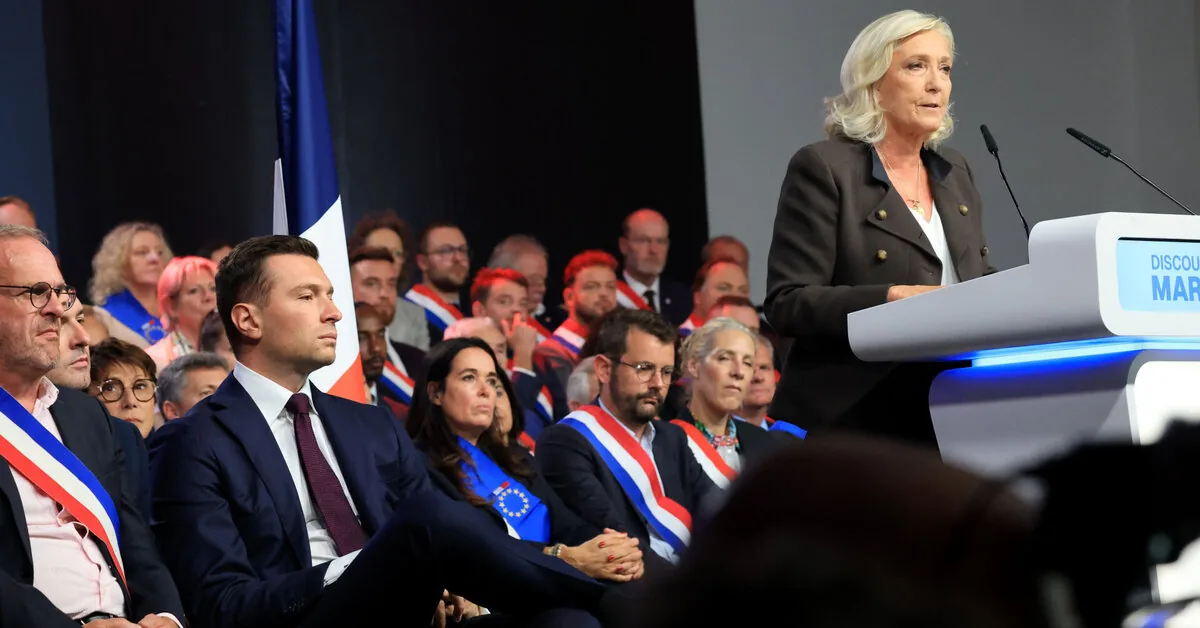
These comments reveal a broader concern among senior European politicians that Europe could lose the so-called hybrid war with Russia. This may also be reflected next year in the growing support for right-wing populist parties in Poland, France, and Italy.
Most populist parties, including Germany’s far-right party Alternative for Germany (AfD), are favorable to Russia.
“Elephants in the room”
The Munich Security Conference discussion was held under rules prohibiting the disclosure of the identities of the speakers. The topics discussed at the conference gained additional relevance due to accusations made this week by the German government against Russia for a drone attack attempt on Leipzig airport last month.
The independent but influential Munich Security Conference promotes closer cooperation among the five main European military powers. This would be one way to give the United Kingdom, which is not a member of the European Union, a more significant role in planning European defense.
Understand instantly
Germany accuses Russia of drone incident at airport, imposes sanctions
2 men sought for attack at Leipzig airport
Mindaugas Sinkevičius discussed the importance of closer partnership with the Romanian Prime Minister
2 Russians sought for attack at Leipzig airport – one has ties to Lithuania
It is expected that Washington will make decisions in the coming months regarding the number of its troops deployed in Europe. Such decisions could mean that greater responsibility for conventional European defense would fall to the continent itself.
However, at the conference, the scale of Russia’s hybrid war, the possible impact of next year’s elections, and the strengthening of the AfD in Germany were identified as “elephants in the room” – problems everyone knows about but avoids openly discussing when considering closer European defense coordination.
One proposal is for the European Union to issue a joint statement on the threat posed by Russia. In that case, populist political forces would be forced to clearly state whether they agree with such an assessment or reject it.
The group of defense ministers from the five main European military powers – the United Kingdom, France, Germany, Italy, and Poland – called E5, already holds regular meetings. However, negotiations are just beginning on how these countries could jointly acquire military capabilities currently mostly provided by the United States. These include integrated air and missile defense systems, long-range precision strike capabilities, and space early warning systems.
“Europe is stagnating at a time when external threats are becoming truly very serious. These are huge and existential challenges that require greater integration in defense,” said Wolfgang Ischinger, chairman of the Munich Security Conference.
According to him, the E5 group provides an opportunity to include all European countries with significant defense industry capabilities. Later, Ukraine could also join if a ceasefire is reached. According to W. Ischinger, Ukraine currently has the largest and strongest army in Europe.
Supporters of the E5 group emphasize that its activities would not duplicate NATO and would not attempt to diminish the Alliance’s role. However, the conference expressed fear that the United States might try to block the creation of a stronger European defense pillar within NATO.
“The US is better at talking about burden shifting than power sharing,” said one diplomat.
Italy fears Russian interference in elections
Italy is one of the E5 countries most concerned about the impact of Russia’s hybrid war on domestic politics.
The right-wing government led by Giorgia Meloni has governed more moderately than many expected and has tried to shape the image of a government supporting Ukraine abroad. The government led by G. Meloni has become the longest-serving Italian government since World War II.
Italian Foreign Minister Antonio Tajani warned that the country faces daily cyberattacks. He also said that Italy is not protected from possible Russian interference in next year’s national elections. This is the first time an Italian politician has warned that elections could be influenced from outside.
“Hybrid war can be waged in many ways – it does not require bombs, planes, or tanks,” said the minister.
Italian Defense Minister Guido Crosetto, one of G. Meloni’s closest political allies, said it would be foolish to ignore the scale of Russian interference.