VDA has numerous branches throughout Lithuania, and in all of them, hundreds of bachelors and masters have presented their final works, with the exhibition content being the best part of the event. I, of course, understand – for the academy’s lecturers, supervisors, reviewers, defending students, their relatives, and friends, the final part of studies is difficult, intimidating, and important, but for us, both amateurs and experienced observers of the art process, the Final Works Exhibition is a pure celebration, allowing us to switch off the art critic, gallery owner, or collector within ourselves.
Read more Clothes in the heat: why white color doesn’t always help?
Although collecting can be different. Student works can become excellent first acquisitions for many standard art lovers (not collectors, but those who buy about ten artworks for their own pleasure over thirty years), and the VDA show is the only convenient opportunity to connect debuting art sellers with hesitant art buyers, but there were not many connections – at least in the VDA central building complex. And rightly so.
The opportunity to play the art market provides many experiences that will help make future decisions. On that occasion, I recall an experiment I conducted about fifteen years ago.
The opportunity to play the art market provides many experiences that will help make future decisions. On that occasion, I recall an experiment I conducted about fifteen years ago. I suggested to the cultural management bachelors (now this department no longer exists at VDA) to organize a student works fair during the final defenses, choosing the hardest-to-sell genre – video art. The bachelors accepted the challenge, the academy did not object, and the fair took place. The students practiced well: they learned to write invoices and receipts, draft contracts, prepare premises, and reduce costs. I even found a few buyers ready to spend a few hundred litas on video art purchases.
The students also received the most important lesson – doing art business with artists is difficult. Young artists did not know the prices of their works, initially agreed to the proposed prices, later rejected them, rejected them again just before the show, and finally, we all surprisingly saw that we had no goods. I think no one from that course took up gallery activities. A great result of pedagogical work that preserved fates and psyche.
There was another thing to fix at the Final Works Exhibition that lecturers should talk about with their students – tactically correct choice of exhibition location. I have no doubt that students, especially those reaching the end of their studies, already know the basics: a bad gallery can ruin a career. But this base is relevant only when the career starts, and there is no need to wander at the final show; it is more useful to exhibit together with all your own people, in your school, in your studies, because that is exactly where the audience comes.
There was another thing to fix at the Final Works Exhibition that lecturers should talk about with their students – tactically correct choice of exhibition location.
It (we) hopes to get a romantic synergy of creativity, youth, rebellion, and exotic environment, and these expectations are absolutely met by the VDA buildings – the old and new buildings, “Titanikas,” that small two-story house next to Vilnelė. They (we) photograph there, upload trophies to networks, note down surnames, write down a thought or two. But for a total look around, there is no time, strength, or motivation left – the surname of a bachelor exhibiting their work somewhere in the countryside does not yet have enough symbolic weight to make viewers move. Thus, quite a lot of young art remains unseen, and that is not good.
Two more events related to the right places for visual art happened in early April, one already started, the other will happen sometime in the future.
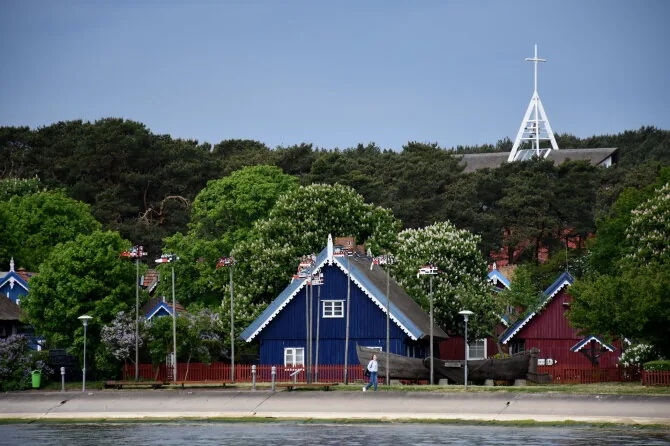
While the Final Works Exhibition was still ongoing, artist Robertas Narkus announced a new residency “Butterfly Station.” It is funded by patrons gathered in the “Nida Art Foundation,” and artists will create, as you can guess, in Nida.
The first residency invited relevant, actively working Lithuanian visual art stars (you can read more about them here), who will create until the end of July and show the results at the contemporary art festival “Medus” (held in the same place, Nida, from July 30 to August 2). The residency is located on the territory of the former Hermann Blode hotel, on Skruzdynės street (on the way from Nida center to the Thomas Mann house).
A few days later, another art news came from Nida – the Neringa municipality plans to build a modern art museum in Nida, on Pamario street! I looked on the map – the museum will be located right next to the residency, just on the other side of the street, so if the residency survives and the museum is built, an intensive segment of artistic dissemination will appear in this part of Nida.
I heard that both Neringa news were commented on by several friends from class positions: “another bunch of clowns will entertain vacationing bourgeois, better…” and they provided a generous list of places where clowns with bourgeois would do something better than they do in Nida.
Indignation is understandable but not very fair. Artists have always (for centuries) worked where their audience is – in big cities and resorts during the season when people from big cities move there. Later, art dissemination institutions also moved to resorts for the same reasons (I am talking not only about local but also global context), because in resorts, especially rainy ones, art collections receive a stable flow of grateful visitors.
In Neringa, when two more art exhibiting objects appear next to the Lithuanian National Art Museum Pamario Gallery in Juodkrantė and the VDA Nida Art Colony, those flows may come from unexpected sides – hundreds of people with boats live in Svencelė in the summer, for whom every opportunity to cross the lagoon is worth gold, and in Klaipėda, there are even more opportunities to ride bicycles to Nida or Juodkrantė, and I am one of them.
So, at the beginning of August, I will definitely pedal to Nida to see the works of the “Butterfly Station” residents. At the same time, I immediately recalled my previous many years of recreational cycling experiences, and for all our benefit, I decided to create a Ranking of the Most Annoying Bicycle-Related Situations, from the least annoying to the most infuriating, the kind that makes you want to take physical action:
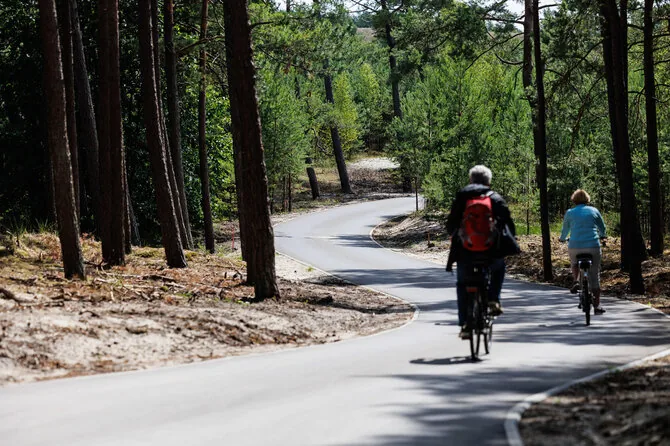
1. On the road, shouting “On the left! On the left!”, a cyclist dressed in dark sports clothes speeds past at huge speed. Upon hearing the shout, I almost always stop because I don’t understand what the shouter wants, and unplanned stops are a bit annoying. Empathy is also not helped by knowing that the shouter is not a real athlete but just a person who likes to ride fast in dark clothes, basically just like me (except for the clothes), because I also like speed.
2. I especially like to ride fast and easily, which can only be done in one case – going down a big and long hill, such as the one in Juodkrantė, between the sea and the lagoon. Going down it, I often see other travelers pulling their bikes by hand. There is nothing bad about that – few people pedal up the Juodkrantė hill (I don’t either).
But it is annoying that they pull their bikes not on the pedestrian side but on the bicycle path side. This is very wrong behavior, violating the main rule – once you get off the bike, you instantly become a pedestrian. It annoys a lot because bike pullers stop me, who is speeding down from the top, and I don’t get the adrenaline dose reaching a terrifying twenty kilometers per hour speed.
Well, there are no more annoying things on the seaside bike path. All others concentrate in Vilnius.

3. The sidewalk is for pedestrians. There we feel safe because we all move at roughly the same speed. If a cyclist appears on the sidewalk, they must adapt to pedestrians, ride slowly, and wait for an opportunity to break through the crowd. A cyclist on the sidewalk is a guest, so ringing cyclists are very annoying.
Previously, among temporary sidewalk passersby, there were invertebrates who would yield to the ringing… What do they do with it? Press? Squeeze? Pull? In short, they let the ringing cyclist pass. Now there are none. Thinking about it, there are almost no ringers left either. Even couriers have calmed down. But if someone rings, it annoys a lot, but still not maximally.
4. Generally, in Vilnius, signaling while cycling is not necessary. There are already many special paths, and sidewalks are usually half-empty. Many pedestrians are only on a few streets in the Old Town, Vilniaus street along with the Green Bridge, and, of course, Gediminas Avenue from Lukiškės to the Cathedral. Cyclists can bypass all these streets without much effort using alternative routes, and on Gediminas Avenue, they have generous bike zones.
However, generosity does not always work – I meet at least one maniac on the avenue every day who does not ride on the bike lane specially made for him (or her), pushes onto the sidewalk, immediately gets offended by pedestrians who disturb him, bulges his eyes, tightens his lips, and starts ringing his bell. That’s when you want to take physical action. But you can’t.
In 2026, the Media Support Fund allocated 25 thousand euros of partial funding for the project “Invisible Side of Culture.”
Read more Research: the proportion of residents investing in Lithuania has nearly tripled over the decade