Mindaugas Variakojis, an ophthalmologist at the Eye Diseases Center of the Vilnius Diagnostic and Surgery Clinic “Meliva,” emphasizes that these conditions are often interconnected and tend to recur, so eye drops alone are not always enough – it is important to consistently care for the eyelids and protect the eye surface from damage, according to the clinic’s press release.

Inflammation of the eyelid margins, also known as blepharitis, is a chronic inflammatory condition of the eyelid edges, often associated with dysfunction of the Meibomian glands. These glands in the eyelids secrete an oily substance that helps tears remain longer on the eye surface and reduces friction between the eyelid and the eye. Therefore, when their function is impaired, the eyes can dry out and become irritated more quickly.
“When the Meibomian glands become clogged, their secretion thickens and is harder to expel. This causes the protective lipid layer of the tear film to thin, tears evaporate faster, and the concentration of dissolved salts in them increases. This condition is called tear hyperosmolarity. It causes stress to the cells on the eye surface and activates systems regulating the inflammatory response – mitogen-activated protein kinases and nuclear factor kappa B. Then inflammatory mediators begin to be produced, which further worsen the function of the Meibomian glands.
“This creates a vicious cycle of chronic inflammation, causing symptoms to often recur or become chronic. Today, dry eye disease is considered a chronic inflammatory condition of the eye surface. Several proteins and enzymes that maintain inflammatory processes play an important role in its development: interleukin 1 beta, which promotes inflammation, interleukin 6, which sustains the inflammatory response, and tumor necrosis factor alpha, considered one of the most important inflammatory mediators. Also significant is matrix metalloproteinase 9 – an enzyme that breaks down the intercellular junctions of the corneal epithelium and weakens the protective barrier of the eye surface,” says the ophthalmologist.
Even watery eyes can be dry
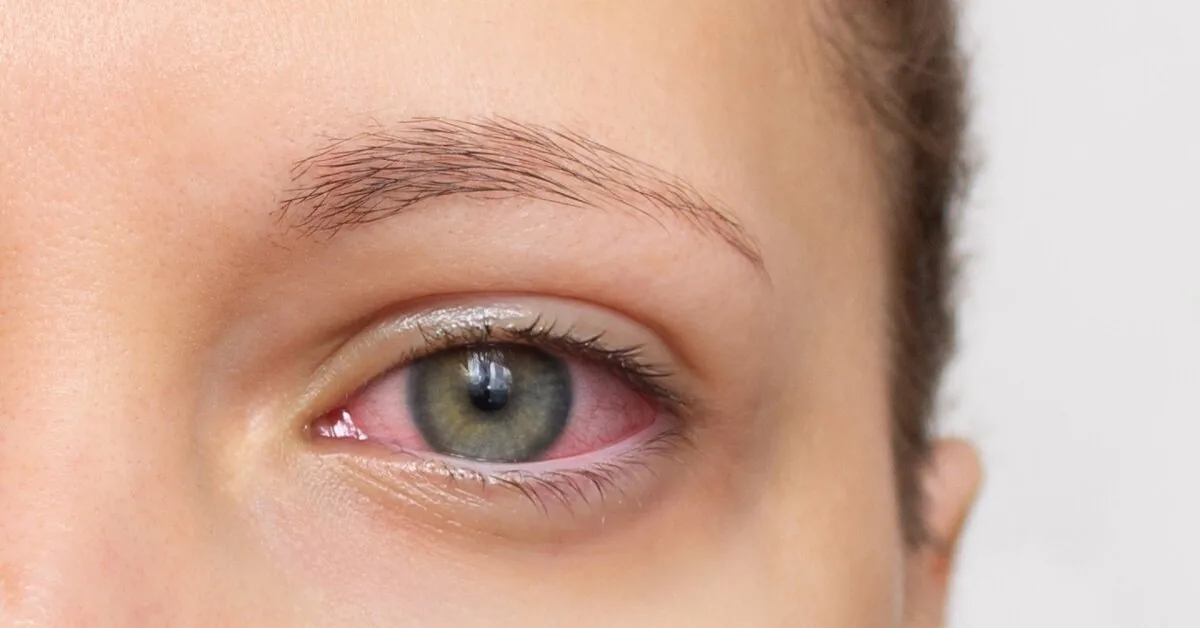
Some of the most common symptoms of dry eye syndrome or eyelid margin inflammation are eye stinging, burning, a sensation of sand in the eyes, redness, light sensitivity, sticky or heavy eyes in the morning. There may also be a feeling as if a foreign body has entered the eye, blurred vision that improves with blinking, and unpleasant sensations when working on a computer, driving, or being in dry, air-conditioned rooms.
“One of the most common myths is that if the eyes water, they cannot be dry. In fact, reflex tearing is a common sign of an unstable tear film. The eye tries to compensate for irritation, but such tears often do not provide quality and stable protection,” explains M. Variakojis.
Factors influencing the development of these problems can include age, skin diseases such as rosacea or seborrheic dermatitis, contact lenses, prolonged work at a computer or other screens, less frequent blinking, dry, air-conditioned rooms, hormonal changes, or certain medications. Daily makeup use and insufficient removal can also promote eyelid margin inflammation.
Consistent eyelid hygiene can help
Eyelid margin inflammation and dry eye symptoms are often related to impaired Meibomian gland function, so eye drops alone are not always sufficient. According to the ophthalmologist, consistent eyelid care is also important.
“It helps remove the secretion accumulated on the eyelid margin, reduce mechanical gland blockage, bacterial count, and the accumulation of substances that sustain inflammation. Eyelid margin inflammation is often not just an infection – much more often it is a combination of chronic inflammation, gland blockage, and tear film instability. Therefore, the goal of treatment is not only to temporarily relieve symptoms but also to help control this chronic process,” notes the ophthalmologist.
Read more The US condemned China’s actions after the clash with the Philippine fleet
Eyelid hygiene is important both in anterior blepharitis, where inflammation is more visible near the eyelashes, and in posterior blepharitis, associated with Meibomian gland dysfunction. Home care is best performed consistently – first using a warm compress for 5–10 minutes to soften the gland secretion, then gently massaging the eyelids toward the eyelash margin. The upper eyelid is massaged from top to bottom, the lower from bottom to top. Afterward, the eyelid margin can be cleaned with special eyelid wipes, foams, or dedicated solutions.
“The most important thing is not to overdo it. It is best to avoid overly hot compresses, aggressive rubbing, alcohol-based solutions, and self-administration of antibiotic or steroid drops. The latter can increase the risk of increased intraocular pressure, cataract progression, and infections. Even seemingly harmless methods, such as cleaning eyelids with baby shampoo, are not suitable for everyone, as they can irritate the eye surface in some patients,” draws attention M. Variakojis.
When is it worth consulting a specialist?
If symptoms persist for more than a few weeks, styes or chalazia recur, pain, pronounced redness, purulent discharge, vision deterioration, or light sensitivity occur, it is advisable to consult an ophthalmologist. Visiting a specialist is also useful when a person feels the need to frequently use artificial tears, but their effect is short-lived.
“The ophthalmologist assesses the condition of the eyelid margin, eyelashes, gland openings, secretion quality, tear film stability, and the condition of the cornea and conjunctiva. Additional tests may be performed if necessary to evaluate tear quantity, signs of inflammation, or Meibomian gland condition. Diagnosis is not a single test – it is a combination of symptoms, eyelid condition, tear film, and eye surface signs, so treatment is always tailored individually,” says M. Variakojis.
Treatment usually includes eyelid hygiene, warm compresses, eyelid massage, preservative-free artificial tears, drops, gels, or ointments that improve tear film quality at night. In case of inflammation, the doctor may prescribe short courses of topical anti-inflammatory drugs, antibiotic ointments, or other preparations. In some cases, such as rosacea or more severe Meibomian gland dysfunction, oral medications may also be prescribed.
According to the ophthalmologist, a common myth is that any artificial tears are enough for dry eyes. However, if the main problem is not the aqueous but the lipid layer deficiency of the tear film, moisturizing drops alone are often insufficient. In such cases, it is important not only to hydrate the eye surface but also to restore tear film quality, replenish the lipid layer, reduce inflammation, and care for the eyelid margins.
“The main goal of modern treatment is not only to temporarily hydrate the eye surface but also to break the chronic inflammatory cycle, restore a more stable tear film, and preserve Meibomian gland function before irreversible atrophy develops. Some patients only need eyelid hygiene and eye drops, while others may require periodic clinical procedures or anti-inflammatory treatment,” explains ophthalmologist M. Variakojis.
Progression of the condition may be indicated by frequent chalazia, persistent eyelid margin redness, dilated small blood vessels, thick or difficult-to-express Meibomian gland secretion, contact lens intolerance, vision fluctuations, pain, or light sensitivity. It is especially important not to miss corneal damage, as this is not only a comfort issue but also a vision quality problem.
Read more Moody’s left Latvia’s borrowing rating at A3 with a stable outlook