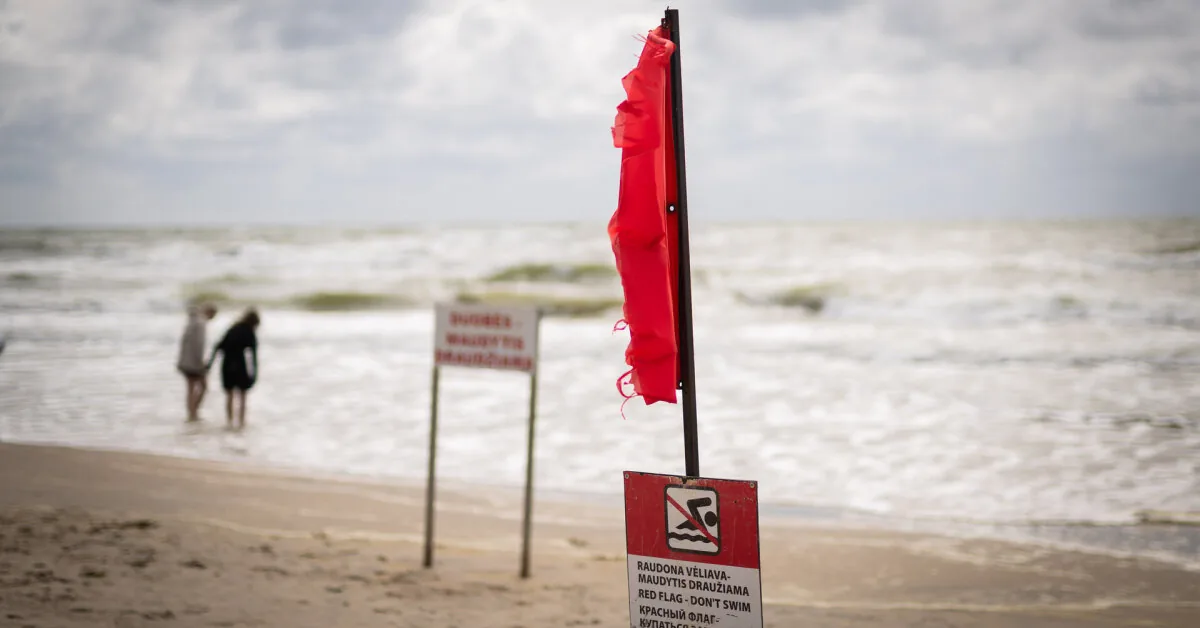
Since 2021, World Drowning Prevention Day has been observed annually on July 25. The United Nations initiative aims to draw public attention to the problem of drowning and remind that most accidents can be avoided.
Read more Sweden intends to accelerate the issuance of mining permits to reduce dependence on China
Drowning – One of the Most Common Accidental Deaths Worldwide
According to the World Health Organization, approximately 236,000 people drown worldwide each year. Over the past decade, water has claimed more than 2.5 million lives. As many as 90% of drownings occur in low and middle-income countries, with children and rural residents facing the highest risk.
The situation in Lithuania also remains complex. According to the Fire and Rescue Department, as of July 23 this year: firefighters rescued 56 drowned people from water bodies (62 in the same period in 2025); 1 minor drowned (6 in 2025); from June 1 to July 23, water claimed 24 lives; firefighters rescued 20 people, 9 of them this summer alone; most people drowned in June this year – 14, and in July up to July 23 – already 10.
Lithuania still remains among the European Union countries with one of the highest drowning rates – in terms of the number of drowned persons per 100,000 inhabitants, we are surpassed only by Latvia.
Statistics show that men drown almost four times more often than women, and most accidents occur among people aged 45–69.
Looking at a longer period, between 2016 and 2025, firefighters rescued 1,235 drowned people from water bodies, including 57 children. Almost 42% of all accidents occurred during the summer months.
Read more Nestlé intends to merge its bottled water business into a joint venture
Main Causes of Drowning Remain Unchanged
Experts emphasize that most accidents recur due to the same reasons. Most often, people overestimate their abilities, swim under the influence of alcohol, jump into unknown bodies of water, do not follow safety rules, or leave children unsupervised.
According to the State Forensic Medicine Service, on average, as many as 57% of drowned persons have alcohol detected in their blood. When intoxicated, the ability to assess danger and make appropriate decisions significantly deteriorates. It is also observed that accidents most often occur not in resorts or by the sea, but in places familiar to people – lakes, rivers, or ponds near homes. In rural areas, people drown more than twice as often as in cities.
What is important to remember?
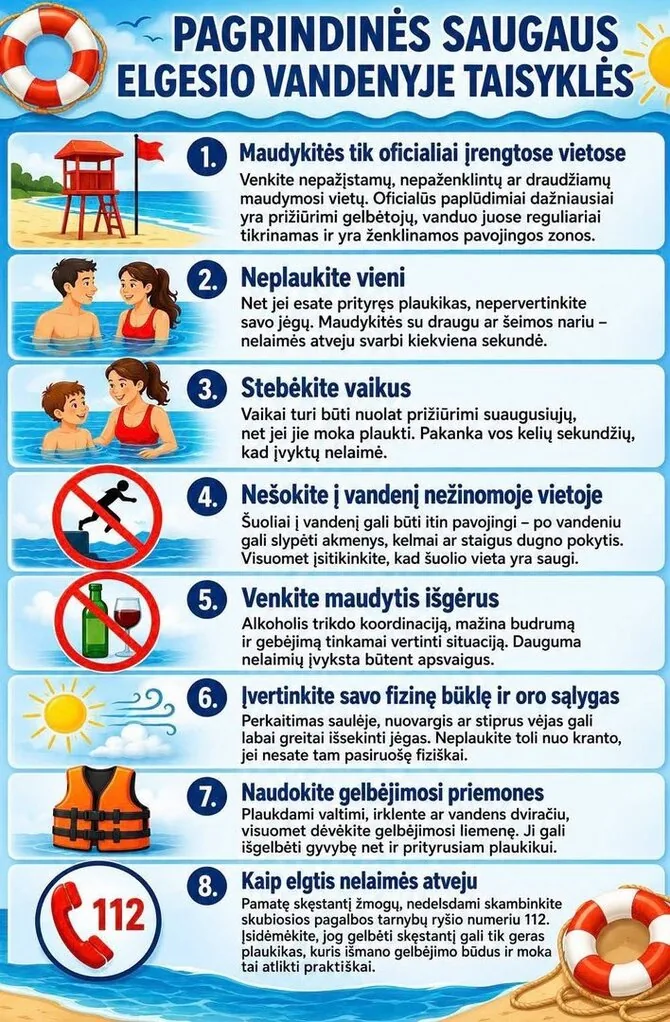
Safety near water begins with responsible behavior:
- swim only in known and safe places;
- never swim under the influence of alcohol or other psychoactive substances;
- do not jump into an unknown body of water;
- constantly supervise children – do not leave them alone near water, even for a short time;
- always wear a life jacket when boating or using other watercraft;
- learn to swim and learn how to provide first aid.
If you see someone drowning, first call the emergency number 112. You should only attempt to rescue a person by swimming if you have assessed your capabilities – the safest way is to hand or throw a floating object to the drowning person and, if possible, help them get out of the water without risking yourself.
Goal – Significantly Reduce the Number of Drownings
The Fire and Rescue Department under the Ministry of Interior has approved the Drowning Reduction Action Plan “Water – My Friend”, which aims to consistently reduce the number of drownings in the country. The plan envisages improving swimming skills for children and adults, strengthening first aid training, fostering a culture of safe behavior near water, in water, and on ice, developing preventive measures, and ensuring close cooperation between state institutions, municipalities, and other partners. The ambitious goal of the plan is to ensure that from 2035, no more than 13 people drown annually in open water bodies and due to breaking through ice in Lithuania.
World Drowning Prevention Day reminds us that most accidents can be avoided. Every responsible decision near water – from supervising children and wearing a life jacket to refusing to swim while intoxicated or jumping into an unknown body of water – can save a life. Water should be a source of recreation, health, and joy, so it is everyone’s duty to take care of their own safety and that of those around them.
Read more How to choose a marinade according to your taste? A guide from mild to fiery hot