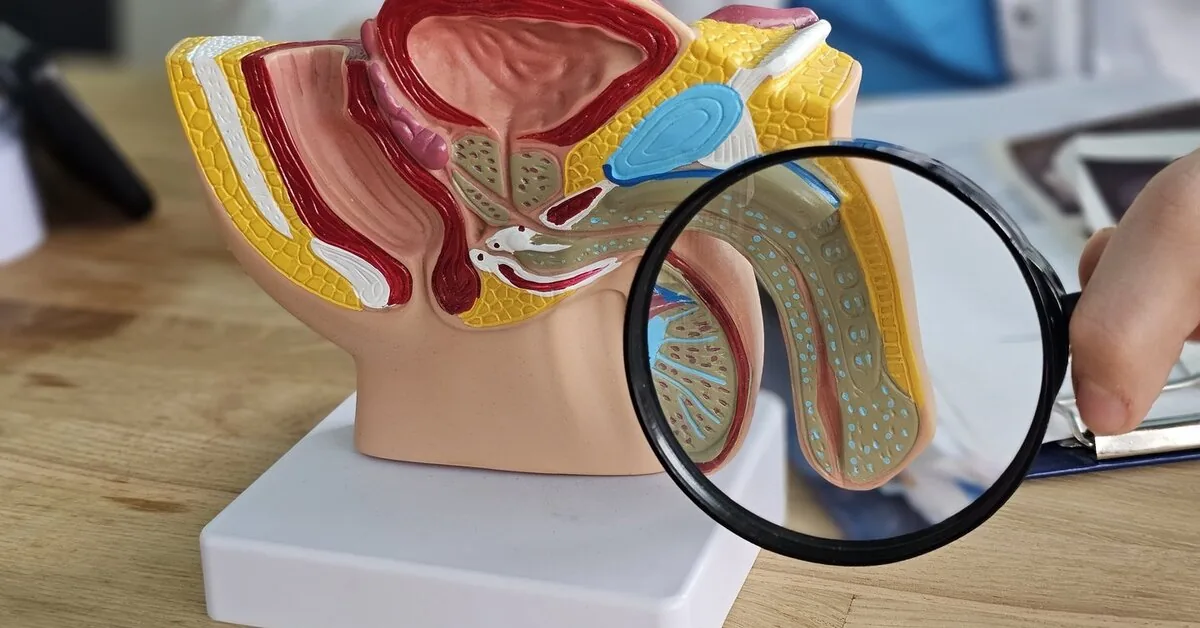
The so-called orgasm gap between genders also shows that there is still too little known about women’s sexual desire. A new review from Ilmenau University of Technology, summarizing data from about 50,000 women and 48,000 men, clearly demonstrated this difference: during heterosexual intercourse, depending on the study, about 30–60% of women experience orgasm, while the proportion of men reaches 70–100%. However, this is not an individual deficiency. Rather, it indicates that for a long time there has been too little discussion about how desire arises in general.
Read more Norway promised Ukraine 9 billion dollars
Desire arises between the “gas” and the “brake”
To understand how desire arises, it is worth looking at the so-called dual control model. It shows that sexual desire depends not only on exciting stimuli but also on whether the body is ready to receive them.
Simply put, desire arises from the interaction of the “gas pedal” and the “brake.” The gas pedal represents everything that can stimulate arousal: attraction, fantasies, touch, or closeness. The brake responds to factors such as stress, exhaustion, worries, or pressure.
Often, when desire decreases, the problem is not that the “gas pedal” is not working. Rather, the internal brake is too strongly engaged, and the body switches to protection mode.
Therefore, stress should be considered a real desire brake. Lack of sleep, constant tension, or emotional pressure can affect how receptive the body is to intimacy and sexuality. So the essential question should not be “why don’t I feel desire?” but “what does my body need to allow desire to arise?”
Hormones – invisible participants in desire
Behind this interaction lie complex biological processes. Hormones play an important role here. They alone do not determine whether desire will arise, but they influence the conditions under which the body experiences attraction, arousal, and closeness.
Dopamine is important for motivation, craving, and the reward system. Chronic stress can suppress dopamine release, so touches, closeness, or sex may seem less pleasurable and less attractive than usual.
Although testosterone is most often called the “male hormone,” it is also part of the female hormonal system. Among other things, it affects sexual interest and arousal. The fact that many do not know this is also related to the scientific undervaluation of women’s testosterone for decades.
Estrogen affects, among other things, circulation and tissue sensitivity. In the late follicular phase, just before ovulation, its level rises – many women feel more energy and stronger sexual desire at this time.
Oxytocin is often called the “bonding hormone.” It is released, among other things, during touches and closeness, helping to create a sense of security and connection.
Progesterone rises after ovulation in the second half of the cycle. For some women, sexual desire changes during this period. At the same time, progesterone performs important functions in the woman’s cycle and hormonal balance.
Do you know your desire curve?
The female cycle can affect how we feel – from energy and mood to sexual desire. After menstruation, the follicular phase begins: estrogen levels rise, and many women feel more energy and increasing desire.
Read more “Hegelmann” and “Banga” shared a point each, “Sūduva” outperformed “Panevėžys”

In the late follicular phase, just before ovulation, estrogen and testosterone levels are higher. Some women notice stronger sexual desire at this time.
After ovulation, the luteal phase begins: progesterone levels rise, and PMS symptoms appearing in the late luteal phase, such as exhaustion, mood swings, or physical discomfort, can affect desire for some women.
These fluctuations are completely normal. It is important not to feel equally strong desire every day but to better understand your body and personal desire curve.
These fluctuations are completely normal. It is important not to feel equally strong desire every day but to better understand your body and personal desire curve.
Nutrition – an underestimated factor
The basic state of the body’s supply of nutrients can also be important. A balanced diet, with enough protein, healthy fats, and essential micronutrients, supports energy metabolism, the nervous system, and hormonal processes.
B vitamins, especially vitamin B6, are involved in the formation of neurotransmitters such as dopamine. Zinc is important for the production of sex hormones, and magnesium helps regulate stress and improve sleep quality. Vitamin D, selenium, and omega-3 fatty acids also contribute to various metabolic processes important for energy, the nervous system, and hormone functions.
A healthy diet cannot replace medical examination if complaints persist, but it can be an important part of building a foundation for well-being and hormonal balance.
A new perspective on women’s desire
The idea that “men always want” is as much a stereotype as the claim that “women are less lustful.” Both beliefs create unnecessary pressure.
Desire is individual, variable, and dependent on many factors. Perhaps that is why we should stop asking: “Why don’t I feel desire?” Instead, it is worth asking: “What does my body need to be able to say yes?”
Because desire is not a switch. It is a complex biological process and at the same time a very personal matter.
Read more Fallen trees, damaged cars, and flooded basements: what we think about too late before buying a home