So that people would not have to leave the fate of their four-legged friends to chance in a crisis moment, the State Food and Veterinary Service (VMVT) has appealed to the Ministry of Environment and the Ministry of Health. According to VMVT, it is more purposeful to seek practical solutions and clearly define how to adapt shelters for families with pets.
“We see a real risk – if there is no space for pets in shelters, people may hesitate to evacuate in danger or decide to stay in an unsafe place altogether. For many residents, animals are full-fledged family members, so leaving them to fate in a crisis moment is emotionally very difficult. In such situations, decisions are made within seconds, so we must create conditions for people to protect themselves without forcing them to leave their pets behind. We have made specific proposals on how to reconcile public safety and ensure that there is space for four-legged friends in shelters,” says Diana Suchocka, senior specialist of the VMVT Animal Welfare Department.
Current regulations force a choice between safety and the life of a pet
The current Construction Technical Regulation (STR) does not provide the possibility to bring pets into shelters. Although it was previously recommended to go to shelters with pets, there is no clear legal regulation. Therefore, access to a safe place in case of danger depends solely on the decision of the specific shelter manager.
Meanwhile, health specialists fear that uncontrolled animal access to closed, poorly ventilated, and overcrowded premises increases the risk of allergies (such as asthma attacks) or unpredictable animal behavior under stress conditions. Practices in foreign countries, such as Finland, show that pets are prohibited from entering common collective shelters (except for assistance dogs), and animal protection remains the responsibility of the owner.
VMVT emphasizes that a strict prohibition model does not help solve real safety challenges. To avoid extremes and ensure maximum resident safety, the Service proposes seeking comprehensively safe alternatives and flexibly adapting shelters.
“We must reconcile two important things – not to cause stress to the public, but also to ensure that owners have a place to hide together with their pets. We propose to equip shelters with specially adapted separate spaces for residents with animals. This would avoid direct contact with other people, ensure hygiene, and reduce overall tension,” says Diana Suchocka.
Clear shelter labeling is necessary
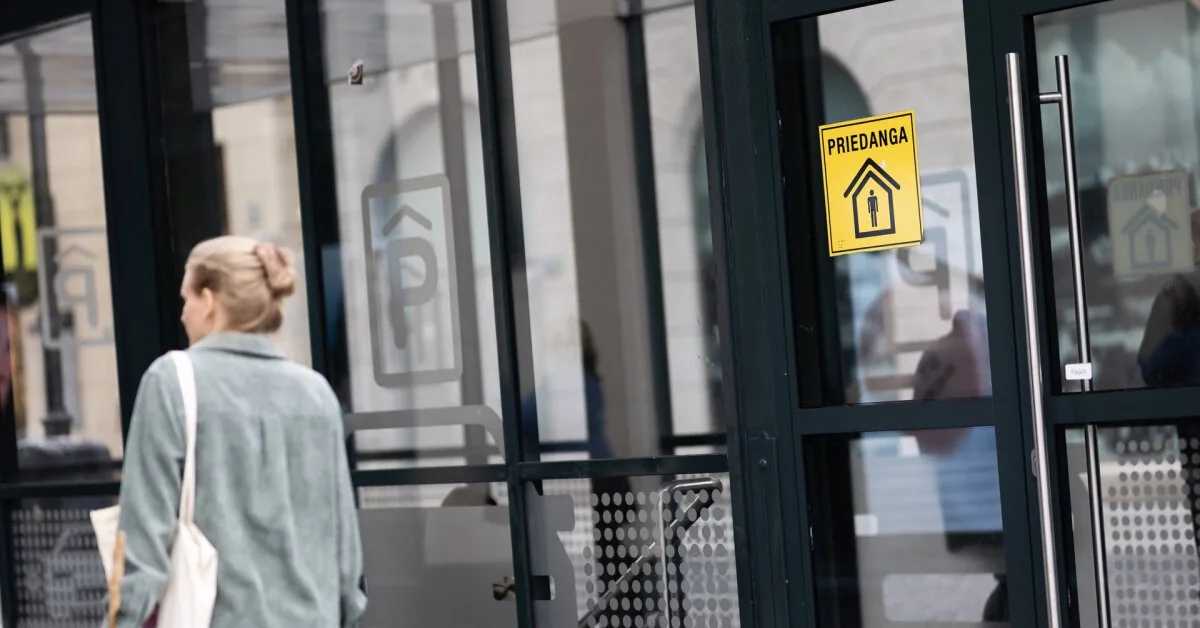
Another important VMVT proposal is to provide clear classification and labeling of shelters. Residents must know in advance which shelters they can go to with animals in case of danger and which are not suitable. Clear information would help avoid critical situations during air danger – people arriving with animals would not waste precious time at the doors of a common shelter.
At the same time, VMVT emphasizes that assistance dogs (guides), which help people with disabilities move, always retain the unconditional right to enter any shelters.
These VMVT proposals were prepared taking into account real human needs and crisis management practices. It is hoped that joint institutional decisions will ensure that in case of danger, no resident of the country will have to choose between their own and their pet’s safety.
Read more In Turkey – Viktor Uspaskich’s «antics» with a famous influencer from Russia