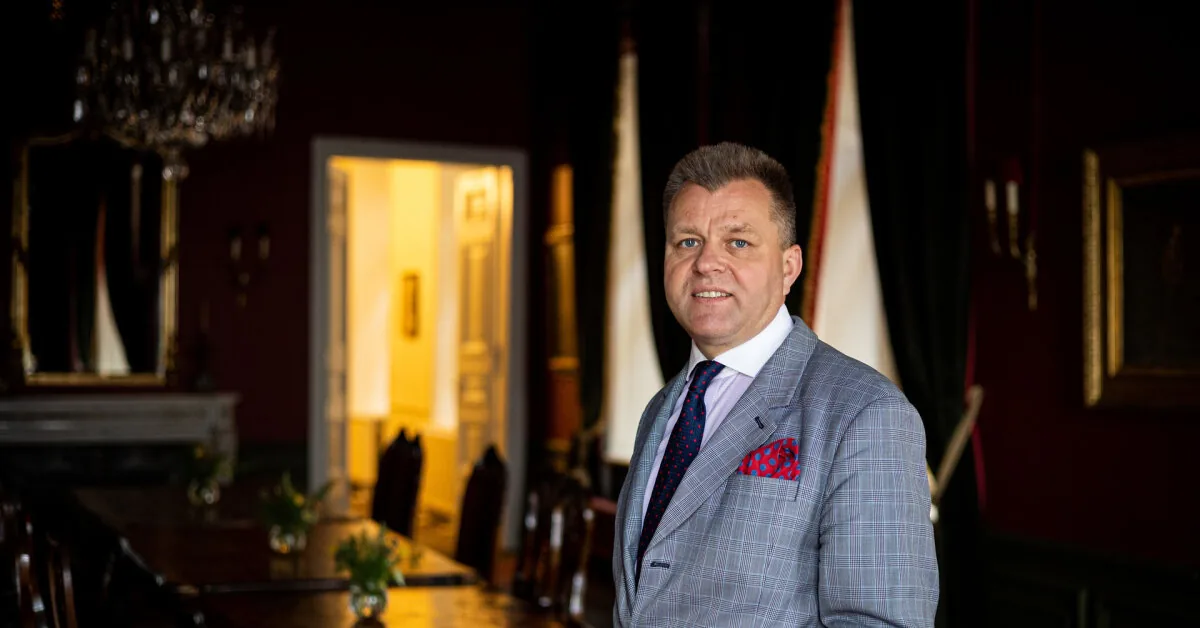
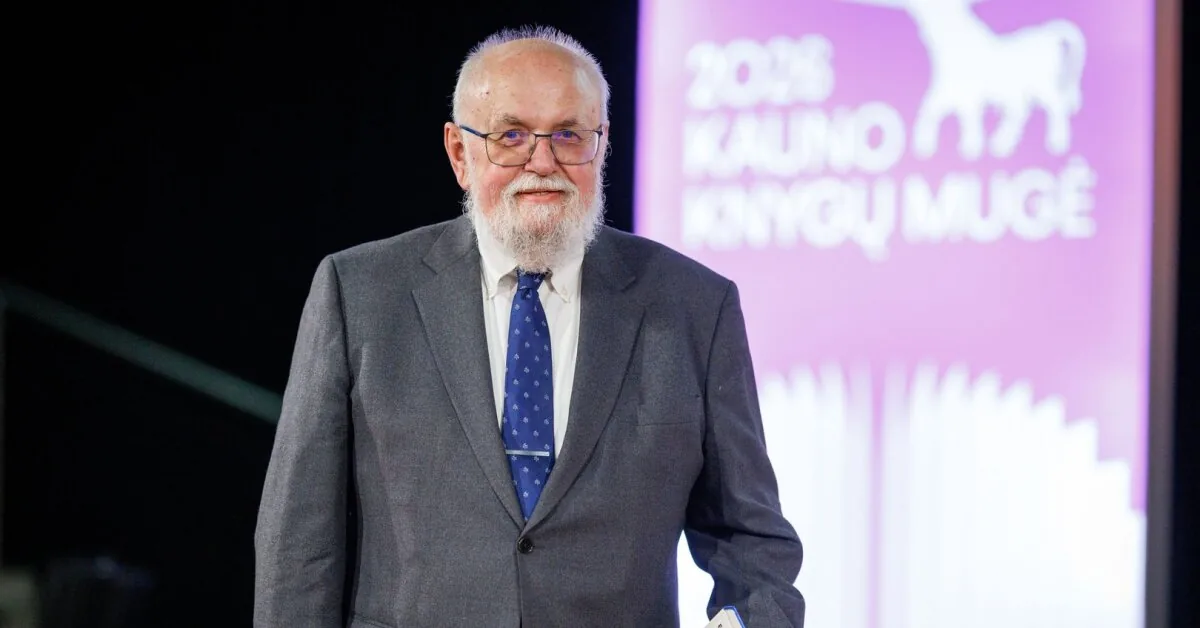
China Miéville – a British writer who has won numerous literary awards, was elected a member of the Royal Society of Literature in 2015, and was awarded a Guggenheim Fellowship for fiction in 2018. The writer is known for works that break the boundaries between literary genres, blending science fiction, politics, philosophy, and horror literature.
Read more A bus driver did not sell a discounted ticket to a minor: the carrier explained who was right
– Let’s start with the title – “The City & The City”. If we briefly set aside symbolism, two completely identical cities do not exist: one will always be more modern, richer, or more influential than the other. What does the city mean to you? You live between London and Berlin – two very different cities.
– To be honest – I haven’t lived in Berlin for long, so I certainly won’t pretend to know it well. Therefore, it hasn’t yet left deeper, symbolic traces in me. On the other hand, London has always had a huge influence on me. As have other cities where I lived for shorter periods – Cairo, Chicago, and a few others.
One of the things I like most about cities is their multilayered nature. For example, in London, a 500-year-old house can stand on the same street next to a building constructed just six months ago. Families live here whose ancestors or they themselves have come from various parts of the world. I like the complexity of cities, the fact that a city cannot be confined to a single definition.
Probably this is how a person who feels connected to the city would answer, rather than someone who prefers life in the countryside or away from the city. I like the feeling of being where the most intense currents of history and culture intersect and constantly move.
– Okay, and how are the cities in your novel? They are quite different from the ones you mentioned.
– One of the things that interests me is what happens when you look at cities that perceive and present themselves quite unambiguously – for example, as monocultural. Or cities where later waves of immigration appeared much later than in London or Paris. However, if you spend more time in them, you notice that they also consist of many layers.
For example, Prague is not London, but it is a unique, complex multicultural city where various things intersect. And I’m not just talking about culture – I mean different economic currents, capital flows, various interconnected streams, and so on.
So, probably one of my thoughts would be this: no matter how a city describes or imagines itself, simply because it exists in a world influenced by capitalism, it is always more complex than it tells about itself. Always. In fact, the more propaganda there is about what the “spirit” of a particular city is, the more, I think, it is worth looking at it suspiciously. The most interesting features of a city often reveal themselves precisely where it deviates from such an image, turning in an unexpected direction.
In fact, the more propaganda there is about what the “spirit” of a particular city is, the more, I think, it is worth looking at it suspiciously.
And speaking about “The City & The City,” it was very important to me that both cities have a distinctive, tangible character. I did not want them to look like symbols. I wanted them to be real cities. In general, I feel somewhat uncomfortable with fiction where the invented or fantastic element is too obviously meant as an allegory or metaphor. In my view, a metaphor should arise naturally. This does not mean that a work should not have symbolism. I just want to let it operate on its own – creating its own rhythm and dynamics. I believe that then it becomes not only more interesting but also much richer metaphorically because it is born from the world, appears real in itself, and is not created to “say” something specific.
I drew inspiration for the book from Prague and other Eastern European cities, as well as from how Eastern European cities are portrayed in literature – both within the region and elsewhere. And I created Ul Qoma based on some features of cities in Turkey, the Far East, and, for example, Singapore. It was very important to me that these cities did not look like substitutes for other cities. I wanted them to look like real places – capable of truly existing, we just haven’t heard about them yet.
I drew inspiration for the book from Prague and other Eastern European cities, as well as from how Eastern European cities are portrayed in literature – both within the region and elsewhere.
– Interesting – in the novel, you mention Atatürk several times. I did not notice any other political leader being mentioned so often. Is there a specific reason for this?
– It seems Atatürk is mentioned in the context of Ul Qoma. There is a place in the book where portraits hanging on the wall are discussed – among them Atatürk’s, if I remember correctly, Mao’s, and another character’s. I wanted to playfully create a reference to the political climate of the 20th century’s 70s and 80s and the attempts of developing countries at that time to navigate between different political blocs: not wanting to be dependent on Washington but also not intending to fall entirely into Moscow’s sphere of influence.
However, Atatürk is also mentioned for a more specific reason. I mention that the language of Ul Qoma was once written in a different script, which was later changed. And that, of course, was one of Atatürk’s most important reforms. So, although I said I did not want to create symbols, with this detail I wanted to subtly point to a certain attitude toward a consciously chosen “modernization” project.
I wanted to create the impression that this city had been intensively reorganized for a hundred years, as if trying to fundamentally remake it according to a new vision of itself. Without delving into specific historical details, it was important to me that this hint would evoke certain associations in the reader with one of the modernization and social transformation paths seen in the 20th century.
– More historical context would be needed for that, as some readers might not notice this detail or understand what you mean. After all, quite a few people in Europe might not have even heard of Atatürk’s name.
– My approach would be this: as a reader, I never know what references or hints I miss when reading other authors’ books. And that does not interfere at all. I can still really like the book and take a lot from it. So, if I include some reference or, as they say in Hollywood, an “Easter egg” in my book, it is important to me that it is not necessary to understand the work. If a reader cannot understand the work without such a reference, I think that would be unfair. Such a detail should rather be a small bonus, giving extra pleasure to those who recognize it.
I hope that “The City & The City” can be read, enjoyed, and provide food for thought without knowing anything about Atatürk. That is not necessary. But if a reader has heard of him, this reference can add another layer to the work. That is how I view all references in my fiction: they should be an optional addition, not something essential to understand the book.
By the way, I am not very well acquainted with Turkish history. I have a general understanding, but one of the pleasures of creating fictional places and trying to give them as much realism as possible is weaving in various details. They help create the texture of the world, even though it is not necessary to explain every corner of it in detail.
That is how I imagined the narrator of “The City & The City” from the very beginning. He is a local resident of Beshel, quite knowledgeable about Ul Qoma and aware that he is talking to outsiders. However, he does not always consider what they know and what they do not. Because of that, he sometimes simply forgets to explain certain things, does not consider others important, or does not think they need to be explained at all.
I am fascinated by the feeling when you talk to someone from another place and they mention something you do not understand. You do not know what they are talking about, but at the same time, you feel that the world is much bigger than the part you know. This feeling seems very important to me. I know some readers want everything explained. But I personally like it when not everything is revealed. Then you feel more strongly that you are somewhere you do not fully understand.
– The book “The City & The City” was first published in 2009. However, today the book seems unusually relevant. Why do you think that is? Has the world become more like the one depicted in the novel?
– When writing “The City & The City” I wanted to depict certain principles of society’s functioning, just exaggerating a bit what we constantly encounter in everyday life. It is really nice to hear that the novel still seems realistic and has not lost its impact. That is because the book is not tied to a specific historical period. It talks about fairly universal social norms and rules, as well as political and ideological structures that affect our lives under late capitalism.

The novel can be read in different places and at different times, and the things depicted in it can still seem very close to the reader’s environment. Sometimes it even feels like the book was written specifically about their city. I am always interested, and even very moved, by how many people from completely different parts of the world come to me convinced that I wrote the novel about their city. I think this happens because these principles of society’s functioning are characteristic of many different societies. In some places and at certain times, they may be more pronounced, although I do not think it is possible to clearly separate places where they exist from those where they do not.
We live in a time when social contradictions and tensions are only increasing. In a way, “The City & The City” talks about trying to mask those contradictions by pretending we do not see them. But consciously not noticing something is not the same as truly not seeing it. It is more like a deliberate obscuring of reality. Looking at what is happening, say, in the USA or to some extent in the United Kingdom, and especially in Palestine, I see almost the opposite process – a very aggressive attempt to impose a certain way of seeing. Essentially, it is related to the same phenomenon, only everything seems turned upside down.
In a way, “The City & The City” talks about trying to mask those contradictions by pretending we do not see them.
So I think that if “The City & The City” remains relevant and has a long life, it is because these principles of society’s functioning never disappear. They constantly strengthen and weaken, change, take new forms, and under different circumstances begin to operate differently. That is why from the very beginning I did not want the novel to be a depiction of a specific place at a specific time.
– One of the most interesting features of your work is how difficult it is to distinguish the fictional world from reality. It seems the novel even anticipated many current discussions about migration, borders, and the separation of people. Do you think speculative literature can help reveal certain aspects of present reality that conventional realism sometimes fails to convey?
– Speaking about today’s relevant discussions, for example, migration, I think that if the novel seems so relevant, it is not because it predicted or foresaw the future. Rather, it is because these issues have not gone away. It is hard to believe that seventeen years have passed since the novel was published. When I wrote it, discussions about migration were loud, fierce, and often no less toxic than today. True, they may be even bigger now, although it cannot be said that these topics were not relevant before. They were hotly debated in the 1980s and even earlier. Certain ideologies, fears, and anxieties rooted in society are surprisingly resistant to time. They can change their form but usually do not appear out of nowhere.
Speaking about speculative literature, I think it can indeed help reveal certain aspects of reality. Kafka always comes to mind first. Adorno said Kafka was the only writer who could describe the 20th century. It seems to me that the unease and dreamlike logic characteristic of fantasy can convey a sense of unreality, instability, and the difficult-to-grasp complexity of the modern world in a way that realist literature sometimes struggles to do.
Partly this is related to turning metaphor into literal reality. Although one should be careful here, as I would not want to give the impression that I underestimate the possibilities of realist literature or think that all fantasy inherently has this effect. I certainly do not think so. Still, the best fantasy, in my opinion, can reflect reality, especially contemporary reality, distorting or amplifying it somewhat – almost like a fever dream. And that is why it can sometimes be especially powerful.
– Perhaps the most disturbing idea in your novel is the conscious “not seeing” of reality, which you already mentioned – when we deliberately choose to ignore what is happening right before our eyes. Thinking about it, we do this quite often. Why do you think people so easily choose not to notice what is uncomfortable or difficult to accept? And do you think this tendency has intensified in today’s society?
– You are right – as we discussed, it is a very widespread phenomenon. I like your thought about conscious unwillingness to see something, rather than just not noticing. I think these are two different things.
I do not know why we do this. People are very complex beings, and living in the modern world is really hard for many. It is exhausting, and it seems to be getting harder. We are vulnerable, interdependent creatures, so we cannot always be completely open to the world around us – sooner or later, we just feel overwhelmed by it. I do not want to judge people for that. In a way, it can be a survival strategy. But it can also be used to promote harmful social phenomena.
Moreover, we live in an environment where those in power often encourage us not to notice certain things or to consciously not see them. Sometimes they even encourage us to think that what happens in other people’s lives happens in a completely different world and does not concern us.
Here one can distinguish conscious “not seeing” from what I would call social sadism. In the latter case, a person clearly sees what is happening to another group of people and even enjoys it with a certain malicious pleasure, especially when what is happening is bad.
We live in a time when such social sadism is especially encouraged. So, in a way, there may be less conscious “not seeing” today than a few years ago – some people who previously chose to pretend not to see now openly choose social sadism.
I do not think either of these phenomena ever completely disappears. Both arise from a similar deeper logic of society’s functioning and are different expressions of the same problem.
– Now we clearly see what is happening in the world, but sometimes it seems that some states try not to notice it. This is even reflected in the media. For example, if we compare how the same events are presented in Lithuanian and English media – sometimes it seems like they are talking about completely different things.
– In a way, this is inevitable because we live in different circumstances and face different realities. But I think ideology has a much greater influence here. It operates both consciously and unconsciously. I cannot speak about Lithuania, but in the United Kingdom, there are certainly groups of people controlling the media who can decide: “We do not want to talk about this. We do not want this topic to appear in the news at all.”
But that is only one side of the coin. Equally important is that entire cultural generations have formed an understanding of what should matter to us and what should not. So even without a conscious decision to silence certain stories, the system itself very effectively sets the limits of empathy.
It is important to emphasize that I primarily see all this as the influence of the structures around us, not as a problem of people’s indifference. My political views come from strong resistance to these structures, not from the view that people are inherently bad. On the contrary, I think most of them are basically good. But we live in a society where we are constantly encouraged and even rewarded for not letting our empathy cross certain boundaries. And after all, we all primarily try to survive.
By the way, everything I am saying now are arguments I would present when speaking politically or sociologically. These thoughts can be conveyed in fiction, but they should not overshadow the narrative. As we discussed about Atatürk, I would not want the book to be interesting only to those who already agree with all the social ideas raised in it. First and foremost, it must have a story, and the book itself must work as a coherent work. That is where the pleasure and difficulty of fiction lie – trying to reconcile both things.
For me, this is also related to the purpose of different genres. I write both fiction and nonfiction. If I want to present a specific argument, say about the nature of borders, I write a nonfiction article aimed at justifying that idea. And I create fiction because I like to read it myself. I completely disagree with the political views of many of my favorite authors, and some of their books do not aim to address political issues at all. But that does not prevent me from finding much valuable in them.
Since I am interested in certain ideas, I think about a story that would be interesting in itself and take place in an interesting place. But at the same time, I try to maintain balance. I am not saying that everything I talk about is unimportant or does not exist in the book. On the contrary, these themes are there, and I care about them. But the book is not written as a tool to spread a specific political argument. Not because I am afraid to express such an argument – I gladly do so in a certain context. I just want to create an independent, artistically coherent work when writing fiction.
That means that in a way, the reader becomes a co-author of the work: bringing their experience, interpreting it in their own way, noticing some things and ignoring others. Maybe they do not care about all this I am talking about – maybe they just want a good detective story. And that is perfectly fine.
Since I am interested in these topics when writing, they inevitably reflect in the created world: borders, political ideas, and various principles of society’s functioning become part of it. If the reader is interested, they can find all this in the book. But fiction and nonfiction are two different modes of expression for me. So I always feel a bit uncomfortable when asked: “What did you really mean?” or “What does this thing symbolize?” The book must work as an independent work of fiction, even if it contains other meanings.
Read more From Jolanta Naruševičiūtė – sad news
For example, in one of my books, Perdido Street Station, there is a whole group of characters partly inspired by radical criminology theories. If you are interested – great, we can talk about it. But if not, and you just like good science fiction, I hope these characters will still seem interesting – unique, grotesque creatures, and so on.
For me, that is one of the greatest pleasures of fiction – as if you could achieve both goals at once. In English, we say: “to have your cake and eat it too.” In other words, you can try to reconcile both things.
– “The City & The City” shows that power is maintained not only by force or coercion. Language is also important. People learn to talk about the world in a certain way, to describe and even perceive it. How do you think language shapes political reality?
– Language has enormous power. But I do not think its effect is irreversible. One of the most interesting features of political reality is that for a long time it seems completely unchanging, as if nothing could change it. And history has shown many times that everything can change very suddenly, sometimes in just a few days. What seemed impossible two weeks ago suddenly becomes reality. So I do not think the current order is inevitable or immutable.
However, the language we use is undoubtedly strongly infused with ideology. It, as part of the broader social structure, in a way draws the boundaries of what we can even imagine and consider possible.
This is especially evident today in the United Kingdom, for example, when talking about migration. Certain words and descriptions used in these discussions are very ideologically charged and, I would say, have clear propaganda features. This influence is most powerful when we stop noticing it – when a certain vocabulary becomes a self-evident part of everyday language. And that, I think, can be very worrying. Yes, language really has enormous power.
– While reading the novel, I kept returning to the principle of the theater’s “fourth wall” – the invisible boundary between the stage and the audience. In “The City & The City,” society itself seems to participate in a collective illusion, constantly maintaining it. The whole novel is very theatrical – imagining its world felt like a huge stage. Do you see a connection between the “fourth wall” and conscious “not seeing”? Can literature help readers notice that invisible performance in which they themselves participate daily?
– I had not thought about that before. I really like the idea of using the concept of the “fourth wall” here. I had not looked at it from that angle myself, but it is indeed an interesting way to understand the novel.
In a way, any first-person narrative slightly breaks the fourth wall. There is an illusion that the narrator is talking to another person in the novel’s world, although in reality, the only listener is the reader living in a completely different reality. This happens even in so-called realist literature.
But I understand your point – this is about something more. I would probably answer yes, although I would like to think about it more. You made me remember that The City & The City has been adapted for the stage several times. When people suggested staging it, it was a very exciting idea for me, and I am extremely interested in seeing how the novel works on stage. Many years ago, I had the chance to see one such production in Chicago.
Since everything must be physically represented, on stage we usually see inhabitants of both cities at the same time. The audience has to grasp the “grammar” of the play: understand which characters are important at a given moment and which need to be “unseen.” In a way, this even more accurately conveys the novel’s concept than a film, because the viewer, being in that space, performs that action – learning to see some people and consciously ignore others.
Now that you talk about it, I am wondering why the adaptation of “The City & The City” keeps coming back and what makes this form so powerful.
Regarding the question of whether literature can help the reader see the world differently, as a politically engaged person and passionate fiction reader, I would like to believe its impact is huge. But basically, I am not sure. Not because I do not consider literature important – on the contrary, it is extremely significant to me. It is just that there are so many intermediating factors between the author, the reader, and the world that it is almost impossible to determine what specifically caused one or another change.
We cannot simply say: a person read a book and therefore started seeing the world differently. We are influenced by our subconscious, personal experience, the TV we watch, the buildings we live in, the tax system, neighbors, and many other things. All this is intertwined.
So I am not saying literature has no effect. It is just almost impossible to isolate one thread of its influence from this whole network. That is why I sometimes look skeptically at attempts, especially regarding fantasy, to justify its value by claiming it helps us see the world differently. Maybe it does. But many other things work that way too, and millions of people read the same books and do not change their views because of them. Does that mean the book failed?
I think the value of literature does not need to be justified by such arguments. In a way, I rely on Trotsky’s thoughts about literature and revolution here. Since people know my political views, I am often asked what the political impact of speculative literature is and how it could be used for political purposes.
I look at such questions quite skeptically. I am not sure it is the best way to engage in politics, and I also do not think such an approach necessarily helps create the best literature. Maybe sometimes it helps, but too many other factors are at play for it to be worth clinging to that too much.
Of course, many books, including fiction, have strongly influenced my thinking, worldview, and political views. So I am definitely not saying such influence does not exist. It is just impossible to fully control it – neither for the writer nor the reader. And I do not think we should try to.
If a politically engaged writer consciously includes their political ideas in a work – great. If a reader reads a book and looks for political meanings in it – also great. But it is worth remembering that fiction books are not political leaflets. They are not a direct political intervention like participating in a demonstration and expressing a political argument. Literature works differently.
So yes, it can have an impact. But let me give one example. I have already talked about this, so I apologize if you have heard this story.
One of the most important books I have ever read, which I think strongly influenced my view of the world and political views, is a work by Beatrix Potter. Beatrix Potter was an English children’s writer from the early 20th century. She created, in my opinion, wonderful, though somewhat strange, short books with beautiful watercolors and anthropomorphized animals. In one of them, a frog is depicted sitting on a water lily leaf, looking at the sky and eating a sandwich, while a trout approaches from below, unnoticed, about to swallow it.
I first saw this image when I was about seven. It became one of the most politically impactful images in my life. Still, it would be hard to explain exactly why.
That is why I find it absurd to ask what benefit Beatrix Potter could have for radical politics. Such a question gives us little. I think political literary interpretations should sometimes be viewed a bit more loosely. That does not mean they are unimportant. It is just that their impact is not as direct and causal as we sometimes want.
Sometimes it becomes a way to engage in politics by other means. I think this is partly related to how much helplessness people feel. And they feel helpless because we generally do not have much power.
This is especially evident every time some damn “Marvel” movie comes out and huge discussions arise about how progressive it is or not. I think: it is completely absurd to act as if a commercial product worth hundreds of millions of dollars, created to sell toys, soft drinks, and occupy viewers’ minds for two hours in a cinema, would be a serious political intervention.
Some of those movies I quite like. But compare how much anger and energy is devoted, say, to the political content of Spider-Man 3 versus real actions against the civil war in Yemen or Saudi Arabia’s rapprochement with the USA. This ratio is simply absurd. I think it reveals our own helplessness: we give our consumer goods and culture too much importance, as if they could perform the role of social intervention, which they actually cannot.
I am not against political analysis of such phenomena. I find it perfectly acceptable to politically analyze “Marvel” movies. For example, one can discuss how African Americans are portrayed in them, what political attitudes lie behind such portrayals. I see no problem here. But to claim that politics primarily manifests as a demand to ensure certain representation in our culture – in other words, that what is merely the result of a certain process is presented as its driving force. The most important thing is what creates these phenomena – broader cultural processes and the environment that shapes them.
– Also, throughout the novel, people increasingly engage in myths and historical narratives, especially the legend of Orchinius. What drives people to believe in something that may never be proven? Is it simply human curiosity, or do we become more receptive to myths and their creation during times of uncertainty?
– You are right on both counts. Partly it is simply human curiosity, but it intensifies significantly in moments of crisis. And I think this is related to what we talked about earlier – the feeling of helplessness. When a person feels they have no influence on what is happening, there is a strong need to give history logic and explanation.
It is no coincidence that conspiracy theories especially spread during times of political tension, social upheaval, and societal division. They allow one to feel that at least they understand what is really going on and, in a way, regain a sense of power.
It is no coincidence that conspiracy theories especially spread during times of political tension, social upheaval, and societal division.
On the other hand, speaking about conspiracy theories, it is important to acknowledge that real conspiracies do exist. People rightly remind us that some things once dismissed as conspiracy theories later turned out to be true. There are secret histories and closed groups operating behind the scenes. Just look into the “Gladio” operation or the Tuskegee syphilis study. So it cannot be said that every suspicion of secret agreements is fabricated.
Still, looking at “QAnon” or similar phenomena, one can see a kind of almost dreamlike reality that people create. I think it is closely related to the helplessness experienced by modern humans.
Additionally, when talking about belief, we sometimes oversimplify the phenomenon itself. Belief can serve many different functions. Film director Adam Curtis, who interviewed many “QAnon” supporters for one of his films, made an interesting observation: he did not say these people truly believe what they claim. But he also noticed that they, in a way, perform their belief, even to themselves.
Therefore, the question “does this person really believe it?” does not always have a simple answer. We are complex beings. It is entirely possible to sincerely believe in something and at the same time consciously provoke others or mock them. At some level, you have to realize that your statements are absurd; otherwise, you could not consciously use them as provocation.
But that does not change the essence: such phenomena are especially characteristic of times that people perceive as catastrophic or apocalyptic. We see this throughout history. During the Thirty Years’ War and other periods of great upheaval, strange beliefs, messianic ideas, and eschatological theories begin to spread. Crises often become fertile ground for such worldviews.
That is because belief is not just a rational process. But that does not mean a person who believes in absurd things is irrational. It is important to understand that such beliefs can be held not only by uneducated or naive people. On the contrary, incredibly intelligent people sometimes become convinced of completely absurd things because our beliefs, thinking, desires, and motivations are complex and closely related to the subconscious and everything we have already discussed.
Therefore, it cannot be assumed that just providing a person with correct evidence will inevitably lead them to the right conclusion. Many circumstances influence this. Sometimes this is probably one of the most depressing things because it means it is not always possible to dispel this madness with arguments.
But it can also be an inspiring thought. After all, we see people who held certain views for many years and changed their opinion overnight when their life circumstances changed.
So conspiracy theories, in a way, reflect both the best and worst traits of humanity.
– It seems that today readers are more attracted than ever to dystopian and speculative literature, which we briefly discussed earlier. Why do you think this is? Are we trying to escape reality with such stories, or, on the contrary, looking for new ways to understand it?
– My answer would be – both. I think this can be characteristic not only of different people but also of the same person at the same time. Our motivations are often contradictory. Undoubtedly, much speculative and science fiction has an escapist aspect. But, as J. G. Ballard said, speculative literature – indeed all literature, but especially speculative – expresses the anxiety of the modern world in a very intensified form.
That is why I am not convinced by the idea that science fiction is primarily meant to predict the future. Rather, it creates a kind of feverish vision of real-world problems. And how much we want to delve into it depends on us – both as readers and as authors.
We already talked about this. You can watch “Star Wars” and just enjoy it as a kind of space western – “cowboys and Indians” transferred to a galaxy. But you can also analyze in detail the ideological subtexts behind the Trade Federation, the Jedi monks, and other elements of this world. Both approaches are possible, and in a way, they can be applied to almost any work.
I do not think there is one answer why science fiction, dystopias, and similar genres are so popular right now. Most likely, many different factors contribute. Hollywood is now very focused on a certain kind of spectacle, and viewers are increasingly trained to perceive such spectacle as impressive in itself. I look at this trend quite skeptically.
On the other hand, these works can be extremely powerful when we use them to think about and understand the world. They often intensely, almost feverishly, convey the fears, tensions, and anxieties prevailing in society.
So I do not think the current popularity of these genres should be evaluated simply as a good or bad phenomenon. It can be all of that at once. And why now? I have given a few possible explanations, but honestly, a big part of the answer is simply: I do not know.
Read more In Kretinga, a drunk woman’s «Peugeot» crashed into a BMW parked in the yard