





British journalist and writer of Ukrainian origin turns to one of the most unusual propaganda operations of World War II and looks for answers relevant today – in the times of Russia’s war against Ukraine, disinformation, and the increasing struggle for public trust.
Read more Three drivers, three bills: how much does it cost to charge an electric car?
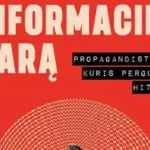
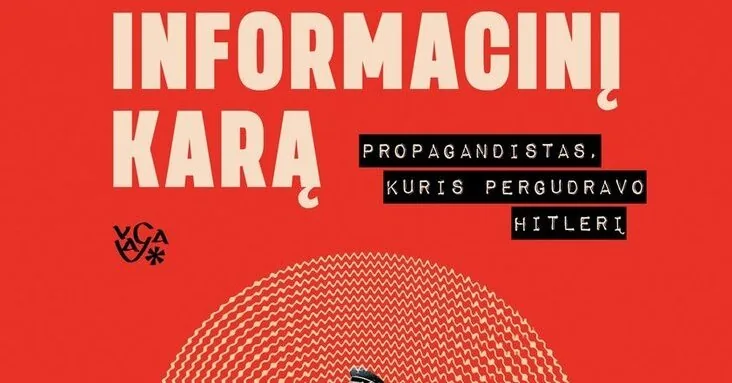
This book is not a theoretical propaganda manual; based on the story of British propaganda specialist Sefton Delmer, P. Pomerantsev seeks to answer how democratic societies can resist information operations, manipulation, and narratives created by authoritarian regimes.
The radio station whose listeners did not know who was speaking to them
During World War II, British journalist and propagandist Sefton Delmer created secret radio stations pretending to broadcast from Nazi Germany itself. One of the voices he created was Der Chef – a fictional German disillusioned with the Hitler regime, whose broadcasts were not meant to moralize Germans from the outside but to penetrate their information environment.
P. Pomerantsev is interested not only in the effectiveness of this operation. He raises a more uncomfortable question: if democracy, fighting the propaganda of a totalitarian regime, itself uses deception, manipulation, and disinformation, where is the line between justified struggle and becoming what you fight against?
Therefore, Delmer’s story in the book becomes a starting point to talk about the present. Russia’s war against Ukraine has once again shown that modern wars are not only fought on the battlefield. They take place in news streams, social networks, technology platforms, and, most importantly, in the battle for people’s trust.
The author analyzes how propaganda is born, why people believe it, and what measures democratic states can take to resist it. In the presentation material, the book is described as a story about propaganda, disinformation, information warfare, democracy protection, critical thinking, media, and civic resilience.
Why facts alone may not be enough?
One of P. Pomerantsev’s key ideas is that the power of propaganda lies not only in the ability to make a person believe a lie. “The real power of propaganda is not to convince or even to deceive, but to make a person feel like one of their own,” the author states.
This also changes the question of how to fight propaganda. If the informational narratives of authoritarian regimes provide people with identity, a sense of community, and an explanation of who “we” are and who “they” are, simply denying a false fact may not be enough.
Read more Microsoft announced the artificial intelligence code of conduct
Peter Pomerantsev looks for lessons for today in Delmer’s story – from disinformation supporting Russia’s war in Ukraine to the need to better understand the nature of propaganda itself and why certain narratives take root in societies.
One of the most prominent propaganda researchers
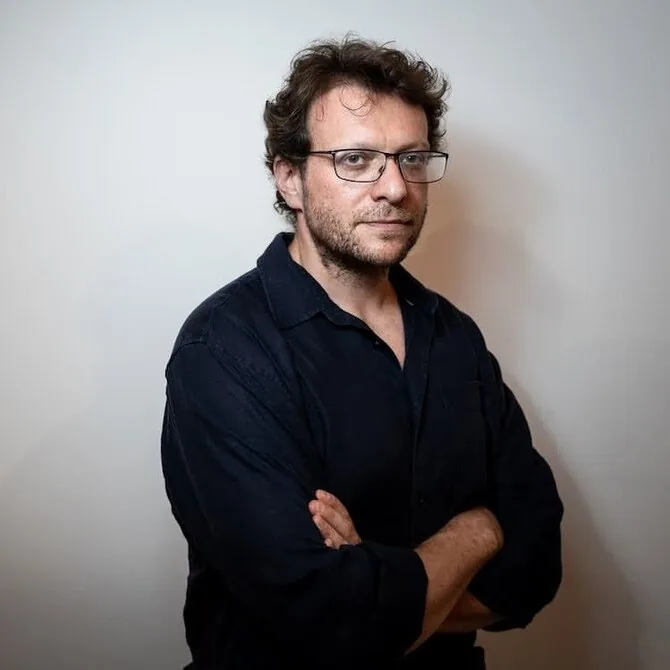
British journalist, producer, and writer of Ukrainian origin Peter Pomerantsev is one of the best-known contemporary researchers of information warfare, propaganda, and disinformation. Born in Kyiv and raised in the United Kingdom, he has spent many years analyzing Kremlin propaganda, authoritarian regimes, and information operations. His works have been translated into many languages, and his previous book Nothing Is True and Everything Is Possible became one of the widely discussed accounts of modern Russia.
Currently, Pomerantsev teaches at Johns Hopkins University, advises UK and US institutions on propaganda and information security issues, and is a member of the Royal Society of Literature. After the large-scale Russian invasion of Ukraine began, he became one of the founders of The Reckoning Project.
“How to Win the Information War” has already received international recognition – the book won The Sunday Times Book of the Year and the Ryszard Kapuściński Award for essayistic journalism, and was also included in the 2025 list of the best translated non-fiction books in Ukraine.
Books that help understand the world
Peter Pomerantsev’s book also marks a new stage in “Vaga” publishing, and “How to Win the Information War” reflects one of the most important ambitions of the new publishing direction – to publish globally relevant books in Lithuanian that help better understand the processes shaping today’s society. This book will first be available to visitors of the Kaunas Book Fair, and from September 18 it will be available in all bookstores in Lithuania!
Peter Pomerantsev’s book “How to Win the Information War” was translated from English by Marius Juknevičius, edited by Goda Grigolytė, proofread by Jovita Lankienė. The principal design was by Nerijus Rimkus, layout and cover adaptation by Alda Eikevičiūtė-Gluščevskaja, project manager – Eglė Maceinaitė, publishing editor – Ūla Ambrasaitė.
Read more National Audit Office: lack of efficiency in renovating public buildings