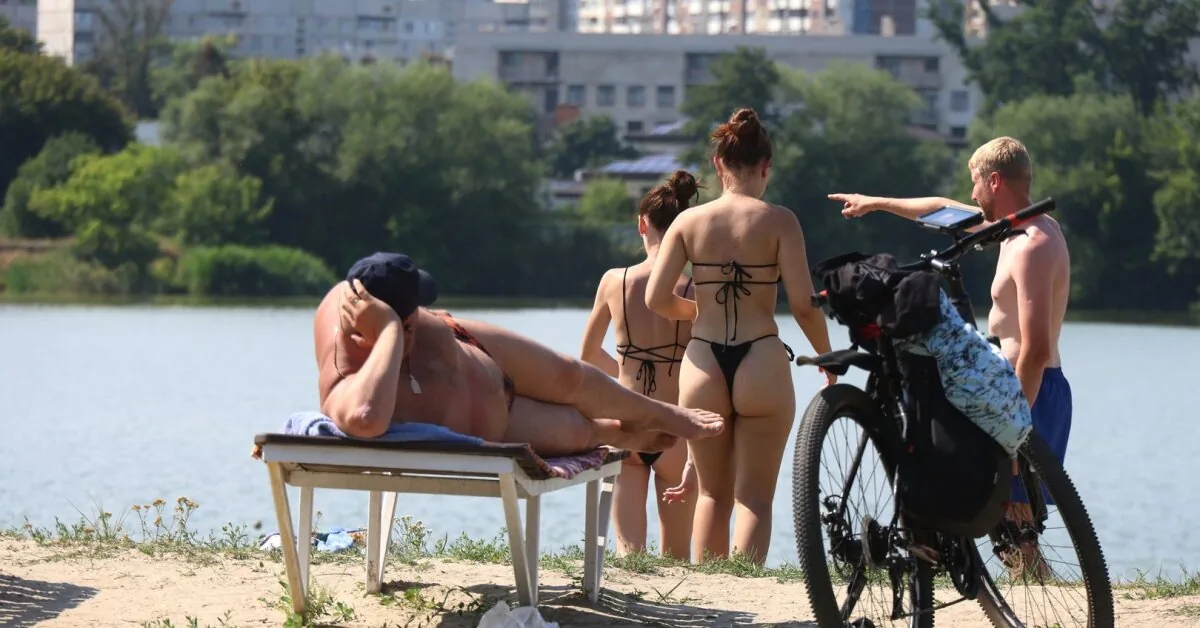
Due to the heatwave in Hungary, the hottest night in the entire observation history was also recorded – the temperature on János Hill in the capital dropped only to 28 degrees Celsius.
Read more During summer heat, not only people are at risk: specialists warn about the danger to some shipments
In the nearby town of Budakalász, the temperature reached 41.4 degrees, just a few tenths less than on June 30. A national record was recorded in the town of Szécsény (42 degrees Celsius).
The scorching heatwave also caused difficulties for Hungary’s water and energy systems.
Water use restrictions apply in 629 municipalities, including 13 municipalities where the highest danger level has been declared. Hungary even had to deploy the military to deliver drinking water to the most affected areas.
Environment Minister László Gajdos urged residents to continue limiting unnecessary water use to ensure water supply to households and noted that water consumption in the country has decreased by 9% in recent days.
Read more Polish official met with the Ukrainian Foreign Minister
The record low level of the Danube also disrupted electricity production at the Paks nuclear power plant, which usually produces about half of the electricity consumed in Hungary. Due to the extremely low river level, the plant operates at just over 10% of its capacity.
Prime Minister Péter Magyar said on Thursday that since the lowest water level recorded on Sunday in the Danube rose by 9 cm, one turbine was able to start operating again.
However, the prime minister warned that as the heatwave continues, households and businesses still “very much need” to voluntarily reduce electricity consumption.
The heatwave has gripped most of Central and Southern Europe. Austria reached a new national temperature record this week. In Bad Deutsch Altenburg in eastern Austria, a temperature of 41.2 degrees Celsius was recorded, surpassing the previous 41-degree record set in Vienna on Tuesday, reported the national meteorological agency GeoSphere Austria.
Read more Mindaugas Sinkevičius: the threat level for Lithuania has not drastically changed, but it exists