First – so the station is always nearby
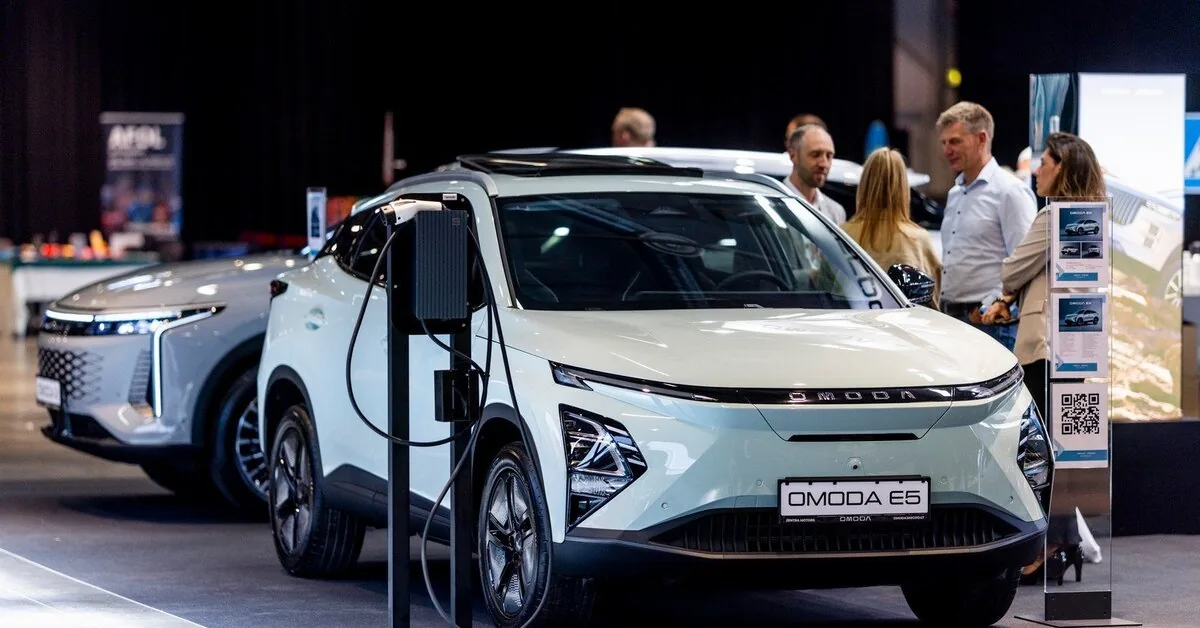
The number of electric vehicle drivers is rapidly increasing: according to “Regitra” data, on August 1, more than 30 thousand pure electric vehicles of categories M1 and N1 were registered in Lithuania – almost 25% more than at the beginning of the year, and during the summer, weekly charging records were recorded in the country’s fast charging network: compared to the same time last year, the amount of energy charged more than doubled. As experience accumulates, the questions also change.
Read more Research Institutes: Germany’s Economic Growth Prospects Improve

First of all, every electric vehicle driver cares about the map of charging stations. The “Ignitis ON” network in the Baltic countries today consists of 872 charging stations, of which 686 are fast charging. In Lithuania, the network covers 98% of the country’s territory, so nowhere do you need to drive more than 30 kilometers to the nearest station.
The entire country’s infrastructure is also expanding: according to the Publicly Accessible Charging Access Information System data, more than 5.7 thousand charging points were operating in Lithuania in March, so the network of stations is densifying throughout the country. The practical consequence is simple – when planning trips, the question “will I make it?” arises less and less often.
“A convenient electric vehicle usage experience depends on how well the charging network, energy solutions, and digital tools work together. Therefore, we develop them as one ecosystem so that the driver can easily plan the trip, charge the car, and pay,” says Eimantas Balta, head of the leading fast electric vehicle charging network “Ignitis ON.”
Later, time and speed matter
With experience gained, attention shifts to trip planning: how long the stop will last and whether it will coincide with a natural break. The answer to this question is the new generation charging park opened in May in Vėjukai, located near the busiest national highway A1 Vilnius–Kaunas–Klaipėda, about halfway along it, near Raseiniai.
All six park stations are designed for very fast charging; their power reaches 400 kW, so the battery can be charged in a very short time – the actual charging speed depends on the car’s capabilities. Up to 12 vehicles can charge simultaneously in the park. The park is adapted for any electric vehicle, whether it uses 400 V or 800 V architecture.
Moreover, it is the first facility in the country adapted for electric heavy transport – there is enough space for trucks, buses, or cars with trailers.
While the car is charging, drivers can rest: the park has a children’s playground and outdoor exercise equipment, and nearby there is a restaurant and hotel. The area is illuminated and monitored by video cameras around the clock, and the infrastructure is also adapted for people with disabilities. The charging stop no longer seems like “lost time” and becomes a usual travel break.
One app – for three countries
The third question of an experienced electric vehicle driver is how not to get confused between systems. All network stations operating in Lithuania, Latvia, and Estonia are visible in one mobile app: it shows in real time whether the suitable connector is free, charging can be started and stopped right there, and payment can be made by bank card or via “Apple Pay” or “Google Pay.”
Read more “Invaldos INVL” fund allowed to acquire “Nordian Group” and “Norvelita”
Crossing the Baltic countries’ borders requires no additional actions: the same conditions and rules apply, the same RFID key and usual payment method work, the app interface is provided in the driver’s chosen language, and phone support is available 24/7 in the driver’s native language, regardless of the country. Unregistered users only need to scan the QR code on the charger or pay at the card reader.
The automatic charging function “Autocharge” goes a step further: when connecting the CCS connector, the station recognizes the car automatically, so the charging session starts without the app and cards. A driver planning a trip can also briefly reserve a very fast charging connector – this possibility depends on the station and car compatibility. Business clients in all three countries have the same service contract, and payment can be made in usual ways, including using funds accumulated in a virtual account or gift voucher limits.
Home and public charging merge
The fourth stage is when the home station, electricity plan, and public network start to operate as one system. The app “EnergySmart” is intended for home charging, and “Ignitis ON” for public charging. Their accounts are linked through the “Ignitis bONus” program. For this, the public charging account email address must be specified in the contract. Then the apps exchange data, and the driver receives additional benefits.
The smart charging function automatically selects the cheapest hours to charge the car at home – the driver no longer needs to monitor market prices, and more savings can be helped by the market-linked electricity plan “Smart – 15.” Program participants accumulate 3 cents for every kilowatt-hour charged at home. These funds are transferred monthly to the public charging account balance and can be used for charging on the road.
An average driver can accumulate about one hundred euros per year this way, and the requirements are simple: a compatible home station, electric vehicle, and an active public charging account. Thus, home charging partially pays for charging in the public network.
A good ecosystem – almost invisible
“The best evaluation for us is when the driver no longer thinks about charging at all: the car charges at home at the cheapest time, the station on the road waits where you would stop to rest anyway, and payment happens with one touch. Everything else must happen inside the system,” summarizes E. Balta the ecosystem logic.
According to him, drivers’ expectations regarding station availability, charging speed, payment, and the coordination of home and public charging will continue to change – just like the ecosystem itself, which already covers more than 90% of the Baltic countries’ territory and expands along with drivers’ experience. And a good ecosystem eventually becomes almost invisible: the driver thinks about the trip, not about charging management.