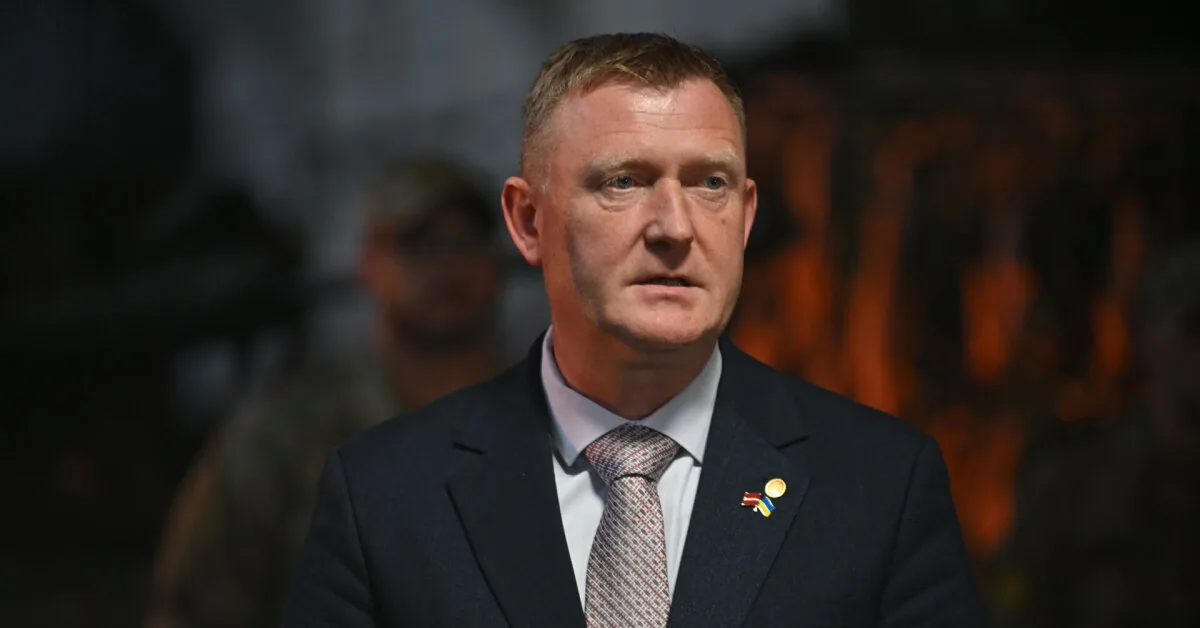
In a Latvian radio broadcast, the country’s defense minister Raivis Melnis, commenting on the statement by the head of the Lithuanian Ministry of Defense, said that Latvia has not currently identified any signs that attacks on specific critical infrastructure facilities are being prepared.
Read more «Meta» hit with a record €493 million fine for child safety violations
According to R. Melnis, all important facilities are constantly monitored, and state services together with their owners and operators have a comprehensive response plan in case of a threat.
“We have no direct signs of threats related to specific facilities – Riga airport, railway, or others – that would require me today to order the National Armed Forces to intervene immediately.

Together with special services, we analyze all kinds of potential threats and make decisions based on their assessments. So far, the main challenge remains the state border,” said the minister.
The Ministry of Defense has repeatedly warned that Russia could start aggressive actions and various provocations at any time, so Latvia, according to R. Melnis, continues to prepare for various event scenarios.
According to the minister, considering the statement of the Lithuanian special services, Latvian security services will most likely strengthen joint information analysis with their colleagues from Lithuania and provide their conclusions to the defense minister, the interior minister, and the country’s president.
The head of the ministry added that the protection of Latvia’s airport and other critical infrastructure facilities is ensured not only by special security plans but also by regular exercises.
He said that if necessary, the National Armed Forces could move to enhanced protection of these facilities.
The agency “LETA” has so far been unable to obtain comments from the Constitutional Protection Bureau, the State Security Service, the Ministry of Defense, and the National Armed Forces regarding the Lithuanian side’s statement.
“We won’t get into Putin’s head”
In July, in an interview with the news agency LETA, R. Melnis noted that Russia is heavily stuck in Ukraine, so given the current situation, a direct conventional attack against NATO is not possible.
However, according to him, various forms of provocations cannot be ruled out. As the minister said, the Latvian armed forces and internal security services are already prepared to respond.
Read more Estonia – a record number of newly registered companies
“If we notice warning signs, we are ready to take action. No ‘little green men’ will be walking around here, and drones will not be allowed to fly. If a drone appears, we will destroy it. If ‘little green men’ appear, the internal security service and the State Security Service will arrest or neutralize them,” emphasized R. Melnis.
The head of the Ministry of Defense believes that Russia will eventually restore its military capabilities. However, he added that NATO is also strengthening its armed forces to ensure deterrence and, if necessary, to defeat any future aggression.
“We won’t get into President Vladimir Putin’s head,” said R. Melnis. “What we can do is be prepared, and that is exactly what we are doing – preparing our forces to respond both to provocations and, if necessary, to defend the country.”
“False flag” operation
On Thursday, the portal 15min, citing data from Lithuanian military intelligence, reported that Russia is considering striking the critical infrastructure of the Baltic states using drones manufactured in Ukraine.
Lithuanian Defense Minister Robertas Kaunas confirmed that such information exists.
“We have data indicating that Russia is considering conducting unconventional kinetic attacks on critical infrastructure facilities in the Baltic states. It is most likely that drones manufactured in Ukraine could be used for this purpose,” said the minister.
So far, no information has been disclosed about alleged targets or possible timing of such attacks. According to the Lithuanian side’s assessment, Russia may use captured Ukrainian drones to conceal the true source of the attack and later deny its involvement in an attack against NATO territory.
Over the past year, military drones have repeatedly appeared in the airspace of NATO countries. Initially, it was believed that Russian forces were using electronic warfare measures to alter the course of Ukrainian drones detected in European Union countries. However, security service representatives are increasingly convinced that Moscow is deliberately directing Ukrainian drones to Lithuania, Latvia, Estonia, Poland, and Finland.
In turn, the Kremlin has repeatedly denied these accusations, emphasizing that Russia does not plan such attacks. However, Moscow has for some time accused the Baltic states of providing Ukraine with their airspace to carry out strikes. The leaderships of Lithuania, Latvia, and Estonia have repeatedly publicly rejected these accusations.
Although there are no signs that specific critical infrastructure facilities in Latvia face a direct threat, the country’s authorities continue to closely monitor the situation and are ready to tighten security measures if necessary. In light of the Lithuanian intelligence warning, it is expected that cooperation among the special services of the Baltic states will become even closer.
Read more Oncologists named a dangerous mistake in the kitchen: many ignore it, and the risk is huge