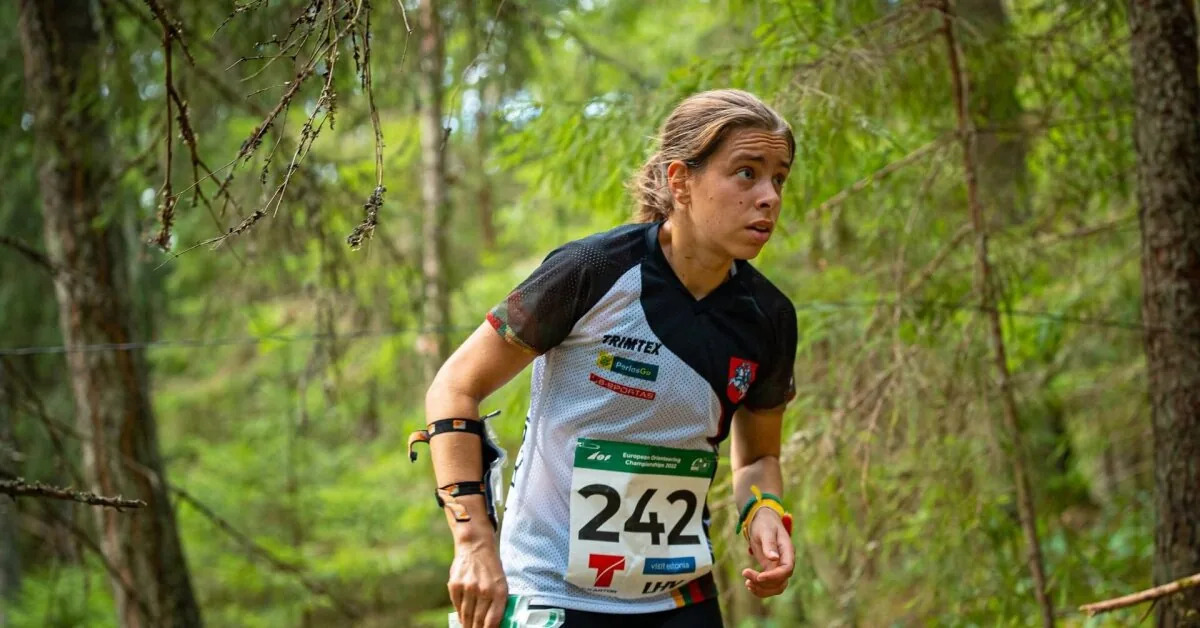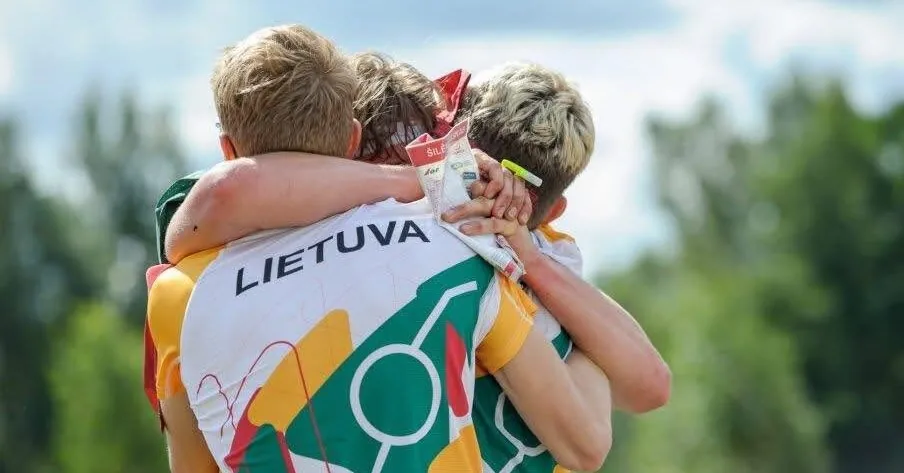
From September 22 to 27, the European Orienteering Championships and the final stage of the World Cup will take place in Druskininkai and Lazdijai district. However, this championship also has a special symbolic meaning: exactly twenty years ago, the same Dzūkija forests had already become an international orienteering center when the World Junior Championships were held there.
Read more Unemployment rate in Poland – the lowest in the last six months
A place where more than one generation grew up
The 2006 World Junior Championships in Druskininkai became much more than just another international event for Lithuanian orienteering. For many athletes, it was their first introduction to top-level competitions, and for Lithuania, which had already successfully organized several international events at that time, it became another important step forward and an opportunity to prove: we are capable, we know how, we can.
“Lithuania had already established an excellent reputation with both the 1996 World Cup competitions in the Curonian Spit and the 2001 World Masters Orienteering Championships, which attracted almost three thousand orienteers from, I believe, 44 countries around the world,” recalls Rimantas Mikaitis, the then organizer of the championship.
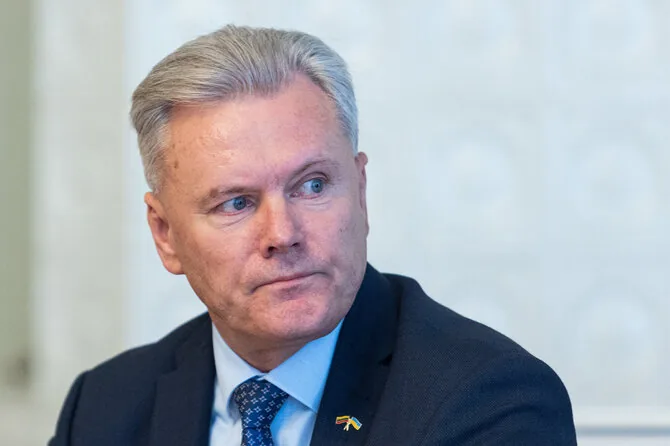
– So we used all the accumulated experience then, in 2006, at the World Junior Championships. We chose Druskininkai, aiming to show the diversity of Lithuanian landscapes: for the long course, we selected the Noškūnai forest, for the middle course – the Petroškai forest, and we planned the relays in the Druskininkai forest with the competition center between Lake Druskonis and Lake Vijūnėlė…
And then we received a letter from the IOF president asking: would Lithuania agree to include sprint competitions in the championship program? We couldn’t miss the opportunity to be the first to organize a new format World Junior Championships! Although this, of course, meant additional organizational concerns, it also meant great trust in Lithuania.”
According to him, after the championship, at the World Championships held in Denmark, the leaders of the International Orienteering Federation already asked Lithuania when it would dare to organize the World Championships.
“This meant that they trusted us, that they valued our abilities and experience. True, at that time I didn’t think that the answer to that question would have to wait so long, until a new generation of orienteers grew up, who would take the lead themselves and seek to organize competitions of such a level,” says R. Mikaitis.
Today, among those new generation people is the current director of the European Championships, Vilius Aleliūnas, who himself competed in the World Junior Championships in Druskininkai in 2006.
The same forests, but different now
Twenty years later, athletes will once again run in the Petroškai forest. However, although the area seems the same at first glance, almost everything changes in orienteering over such a long period.
Egidijus Kukenys, who is preparing the main map for the European Championships, says that it took about 750 working hours just to create the map for the 16 square kilometers of Petroškai and Klepočiai forests. And that’s not the end.
Read more “Neurobics” general knowledge test: can you answer at least 7 out of 10 questions?
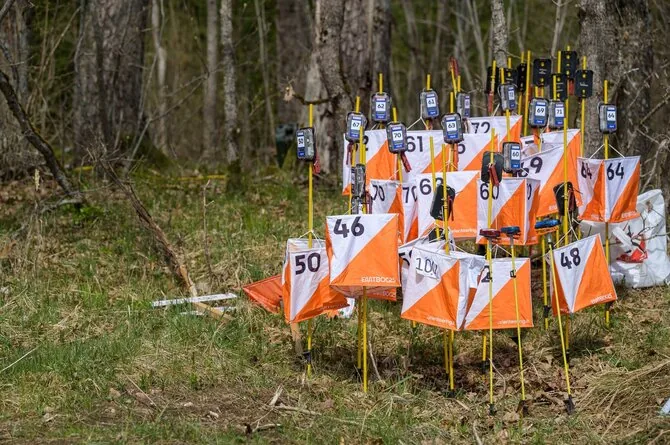
“The forest changes due to natural phenomena and human activity, so before the championship, we will still have to check and correct the already prepared map for about two weeks,” says E. Kukenys.
Although Lithuanian forests do not have the rocks or boulder fields characteristic of Scandinavia, they present completely different challenges for orienteers.
The biggest of these, according to E. Kukenys, is to accurately mark the runnability of the forest, especially where spruce forests have been replaced by areas damaged by the bark beetle. However, it is precisely because of its terrain that the Petroškai forest is considered one of the most interesting orienteering areas in Lithuania.
“This is one of Lithuania’s golden fund areas. There are many pits, hills, slopes of various steepness with ravines, beautiful natural hornbeam groves. It is incredibly interesting to draw a map in an area where a new secret lies behind every hill,” says the map author.
From the first starts to the European Championships
Rimantas Mikaitis has no doubt that the 2006 championship left a significant mark on Lithuanian orienteering.
“I heard this year’s championship director Vilius Aleliūnas saying that if there hadn’t been the 2006 World Junior Championships in Druskininkai, there wouldn’t be the 2026 European Championships. It’s good for me to see that the concept of the competition has not deviated from then: Druskininkai, Noškūnai forest, Petroškai forest… All this awakens memories,” he says.
Vilius himself confirms this: “In 2006, Lithuania showed that it could perfectly organize a memorable World Junior Championships. In 2026, we want to show even more. We want athletes coming to Lithuania to take away not only memories of challenging courses or beautiful Dzūkija forests, but also the feeling that a country that loves orienteering awaited them here. If after another twenty years someone remembers this championship as we remember 2006 today, it means we will have done our job well.”
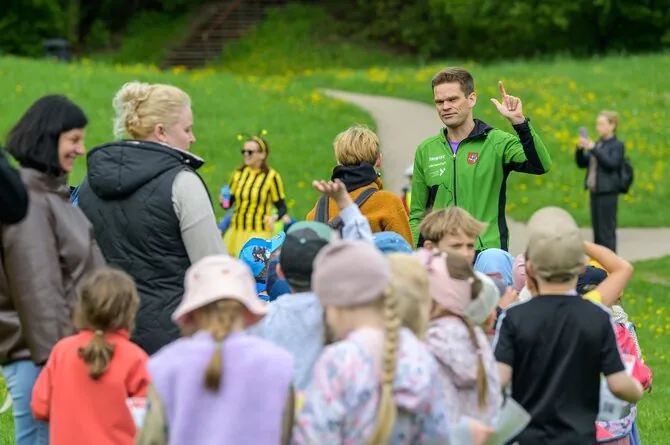
From September 22 to 27, the European Orienteering Championships and the final stage of the World Cup will take place in Druskininkai and Lazdijai district.
The almost week-long event will become one of the biggest international sports events in our country this year and will bring together the strongest European orienteers, hundreds of team members, and thousands of orienteering enthusiasts to Lithuania.
Read more A new head is being sought for Mažeikiai Regional Hospital