In the summer of 2026, the epidemiological situation in Greece noticeably worsened. The Greek National Public Health Organization (EODY) reports that by August 12, a total of 110 locally acquired West Nile virus infections were identified.
Read more The last summer evenings in Vilnius will be colored by jazz: a new festival is born in Žvėrynas
Of these, 81 cases showed central nervous system damage, such as encephalitis, meningitis, meningoencephalitis, or acute flaccid paralysis. Another 29 people exhibited milder symptoms or showed no signs of central nervous system damage, writes “Euronews”.
Nine people died, 16 are treated in intensive care
The seriousness of the situation is also indicated by the condition of the patients. By August 12, nine people died from West Nile virus infection causing central nervous system damage. All the deceased were over 65 years old. Their median age was 82 years, with ages ranging from 66 to 91 years.
Currently, 35 patients are being treated in hospitals: 19 in regular wards and 16 in intensive care units. A total of 61 patients have already been discharged from the hospital, and five did not require hospitalization.
The risk of severe cases increases with age – the median age of patients diagnosed with central nervous system damage is 73 years. However, among them were people aged from 19 to 91 years.
The actual number of infected people may be much higher
The officially registered 110 laboratory-confirmed locally acquired cases do not necessarily reflect the true spread of the virus.
EODY reminds that, based on the results of a 2010 seroepidemiological study, for every West Nile virus infection case with central nervous system damage, there may be about 140 infected people who exhibit mild symptoms or no symptoms at all.

Therefore, official severe cases are only a part of the overall virus spread among the population.
The virus spreads most in Attica
The geographical spread of the virus is also concerning. This year’s outbreak epicenter is the Attica region.
By August 12, cases were identified and investigated in 39 municipalities, 14 regional units, and four regions: Attica, Thessaly, Central Macedonia, and the Peloponnese.
In Attica, the virus was detected in East Attica, as well as in the northern, western, central, and southern parts of Athens and in Piraeus. Outside Attica, cases were found in the regional units of Karditsa, Larissa, Trikala, Imathia, Thessaloniki, Pella, Serres, and Laconia.
EODY emphasizes that the virus is circulating particularly intensively in the Attica region this year.
Especially high incidence in some municipalities
East Attica is particularly severely affected.
In the Spata-Artemida municipality, 11 patients with central nervous system damage were identified, and two more patients without such signs.
In the Markopoulo Mesogaias municipality, eight patients with central nervous system damage and three without it were registered. In the Vari-Voula-Vouliagmeni municipality, five severe and two milder cases were identified.
In the Markopoulo Mesogaias municipality, the frequency of central nervous system damage cases is 36.8 per 100,000 inhabitants, and in the Spata-Artemida municipality – 31.5 cases per 100,000 inhabitants.
Read more Mykolas Alekna, who completed the European medal collection: «I still wanted gold…»
Areas without human cases are also considered risky
Health specialists monitor not only areas where human infections have already been detected.
Based on the evaluation of epidemiological and geomorphological data, some additional municipalities have been classified as high-risk areas, although no human infection cases had been detected there before the report was published.
Such areas include Kifisia, Iraklio, Filothei-Psychiko, and Metamorfosi in northern Athens, Kallithea and Nea Smyrni in the south, Nea Filadelfia-Nea Chalkidona and Dafni-Ilioupoli in the central part. The municipalities of Amphipolis, Naousa, and Delta are also considered high-risk areas.
Their classification as risk areas is due to their proximity to already affected municipalities, the geomorphological features of the area, and current and previous epidemiological data.
The virus is also detected in horses
Veterinary surveillance also signals a wider spread of the virus.
By August 12, recent West Nile virus infections among horses were detected in five locations or settlements in the regional units of East Attica, Drama, and Preveza, as well as in the Thessaloniki metropolitan area.
The detection of the virus in horses indicates that it is circulating in those territories as well.
Each case is investigated within 24 hours
Since 2010, Greece has operated an enhanced epidemiological surveillance system.
An investigation begins within 24 hours of each registered case – doctors are contacted, patients are interviewed to determine the likely place of infection, risk factors, and disease severity. The condition of hospitalized patients and the final outcome of the disease are monitored daily.
Laboratories conducting virus tests are also contacted daily. Regional and municipal authorities, public health directorates, the Ministry of Health, and other responsible institutions are informed about detected cases. Special attention is paid to blood safety.
Strengthening mosquito control
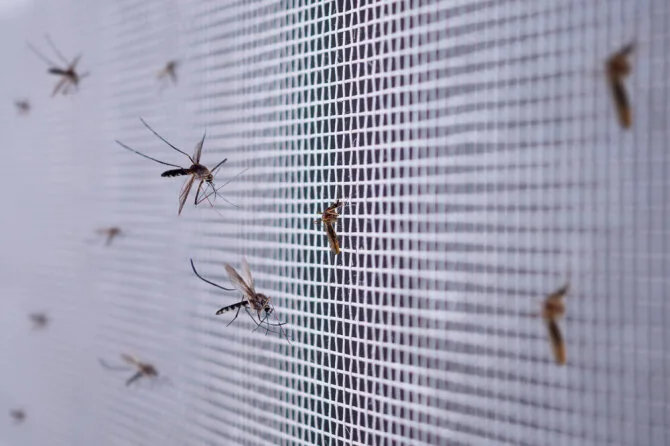
An important part of prevention consists of comprehensive mosquito control programs. EODY urges regions and municipalities to start them on time, organize them properly, and carry them out effectively.
When new cases are detected, local authorities are promptly informed and urged to strengthen mosquito control and public information.
Special mosquito traps are also used in Greece. Collected mosquitoes are tested for West Nile virus infection. Such surveillance can serve as an early warning system – allowing detection of virus circulation before or at the same time as human cases appear.

The virus is already established in Greece
According to EODY, the West Nile virus in Greece is not just a phenomenon of this summer.
Cases were recorded in the country from 2010–2014 and 2017–2025, mostly in summer and autumn months. Previously, virus circulation was detected in all regions of Greece.
Almost annual recurring cases since 2010 indicate that the virus is established in Greece, as in other European countries. EODY predicts that in the coming weeks, new cases are likely to be reported both in already affected and new territories.
Specialists emphasize that it is impossible to accurately predict the geography of virus spread, as its epidemiology depends on many factors. Therefore, protection recommendations apply not only to residents of Attica or areas where infections have already been detected.
EODY highlights three main measures: epidemiological surveillance, timely comprehensive mosquito control programs, and individual protection against mosquitoes.
Read more Orai.lt: a hot and almost dry festive weekend expected