








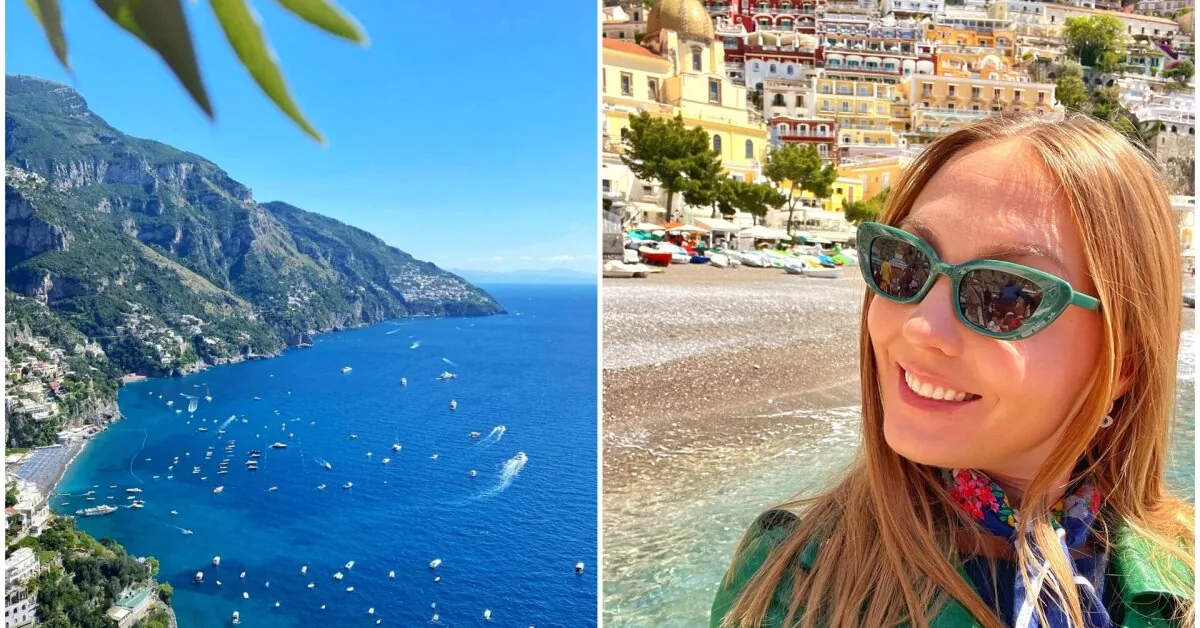
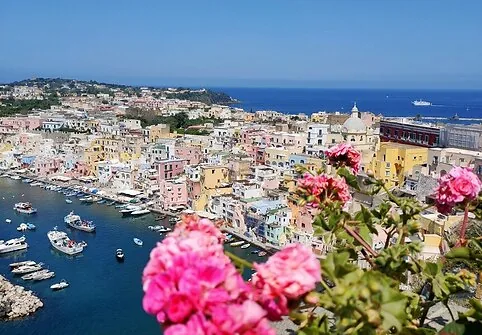
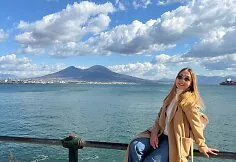
The portal 15min spoke about this with Vitalija Nagliūtė-Spoleto, a Lithuanian woman who has lived in Naples for 11 years, organizing trips and leading excursions throughout the Campania region – Pompeii, the island of Capri, and the Amalfi Coast. On her “Kaip prisijaukinti Neapolį” Facebook page, she shares useful tips.
– How has tourism in this city, its surroundings, and the entire Amalfi Coast changed during your years living in Naples?
– I have been living in Naples for 11 years, observing changes in tourism trends up close. And yes, they are definitely changing. More and more travelers are paying attention not only to the famous places in the region but also to the city of Naples itself.
After the pandemic, tourism recovered at an impressive pace. 2023 was a real year of ascent – people who had been cooped up at home for a long time finally allowed themselves to vacation longer, see more, and allocate a larger budget for travel.
In recent years, hiking and mountain trails have become particularly popular. For those who spend most of their day sitting in front of a computer, active recreation has become one of the most desired travel formats.
And I’ll let you in on a little secret – for several years now, I’ve noticed that September is becoming the new August. Foreign tourists have understood what Italians have known for a long time: in August, all of Italy is on vacation. Resorts are most crowded then, prices reach their highest level, and due to huge crowds, service quality sometimes suffers.
Therefore, more and more travelers plan their vacations in September. But the most interesting thing is that Italians themselves are adopting this habit. The younger generation, the so-called millennials, are increasingly abandoning the tradition of vacationing in August and choosing early September.
Children in Italy usually return to school only in mid-September, the weather is already more pleasant, not as hot, the sea is still warm, and there are slightly fewer people.
Therefore, I sometimes joke that if a decade ago everyone asked if it was worth going in August, today I more often have to answer the question of whether there will still be hotel rooms in September. In some areas, there are even more tourists in September than in August.
– Are there specific places where the growth of tourist flows is felt most?
– Naples has been receiving increasing attention in recent years. If previously it was just a brief stop for many on the way to the island of Capri or the Amalfi Coast, today more and more tourists are consciously choosing to spend more time here and discover the city itself.
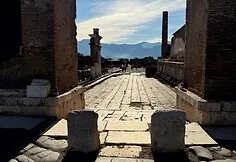
Of course, other famous places in the region are not short of tourists. The island of Capri, the archaeological site of Pompeii, Sorrento, and the Amalfi Coast remain among the most popular attractions in the Campania region, attracting millions of visitors from all over the world every year.
– How do local residents view tourist flows – do they welcome the economic benefits more, or do they feel more inconvenience? How do tourism changes affect you personally?
– Local Neapolitans are very diverse. One thing is clear: they certainly don’t lack imagination and ingenuity. Neapolitans are famous for their cleverness, entrepreneurship, and ability to see an opportunity in every situation. Sometimes this entrepreneurship surprises even the most seasoned travelers. So, they certainly find ways to turn tourist flows into benefits for themselves and their businesses.
Of course, there are also grumblers – as in any city in the world. However, I certainly couldn’t say that there is hostility towards tourists in Naples or Campania. On the contrary, there are no anti-tourism sentiments or protests here like those sometimes seen in some mass tourism-affected areas of Europe.
After all, places like the Amalfi Coast or the island of Capri essentially live off tourism. A large part of local businesses, restaurants, hotels, transport, and the service sector depend on arriving travelers. Therefore, tourists are more often welcomed here as guests, rather than seen as a problem.
In general, people travel significantly more today than a decade ago. The old myth that travel is only a privilege of the wealthy is gradually crumbling. Today, it has become one of the favorite forms of leisure and vacation for the middle class.
People more often give up material possessions but prefer to invest in experiences, impressions, and the opportunity to explore the world.
– What mistakes do tourists most often make when planning a trip to Naples and the Amalfi Coast?
– A common mistake for novice travelers is the desire to see all of Italy in one trip. One day in Venice, another in Florence, two days in Rome, then a couple more days on the Amalfi Coast, and three in Sicily.
It sounds ambitious, but in reality, it often turns into a race, not a trip.
It is important to remember that Italy consists of 20 regions, each with its own unique history, culture, traditions, and cuisine. It’s a place where you want not only to see but also to experience.
When planning routes, tourists often open map apps and see that it’s not far from Naples to Amalfi. Then a plan is born: “In the morning I’ll go to Pompeii, then visit Vesuvius, and in the evening I’ll drive along the Amalfi Coast.” Such a plan theoretically looks great.
However, maps don’t show everything. They don’t account for the time you’ll spend on winding roads, looking for a parking spot, waiting in ticket lines, or simply stopping to admire the views. And after all, you want not just to tick off an item on a list, but to spend at least a little time there.
Yes, theoretically, you can “run through” everything. But I suggest asking yourself: is the goal of the trip to collect as many points on the map as possible, or to truly feel the place? Sometimes fewer visited sites mean many more impressions and memories.
– What is the best time of year for a first visit?
– Every season in Italy has its advantages and disadvantages, so there is no single perfect answer as to when it’s best to travel. It all depends on what you’re looking for.
For Lithuanians, the most pleasant weather is usually in spring and autumn. The temperature is not as exhausting then, making it comfortable not only for walking around cities but also for visiting archaeological sites, participating in excursions, or going on hikes. True, many Northern Europeans who avoid summer heat also like to vacation at this time, so it is also one of the most popular seasons.
For me personally, it’s an ideal time to combine cultural tourism with swimming in the sea.
In winter, the number of tourists significantly decreases, but one should also know the other side of the coin. On the Amalfi Coast and the island of Capri, most hotels, restaurants, and other tourist services close after the season ends.
Furthermore, the sea can be rough, and ferry services are canceled if waves exceed a certain height.
There are rainy and windy days, and in strong winds or bad weather conditions, visitors are not allowed to climb Vesuvius. Therefore, in the colder months, there is always a slightly higher risk that plans will need to be adjusted.
Summer has its charm, but also its challenges. It’s hot, beaches – mostly paid here, by the way – are full of vacationers, and in the most popular places, crowds can sometimes be truly impressive.
Nevertheless, there is one unexpected advantage of summer that is often overlooked: it’s a great time to visit museums. Many tourists choose beaches and boat trips, so museums usually have fewer people. And the air conditioning works pleasantly too.
– How do social networks contribute to the popularization of certain places? How do you evaluate this? Doesn’t it do a “disservice”?
– Yes, that happens. Social networks are a very powerful tool for quickly spreading information. However, it’s not always possible to immediately assess whether that information is correct and what consequences it might cause. And if the headline is formulated in a way that pre-forms the reader’s opinion, then it becomes clear that the aim is not only to inform but also to influence.
Recently, I saw a scene in a movie: a famous “blogger” stumbles upon an inn, is captivated by the place, and decides to write about it as an “undiscovered restaurant.” The restaurant owner’s partner tells the owner: “But if he writes about this place, it will instantly become known to everyone.” A paradox.
Read more As the service lifts foot-and-mouth disease restrictions, an alpaca show will be held in September
– Can you share which places are still undeservedly little known?
– Besides the well-known Pompeii, it’s worth visiting Herculaneum – another ancient city buried during the 79 AD Vesuvius eruption. I also recommend the Naples Archaeological Museum, Paestum with its impressive ancient Greek Doric temples, and the magnificent Royal Palace of Caserta.
And my personal favorite – Campi Flegrei – the Phlegraean Fields. This is an area that was once extremely popular with ancient Greeks and Romans, but today few travelers discover it. Information about it is still scarce, so tourists rarely include it in their itineraries.
I constantly invite people to travel there together, as it is one of the most interesting and undeservedly forgotten places in the Campania region.
– Is there a town you would recommend instead of, for example, the much-desired Positano, for those seeking a more authentic experience?
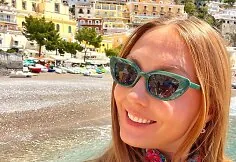
– Positano, Amalfi, and Ravello remain wonderful places, despite the sea of tourists that sometimes floods them. To be honest, there are almost no authentic places left on the Amalfi Coast that are completely untouched by mass tourism.
However, authenticity can still be found on mountain trails, in more secluded corners, and by meeting local residents who still grow Amalfi lemons. Of course, they later sell them to the same tourists – after all, most local people live off tourism in one way or another.
There are almost no authentic places left on the Amalfi Coast that are completely untouched by mass tourism.
The Amalfi Coast is a place of exceptional beauty, but life here is not as simple as it might appear from vacation photos. Reaching the nearest major cities is not easy, journeys take time, so locals perfectly understand that income must be earned where there is demand – from arriving travelers.
I notice that Lithuanians often choose to stay in the town of Minori – it’s conveniently accessible and often more budget-friendly. And I personally really like Cetara, often called the last fishing village on the Amalfi Coast. I come here to enjoy the sea and taste the famous Cetara anchovies.
– What routes or trails would you recommend for people wanting to avoid crowds?
– The famous Path of the Gods is no longer a place where you can be alone with your thoughts today – you will meet many other travelers there.
It is important to assess your physical capabilities. I do not recommend mountain trails for those with health problems, and in July and August, it’s better to avoid hikes during the greatest heat. Comfortable footwear, headwear, and water are essential. And if you don’t want to travel alone, you can always join hikes with mountain guides.
During the hot season, an excellent alternative is the Valle dei Mulini and Valle delle Ferriere trails. They stretch through a shaded valley, surrounded by dense vegetation, and along the way, you can find waterfalls where you can cool off. From here, you can reach both Scala and Amalfi.
– Do local residents feel the impact of rising housing prices or rents due to tourism?
– Yes, of course, increasing demand and limited supply drive up prices.
– How do you evaluate the new regulations (e.g., the license plate alternation system): has it truly reduced traffic jams?
– Traffic jams on the Amalfi Coast are practically unavoidable. From Positano to Vietri sul Mare, there is only one narrow and winding road, so there are simply no alternatives.
Local drivers here are true professionals, but the large flow of cars and buses, and especially driving by tourists unaccustomed to such roads, often causes traffic jams.
Many foreign tourists are unaware of the alternating license plate rule and only learn about it after receiving a fine. Nevertheless, it is a good measure that helps reduce the flow of day-trippers, especially Italians themselves, and at least somewhat ease traffic on the coast.
By the way, the rule is not new — it has existed for a long time, but in 2022 it was tightened to manage the increased tourist flows that recovered after COVID.
– Are there measures that local authorities could still implement?
– If it were easy to find an answer to this question and simply apply it in practice, locals would have long ago solved all the challenges of tourist flows. The essence is that these well-known tourist centers are relatively small, while the number of people wanting to visit them is extremely large. So, frankly, I don’t know if there even is one “correct” solution here that would satisfy everyone.
– Why is there so much talk in the public space this year about the influx of tourists, mass tourism?
– I honestly don’t know. Especially because, compared to the trends of May in previous years, this May saw fewer tourists, fewer individual day-trippers, and tourist groups are becoming more compact.
Perhaps because many compatriots have already been to the Amalfi Coast? A catchy headline makes them recall their time there. Clickbait? Is it hoped to provoke reactions, comments? I don’t think such news is shared out of genuine concern for the peace of the locals.
Once I had an excursion in Naples with two women who returned to Naples after twenty years. They compared Naples “then” and “now.” The first time they came, they knew almost nothing — there were no social networks, no abundance of articles about how difficult it was to drive on those roads. They simply got into a car and drove along the coast, in Naples.
But before their second visit, they had read more about Naples and the Amalfi Coast, especially about how difficult it was to drive there. Upon returning after twenty years, they noticed how truly difficult it was to drive. They said they hadn’t noticed anything unusual in traffic the first time. It was as if that “difficulty in driving” became obvious precisely because they were already expecting it.
I am sure that 20 years ago, even though there were fewer tourists, local drivers certainly didn’t drive any calmer. What does this mean? That preconceived notions strongly influence perception.
– Do you still discover new, lesser-known places in the Campania region?
– Yes, these are usually small, minor museums, but I especially start to like local artisans’ workshops or small factories. Some artisans even let tourists into their daily lives. And it is precisely here, in my opinion, that true authenticity lies.
– Will the Amalfi Coast in the future become similar to some resorts in Spain or Greece, which are starting to drastically limit the number of tourists?
– Hard to say, perhaps. But after all, all of Italy is very popular with tourists: Rome, Venice, Florence… One could go on and on — during the high tourist season, all these cities attract huge crowds. So, a large flow of tourists here is certainly nothing unusual.
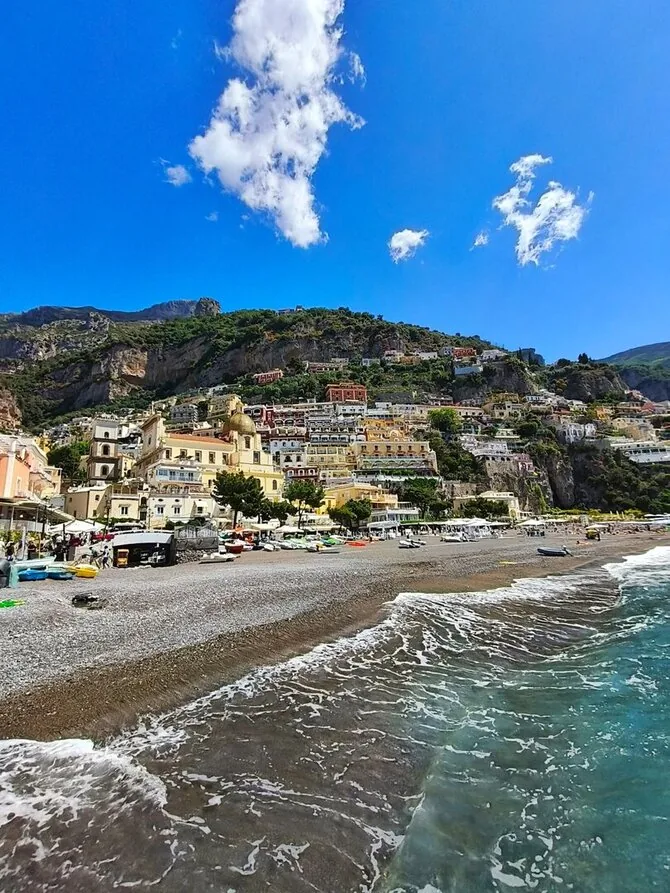
The Amalfi Coast consists of 13 municipalities, but the concentration of tourists is highest in Amalfi and Positano. These towns are often considered the most beautiful places on the entire coast, so it’s no surprise that the largest crowds gather there.
– Do you agree with the idea that we often complain about the very tourists of whom we ourselves are a part?
– Absolutely. If we find ourselves in a certain place and see others there, there’s no need to get angry. Did they come to take a selfie? Maybe? But when we take photos, it might also seem to others that we came to Amalfi “just for pictures.” We are all a consequence of today’s tourism.
Tourists often ask for recommendations for “non-touristy places.” And I answer like this: if there’s a road, train tracks, or a simple mountain trail, and there are clear instructions online on how to reach those places – there are already tourists there. Moreover, places far from popular attractions are often not adapted for tourist stays. You won’t find a shop where you can have dinner on a Sunday where anyone speaks anything other than a local Italian dialect.
Read more New study shocked doctors: an unpleasant truth about calcium and vitamin D supplements revealed