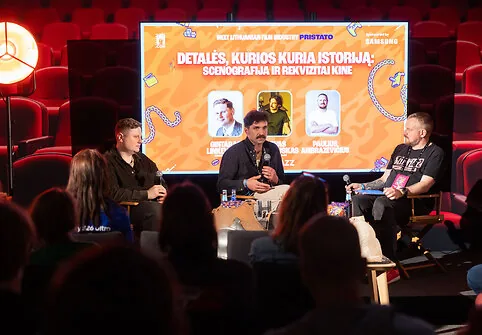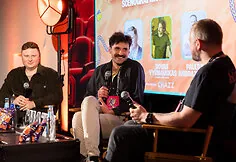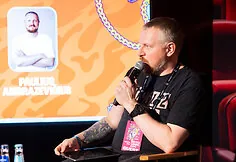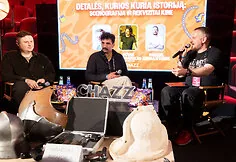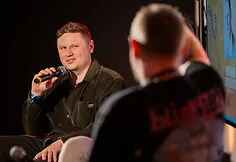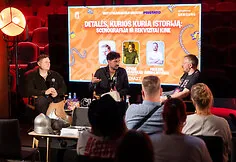




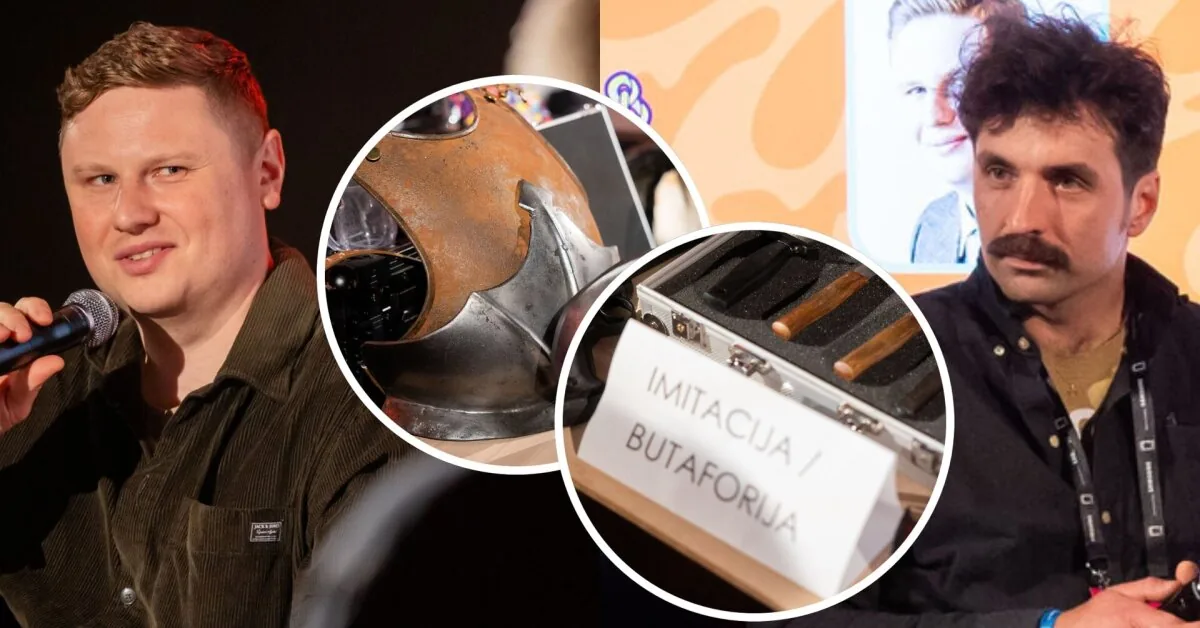
Gintaras Linkevičius recalled that he became interested in making film props during his student years, after seeing a sculpture made by his lecturer for an advertisement. However, he revealed that the Academy of Arts, where he studied, does not specifically train people for the film industry:
Read more As the service lifts foot-and-mouth disease restrictions, an alpaca show will be held in September
“It happened naturally, I always wanted to work in film. My studies helped somewhat, but you can’t imagine that you’ll come to the Academy of Arts and they’ll teach you how to make things there.
It’s not like everyone has carving or casting lectures during their studies. You can get all of that, but you have to want it and take it yourself. Everything depends on you. You get among certain lecturers and you have a community. The more you try, the better you succeed.”
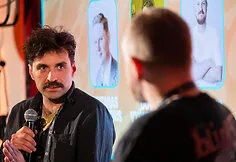
According to Dovas Vyšniauskas, cinema is like a large living organism. When creating a film or series, a huge team works, distributing responsibilities as evenly and conveniently as possible.
“The main person is the production designer, and then there’s his team. Everyone’s work depends on the script, that’s the common denominator, by talking about which we understand what that world will be about.
It seems like we’re just drawing, but you have to read and think a lot. You are responsible not only for yourself but also for other people. It’s quite interesting, a different story every time, but there’s also boredom,” the film artist said.
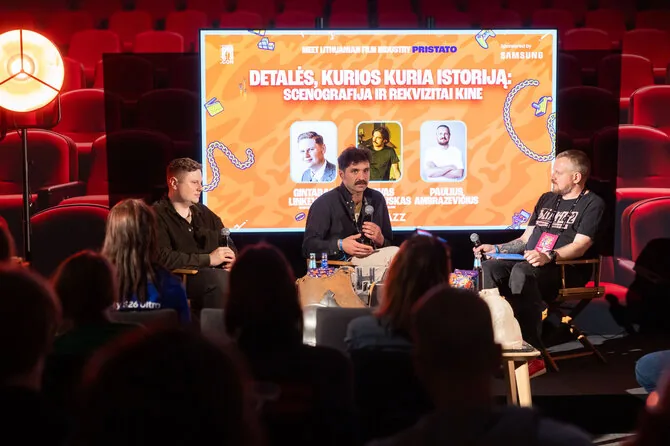
Sought decorations in the village
In the search for how to better create props and decorations, one often has to travel. G. Linkevičius recounted that such searches lead to the most unexpected places.
“It depends on what position you work in. The operator writes down and marks places where there will be certain furniture and what kind it will be. If, for example, a character is supposed to be messy according to their personality, it needs to be reflected in the decorations.
We communicate with the operator, look for examples of what the decorations should be like according to the period. Then you try to find materials, sometimes we drive through villages.
We were filming a movie about the Middle Ages and needed aged wood. We drove through a rural area and found a person 15 km from the filming location who had that wood.
Of course, they often find it strange, what do you want here, what is this cinema,” the sculptor laughed.
One of the biggest challenges arises when you have to fit into a smaller budget than desired. Then, according to the interlocutors, teamwork is most important – ideas are thought up not only by the prop masters but also by the entire rest of the team.
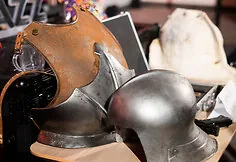
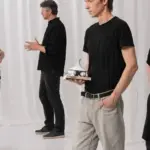
The duo brought several decorations to the conversation, including a helmet and the silicone mold with which it was made.
“First, the blacksmith forged Swedish royal palace armor. We then took a silicone mold of them and then sprayed rubber into it, then sanded it. During sanding, dust rises, and there’s a risk of scraping your hand. I’ve caught the sander with my sweater more than once,” G. Linkevičius recalled the extreme moments.
Read more New study shocked doctors: an unpleasant truth about calcium and vitamin D supplements revealed
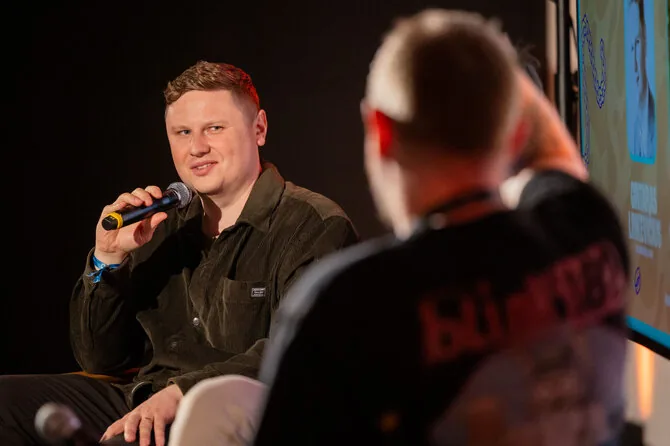
Safety is paramount
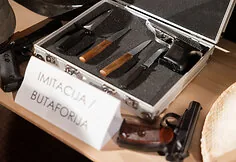
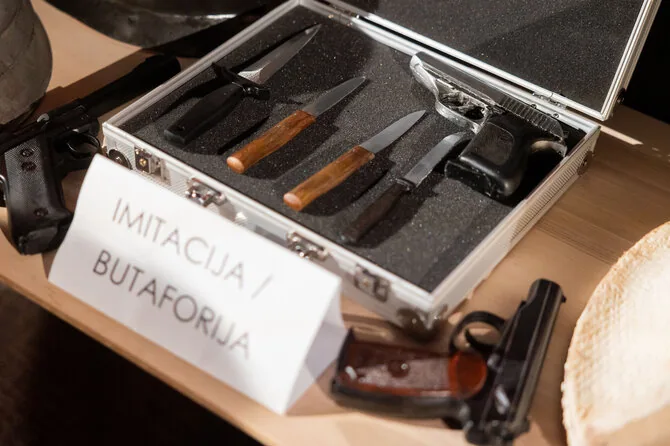
And most importantly in this job is ensuring the safety of actors and the team as best as possible. That’s why various weapons we see on screen when watching action movies are fake.
“If you need to chop wood and swing that axe, there’s a perceived threat that someone might get hit, so you need to make a soft object. Rubber molds, light plywood.
The most common items are sticks, axes, knives, sugar cups. Everything is very safe, we don’t even give real weapon imitations to background actors, so they don’t get hurt or hit someone if they get angry,” G. Linkevičius laughed.
Ugly-looking decorations, such as fish heads and other waste, are also fake – the prop masters revealed that they are usually made from foam rubber, silicone, and various other synthetic materials.
There are all sorts of materials these days, and they are all, of course, toxic in one way or another, so protective gear must be worn.
The chemical industry has a developed market for such things. Even 40 years ago, Americans and Britons had their list of ingredients, which they kept secret. Nowadays, you can buy such things in bottles with instructions on how not to poison yourself,” the interlocutors said.
A few years ago, a tragic accident made headlines – actor A. Baldwin accidentally shot a stuntwoman, whose life could not be saved. G. Linkevičius did not mince words – it should not have happened:
“I recently spoke with an armorer about it. In general, real ammunition cannot even be on a film set. The mere fact that there was real ammunition there is a huge violation. But even with fake ammunition, you can cause great harm to a person.
Nowadays, air rifles are starting to be used, often with a small silencer attached, a blinking light, but it looks quite bad. Directors want to use blank cartridges for smoke and flash, but often that can also be done with computer effects.”
Had to visit… a morgue
When creating action films, it is often necessary to produce gruesome injuries that look as realistic as possible – after all, all injuries suffered by characters in films are fake.
When asked how to create realistic-looking wounds or severed limbs, Dovas Vyšniauskas recalled having to go somewhere no one would probably want to visit for that purpose:
“When there’s such a task, for example, Mykolas Sauka and I went to the morgue, and I took molds from living people. It becomes part of the job, it’s not like it’s very fun or interesting.”
Read more Inheritance is not automatic: why not knowing about a relative’s death can cost you an inheritance