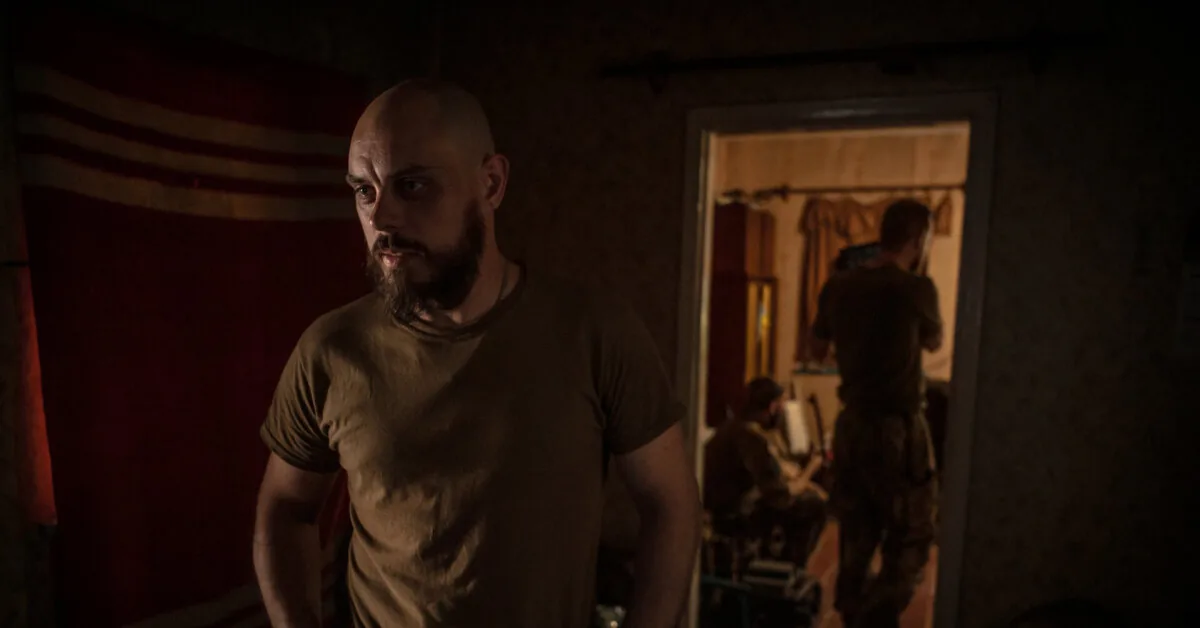
We first met under rather turbulent circumstances near Pokrovsk. We didn’t have time to talk in more detail, so let’s do it on the pages of the riflemen’s magazine. As much as you can, tell us about yourself: where did you study, how did you become a soldier?
Read more NATO strengthens defense around Sweden and Finland
I have a civilian education. I hold a Bachelor’s degree in History and a Master’s degree in Public Relations Management. In 2014, I voluntarily joined the National Guard of Ukraine and fought as a scout. Later, I received military education and an officer’s rank at the National Defence University of Ukraine. During my studies, I engaged in martial arts, airsoft games, and professional tourism. I trained children. From 2016 to 2022, I was involved in business and was a completely civilian person. However, sensing a threat, in 2021, I signed a reservist contract.
What has changed since then? As far as I know, many have laid down their lives, and that area is now occupied? How do you generally assess the situation?
During our last meeting, you brought voluntary aid – cars and equipment – and we met in the village of Memryk. The line of contact ran along the border of Netailove and Karlivka. Memryk was a rather remote village; children would come to their grandmothers to help with farm work. If we talk about the territory, this village is now occupied. If we consider technological changes, they are radical, because even two years ago, the threat of drones was quite palpable, but they could be fought. For example, I could carry out personnel rotation in defensive positions. Equipment could approach 3–5 kilometers to the combat line. Now the “kill zone” (Lith. death zone) extends up to 10 kilometers. And everything that drones detect in this zone is guaranteed to be destroyed. Logistics along main movement routes are destroyed up to 20 kilometers away. 30 kilometers from the line of contact, movement must be fast and without stops. Echelons are generally destroyed 100–200 kilometers deep. It has become common to repel 500–600 suicide attacks per day deep into Ukrainian territory, 500 kilometers from the border. In short, dangerous distances are only increasing.
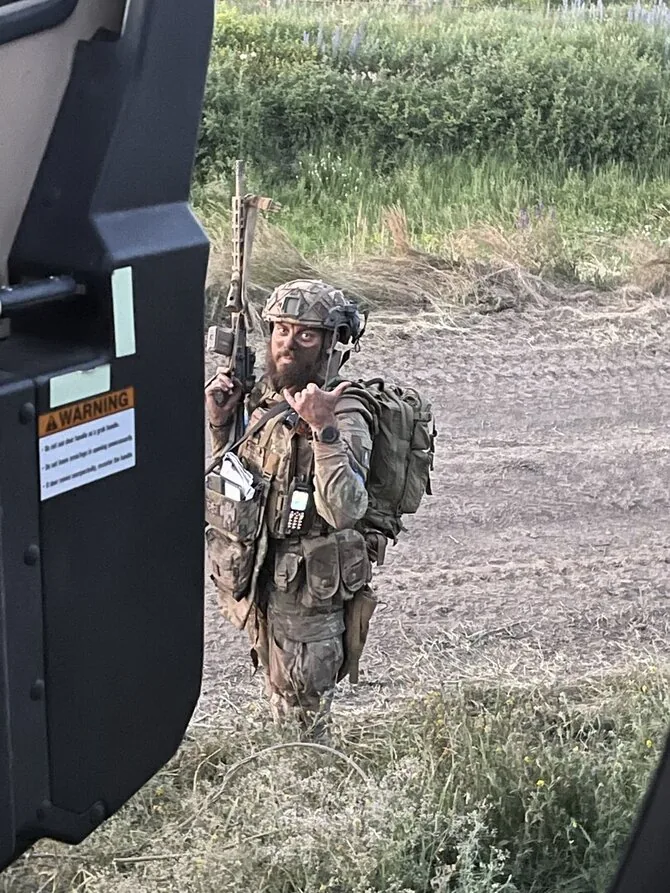
On your social media account, you published advice for Lithuanians and Estonians on what to do when preparing for D-day. With your permission, I would like to publish them, but I want to ask you to comment on them. What are the main points?
Lithuania, Estonia, Latvia are small countries. For you, the threat associated with drone strikes will have a much greater impact. Moreover, however strange it may sound, Ukraine entered the war “gradually,” starting in 2014. There was a certain number of people who had experience in military operations. The country suffered its first losses, so when the full-scale invasion began in 2022, society was able to endure significant losses. God forbid, but if military actions begin in the Baltic states, losses of the level seen in Ukraine in the first days of the war would be an extraordinarily huge blow. When I participated in exercises in one of the NATO countries, we were taught according to standards that losing 30% of a unit’s personnel results in a loss of combat capability. Practice has shown that with 30% of personnel, it is still a sufficiently complete unit capable of countering the enemy’s advantage.
Unfortunately, no words can convey the true reality of military operations. I will give an example. In April 2022, I was training a newly mobilized scout squad. This was immediately after the battles near Kyiv. There was not a single person in the entire squad with combat experience, so I tried to impart as much knowledge as I knew from practice at the time. I thought that classical training and coordination programs would not prepare them for the real conditions of the first battles. I would play audio recordings of various types of artillery shelling, taught them to shoot quickly at close range (instead of the classic 100 meters and more), and to use the first reconnaissance drones. This paid off, as these very guys proved their superiority compared to other soldiers in the battalion. Later, they recounted that “even though we listened to recordings of artillery shelling and learned to distinguish them, in reality, everything still turned out differently.” My advice is a foundation; its purpose is to help shorten the time of adaptation to reality (I sincerely hope it won’t be needed).
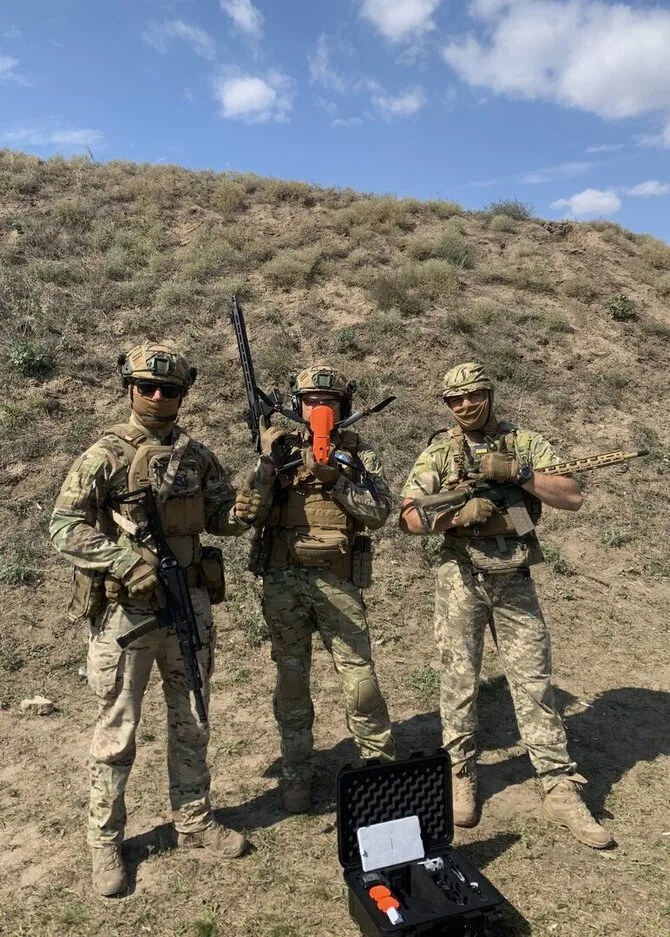
In our public space, disputes about unmanned aerial vehicles constantly arise. There are two camps: some firmly believe that it is worth abandoning everything else and buying, producing only drones. Understandably, Ukraine’s example has proven this. Others hold a more moderate position – that everything needs to be developed (artillery, heavy infantry weapons, air defense, etc.). What is your view? How to find a balance?
The most important thing, in my opinion, that Europe should learn from the experience of the war in Ukraine is that war is very dynamic, has become technological, and requires not expensive and highly precise resources, but abundant, yet cheap and of sufficient quality. It is necessary to be able to adapt quickly. Therefore, having artillery and ammunition reserves is excellent, anti-aircraft defense means are necessary, not to mention heavy infantry weapon sets.
Another question concerns armored vehicles costing hundreds of thousands of dollars. It seems this is no longer relevant. As for drones – here it is essential to constantly follow the latest trends. Drones and technologies on the battlefield change very quickly. There is no single best weapon model worth stockpiling, because tomorrow there will be an even better one. In Ukraine, there are now hundreds of drone models, dozens of ground robotic systems, about ten types of air defense interceptors, and naval drones. And all these types of drones are constantly adapted and tested in combat conditions. Only the best models remain. I cannot imagine how a peaceful country can start developing the “best drone” without testing it on the battlefield. Therefore, a smart solution is to build partnerships with Ukraine in manufacturing and training.
Besides drones, it is very important to have a good battle management system, reliable logistics, and not to forget about electronic warfare systems.
Read more Jankauskas, who drew the winning ticket in the penalty lottery: «I didn’t lie…»
Let’s not delve too much into politics, but I cannot help but ask: where do Ukrainian soldiers draw their strength from? Faith? Upbringing? So-called patriotism?
I will speak frankly. The mass “waves” of patriotically inclined volunteers ready to go to the front ended back in 2022–2023. However, people whom the state mobilized later, after proper training, fight no worse. True, their level of motivation is completely different; they attribute more responsibility to the state than to themselves, but they fight well. They draw strength from the understanding that this is a fight for survival. After what we saw in Bucha, Irpin, Izium, Kherson, everyone understands that if we lose, the enemy will spare neither women nor children.
Describe a good soldier. What is he like?
Physically and morally strong. Able to adapt, eager to constantly learn. Self-confident.
In Lithuania, the Riflemen’s Union has been operating for over a hundred years – a strong paramilitary citizens’ organization. As I have experienced, Ukraine has a rather strong network of volunteer-uniting organizations. How important is it to support the fighting army at a non-governmental level? Do you have any inspiring examples?
I myself was a member of a similar patriotic organization in Ukraine – the Cossack society “Spas”. In 2014 and 2022, my brothers were among the first to stand up to defend the country. Before that, from 2006–2014, we were preparing for a possible Russian invasion and then thought about partisan detachments that would resist the occupier. The current war completely disproved such an approach.
In my opinion, it is precisely such organizations that maintain the balance of patriotism and civic duty. It is precisely such organizations, unconstrained by bureaucracy and state restrictions, that can adapt more quickly to modern warfare; it is precisely such organizations or simply individual proactive people, not belonging to the armed forces structure, who have brought technology and new approaches to the army. This is very valuable.
Let’s try to predict the future. How will it end or not end? What scenarios do you foresee?
Predictions are a very complex matter. Although I do not consider myself a pessimist, I do not see any positive scenarios in the near future. Regarding planning, I will say this: in January 2022, I had my backpack packed with belongings, and in early February, I signed a notarized power of attorney for the transfer of property and business to my wife.
I urge everyone to keep their backpack ready. Because it’s better to withstand a blow while standing on your feet and prepared.
SOLDIER’S ADVICE:
Understand instantly
- I would start by going out for a beer with good friends. Then I would decide who is suitable for what: who is only for beer, and with whom one can go to the mountains. You need reliable people around you.
- 1. I would download the necessary applications, attend courses, and learn to control FPV drones. Then I would organize an “excursion” to Ukraine and learn to fly and work with drones in reality.
- 2. It is necessary to prepare physically, train a bit, and periodically visit a shooting range.
- 3. Next weekend, I would go camping. I would test my sleeping bag and other equipment. I would rely on professional advice.
- 4. I would save food and fuel supplies. I would buy an EcoFlow, my own drone, perhaps a car that I wouldn’t mind.
- 5. I would urge my countries’ governments to publicly request assistance from the Ukrainian government, Ukrainian non-governmental organizations, and volunteer organizations for training in controlling strike drones and their interceptors.
- 6. Tactical medicine courses are essential. I would have two first aid kits at home. One TCCC, the other with common medicines and other necessary items.
The article was prepared as part of the project “Code of Resilience: Riflemen 360° and Awareness in the Face of Information Threats”. The project is partially funded by the Media Support Fund.
Read more Lithuanian football youth lost to Estonians
More articles in the Lithuanian Riflemen’s Union magazine “Trimitas”.