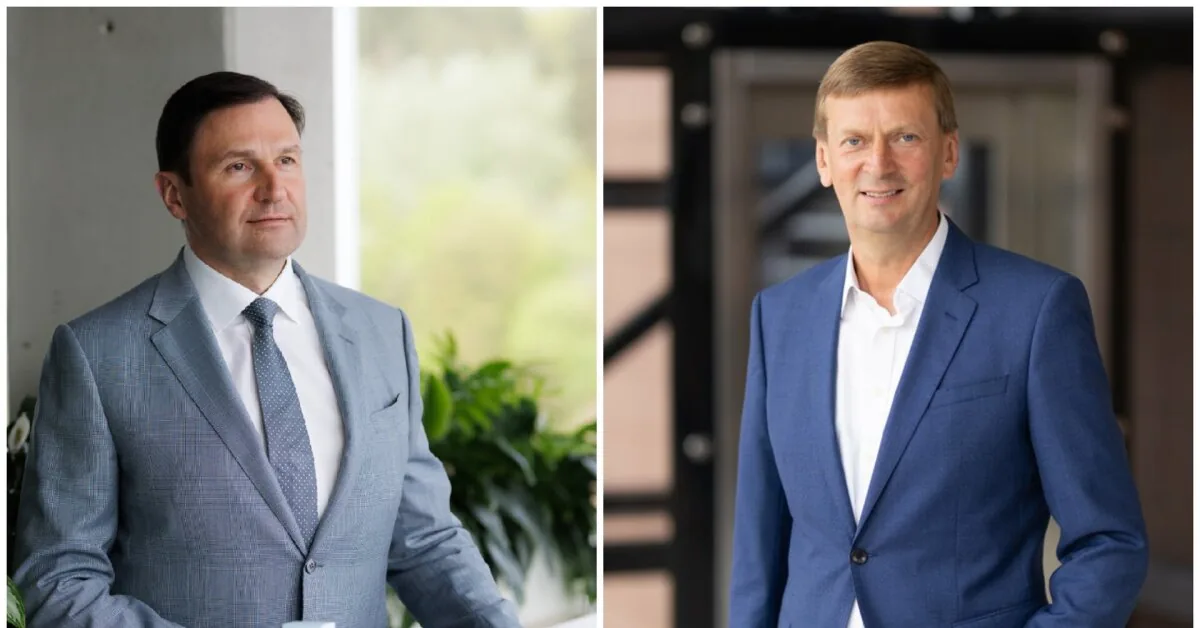
Both of them have built strong organizations, lead large teams, and over many years have proven that business success is no accident. However, when asked what drives a strong business today, both answer the same – people.
Read more Turkish fishing vessel sank in the Black Sea after attack, there are casualties
“Nothing is impossible”
Although Dainius Dundulis and Paulius Grigas lead successful companies today, both vividly remember times when business success seemed much more distant than it does now.
Dainius Dundulis built his business in the wild 90s, when there were no business school tips or clear recipes for success. Goods had to be transported in boxes, and decisions were made not based on textbooks, but on intuition and common sense. The biggest challenge then was not even competitors. The businessman had to face the realities of those times – racketeering and pressure from criminal groups. As D. Dundulis himself has recounted, sometimes he simply had to hide from those offering the so-called “roof”. Despite constant tension and more than two decades of work practically without holidays, he managed to create one of the largest retail chains with Lithuanian capital in the country.
Meanwhile, Paulius Grigas, CEO of UAB KRS, would say one sentence to his younger self today: “Nothing is impossible.”
In his opinion, many goals initially seem much harder to achieve than they actually are. However, results come when a person dares to dream, creates a clear vision, and consistently pursues it.
“A person must dream, visualize, and act. All problems have solutions,” says the manager.
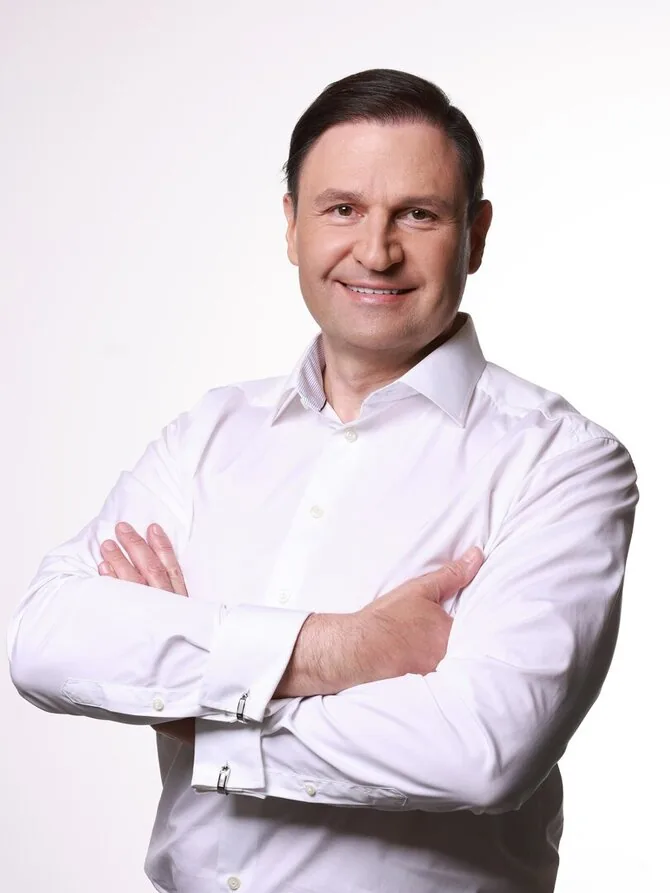
Perhaps that is why, when talking about his company, he first speaks not about complex engineering networks or infrastructure objects. If he had to explain his activity to a ten-year-old child, he would simply say:
“We build incredible buildings. Big, impressive, mysterious, and special.”
This thought says a lot about the manager himself. Even when talking about business, he primarily speaks about people’s imagination, emotions, and ability to create.
Great results begin with believing in what you do.
Although their stories are very different, both entrepreneurs agree on one thing today – great results begin with believing in what you do. And when there is a clear vision, perseverance, and the right people around, even the most ambitious goals become achievable.
The True X Factor of Business
Recently, there has been no shortage of business ideas. Thousands of business plans, training courses, and tips on how to become successful can be found online.
However, reality shows otherwise. Some companies grow, strengthen, and become leaders in their fields, while others, despite having good ideas, investments, or the most modern technologies, never find their place in the market.
Why?
Paulius Grigas, CEO of UAB KRS, believes that the answer should not be sought in business plans or technologies.
It is impossible to copy culture.
“It is impossible to copy culture,” he says.
In his opinion, this is where the true X factor of business lies. A product can be copied. Processes can be adopted. Technologies can be bought. But it is impossible to copy the atmosphere that people create every day. It is impossible to copy trust, shared values, and attitude towards work.
“When there are the right people and the right culture, a company not only adapts to changes but also finds its own way,” he is convinced.
According to P. Grigas, every new person in an organization changes its culture. Therefore, it is very important not only what a person knows but also how they communicate, how they solve problems, whether they can work in a team, and whether they want to grow with the organization.
Dainius Dundulis speaks similarly, only his answer is even simpler: “Communication works wonders.”
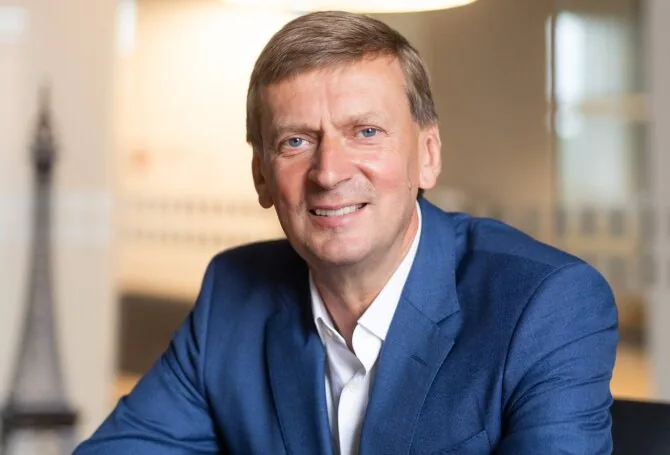
Over more than three decades in business, he has repeatedly become convinced that the biggest problems usually begin not when there is a lack of money or technology. They begin when people stop talking, when an employee is afraid to say that they have encountered a problem, when a manager no longer hears their team, when colleagues choose grievances instead of conversation, or when there is more speculation than openness in the organization.
Communication works wonders.
Both interlocutors agree that today, business needs not perfect employees or brilliant managers. It needs people who can talk, listen, admit mistakes, and together seek solutions.
Work is very similar to family
Perhaps it is no coincidence that both managers, when talking about business and people management, constantly return to the theme of family. Although the businesses they represent are different, their approach to relationships with people is very similar – trust, respect, and responsibility begin not in the workplace, but in a person’s values.
Paulius Grigas first describes himself not as a manager, but as a father and husband. In his conviction, family teaches the most important leadership lessons.
“At home, you are the head of the family, but that is not a privilege. It is a responsibility,” he says.
According to him, responsibility is not just about making decisions or having the right to have the last word. It is daily care for other people, the ability to listen, help, and be a person who can be trusted. He applies the same principle in business. A manager’s duties, in his opinion, are not a status symbol. It is a commitment to help the team do their job as best as possible, to notice problems in time, and to create conditions for people to grow.
Dainius Dundulis also views work relationships very humanely. In his opinion, a team in many ways resembles a family or a marriage. It’s not enough just to be present – you need to constantly build a relationship.
If you feel bad at work, disagree with those around you, you should first look at yourself.
“If you feel bad at work, disagree with those around you, you should first look at yourself,” he says.
Read more Shock for the German national team – super talent is out: «I don’t even know where to start»
According to the entrepreneur, today we often look for culprits in the environment – in the manager, colleagues, organization, or even society. However, mature relationships begin with the ability to honestly evaluate one’s own behavior. After all, no conflict arises out of nowhere, and good relationships are never the merit of one side.
Therefore, both managers agree that the most important thing in an organization is not to look for culprits or win an argument. It is much more important to learn to talk. Not to formally exchange information, but to truly hear each other. To hear an employee’s problem, a colleague’s opinion, or a manager’s arguments even when they are not always convenient.
Today, when many talk about technologies, artificial intelligence, and automation, both entrepreneurs remind us of a simple but often forgotten truth – strong organizations are built not by systems, but by human connection.
A good employee is not afraid to say “I don’t know”
When asked what employee qualities they value most today, both managers surprise by first talking not about professional competencies. Of course, knowledge and experience are important, but they are not what determines a person’s success in an organization.
Human qualities seem much more important to them – openness, honesty, punctuality, ability to work in a team, respect for colleagues, willingness to learn, and, most importantly, the ability to communicate.
Over more than three decades in business, Dainius Dundulis has become convinced that the strongest employees are not necessarily those who always know everything. Much more valuable are people who are not afraid to admit that they don’t know something yet.
“I like people who can say they don’t know something or made a mistake,” he says.
I like people who can say they don’t know something or made a mistake.
In his opinion, such employees usually grow the fastest. They don’t hide problems, don’t try to pretend to be all-knowing, and don’t waste energy saving their image. Instead, they look for solutions, learn, and become stronger.
Paulius Grigas thinks similarly. He is convinced that a culture of error tolerance must exist in an organization. Not because errors are desirable, but because they are an inevitable part of growth.
“To err is human. It is important to talk about mistakes,” emphasizes the manager.
According to him, a much bigger problem than the mistake itself is the attempt to conceal it. When employees are afraid to make mistakes, they stop offering ideas, avoid responsibility, and start working only to avoid doing anything wrong. In such organizations, initiative, creativity, and the desire to improve eventually disappear.
Therefore, both managers strive to create an environment where a person can be themselves. An environment where one can ask a question, ask for help, admit making a mistake, and not feel like a worse employee because of it.
In the opinion of both managers, it is precisely in such an environment that a person’s true potential is revealed. When an employee does not have to pretend to be perfect, they can dedicate all their energy to what they do best – creating value, growing, and together growing the organization.
Trust Creates Results
Organizations invest in training, bonus systems, additional benefits, and team-building events. However, talking to Dainius Dundulis and Paulius Grigas gives the impression that true motivation lies in much simpler things.
Both interlocutors emphasize one fundamental principle – a person must feel trusted.
When a person feels trusted, they work better.
“When a person feels trusted, they work better,” says Paulius Grigas.
In his opinion, a manager’s job is not to stand behind an employee and control every step. On the contrary – the manager must create conditions for the person to work, make decisions, grow, and provide help when needed.
“My doors are open to every employee,” he says.
P. Grigas is convinced that an employee must feel that they can ask for help, ask a question, or express an opinion regardless of their position or length of service. According to him, people reveal their best when they are trusted and allowed to take responsibility.
A manager must help a person do their job better, not do the job for them.
Dainius Dundulis fully agrees with this. In his opinion, one of the biggest mistakes some managers make is the belief that managing processes is the most important thing. In reality, understanding people is the most important.
“If a person doesn’t like people, they shouldn’t be a manager,” he says.
This idea sounds very simple, but it contains the entire essence of leadership. Leading does not mean managing spreadsheets, budgets, or reports. Leading means working with people – with different characters, moods, experiences, and expectations.
If a person doesn’t like people, they shouldn’t be a manager
Over more than thirty years in business, D. Dundulis has repeatedly become convinced that the strongest teams grow where employees are given responsibility and trust. That is why many people who have spent decades in the organization work in the companies he leads.
Both interlocutors agree that a person who is trusted feels important. And when an employee feels important, they start to look at their work differently. They no longer come just to “work their hours.” They begin to feel part of the team, take responsibility for the result, and look for solutions even when no one asks them to.
When people are still the most important
In recent years, there has been no shortage of stories in the public sphere about employee exploitation, mobbing, burnout, and toxic work environments. Therefore, conversations with Dainius Dundulis and Paulius Grigas leave an unexpectedly warm impression.
These are two successful, highly accomplished Lithuanian entrepreneurs whose led organizations have become strong players in their fields. However, their strength lies not only in business results.
It lies in their approach to people.
Both managers talk about trust, respect, communication, learning from mistakes, and an environment where a person can grow. They do not aim to create perfect employees. They aim to create strong teams.
And today, when we often hear stories about poor microclimate, conflicts, or employee undervaluation, it is good to know that in Lithuania we still have managers who consider not technologies, not processes, and not financial indicators as the most important business asset, but for whom people remain the most important.