Crisis is not guaranteed, but it is better to prepare for turbulent times
The European Central Bank (ECB) forecasts that inflation in the eurozone should jump to 3.1% in the second quarter of this year. Of course, the crisis in the Middle East will have the greatest impact on this.
Read more Almost a hundred trees were stolen from a plot in Tauragė district
Raul Eamets, chief economist at “Bigbank,” said that based on historical indicators, geopolitical events could push inflation in Europe to around 6% this year.
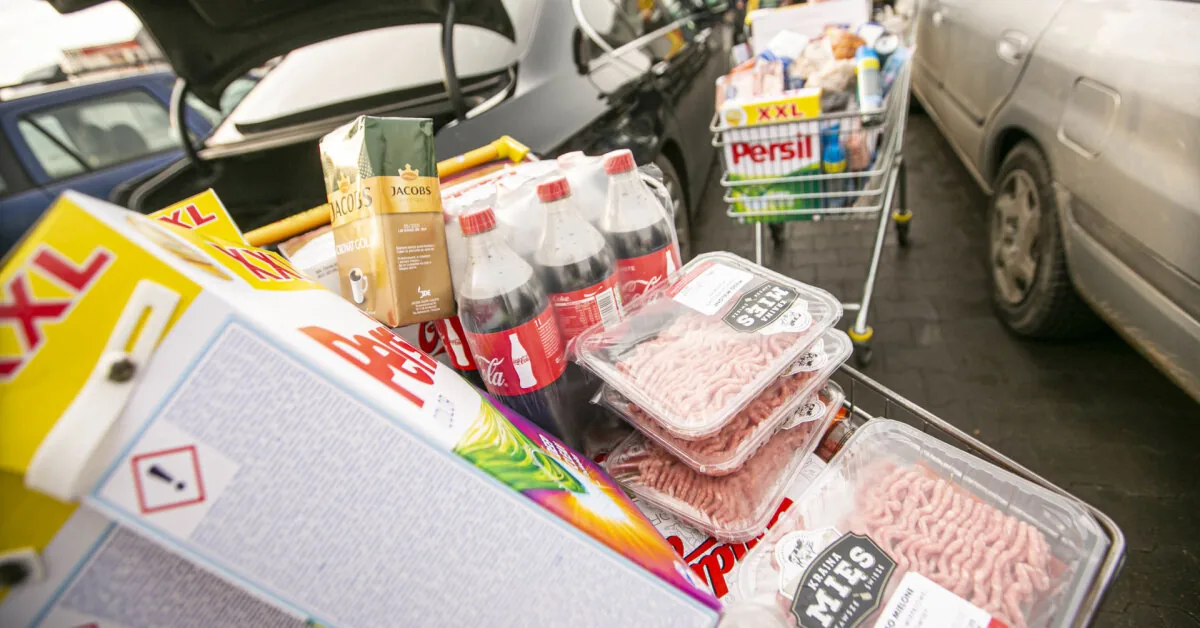
In that case, the ECB would be forced to raise interest rates, which means we would go through another period paying more for more expensive food products in supermarkets, higher heating bills, and increased loan payments.
It does not help that Germany has been facing economic difficulties for some time: factories are closing, exports to China and the USA are decreasing. Although Germany’s crisis is currently local, a stagnation of such an economy size could eventually seriously affect the Baltic countries due to the scale of trade with Germany. Experts urge not to panic but to be prepared.
It is important to see the big picture
The simplest way to prepare for a crisis is to clearly see your commitments and their impact on the monthly budget. People often fear housing loans because of the very long commitment period and large payments, but they take on several smaller commitments at the same time without hesitation.
When choosing any financing services, it is important to look not only at the size of one payment but also at the total amount of all commitments, terms, interest rates, and possible impact if income decreases. Some financial decisions are made by looking at an attractive monthly payment, so it is worth checking how much such commitments actually cost over the entire period.
It is useful to make an “expense map” for this: review the last three months’ bank statements and categorize your expenses. Such an exercise can help find up to several hundred euros per month that can be allocated to savings or reducing loan burdens without worsening the quality of life.
Read more Three politicians left «Nemuno aušra» in the Klaipėda council per month
It is necessary to talk about difficulties
Statistics show that the first step to managing debts is recognizing the problem. According to “Creditinfo” data, as much as 58% of debts publicly announced are paid off in less than 30 days.
Creditors themselves are also inclined to look for solutions: “Early communication with your banks provides many opportunities: changing the payment schedule, postponing payments, reviewing interest rates. It is more beneficial for the creditor to help solve the situation than to start legal proceedings,” explains Rolandas Norvilas, head of “Bigbank” in Lithuania.
Moreover, refinancing can be applied for even when simply seeking better conditions. One of the main benefits of refinancing is that this service allows all loans to be combined into one, which reduces administrative fees and the overall loan burden. In some cases, it can also help reduce the interest paid.
And if loan payments are already officially registered as overdue, it is worth knowing that creditworthiness can sometimes be restored. Also, in such cases, borrowers are prevented from taking new loans – this stops digging an even bigger hole.
The best time to prepare is a time of calm
A recession or a significant inflation spike in the current geopolitical and economic environment can arise in just a few months. Therefore, R. Norvilas emphasizes that it is necessary to prepare for tougher times in advance: “It is mandatory to have at least a three-month reserve for all essential expenses, and financial commitments should be reviewed when the situation is still stable, ideally first getting rid of the most expensive loans.”
Currently, it is forecasted that eurozone GDP growth will be 0.9% in 2026. However, the Bank of Lithuania looks to the future a bit more optimistically, calculating 3.1% growth this year and 2% growth next year. This may mean that economic difficulties in Lithuania will be less pronounced, but it is always wise to prepare for the worst-case scenario.
Read more Andrius Gudžius recorded the best throw of the season in Lithuania