
At the end of May, it was announced that from June 1, 2026, courts would start using the modernized Lithuanian court information system LITEKO II. It was announced that preparatory work would take place before the system launch, so from May 28, 5:00 PM, until June 1, 8:00 AM, public search for decisions, public search for schedules, and a special court hearing schedule search for media representatives would not be available.
Read more A car overturned in Vilnius after an accident
It was warned that at the beginning of LITEKO II’s operation, there might be disruptions in the information system, e.teismas.lt, all court public data search tools, including slowdowns, login issues, functionality, and integration problems.
However, what happened when the new system was supposed to start operating exceeded all fears.
Already on June 2, it was announced that after LITEKO II started operating, court users were encountering system speed problems and disruptions in system functions.
“Specialists are solving problems and implementing technical solutions to ensure system stability, actively communicating with system developers and manufacturers of the system’s technical solution.
Due to the complexity of the problems, our primary goal is to resolve system disruptions that hinder court operations and prevent the organization of court work. At the same time, we aim to restore the provision of electronic court services and access to public data. Resolving incidents may still take several days,” announced the Lithuanian courts.
Interested parties were asked to contact the court by other means. It was reminded that procedural documents can be submitted to the court by delivering them in person, by email when documents are signed with a qualified electronic signature, or by submitting them through the epristatymas.lt system.
On June 3, the problems did not end. The Lithuanian courts announced that the system continues to operate slowly, with constant disruptions in function.
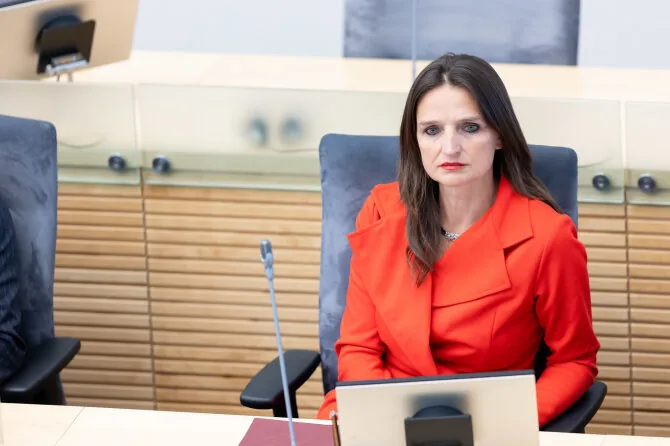
“LITEKO II is a change for the entire court system, so its success depends not only on technology but also on our ability to act as a unified community. During this period, professionalism, constructiveness, and mutual assistance are especially important. I invite you not only to record disruptions but also to share solutions and best practices. I have no doubt that by focusing and working together, we will overcome the difficulties of the transitional period, and the accumulated experience will allow us to create an even more efficient working environment for our entire court community,” said Danguolė Bublienė, Chairwoman of the Judicial Council, quoted in the announcement.
“Currently, the main priority is system stabilization and performance optimization. Resources from both system developers and maintenance teams have been mobilized for these tasks. At the same time, continuous analysis of user-provided information and prompt elimination of identified shortcomings are being carried out,” the announcement stated.
Read more LFF imposed the strictest sanctions on Riteriai’s reserve team
It was also emphasized that there are no possibilities to return to the old system: “The LITEKO I system currently operates only in archive mode. New data is not registered in it, and all active processes are carried out only in the LITEKO II environment. All external data exchanges, integrations, and electronic services have been transferred to the new system, and there are no technical possibilities to return to LITEKO I operations.”
Going back – no longer possible
On Thursday, the problems were still not resolved. The system operated slowly, with constant disruptions in individual functions. The Lithuanian courts assure that a team of NTA, system developers, and maintenance specialists is addressing these issues 24/7.
“It is natural that during a period of change, questions arise as to whether it would not be simpler to return to the previous LITEKO I system. The short answer is – it is no longer possible. The mere return of integrations with LITEKO I, along with preliminary epp assessments, would cost over 1 million euros, not to mention time costs, public procurement procedures, etc. Such a possibility has been discussed in the meetings of the Judicial Council’s Legal Acts Committee, and there is no decision to return to LITEKO I, as such a scenario is neither technically, organizationally, legally, nor financially feasible:
- LITEKO is not an isolated system. It is integrated into the overall ecosystem of state information systems and registers. Data exchange with registers, other state institution information systems, and the e.teismas.lt electronic services portal is already carried out through LITEKO II. The old LITEKO I system currently operates only in archive mode.
- Parallel use of two production systems is not possible due to the interconnections of judicial process data managed in the systems between different courts or their instances. Some courts cannot work in one system while others work in another; this would prevent smooth data exchange and create significant risks of data incompatibility. Such a situation would threaten data quality and the integrity of court processes.
- All integrations, the e.teismas.lt portal, and technological solutions are already adapted to the new LITEKO II architecture, which will be continuously improved and made more user-friendly.
- The aspect of information security is also particularly important. LITEKO I no longer meets modern requirements today. LITEKO II is built using a modern technological architecture, ensuring greater system reliability, data protection, operational continuity, and opportunities for further development.
- Since the start of LITEKO II’s operation, new cases, procedural documents, rulings, and other data have already been registered in the system, existing only in the new environment. Returning to LITEKO I would mean the necessity of abandoning some of the already created data or facing a significant risk to data integrity.
The operational disruptions currently being recorded are a consequence of performance optimization, high loads, the functioning of individual integrations, and the improper operation of other technical solutions, which are being systematically eliminated.
Today’s most important task is not to consider the possibility of returning to old technological solutions, which are already a thing of the past, but to focus efforts on stabilizing and further improving LITEKO II. It is this system that will ensure greater process automation, a higher level of information security, better integrations with state information systems, and a more sustainable foundation for the future digitalization of courts,” the announcement states.
On Friday, the Judicial Council’s Court Administration Committee is holding a meeting with court chairpersons to discuss the emerging problems.
What is LITEKO II
The upgrade of the court system’s information system LITEKO to LITEKO II is one of the largest updates of state-managed information systems.
LITEKO II is a complex system designed for the organization of judicial processes, data management, case distribution, data publication, integrated data exchange with other state data systems and registers, and the provision of electronic court services. In total, almost 40 state data systems or registers
Read more Lavrinovičiai checked how much Buzelis improved: «Let’s go ice our ankles»