

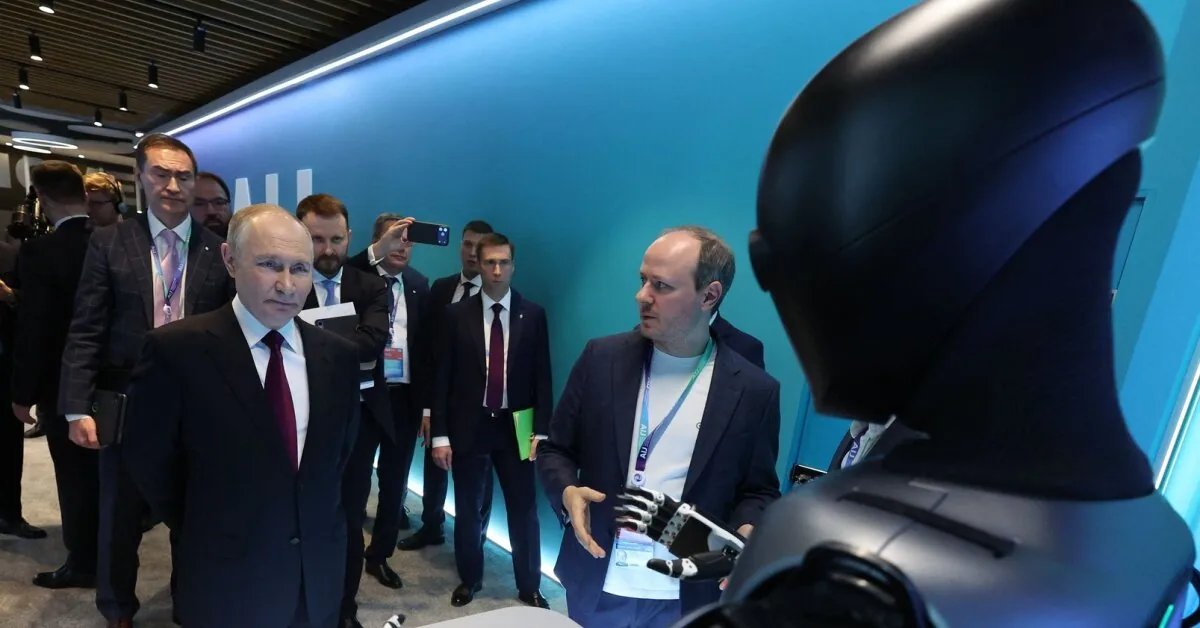
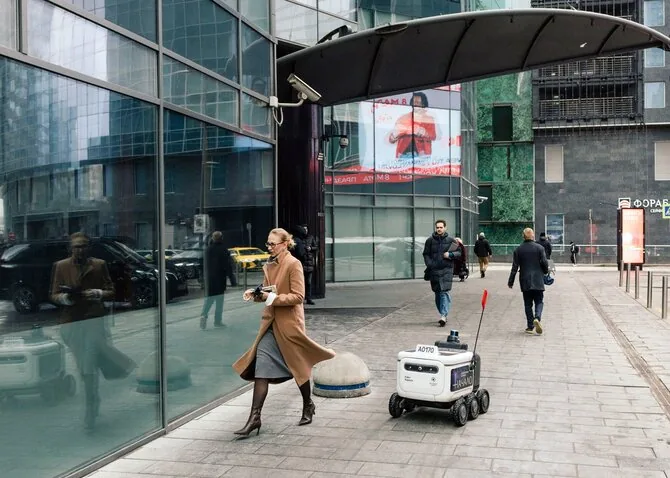
Many of these modern conveniences are supported by a robust digital infrastructure created by the city government, which has made everyday life not only easier but also safer.
Read more EuroLeague Supercup – in the hands of «Real»
The use of digital tools has facilitated police work and helped cement Moscow’s transformation: the shadow of that brutal and ruthless city it was 25 years ago, when killers and thieves roamed, robbing homes or stealing right on the streets, is a thing of the past.
However, these conveniences and security come at a price: the city is rapidly expanding a mechanism of universal surveillance.
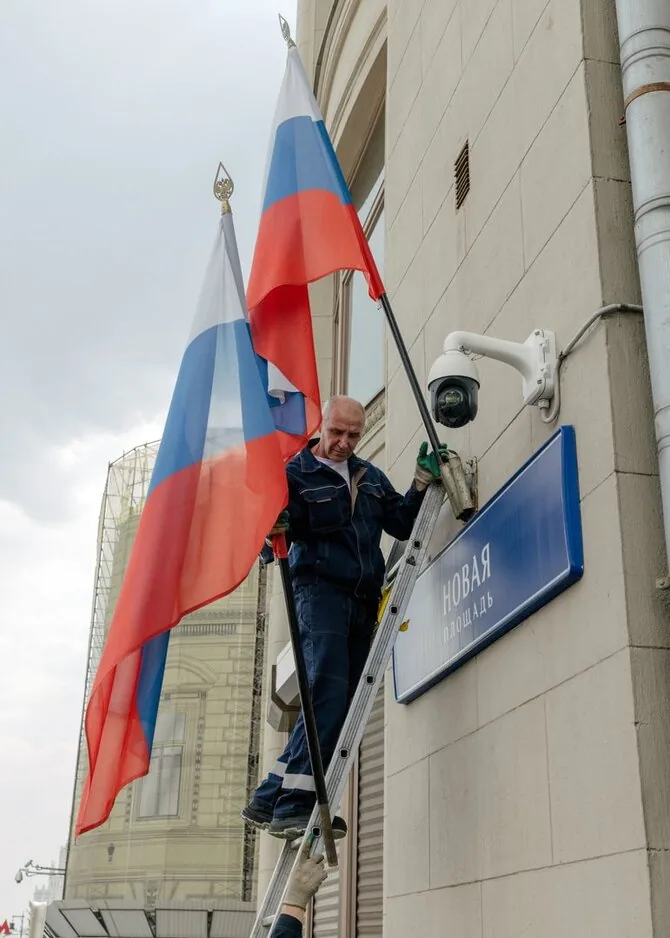
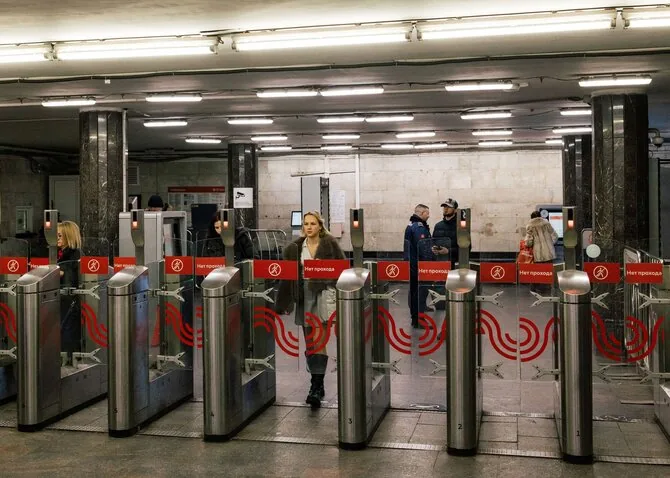
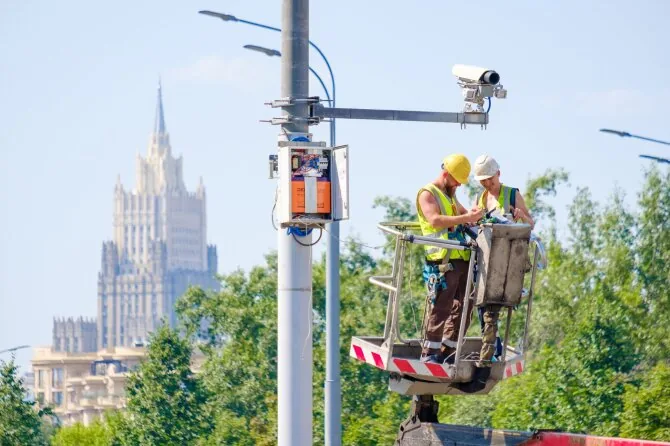
There are about 300,000 surveillance cameras operating in Moscow. It is one of the most monitored cities in the world. Even simply walking around the capital, it is impossible to avoid the camera lens. The same video cameras that allow metro passengers to instantly pass through turnstiles are used for monitoring and identifying people.
In April, at the St. Petersburg railway station, police detained a Russian rock musician because surveillance cameras confused him with a similarly looking, state-wanted Ukrainian public figure. Upon closer inspection of his face and pulling his hair to make sure it was not a wig, the officers released the musician.
This network of surveillance cameras is linked to biometric databases. Providing biometric data in Russia is voluntary, but it is strongly encouraged by ubiquitous advertising. Moreover, Russian citizens who do not provide such data cannot fully use digital services.
Databases help authorities fight not only crime but also political dissidents. Biometric data can be useful for persecuting government critics after their organized gatherings.
The times when Russians openly expressing their opinions could retreat to remote towns to avoid government wrath—as was done during Joseph Stalin’s purges—are essentially over.
According to July data, about 10 million Russians used apps requiring biometric data in one way or another. The Kremlin aims to increase this number further, urging citizens to use these identification tools not only at train stations but also at airports.
This year, the Moscow city government announced that the biometric system will recognize passengers on buses and trams and automatically charge the ticket price after they confirm the purchase in a mobile app.
Other major European cities also have widely developed surveillance networks, especially London. However, the system in Moscow is more centralized and uses biometrics to identify individuals captured by cameras with almost no restrictions.
Since Russia began its large-scale invasion of Ukraine, the role of surveillance systems has become even more significant.
Rumors have been circulating in the country for several months about a new wave of conscription—the first mass mobilization since the start of the war. Until recently, it was relatively easy to avoid military draft because conscription offices were buried in piles of paper files, but now, with AI-enhanced digital systems, it has become almost impossible.
After thousands of Russians fled mobilization in 2022, the Russian government introduced electronic summons with the same legal force as paper notifications.
Vlad, a 28-year-old art and fashion photographer, received a summons in March to appear at the military conscription office for a mandatory medical examination. Through the “State Services” app—a centralized portal for government services, healthcare, and identity verification—he learned that he was prohibited from leaving the country until he complied with this requirement.
Vlad, who asked to keep his surname private due to possible government reprisals, admitted he now lives “consumed by fear” because he ignored the summons, which he considers a prelude to being sent to the battlefield.
“This is total control—once you give so much data, every step you take can be tracked,” the man noted. Frightened by the surveillance cameras everywhere, Vlad stopped using the metro.
Analysts linked to the Kremlin claim that the government, using convenient apps and data collection, is creating a system that better meets people’s needs than Western democracies. According to them, Western countries struggle to plan long-term due to constant changes in power, and in some cases, the development of digital services is limited by personal data privacy concerns.
Russia still lags several steps behind China. There, a “social credit” system evaluates people based on their behavior in financial, legal, and other matters and restricts the freedom of offenders. However, it is clear that Russian technocrats consider Beijing’s digital architecture a model for themselves.
Political analyst Gleb Kuznetsov, who previously worked at one of the largest Kremlin-linked analytical centers, cited Moscow, governed by its long-time mayor Sergei Sobyanin, and Shenzhen—the Chinese high-tech megacity—as urban models superior to Western capitals.
Read more In Vilnius district – a crushing blow to «Žalgiris» championship ambitions
“Sobyanin’s ratings are high not because there is a lack of competition in elections,” G. Kuznetsov wrote in response to questions, “but because the city government actually works for the benefit of the residents.”
FSB versus Kremlin Technocrats
However, Russian authorities who perceive a security threat can instantly disconnect the networks supporting these digital services. This reveals tension between technocratic agencies and security services.
For example, in March this year, mobile internet was unexpectedly shut down for more than two weeks in a large part of central Moscow, including the metro system, temporarily rendering many praised city digital services useless.
Residents were stunned by this decision. Some analysts speculated it might have been a result of state paranoia following the assassination of Ayatollah Ali Khamenei in Iran.
“Russia is returning to the situation it was in 25 years ago, facing patchy globalization,” noted ethnographer Jeremy Morris, one of the few Western academics still conducting field research in Russia.
“You can enter one place and find yourself in a cyber and technologically advanced space,” he explained, “but as soon as you leave this coverage zone, you return to a primitive economy.”
One Russian official, speaking on condition of anonymity, stated that a silent war is already underway in the country.
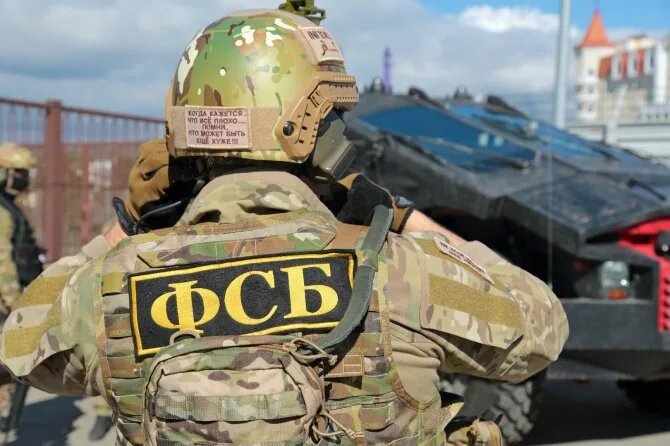
According to him, technocratic institutions such as the Ministry of Digital Development are in conflict with the Federal Security Service (FSB)—especially its notoriously infamous political police division. Although the FSB has access to digital tools, it was not involved in their development.
The FSB prefers old-fashioned analog methods of public surveillance and control, even if it means damaging technologies for which technocrats have spent billions, the source said.
This FSB stance is partly driven by institutional self-preservation instincts—the artificial intelligence threatens the existence of its vast agent apparatus.
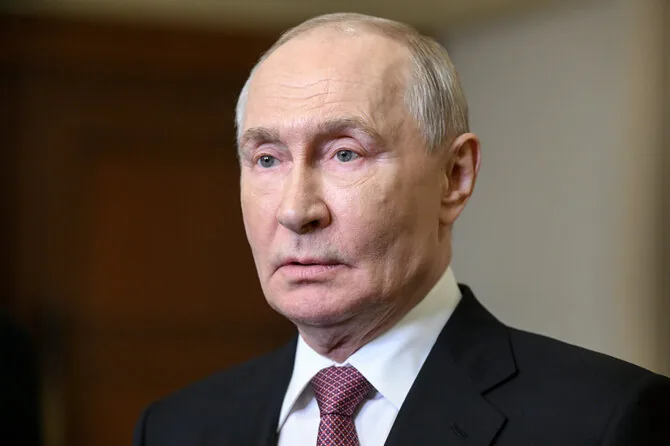
Ultimately, digital and security agencies compete for the attention and approval of one person—the Russian leader Vladimir Putin, who demanded that the government develop artificial intelligence while protecting it from Western influence.
Speaking at a high-level meeting on artificial intelligence in the Kremlin in April, V. Putin presented this issue as an existential challenge.
“The sovereignty of the Russian state in the near future—and, without any exaggeration, its existence—depends on our ability to achieve good results in artificial intelligence, digital platforms, and autonomous systems,” he stated.
Despite ambitions, Russia lacks the infrastructure and hardware to develop this technology independently of China and the United States.
Western sanctions imposed due to Russia’s invasion of Ukraine have limited access to advanced microchips, and since the war began, many of the country’s best tech specialists have left.
The two main Russian AI models—one developed by the country’s largest state bank and the other by a leading local tech company—were “inspired” by or heavily dependent on open-source architectures from China.
Finally, as noted by political analyst Ilya Grashchenkov, who lives in Moscow, Russia will likely be defined by what he called an attempt to “reconcile seemingly irreconcilable things.”
According to him, this includes creating an “external digital perimeter” to isolate the country from the world while accelerating digitalization within Russia itself.
Photographer Vlad, who was drafted, admitted he would gladly give up all these smooth, high-tech conveniences if it meant regaining the freedom he so desperately lacks.
Life in Russia, according to him, now resembles “living with an oxygen mask.”
This article was published in The New York Times.
© 2026 The New York Times Company