





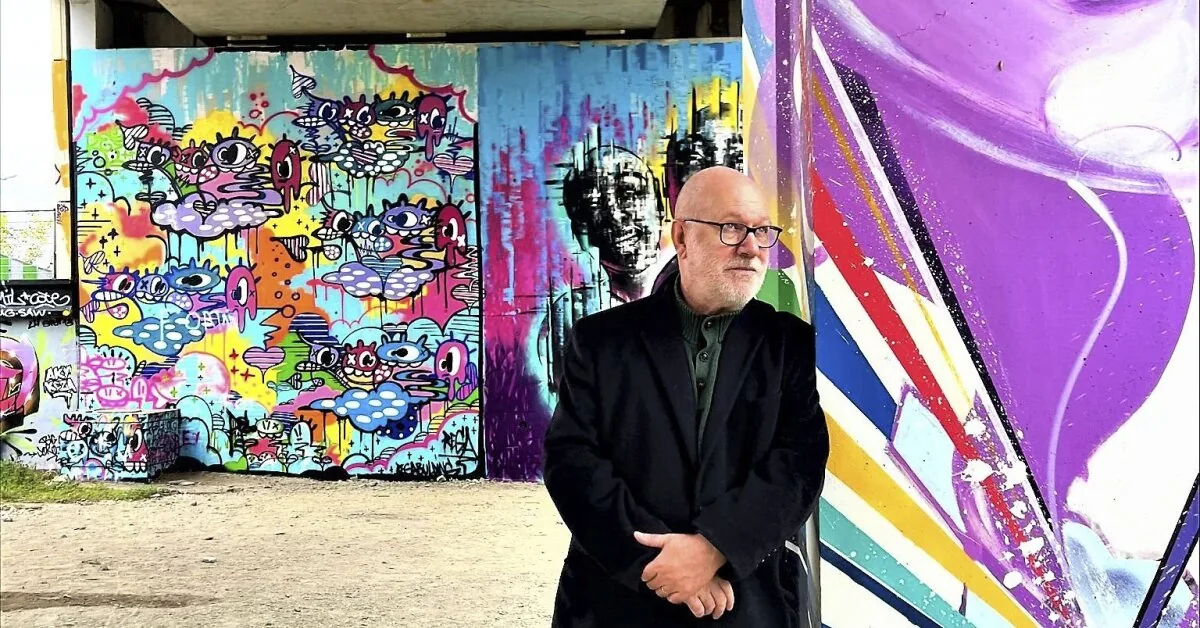
On September 24-26, the professor will give a lecture at the conference “In the City and Beyond: Narratives and Practices” held at the Faculty of Philology of Vilnius University. Monika Augustaitytė-Mickūnienė interviews the scholar about how literature and street art create city myths and physical reality.
Read more Is it possible to fool a «Lie Detector»? Experts explained how it works
– City cartography inspires both literature and visual art. But how do writers shape the identity of cities and the spaces we live in?
– It is hard to find a place untouched by writers. The powerful voice of certain authors has had a huge impact on the identity of a place. For example, in Dublin, James Joyce is felt at every step, and in Lisbon – Fernando Pessoa.
Prominent writers give the city a form. Then tourism joins in, exploiting literature to develop the cultural potential of the area. The tourism industry in general is an avid consumer of literature, films, and series. At first glance, unremarkable spots suddenly become attractions simply because a book was written about them or a Netflix series was created.
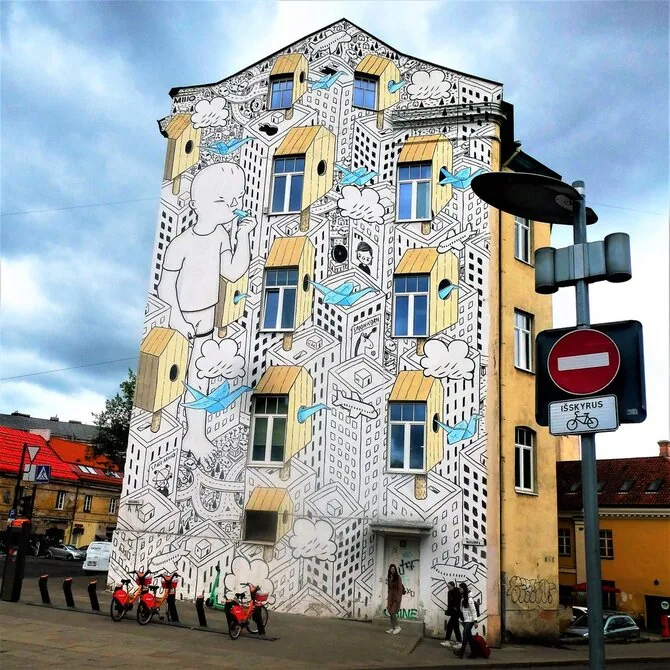
Literature fuels the city’s narratives. Street art does the same, but in a different way. These spontaneous interventions also create a story about the city. Any place and any city offer a multitude of different narratives. It is up to you how you piece together a personal narrative from all these unfolding perspectives.
– To meet tourists’ expectations, architects and businesses reshape spaces according to how they were described in popular texts, thus changing physical reality. Examples here could be: the attached Juliet’s balcony in Verona, the nine and three-quarters platform mentioned in the Harry Potter books at London’s railway station, the non-existent Sherlock Holmes house, etc. What do you think about this phenomenon?
Tourism greedily grabs everything from cinema and literature and turns it into kitsch, as happened with the Sherlock Holmes museum.
– The problem with tourism is that it necessarily needs something tangible. You cannot just let a traveler in London read “Sherlock Holmes” – you have to show them the wax museum and other material forms of literature. This way, literature grows tourism flows.
For example, “The Lord of the Rings” helped tourism flourish in New Zealand – not because of the places described in the work, but because of the film sets. Tourism greedily grabs everything from cinema and literature and turns it into kitsch, as happened with the Sherlock Holmes museum. It seems absurd, but that is exactly what tourists want.
When Swedish crime writer Henning Mankell wrote a series of detective novels about Inspector Kurt Wallander, many travelers flocked to the town of Ystad in Sweden to look for the inspector’s traces. The town got a bakery where the inspector supposedly bought bread and cookies, a police station, and more. A town of fifteen thousand inhabitants, with no tourism potential, created a narrative from literary imagination, similar to London from Sherlock Holmes. Only London does not need Holmes because it has countless other stories.
– It is interesting that a tourist who does not find a known literary or film myth in the city can be disappointed and subconsciously reject reality as “wrong.” How can one protect against this?
Hollywood is a powerful machine. We have seen many films about Los Angeles, New York, and other cities, so when arriving in the USA, one should first understand that this is not a movie.
– We always live surrounded by stereotypes. A perfect example of a stereotyped space is the United States. To truly understand a specific place, we must dismantle the existing image; otherwise, we will remain floating in prejudices. But this is only possible when you are in that place.
Hollywood is a powerful machine. We have seen many films about Los Angeles, New York, and other cities, so when arriving in the USA, one should first understand that this is not a movie. It may take months to realize that what we believed does not correspond to reality at all. And although this can be disappointing, it also opens the door to a different identity, which is far from homogeneous or closed. This experience broadens perception.

– We all know the myth of Paris, which speaks of love and freedom. How did this narrative form and how much does it correspond to reality?
– In 1860, the book “Les Fleurs du mal” by the famous French poet Charles Baudelaire was one of the starting points. Although in France there were earlier writers like Balzac, later Zola and others.
Foreign cinema still reproduces these rosy stereotypes of love, freedom, and eternal Parisian spring.
In the 1920s, many American women writers created here, and at the same time, the myth of the city of freedom was formed. They stayed in Paris because they felt free to live as they wanted and write what they wanted. The same applied to others. These stereotypes persist to this day, so France and especially Paris continue to function as a city of love, freedom, and beauty. Is it true? I am not so sure.
Politically, Paris and France in general are hardly examples of ideal democracy. If you follow European political news today, you understand perfectly well that this probably was never true. However, the stereotype of freedom still lives on. Foreign cinema still reproduces these rosy stereotypes of love, freedom, and eternal Parisian spring.
For example, the series “Emily in Paris” is pure stereotype. You will not see the suburbs there, nor any hint of social tensions. It embodies clichéd American stories about the city of love.
Meanwhile, contemporary French cinema much more often examines Paris’s problems rather than supports the myth. Social French novels about Parisian ghettos and suburbs, about everyday hardships, are light years away from sunny, romantic Paris.
Social French novels about Parisian ghettos and suburbs, about everyday hardships, are light years away from sunny, romantic Paris.
Read more Dramatic season start in Panevėžys: „Lietkabelis“ broke the half-game dominating „Juventus“
– We have already discussed that literature influences the formation of urban spaces. But how much can it become a practical tool in solving contemporary problems such as urbanization or the climate crisis?
– Through my analyses of urban spaces in the context of crises, I try to be practical. But the final word belongs not to me, but to readers or listeners. When I give a talk somewhere, some accept my ideas, while others wave them off as “ordinary literary scholar nonsense.” Literature is just a proposal on how to interpret our environment, and it is open to further interpretations.
I see literature as a laboratory of real-world possibilities. One of its most valuable lessons is diversity. Literature provides keys to multilayered realities; it broadens the mind by revealing real life and everything around us.
When you read Balzac, who wrote about Paris, you also see a representation of the real Paris at a specific historical moment. Therefore, literature should transcend the strict boundaries of pure literary studies to say something about our world, society, and our cities.
The field of literature is often perceived as distant from real social life, so it is necessary to prove that literature, like cinema, photography, or other artistic forms, is practically useful.
You cannot separate literature from urban themes or other social or spatial disciplines: architecture, urbanism, sociology. The field of literature is often perceived as distant from real social life, so it is necessary to prove that literature, like cinema, photography, or other artistic forms, is practically useful.
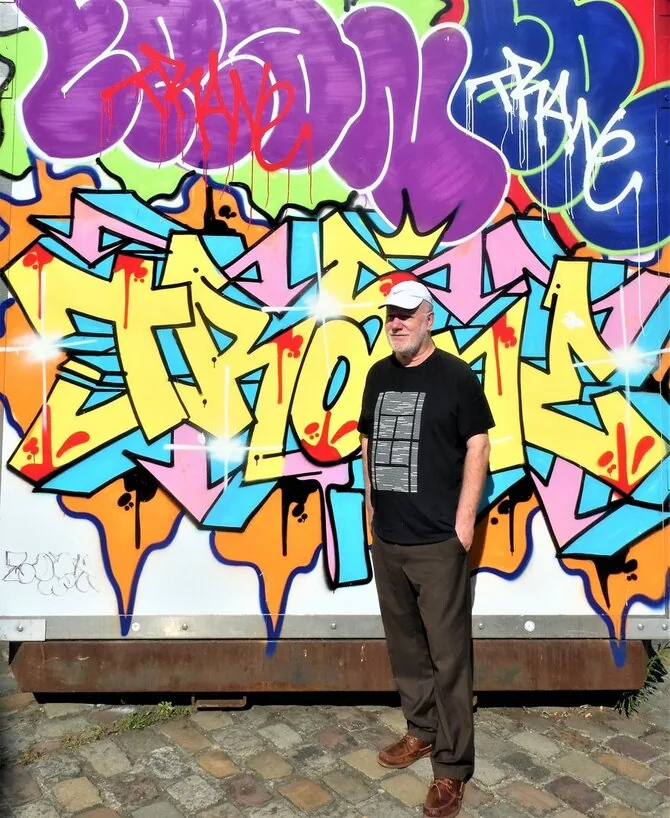
A great example here is street art. It becomes a perfect intermediary because it is narrative and exists directly in the city. It is extremely interesting that graffiti creators call themselves writers, not painters, because they write their identity on city walls. Street artists provide a unique interpretation of a specific place or city problem. These urban narratives are extremely useful to society. Urban planners should listen to the voices of artists. Do they? Sometimes.
– You recently published a book about street art. You talk about how it, like literature, changes the perception of the city. But does street art still function today as a tool of political protest, or is it more decoration?
– This is probably the essential question of street art, requiring a separate dissertation each time. Those who paint on walls say: as soon as an institution intervenes, it is no longer street art. It becomes selling out, integration into the system.
Street artists provide a unique interpretation of a specific place or city problem. These urban narratives are extremely useful to society.
Those who create monumental works claim that if there is no spontaneity, it is not street art. But I disagree. Here, as in literature, it is not enough to write a book and end up in a library or bookstore – the artist also needs to make a living.
Creating a work on a wall costs about 10,000 euros. The artist himself does not have such funds. Of course, if you tag a signature on a fence at night – it is simpler, but to create a large work, resources are needed. When you are twenty, it is one thing, but when you turn forty and have a family, it is quite another. Therefore, in my opinion, there must remain the possibility to support artists without censoring them.
– Have you seen examples where street art becomes a propaganda tool?
– Yes. In China, we can still see government messages about state plans on walls. Similarly, in the Soviet Union thirty-five years ago, walls were used to show what the people had to achieve in economic plans. Usually, this is not considered street art.
Propaganda on walls undoubtedly exists, but such propaganda must please the local authorities, otherwise it will be painted over.
Two years ago, during the presidential elections, I visited Mexico. There, through drawings and inscriptions on facades, everyone advertised their candidates. Propaganda on walls undoubtedly exists, but such propaganda must please the local authorities, otherwise it will be painted over.
– What new urban narratives do you see in street art today?
– New myths are definitely being born. Today, a very pressing and important topic is gender equality. For example, in Valencia, street art opens completely new perspectives on the topic of women. Many painted walls highlight women’s achievements – these can be feminists, scientists, writers, and other personalities. Over time, even I, a Frenchman, being somewhat of a tourist here, began to understand which women are important to Spanish history.
Street art is a way to grasp the limits of democracy. It becomes litmus paper showing exactly where censorship strikes.
Mexican Frida Kahlo is a perfect example of the canonization of women’s culture, which did not exist twenty years ago. I have at least fifty or sixty images of her on walls in my archive because she is everywhere. Usually, institutions support this canonization and the creation of new myths by bringing to light names that were previously undeservedly forgotten, as this promotes social progress.
Street art is a way to grasp the limits of democracy. It becomes litmus paper showing exactly where censorship strikes. These limits differ in different spaces: what is censored in Spain may be completely accepted in France, and vice versa. If a critical comment about the police appears on a wall in France, it is immediately removed, while in Spain such drawings are left untouched. Everything depends on the context.
It is interesting to observe people’s reactions: some demand bans and censorship, others defend. This provokes a discussion about democracy itself. When you learn to read these signs, an incredibly interesting picture opens up. Street art gives an opportunity to see the true culture of a place.
Read more Ed Butvilas, hearing compliments from Serbs, expressed mixed feelings: «Both good and not good»