








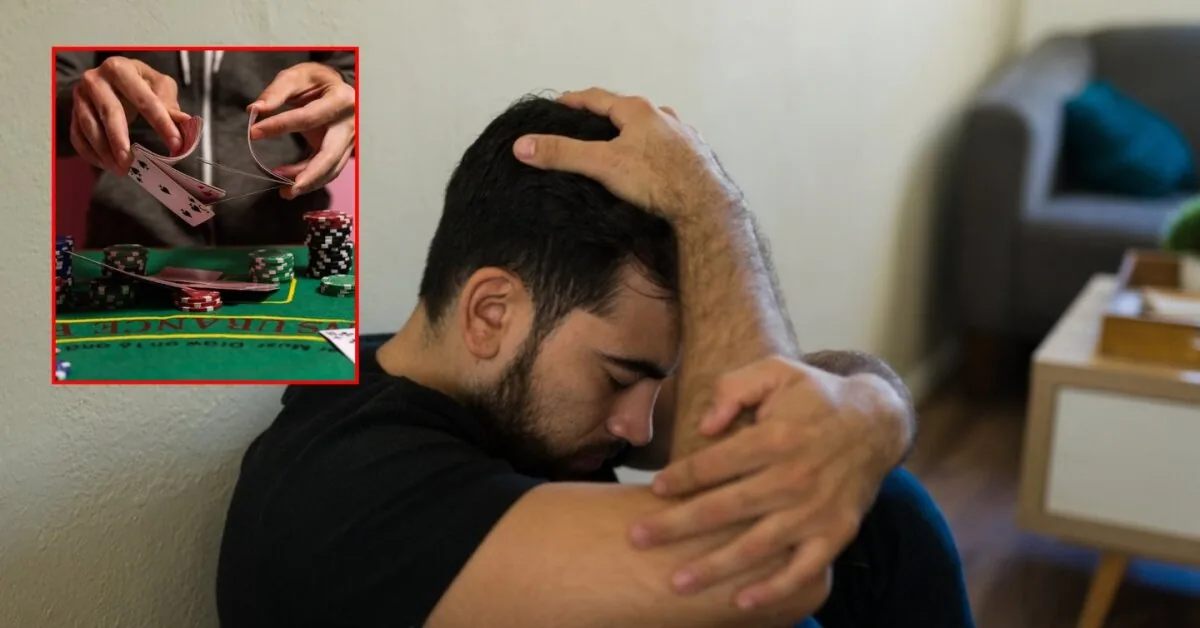
Tomas says that today he understands his story very differently than ten years ago. He thinks that the first signs of addiction appeared back in childhood. He grew up in a family where his father was physically present, but there was a lack of close connection. For mistakes, the boy only received humiliation.
Read more Due to intense Russian strikes on the border, Poland is expanding its siren network
If I did something wrong, I was called stupid.
“I was not allowed to make mistakes. If I did something wrong, I was simply called stupid. I think that’s when the desire to do everything perfectly to prove my worth appeared,” the man says.
At school, he was good at math and liked strategic computer games. Later, it was pennies cards, small money games. Winning meant not only earning – it was a way to feel better.
“I wanted to lead. I saw strategies and schemes everywhere. It seemed that if I was smarter than others, I would win,” he recalls.
The casino became a place where problems disappeared
After the loss of a close person, Tomas, as he says, completely closed off. He did not talk about his feelings with family or friends.
During his studies, a friend took him to a casino for the first time. The first evening ended with a loss, but instead of disappointment, he felt an even stronger thrill: “At first, I ‘burned out’. Then I thought I could win. Probably wanted to prove it to myself.”

After lectures, Tomas worked in construction, so he had money to return to the casino. Over time, he realized he went there not for winnings.
“I think what kept me gambling was my inability to live and my immaturity. I didn’t know how to solve problems, so I ran away from them. Time disappears there, problems vanish, you think about nothing. And when you leave the casino, everything is even worse,” the man confesses.
There was constantly no money at home
For about six years, Tomas gambled irregularly, mostly on weekends. During that time, he met his future wife, who soon noticed a strange thing: the man worked constantly and a lot, but there was still a lack of money in the family.
Bills were late, debts grew, and Tomas always found explanations: “At first, I lied and manipulated. I only admitted it when I realized I couldn’t get out of debt alone.”
Then I didn’t even realize how deeply I was stuck.
But even after seeking help, he still didn’t think he was addicted: “I thought the problem was the debt. I went to the community a couple of times and told myself: nonsense, just wasting time. I can stop gambling myself.”
And he succeeded. The man didn’t gamble for three years, paid off all debts, and believed it was over. But the relapse started from what seemed like a completely innocent evening with friends. “They invited me to play again. Then I didn’t even realize how deeply I was stuck. The amounts grew, I started gambling more often,” he says.
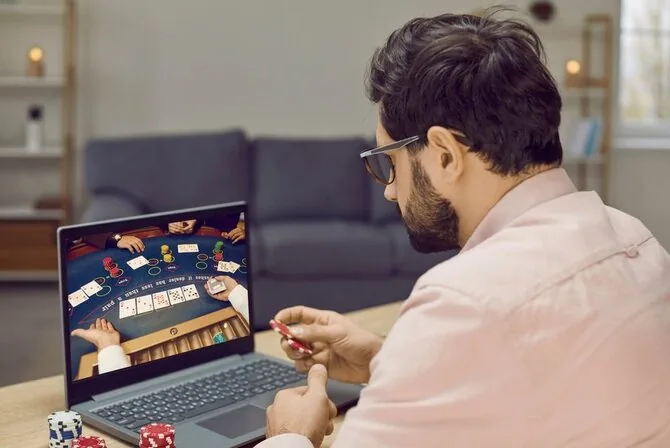
This time everything happened much faster. Tomas was already married, raising two young children, but at home there was more lying, manipulation, and tension.
“I was either in a state of euphoria or completely black emotions. I lived as if in an internal prison,” the interviewee describes his state at that time. “Money lost its weight. It was just a ticket to a place to disconnect. If you have money, you can go disconnect. If you don’t – you think about where to get it.”
The thought of two children stopped him
As Tomas says, about three and a half years ago he “hit another bottom.” Constant lying, tension in the family, and internal pressure became unbearable. While driving, the man seriously considered suicide: “I thought: I’ll crash into a tree and all problems will end.”
Only the thought of two young children waiting at home stopped him. Tomas thought about how they would grow up without a father and who would take care of them. It was especially painful for him because he himself lacked fatherly care in childhood. He says he then realized that no matter what happens, he wants to live and be near his children.
He told his wife about his state. Their relationship had already reached a limit, and divorce was being discussed. But this time Tomas understood that just paying off debts would not solve the problem.

His first step was to apply to the Gambling Supervision Service to ban himself from gambling for life. Later, Tomas started seeing psychologists and joined a group of anonymous gamblers.
He calls his first consultations with psychologist Oleg “a general cleaning,” during which, as he says, long-held wounds were opened. Gradually, he realized that it was not enough to just pay off debts or simply stop gambling – he needed to understand what kept pushing him back to gambling.
Tomas still attends anonymous gamblers’ meetings and does not intend to give them up. The man, who has not gambled for three and a half years, knows that the previous several years’ break once created a false sense of security.
Read more Over UK military sites – hundreds of drone incidents: 340 cases recorded in a year
“There is always a risk of relapse. The point is how I learn to live with my illness, how I take care of myself. If I neglect all this, forget myself, feel safe, everything can come back,” Tomas is convinced.
“I considered myself the smartest”
Looking back, Tomas thinks that for a long time he was prevented from seeking serious help by the belief that he understood everything and could control it himself. Once he considered himself smarter than others, believed he could figure out gambling strategies, and later solve his problem himself.
Now the man admits that such a belief was wrong. He doesn’t even know how much money he lost in total because at some point the value of money disappeared altogether – money was just a means to get back to where he could “disconnect” from everything.
Now I live the best life of my life.
Today, after three and a half years without gambling, Tomas says he lives completely differently. The biggest change for him is not the paid-off debts or the fact that he no longer gambles, but the learned ability to take care of himself and not run away from what is difficult.
“Now I live the best life of my life. I couldn’t even imagine such changes before,” Tomas says.
SPECIALIST COMMENT
Comment by Gabriela Glušauskaitė, senior specialist and psychologist at the Gambling Supervision Service.

– Tomas says that since childhood he felt a strong need to be the best and prove he is not stupid. Can such a link between self-esteem and winning or superiority over others later become one of the reasons why a person is especially drawn to gambling?
– First of all, I want to thank Tomas for his openness. I believe that such sharing of experiences can contribute to raising public awareness and reducing the stigma of problem gambling.
Speaking about gambling involvement, linking self-esteem with winning can be one of the factors increasing a person’s vulnerability to gambling addiction.
If from childhood a person has learned that making mistakes means being unworthy – “stupid,” then the person feels valuable only when they are the best, for example, winning, having a significant amount of money, or otherwise externally proving their superiority.
Gambling can gradually become the activity where one seeks to confirm their worth, since gambling behavior is often associated with luxury and fun. Unfortunately, the gambling mechanism is designed so that due to random results and possible profit, this activity strongly engages and can cause addiction, especially for those who start to see gambling not as entertainment but as a source of self-esteem confirmation or income.
Winning temporarily provides not only financial reward but also strong confirmation: “I can do it,” “I am not stupid,” “I can be better than others.”
– The man had stopped gambling for three years and thought he had overcome the problem, but then he relapsed strongly. Why does a long period without gambling not necessarily mean that the addiction problem is solved?
– A long period without gambling is a very important achievement, but it does not by itself mean that the person will not return to gambling. Addiction is not just behavior, so it is important to understand what supports it, and psychologists/psychotherapists and anonymous gamblers’ groups can help with that.
If during the non-gambling period a person learns to recognize situations that pose a relapse risk, understands what need gambling fulfilled for them, and finds other ways to cope with emotional difficulties, then the risk of relapse decreases. But if gambling was simply stopped and the person did not learn new skills, the main difficulties remain unresolved, and under certain circumstances, the desire to gamble can return even after several years.
The thought “I am already recovered, so one time won’t change anything” can be especially dangerous.
A relapse after a long break should not necessarily be seen as “going back to the beginning.” Rather, it is a signal that in certain situations the person is still vulnerable. The thought that “I am already recovered, so one time won’t change anything” can be especially dangerous.
I tell my clients that they can control themselves before gambling, but once they try gambling again, they will no longer be able to control themselves. Even one gamble can reactivate the previous behavior pattern, especially if the person had serious gambling problems before.
Therefore, if you feel you have gambling problems or thoughts about gambling return, it is important not to be alone and to seek help from specialists, loved ones, or Anonymous Gamblers groups.