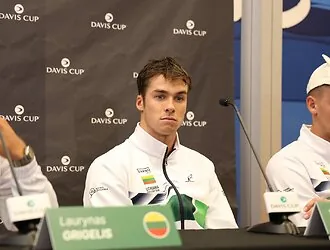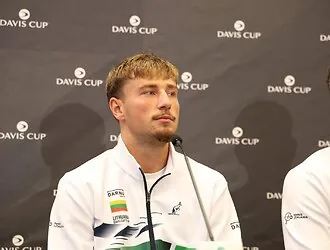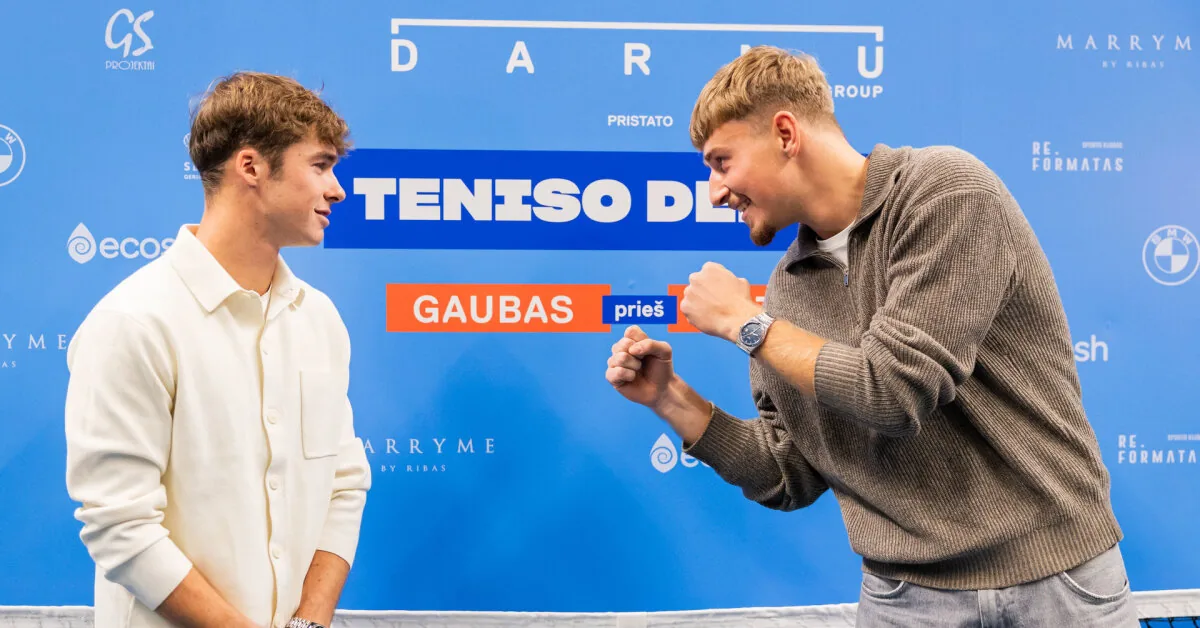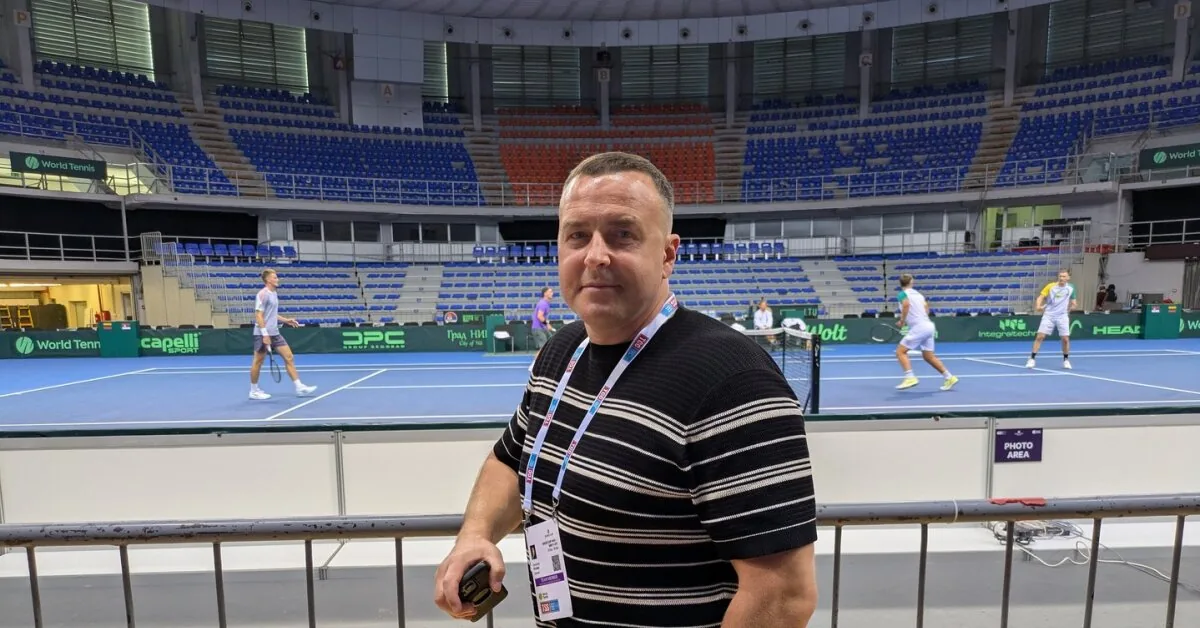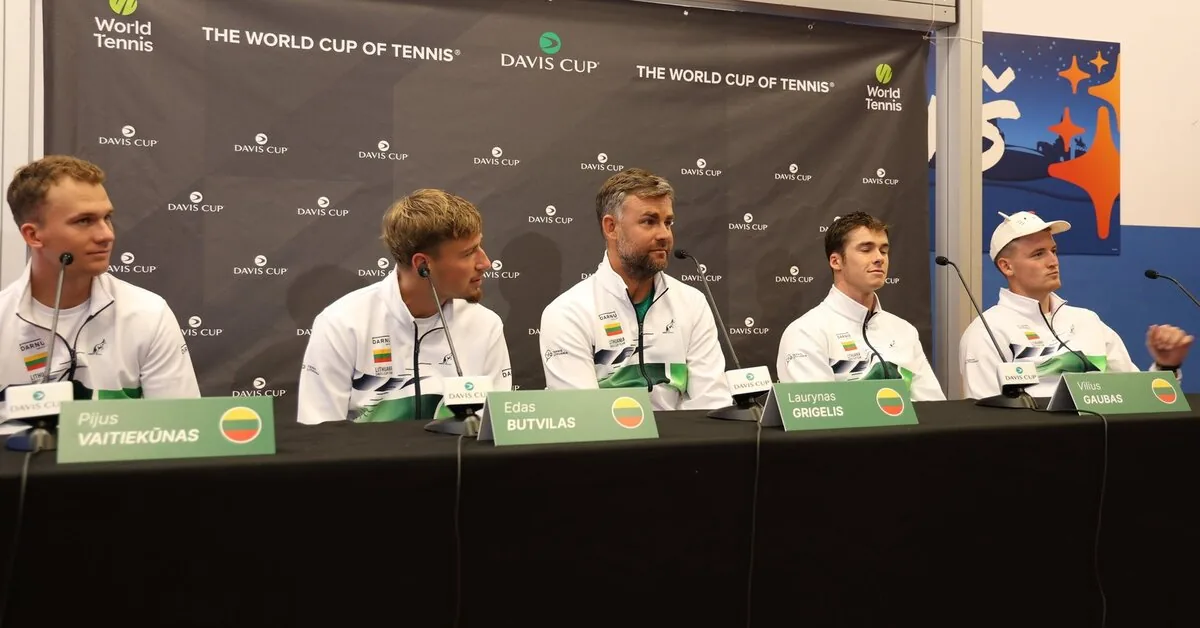







Vilius Gaubas, Edas Butvilas and other Lithuanian tennis players finished rehearsals at the Čair Arena in Niš, where on Saturday and Sunday they face a showdown with the formidable hosts.
Read more From insect DNA to a Japanese garden: what landscaping trends are changing our environment
Although Serbia does not have its tennis superstar Novak Djokovic in this encounter, his compatriots are ready to defeat the Lithuanians coached by Laurynas Grigelis and return to the tennis elite – it is no coincidence that the Serbs won the Davis Cup champions trophy in 2010.
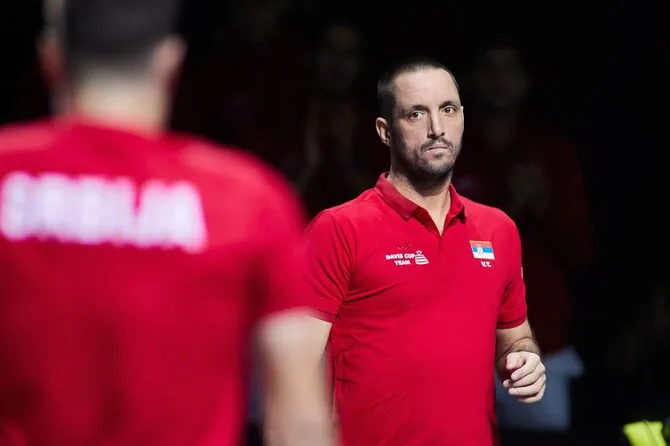
“Lithuania is a very strong opponent, they have two young talented players, but I believe in my team and victory,” confidently stated Serbia’s national team coach Viktor Troicki after the draw ceremony, who himself contributed to the Davis Cup triumph on the court 16 years ago.
- The draw for the Davis Cup first world group meeting between the Serbian and Lithuanian teams in Niš determined that on Saturday at 3 p.m., Edas Butvilas (ATP-194) and Serbia’s team leader Miomir Kecmanović (ATP-61) will be the first to step onto the “Čair” arena court.
- In the second match on Saturday, Vilius Gaubas (ATP-119) will face Hamad Medjedović (ATP-77).
- Sunday will start with a doubles match. Lithuania’s team captain Laurynas Grigelis nominated Justas Trainauskas (ATP-1677) and Pijus Vaitiekūnas (ATP-1689), while Serbia’s captain Viktor Troicki chose Stefan Latinović (doubles ATP-90) and M. Kecmanović. The doubles match starts at 2 p.m.
- After the doubles, two more singles matches are scheduled: M. Kecmanović will play against V. Gaubas, and H. Medjedović against E. Butvilas.
The tennis duel between Lithuania and Serbia will take place in Niš – the third largest city in Serbia, in the southwest of the country, where several Roman emperors were born and lived in ancient times.
Now a city of 180,000 inhabitants, it is an important economic center of Serbia, especially in electronics, mechanical engineering, textiles, and tobacco industries, but earlier it even earned the nickname “city of emperors.”
Nowadays, Serbia touches greatness mostly through sports.
In politics, the country is stuck in a populist autocracy dictated by the president Aleksandar Vučić, who defends himself against protesters.
Still glorifying war criminals from the conflicts three decades ago and resenting NATO that restrained them, Serbs feel affinity for today’s biggest aggressors, the Russians, who have penetrated Serbia with their oil, covering all roads with “Gazprom” and “Lukoil” gas stations. Yet a few decades ago, they had surpassed the Soviets in economic progress, still under the Yugoslav umbrella.
It was during the Yugoslav era that much attention was paid to sports, and after Croatia, Slovenia, Bosnia and Herzegovina, North Macedonia, Montenegro, and Kosovo gained independence, the Balkan representatives keep harvesting the fruits of trees planted decades ago.
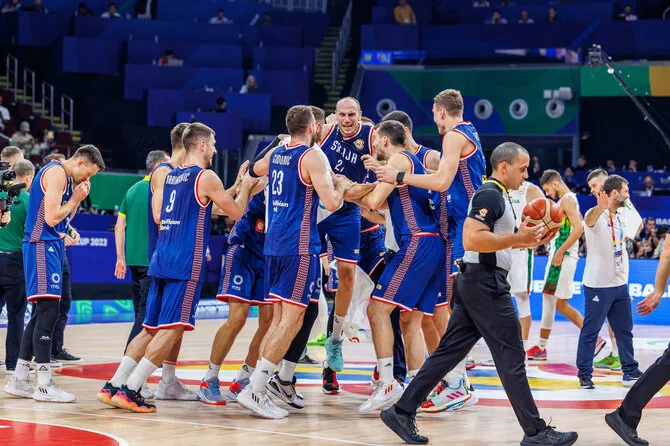
Even among strong sports countries like Croatia and Slovenia, Serbia appears even more powerful.
“We always play various sports. As children, we spend a lot of time outdoors, where sports games with friends go best. That’s how you grow to love sports more and more,” Viktor Troicki sought an answer to the 15min question. “Yes, we have talent for sports, obviously, but probably there is no single explanation why. I think children like to play with a ball from a young age, maybe that’s somewhat the difference from other countries in the world.”
Serbia has not only strong clubs, such as Belgrade’s football club “Crvena zvezda,” which won the UEFA Champions League, or Belgrade’s basketball club “Partizan,” also once the strongest in Europe.
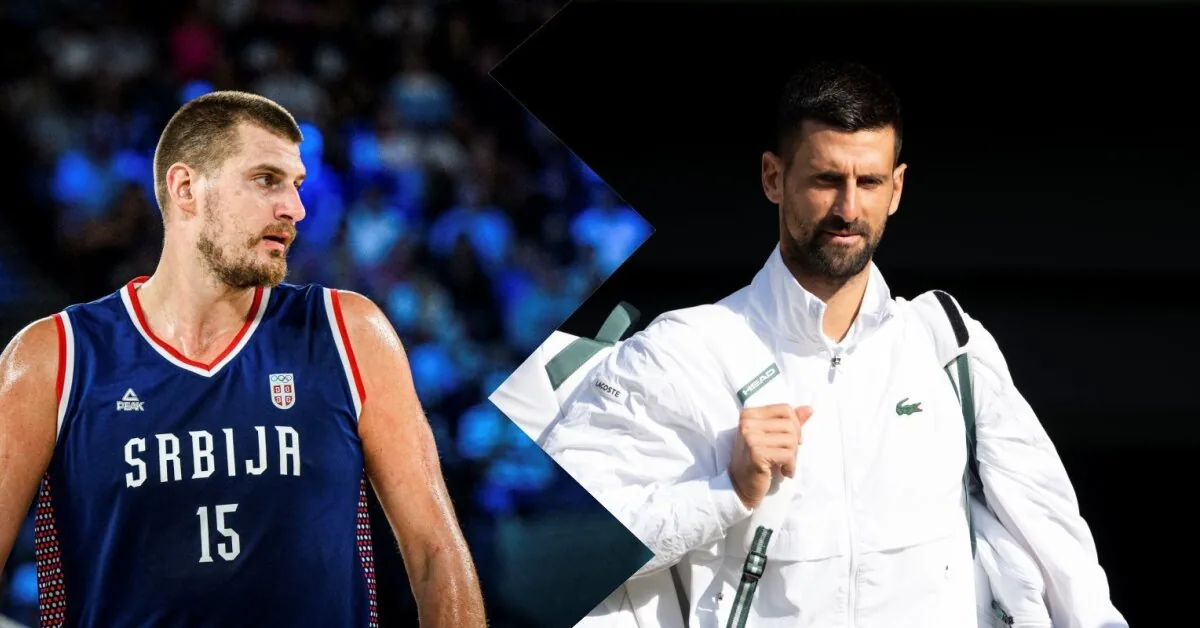
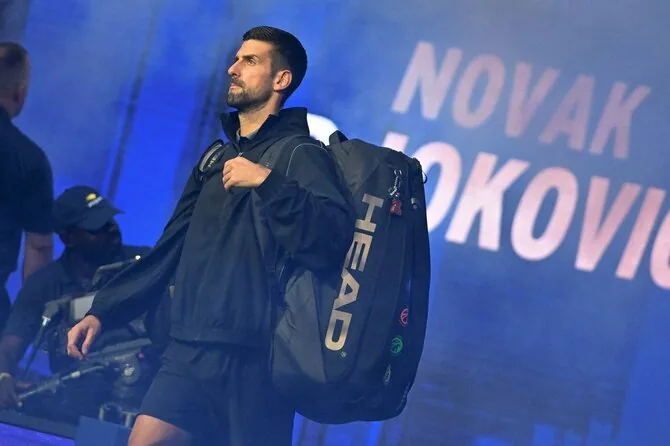
Even better known worldwide are Serbia’s current sports giants – three-time NBA MVP Nikola Jokić and tennis “Grand Slam” record holder N. Djokovic.
There are more prominent personalities in Serbian sports. Here are a few examples:
In athletics, in recent years, javelin thrower Adriana Vilagoš and high jumper Angelina Topić have won several medals at European championships.
Hungarian Serb Dalma Ružičić-Benedek, who excelled in canoeing, holds 7 world and European champion titles won between 2003-2011.
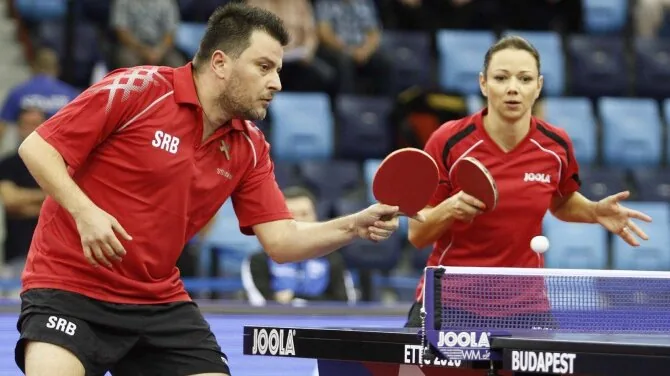
Aleksandar Karakašević is a multiple European table tennis champion, winning three titles playing mixed doubles with Lithuanian Rūta Paškauskienė.
Serbs have long had accurate shooters, and at the recent Summer Olympics, Damir Mikec and Zorana Arunović won gold in mixed air pistol shooting events.
Milorad Čavić, born in California, was a former world record holder in butterfly swimming.
In outdoor tennis – a golden constellation.
Monica Seles, Ana Ivanović, and Jelena Janković have been former No.1 women’s tennis rackets in the world.
Read more Put this with green tomatoes – they will ripen much faster: a simple trick
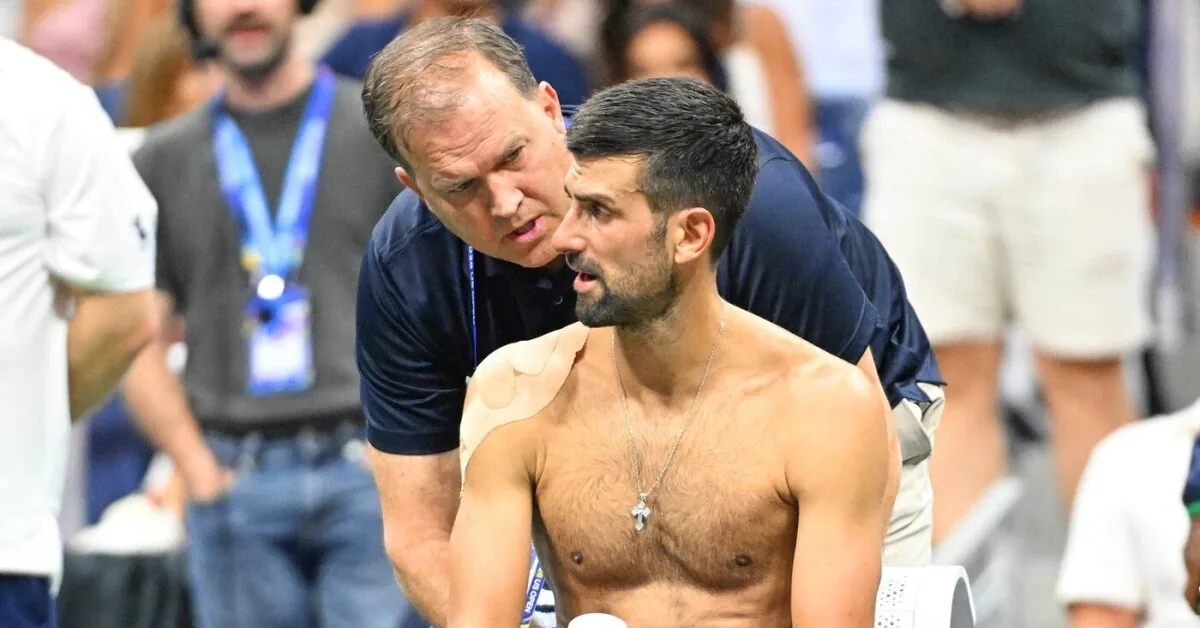
In men’s tennis – probably the best player of all time in this popular sport is N. Djokovic, the 39-year-old Serbian tennis legend, who has won the most “Grand Slam” tournaments in history (24) and held the No.1 world ranking for a record 428 weeks.
N. Djokovic is missing the Davis Cup matches in Niš this weekend, but Serbia will be represented by other strong players.
27-year-old Miomir Kecmanović (ATP-61) has reached as high as 27th in the rankings and earned $9.3 million in prize money during his career. He started playing tennis at six with his grandfather, former Yugoslav army general Jovan Pavlov, moved to Florida at 13 with his aunt to train, and became the world’s top junior tennis player. M. Kecmanović has won two ATP tournaments.
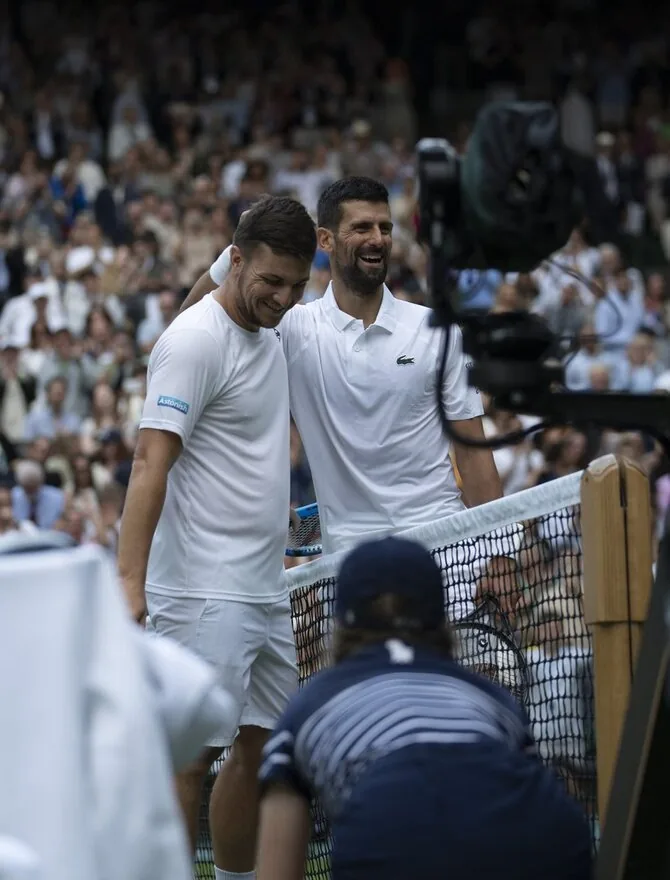
23-year-old Hamad Medjedović (ATP – 77), who won the “NextGen” finals three years ago (featuring the best players under 21 in the world), climbed to 56th in the world rankings this year. H. Medjedović is known for his friendship with N. Djokovic – the Serbian legend personally coached the young compatriot on the court and provided financial support, covering all travel expenses.
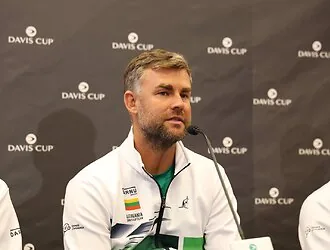
“They are really good at sports. Their physique is suitable for sports, but mentality is also important,” Lithuania’s tennis team coach Laurynas Grigelis reflected on Serbian strength in sports at the Čair Arena before the Lithuanian training. “From a young age, they are encouraged to win, which pushes them forward. Also, tennis is an old sport for them. I think our Lithuanian tennis is still young. In Lithuania, serious interest in tennis started around 2010. So we have been in tennis for maybe only 15 years. Serbia has been longer.
I would like to see what we will be like as a tennis country in 15 years. When it will be about 30-40 years, when more people watch tennis, more children attend tennis. And now the situation is not bad, but I think in 15-20 years it will be even better.”
Serbs are strong in team sports as well.
In basketball, Serbs have twice become world champions and twice runners-up, three times European champions, including in 1995 when led by Aleksandar Đorđević they defeated Lithuania in the final. The collection also includes two Olympic silvers and a bronze from the recent Olympic Games in Paris.
N. Jokić is often considered the best basketball player in the world, but before this “Denver Nuggets” monster, Serbia had many legends: Vlade Divac, Predrag Danilović, Dejan Bodiroga, Predrag Stojaković, Miloš Teodosić, Bogdan Bogdanović, and others.

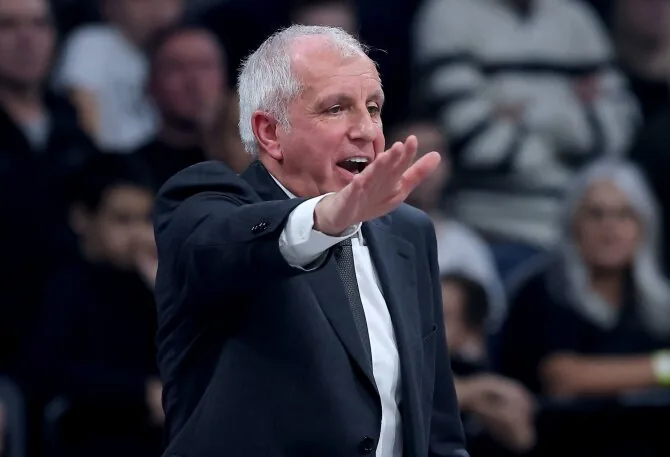
Coach Željko Obradović is the strategist with the most – 9 – EuroLeague titles, followed by the legendary Dušan Ivković, and also Igor Kokoškov – the first European coach at the helm of an NBA club.
Basketball is the second most popular sport in Serbia, slightly behind football, in which Serbs also always have talents.
Nemanja Vidić, Dejan Stanković, Branislav Ivanović, Aleksandar Kolarov, Nemanja Matić, and Dušan Tadić have distinguished themselves in the Champions League representing their clubs. As a football national team, Serbia has no titles but has played in five World Cups, and the youth team became world U20 and European U19 champions a decade ago.
In the city where the tennis showdown will take place this weekend, Niš, Nikola Karabatić was born. Raised in 1984 in a Croatian and Serbian family, the handball player representing France became an Olympic, world, and European champion and was named the best handball player in the world three times.
Serbia is also very strong in volleyball, where their men became Olympic champions (2000), and the women recently won their second world championship title.
Serbian water polo players are second in the world by titles after the Hungarians, winning gold in the last three Olympic Games. Filip Filipović was named the best water polo player in the world four times.
So what mostly determines Serbia’s strength in sports? The old Yugoslav system? Good coaches? Genes and big bodies?
“In basketball or water polo, we have good systems, but in tennis, we did not have great traditions in the old days,” V. Troicki pondered. “Yes, we had a wonderful generation, maybe not so much now, but probably every generation is different.
Read more «This is nothing but a scam»: buyer surprised by fruit prices in a Kaunas store
Ultimately, there is no single explanation.”