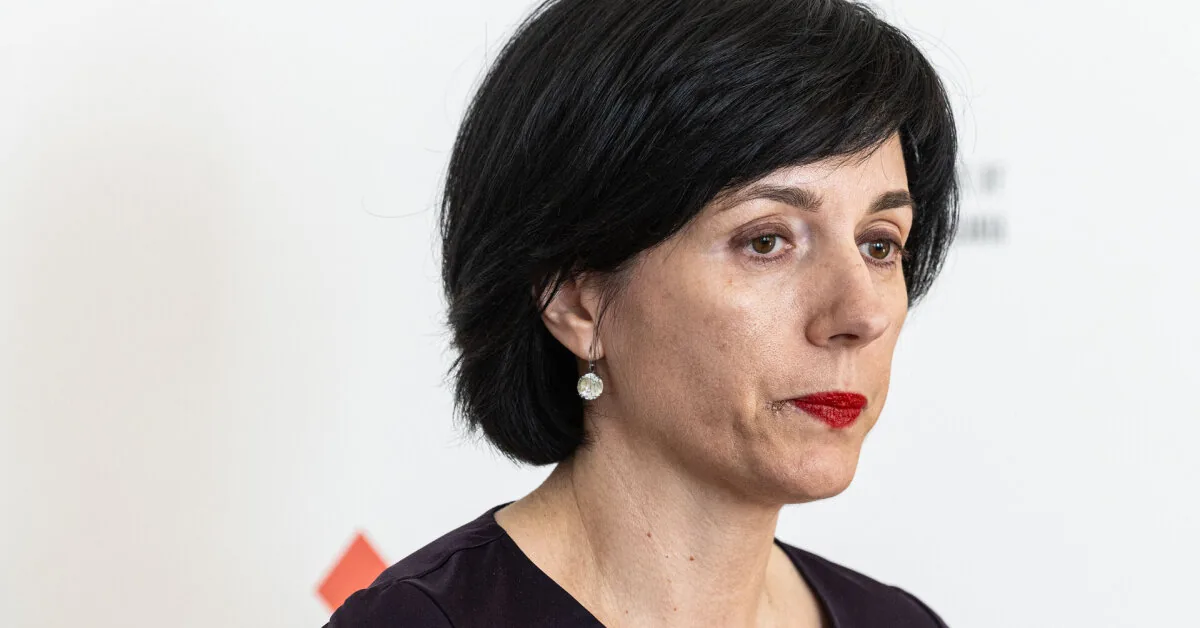






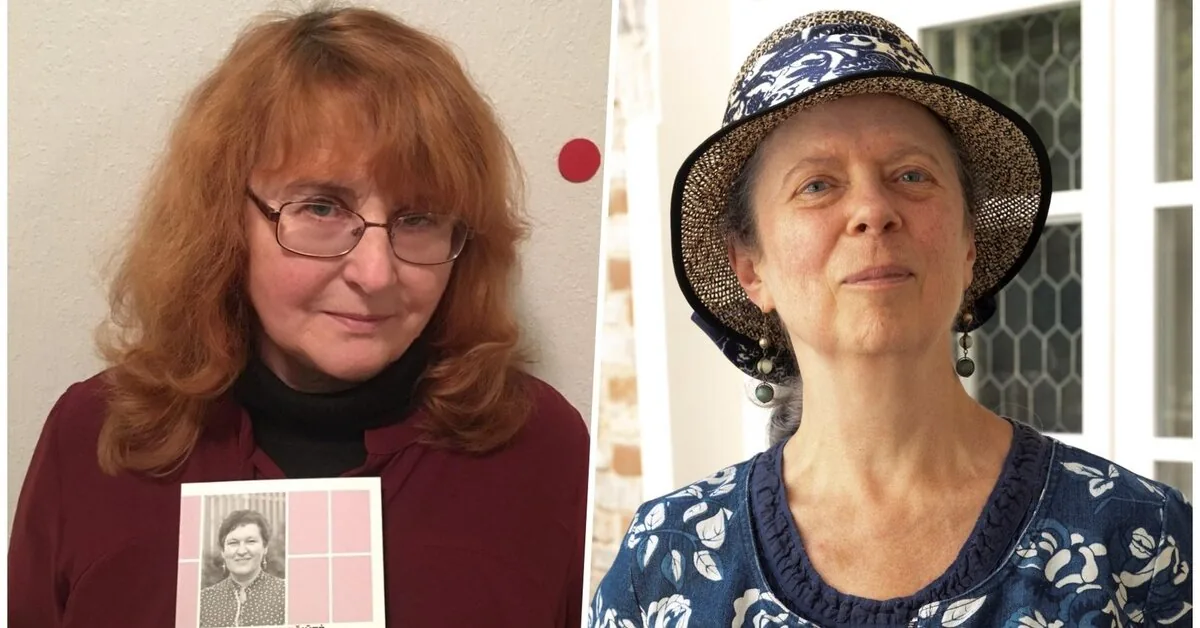
The St. Jerome Prize for a translator of foreign fiction and humanities literature into Lithuanian was awarded to Austėja Merkevičiūtė – for translations of German classics in philosophy, psychology, and psychoanalysis, a significant contribution to the formation of Lithuanian terminology in these fields, an unparalleled commitment to German literary classics, opening Persian poetry to the Lithuanian-reading audience, and the highest translation standards.
Read more 252 bodies of Russians killed handed over to Ukraine
Having started translating more than thirty years ago, Austėja Merkevičiūtė published numerous then very topical translations of fiction, philosophy, and psychology from German and Russian in Lithuanian cultural publications such as “Šiaurės Atėnai,” “Metai,” “Liaudies kultūra,” “Kultūros barai,” and “Gimtoji kalba.”
In 1997, the first book was published, Austrian psychiatrist and neurologist Viktor E. Frankl’s “Still Say Yes to Life.” This book began a very important thread of the translator’s work, namely translations of classics of psychotherapy (works of the three founders of Viennese psychotherapy directions Sigmund Freud, Alfred Adler, Viktor E. Frankl, and the creator of analytical psychology, Swiss Carl Gustav Jung).
As literary scholar Dr. Regimantas Tamošaitis writes, “It is gratifying that the complex yet elegant and fluent works of psychotherapy classics, having acquired adequate terminology, also sounded smoothly in Lithuanian.”
The second creative thread of A. Merkevičiūtė became fiction. Again, first and foremost, the Viennese classics: Stefan Zweig, specifically his trilogy “The World Builders” (although, with the onset of the economic crisis, the publisher abandoned publishing the third, arguably the most interesting, part of the trilogy “The Struggle with the Demon” about Hölderlin, Kleist, and Nietzsche), and Elias Canetti (the first two volumes of his autobiographical cycle).
Then came unexpected poetry translations from Persian and German, collections of Iranian poets Ali Abdollahi and Sohrab Sepehri were published (Ali Abdollahi’s “The Soul’s Peak in the Bow” won the 2018 “Poetry Spring” prize), as well as the bilingual poetry volume by Schirin Nowrousian “Wilna Worte / Vilniaus žodžiai,” for which the poet was awarded the Vilnius Mayor’s prize. Soon after, the first prose translation from Persian appeared, the harshly poetic novel “Enlightenment in the Green Plum” by Shokoofeh Azar.
In 2025, the long-awaited one of the most important works of the second half of the 20th century in German, the Swiss poet and writer Gerhard Meier’s novel cycle “Bauras and Bindšėdler / Amrain’s Tetralogy,” called the Amrain Proust, was published. Here, the translator probably benefited from all previous skills and needed new ones, as the author creates an extremely poetic yet meticulously precise atmosphere of the trilogy even at the grammatical level.
A. Merkevičiūtė not only translates herself but also actively participates in educational activities. In 2013, she took part in the Lithuanian Artists’ Association project AKIM (conducted translation seminars with psychodrama elements in five Lithuanian schools), from 2016 to 2023 worked as an expert in the translation section of the Lithuanian Students’ Young Philologists Competition, and from 2016 to 2019 gave lectures on translation to university students (at Vytautas Magnus University’s Summer School of Eastern Languages, Vilnius University Faculty of Philology).
Read more Mark Carney welcomes the proposal for Canada to become an associate member of the EU
Since 2022, A. Merkevičiūtė has been implementing a joint project of LLVS and the Lithuanian Academy of Sciences Vrublevskis Library “The Book and the Translator,” creating video recordings of conversations in which the translator presents their translated book or author. This also attractively popularizes significant world literature works translated with high quality from various languages on social networks and elsewhere, introducing readers to the relevant culture, language, the translator’s work, and translation issues.
In 2026, the St. Jerome Prize for translations of Lithuanian literature into foreign languages was awarded to Tiiu Sandrak for translations of contemporary Lithuanian prose, children’s literature, and drama into Estonian, for contributions to building bridges between Lithuanian and Estonian literature readers and theater audiences, and for promoting Lithuanian culture in Estonia.
The St. Jerome Prize laureate Danutė Sirijos Giraitė, who proposed awarding Lithuanian literature translator into Estonian Tiiu Sandrak, writes: “Tiiu Sandrak is a long-recognized translator and an active friend of Lithuanian literature. However, her activity spectrum is not limited to literary translations; T. Sandrak promotes Lithuanian culture and history in Estonia, cooperates with the Embassy of the Republic of Lithuania in Tallinn, the Estonian Writers’ Union, and the Tallinn Art Museum.” T. Sandrak began translating Lithuanian literature back in 1982, so this year marks more than four decades of her work. During this time, T. Sandrak translated not only contemporary Lithuanian prose but also works that have become classics, plays, essays, popular science works, and children’s literature.
The most important translations by Tiiu Sandrak: S. Šaltenis’s “Jason” (Viljandi Drama Theatre “Ugala,” premiere 1983); S. T. Kondrot’s “The Centaur’s Coat of Arms Family” (1982), “The Collector” (2023); U. Radzevičiūtė’s “There Will Be No Baden Baden” (2014), “Fish and Dragons” (2017); G. Radvilavičiūtė’s “Tonight I Will Sleep by the Wall” (2019); M. Ivaškevičius’s “The Expulsion” (2016), “Kant” (2019); B. Jonuškaitė’s “Maranta” (2021); R. Gavelis’s “Vilnius Poker” (2024); A.A. Jonynas’s “New Sonnets” (2024); J. Vilkutaitis-Keturakis’s “America in the Sauna”; M. Ivaškevičius’s “The Expulsion. The London Needle” (2026). The full list of translations consists of 22 books. From children’s literature: Marius Marcinkevičius’s “Sivužas” (2021, Children’s Literature Center main prize “Paabeli torn”), “Supergrandma” (2023); S. Paltanavičius’s “Tukas Stays Alone” (2023).
In 1980–1990, T. Sandrak actively participated in literary evenings in Tallinn, Pärnu, and other cities, presenting Lithuanian authors. In 1990, together with Mihkel Loodus, she prepared a “Looming” issue dedicated to Lithuanian literature. She participated in ETV programs, radio interviews, and presentations of Lithuanian writers’ works.
She collaborated with the Lithuanian Writers’ Union, the Lithuanian Culture Institute, participated in international residencies (Nida in 2020, Vilnius in 2021). She contributed to organizing Lithuanian authors’ participation in international literary festivals HEADREAD and Prima Vista, and in the Tallinn Writers’ Union.
In 2024, she participated in translation workshops organized by LLVS. In 2025, she presented A. A. Jonynas’s “New Sonnets,” participated in the literary evening “Tallinn–Vilnius–Tallinn.” In 2026, together with her husband, historian Ott Sandrak, she gave lectures on Lithuanian culture and history at the Tallinn Art Museum.
Read more Pačėsas left the «Lithuanian Basketball» association, uncertainty over Kleiza