







“The situation is very bad,” said a source within the government.
Read more A fallen drone found in Pasvalys district: it was overgrown with grass
“Unfortunately, Putin is rampaging more and more, and the reports are increasingly alarming,” he added.
For Poland, this is troubling news, coinciding with the weekend attack on a train near the Poland-Ukraine border and the country’s security services’ heightened readiness for further Russian provocations.
In official talks, Polish officials did not mention details of their discussions with the Americans.

Last week, Prime Minister Donald Tusk only stated that he had received a report from CIA Director John Ratcliffe about expected events in the coming months.
He emphasized that Poland and Europe must be prepared for various scenarios not only on the Russia-Ukraine front but also on the eastern flank.
Recently, Poland’s special services coordinator, Minister Tomasz Siemoniak, visited Washington and met with J. Ratcliffe. Two weeks had passed since his visit to Moscow.
The Americans were shocked
According to US media, the CIA director’s mission was to reduce tensions between Russia and NATO members. J. Ratcliffe was also supposed to convey to Russia that its position is weakening and will worsen if military actions continue.
However, after his visit, Russia launched 162 drones at Ukraine. The next night, it used 258 drones and missiles.
As one source later told The Washington Post, after meetings in the Russian capital, J. Ratcliffe reportedly admitted that he delivered the intended message to the Russian side, but it essentially changed nothing.
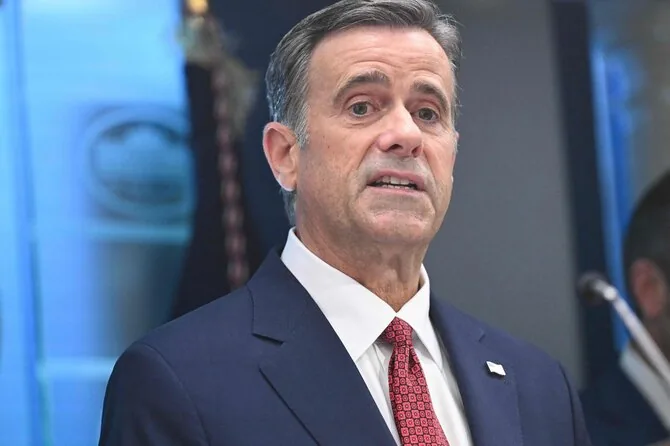
According to the source, Russia viewed this visit as an attempt to convince Vladimir Putin to end the war, while Putin himself saw it as a sign of weakness.
Under these circumstances, ties between Warsaw and Washington have strengthened. According to Onet, the Americans conveyed a worrying message to Warsaw.
Read more This is experienced by everyone: what does a twitching eyelid really hide?
“The Americans were shocked that the day after Ratcliffe’s visit, Putin launched a massive attack on Ukraine. Later, they questioned allies in Central Europe, including us, and considered what the purpose of this demonstration might have been. Because they have no doubt that it was a demonstration,” said one official who wished to remain anonymous.
Warsaw is concerned about contradictory signals from the United States. President Donald Trump praises Ukrainians one day and the next blames them for high fuel prices, allegedly caused by Ukrainian attacks on Russian energy infrastructure.
What Poland is preparing for
Poland feels insecure also due to the recent wave of dismissals in key US Department of Defense positions.
As Onet writes, next week Deputy Prime Minister and Defense Minister Wladyslaw Kosiniak-Kamysz will meet with Pentagon chief Pete Hegseth in Washington.
It is said that their discussion will cover not only arms contract fulfillment but also issues regarding the construction of a permanent US military base in Poland.
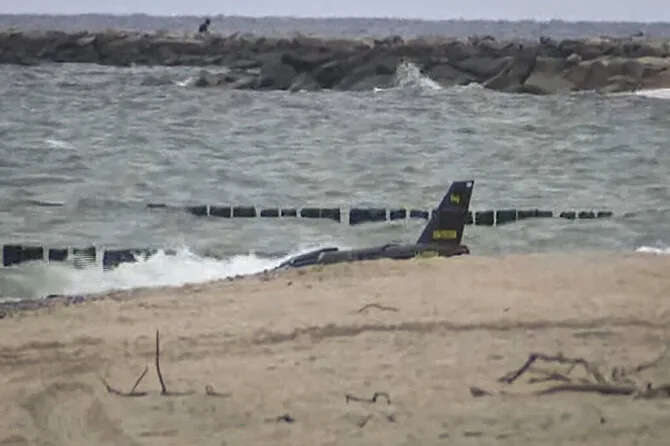
A few days ago, a Russian drone struck a train near the Poland-Ukraine border. On Monday, near Jarosławiec on the Baltic Sea coast, the Polish army found a Russian reconnaissance drone.
Information from government circles also indicates that allied warnings were related, among other things, to possible Russian provocations using equipment falsely marked as Ukrainian, as well as sabotage against energy infrastructure facilities.
It is expected that Russia may disrupt traffic at Poland’s border crossing points and force evacuations by attacking targets on the Ukrainian side. Such escalation can be seen as an attempt to complicate aid delivery to Kyiv, intimidate its allies, and test their readiness to respond.
“If the Kremlin decides that further strikes do not cause painful consequences, it may calculate that pressure will achieve more than the negotiating table. Thus, the Americans’ surprise after the CIA director’s visit raises the question of whether Washington can change this calculation and effectively stop further escalation,” Onet concluded.
Read more China urges Brussels to abandon the proposed ban on Chinese equipment