







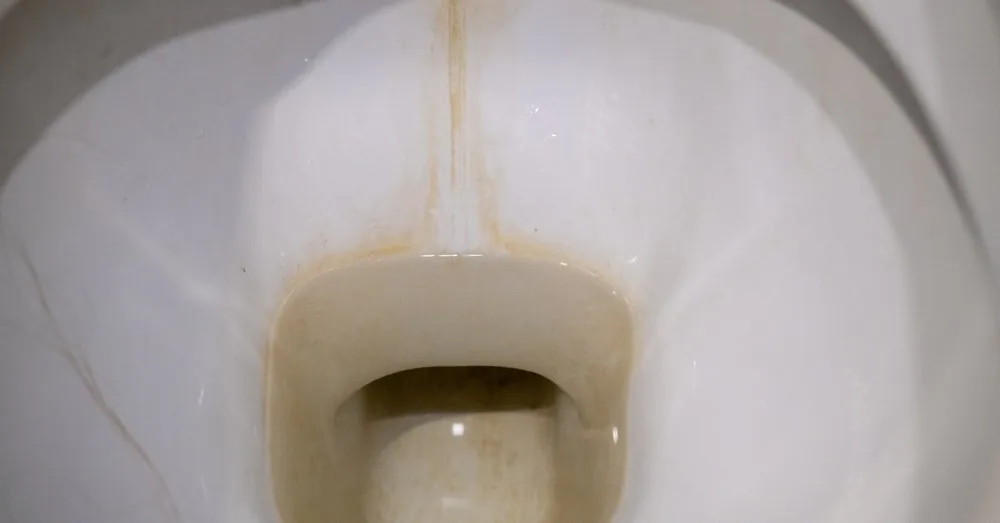
Urine scale in the toilet is a particularly persistent problem. It soaks into the enamel, darkens over time, and cannot be cleaned with a regular toilet brush.
Read more Turto bankas will be able to help implement complex military and civil infrastructure projects
Expensive household chemicals do not always handle such deposits better, and some products only mask the problem for a few days.
Fortunately, old lime and urine scale deposits can be removed using a simple and inexpensive agent – citric acid.
How to remove old lime deposits?
Over time, the walls of the toilet bowl become covered with dense white, gray, or yellowish deposits. They usually accumulate at the waterline and under the toilet rim – exactly where it is hardest to reach with a brush.
If the deposits have already hardened, regular cleaning with a brush will not be enough – a different method is needed.
Mineral deposits usually form due to hard tap water. The salts in it gradually settle on the surface and eventually form a hard layer. The longer you do not clean it, the harder it will be to remove later.
Regular dirt is easily removed by common cleaning agents. However, for old mineral deposits, an acidic agent can be more effective – it breaks down the deposit structure, making it much easier to brush off later.
Even a thick layer of deposits can soften when using a simple citric acid solution if left to act overnight.
How to remove rust and lime deposits with citric acid?
Rinse the toilet bowl well with water. If the deposits are at the water level, some water can be removed so that the agent stays in contact with the contaminated surface longer.
Prepare the solution:
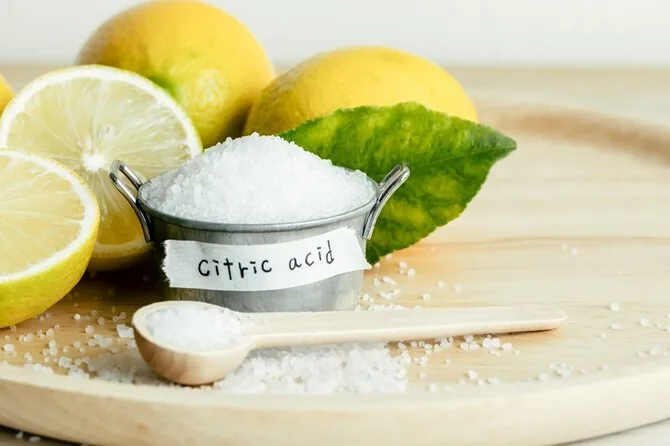
- Dissolve 3 tablespoons of citric acid in 400–500 ml of warm water. Boiling water is not suitable.
- Apply the solution to the problem areas.
Since the solution quickly runs off vertical surfaces, strips of toilet paper can be applied to the deposits and moistened with the same solution. The paper will help keep the agent in place.
Read more „Orlen“ secured more oil for refineries in Poland, the Czech Republic, and Lithuania
Leave to act. If the dirt is fresh, a few hours may be enough, but for old and thick deposits, it is best to leave the solution overnight.
In the morning, remove the paper, scrub the surface well with a toilet brush, and rinse several times with water.
If the deposit layer is very thick, the procedure can be repeated. This is safer than trying to scrape it off forcefully.
What is better not to use?
That is why you should not resort to knives, metal sponges, or sandpaper. They can scratch the toilet glaze, and on the damaged surface, lime and other deposits may accumulate even faster in the future.
If the lime ring stubbornly appears in the same place, the problem may not only be hard water. It could be a leaking toilet tank – if water constantly drips slowly, the minerals in it settle again and again in the same spot.
In such a case, the leak cause should be fixed first. Otherwise, even thorough cleaning will only help temporarily.
It should be remembered that citric acid must never be mixed with chlorine-containing agents, such as bleach or chlorine gels.
If the toilet was previously cleaned with such an agent, first rinse the surface thoroughly with plenty of water.
When cleaning, it is best to wear protective gloves and ventilate the room well both during and after cleaning.
Read more Negative reviews do not yet guarantee safety: what you need to know when buying food online
Source: unian.net