






It fundamentally changes how businesses will need to assess and select packaging and justify its compliance. Although the new requirements will be applied in stages, delaying preparation would be risky – packaging chosen today may no longer meet the requirements in a few years.
Read more After the influx of migrants in Ceuta, Ursula von der Leyen proposes an emergency management measure
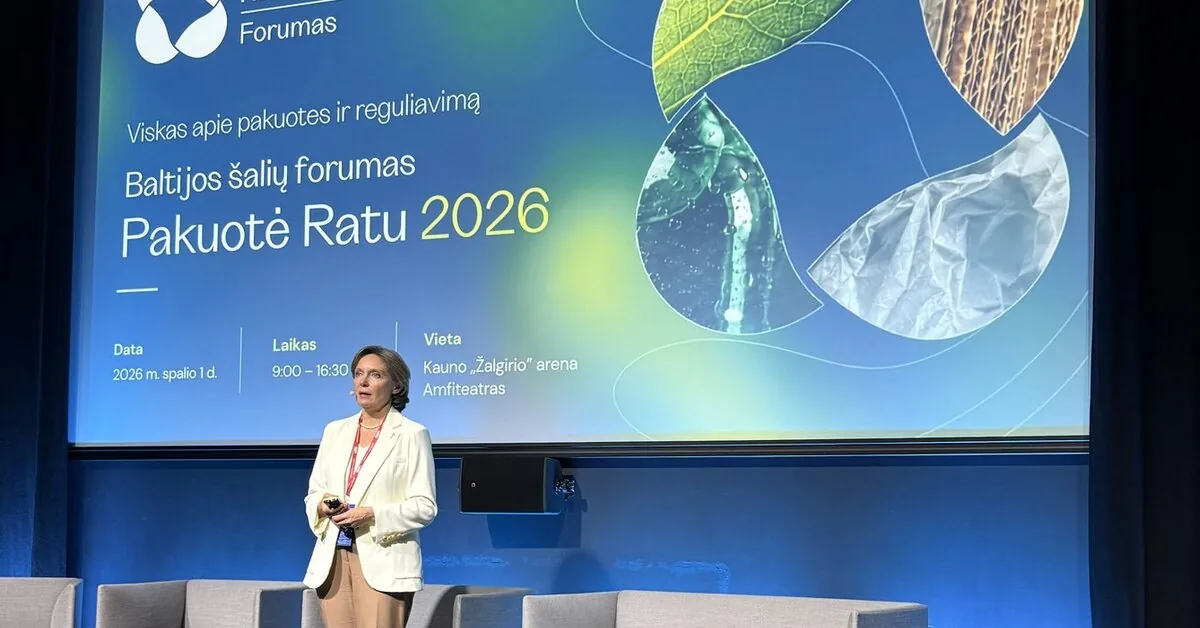
Organizations operating in this field are already looking for solutions to help businesses transition more easily to the new system. Answers on how to turn complex legal requirements into clear practical steps for Lithuanian businesses will be sought on October 1 at the Baltic States Packaging Sector Forum “Packaging in a Circle” held in Kaunas. Lithuanian and foreign experts will discuss how the new PPWR requirements will work in practice, what can be learned from other European countries, and what actions businesses should take today.
One regulation – many practical questions
“I’ll be direct: the biggest challenge today is not the Packaging and Packaging Waste Regulation text itself. Anyone can read the regulation. The problem begins the moment it needs to be applied to real company operations,” says Živilė Ramoškienė, organizer of the “Packaging in a Circle” forum.
According to her, even experienced companies face questions without simple answers, and the same requirement is sometimes understood differently by market participants. The European Commission receives questions about the interpretation of certain PPWR provisions from both businesses and member state institutions.
In practice, most questions arise about three things. Who in the supply chain is responsible for the packaging? What documents and evidence are sufficient to justify its compliance? And how to collect information when one part is held by the purchasing department, another by quality or sustainability specialists, and a third by the packaging supplier? It is no longer enough for the manufacturer to simply state that the packaging complies with PPWR – a conformity assessment must be performed, technical documents and an EU declaration of conformity prepared, and all supporting data must be available.
“At that point, PPWR quickly becomes not about packaging but about data, responsibilities, and process management. This is where most get stuck,” notes Ž. Ramoškienė.

Some major changes are still ahead. Approaching 2030, more requirements will be applied regarding packaging recyclability, labeling, use of recycled plastic, minimization, and reuse. Not all details are clear yet, as accompanying legislation, methodologies, and common criteria are still being developed for some requirements. However, according to Ž. Ramoškienė, waiting for every detail to be clarified would be a mistake for businesses.
“If I had to put the entire PPWR into one sentence that businesses must internalize, it would be this: 2030 is not the start of PPWR. PPWR is already in effect,” she emphasizes.
Extended Producer Responsibility (EPR) also raises many practical uncertainties. For example, when selling online in several EU countries, the EPR obligation usually arises where the product reaches the consumer. Therefore, a company may need to register separately in each country, pay fees, and have an authorized representative. Changing one supply chain circumstance can change the entity responsible for the packaging.
According to Ž. Ramoškienė, this is precisely why the forum is held now: PPWR is already applied, businesses are beginning to understand its true complexity, but most of the packaging transformation is still ahead. “The event will not be another retelling of what is written in the PPWR text – you can read that yourselves. We care about a completely different question: what should businesses do with it today,” says the forum organizer.
One record of “complies” is no longer enough
How preparation for new requirements looks in a real company is shown by the example of “BIOVELA Group.” The company sought ways to reduce the amount of plastic used in packaging and improve its recyclability even before PPWR application began. One such solution was the introduction of recyclable “Flow-pack” packaging. However, according to the company’s product development project manager Rūta Dambrauskienė, the new regulation forces a closer look at each packaging.

“The new packaging regulation encourages a more comprehensive and detailed understanding of the packaging’s composition, materials used, compatibility of individual components, and real recycling possibilities. This means that when making decisions about packaging, we must evaluate not only its functionality, cost, or suitability for production but also its entire life cycle – from the chosen raw material to what happens to the packaging after use,” says R. Dambrauskienė.
Communication with suppliers is also changing. Now, data about the packaging’s composition, recyclability, recycled material content, and chemicals used must be obtained from them, and when packaging comes into contact with food – documents supporting its safety. However, a declaration alone is not enough: the company needs to know what tests, research, or calculations support the claims and whether they truly apply to the specific packaging.
“Not all requirements currently have equally clear methodologies, standards, or established documentation practices. Therefore, we must critically evaluate the information provided by suppliers and request additional evidence if doubts arise. A document simply stating ‘complies’ is no longer sufficient – we must understand what that compliance is based on,” says the interviewee.
As the supplier becomes an important source of information, it is essential to clearly agree on what data and who must provide it. Especially since larger international partners sometimes request more evidence than directly required by PPWR.
Read more What happens to the heart if you eat these cabbages every day?
“Packaging compliance cannot be the responsibility of one person or one department because it requires very different competencies,” says R. Dambrauskienė, adding that “BIOVELA Group” coordinates these issues with a dedicated team, involving product development, production, purchasing, quality, legal, and sustainability specialists in decision-making.
The first step – data inventory
According to Indrė Lasionienė, Deputy Director of “GS1 Lithuania,” implementing PPWR will require more than general information about what the packaging is made of. Depending on its type and purpose, it will be necessary to know the origin of materials, recycled content, chemical composition, or the number of reuse cycles for reusable packaging and have documents supporting this data.
According to the interviewee, this information is often scattered across different departments in companies, and some data is still stored in paper form.
“The main requirement is that data is obtained from a primary, reliable source, that it is current and updated immediately when necessary. Since supply chain participants usually have only a portion of all data needed for compliance, it is important for companies to properly combine and store them in their own or external quality management information systems dedicated to this purpose,” explains I. Lasionienė.
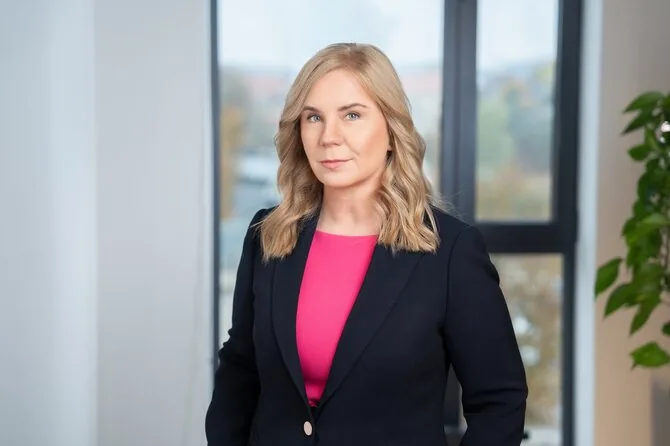
It is equally important to know who and when provided the data, whether it was updated, and what information was passed to other supply chain participants. At the same time, the company must protect trade secrets. Different access levels can be established: some information would be public, other accessible only to business partners or market surveillance authorities. For example, GS1 Digital Link allows linking the same packaging identifier to different information sources and updating them without changing the labeling on the packaging.
“I would suggest starting with an inventory of existing packaging data. Accurate identification and high-quality structured and standardized data are the basis for compliance,” advises I. Lasionienė.
Ž. Ramoškienė admits that the increasing need for data, documentation, and traceability may seem like an additional administrative burden. However, according to her, the regulation also reveals how much information about used packaging companies have lacked until now.
“Sometimes we call bureaucracy simply the fact that for the first time we must know exactly what we present to the market,” she notes, emphasizing that businesses should already today assess the packaging they use, inventory data and documents, review information exchange with suppliers, and allocate internal responsibilities.
Practical solutions for business
“Each participant should take away their company’s action map: what to do now, what to prepare for by 2030, and – I emphasize this especially – what decisions to make to ensure the packaging is suitable for the market. We will build this map together at the forum,” says Ž. Ramoškienė, presenting the idea of the “Packaging in a Circle” forum.
During the event, practical seminars will be held on packaging recyclability assessment, PPWR application, and producer responsibility. In a separate “Experts HUB” area, company representatives will be able to consult individually with experts, discuss their situations, and jointly seek solutions suitable for specific businesses.
Participants are invited to bring not only questions but also packaging about which there are doubts regarding compliance or the future.
Regulatory, responsibility, and market surveillance issues will be discussed at the forum by Lithuanian and foreign experts, representatives of the Ministry of Environment, and supervisory authorities. The Director of the State Consumer Rights Protection Service, Goda Aleksaitė, will speak about packaging compliance and market surveillance from a practical perspective.
The future of EPR systems and producer registers will be presented by Gunda Rachut, Chairwoman of the German Packaging Register Board and President of the European Network of National Registers. Leaders of manufacturers’ and importers’ organizations from Lithuania, Latvia, and Estonia will share the Baltic States’ experience and discuss the practical challenges the region’s businesses face today.
The forum is relevant not only to the packaging sector but practically to every company that manufactures, imports, packages, or supplies packaged products to the EU market. Company managers, purchasing, quality, sustainability, product development, packaging, legal, and environmental specialists are expected to attend.
Read more The lawyer went on a sex cruise: «Suddenly I realized I could relax»