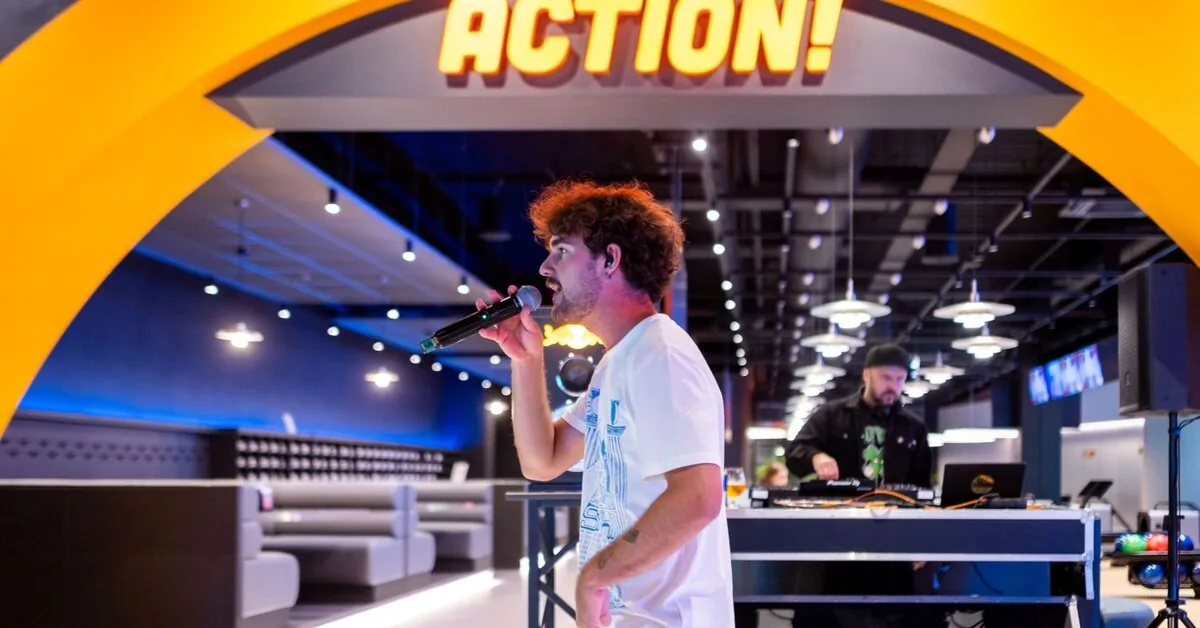





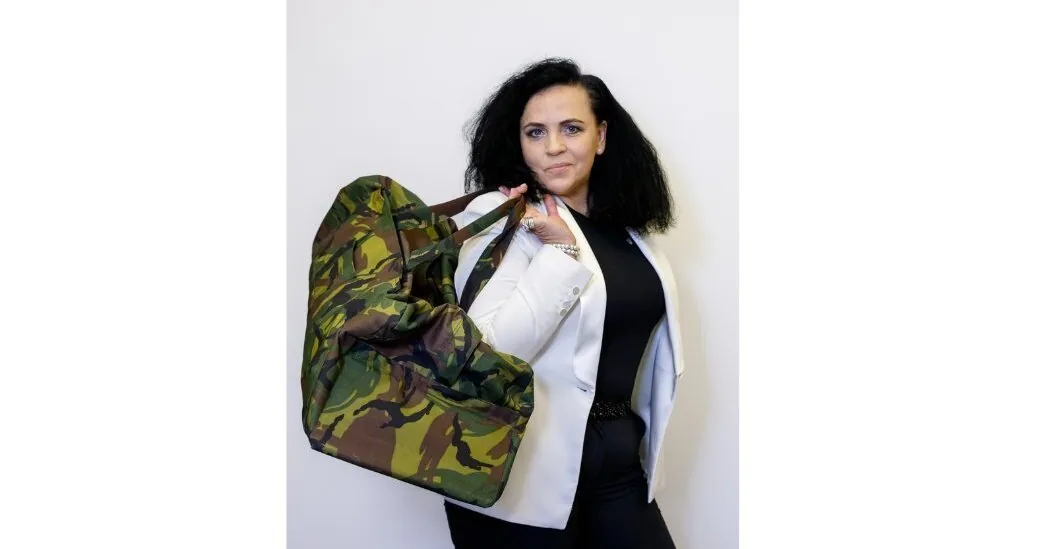
With M. Matulaityte-Feldhausen, we talk about what short war videos do not show, what Lithuania can learn from Ukraine, and why a strong army needs public support.
Read more Ministry: Lithuania could use small nuclear reactors from 2038
What is the hardest thing to understand about the war without seeing it up close?
Its cruelty. But also its mundanity. In war, seemingly incompatible things fit perfectly side by side: a sniper woman’s impeccably done manicure and her perfect accuracy on the battlefield. On the other hand, today, entering the fifth year of the large-scale war against Ukraine, there are probably no more “non-understanders” of it. I am, of course, being ironic. The greatest damage to true understanding has been done by all the war-romanticizing Tiktoks. In the virtual space, we see soldiers dancing, singing, or performing impressive actions or maneuvers for 20–30 seconds, so even soldiers having lunch on the snow suddenly start to look very romantic. However, few think that this is only half a minute out of 24 hours a day. The rest is mud, cold, dampness, mold, mice in the trenches, and wet boots. The unbearable fear of death. Hope. And waiting. Insanely long and exhausting waiting for hours or days. On top of all that, it is impossible to get used to war.
How has Ukraine changed your understanding of a strong army? What is more important – weapons, technology, or people?
I can answer here with a laconic quote heard from one of my regiment commanders: “No matter how advanced (and will be) the technologies are, as long as at least one of our soldiers sits in our trenches, we hold on. That is our victory.” The war will not be won by a drone; the war will be won by a soldier. If we look from the perspective of technology or weapons, no matter how modern the technologies or weapons are, if a soldier cannot trust his commander, has no one to rely on, and his fellow soldier does not cover his back, the soldier will lose faith and trust in what he does and what and why he fights for. Unfortunately, this is a very common phenomenon there (in Ukraine) now, which, if the system is not fundamentally changed, will very quickly yield very sad and bleak results.
What lessons from Ukraine should Lithuania learn?
That war will not pass by while we comfortably sit on the couch. We have a painful example right before our eyes, yet we do not learn from it. We are still more concerned about cash or a good steak at the cottage on the weekend than acquiring basic skills, improving existing ones, or strengthening our emotional and physical resilience. We have become lazy and sluggish Westerners, thinking that everything will be resolved “somehow,” without us contributing to it. Oh, wait, that’s not true, we DO – we increase defense budgets, accept allies, and sincerely believe that “someone” will fight for us and our country. Why should others fight for us while we grill? We ourselves do not really know, but we have very well learned a few key words: “NATO,” “allies.” We skillfully juggle these words, covering up our sluggishness and inactivity.
What do we talk too little about in Lithuania?
About citizenship. We have played too much with straw patriotism, changing profile pictures on Facebook, chanting slogans. Oh, and organizing endless conferences. But we are too little true citizens of our state, and we educate our children too little in this way. Most probably do not even know the difference between citizenship and patriotism.
What myths about the army would you like to dispel?
All the widespread Soviet myths that pass from generation to generation, such as – there will be nothing to eat, I will die of hunger, there is dedovshchina (hazing), commanders immediately send new conscripts “to the meat grinder,” and similar absurdities. Here I would like to remind the most important rule: you will not support your country’s army, and I would add, “if you do not serve in your country’s army,” you will serve and feed a foreign country’s army. The modern Lithuanian army is a very open organism, openly communicating, showing, inviting to come, look, and get to know the system from the inside. So you just need to get off that comfortable couch and show interest from your side, ask questions, which will always be answered.
Read more In the South China Sea, a Chinese ship rammed a Philippine government cutter
What is the role of society in strengthening defense?
Extremely important, and sometimes even decisive. Defense is not an abstract word – fighters do not fly by themselves, trenches do not dig themselves. Behind all this stands first and foremost a soldier. A human. A human, like you and me, only with specific skills. There is no “they” and “we,” because we are they, and they are us.
We all must always remember the most important rule of war – today’s civilian is tomorrow’s soldier. Your dissatisfaction with the army today, your “driving” it, belittling it, can already turn against you tomorrow when, in the worst-case scenario, you stand in the place of that fallen soldier.
One Lithuanian army officer said very aptly – an army without society is just a weapon with no one to use it. And that same soldier – he is not a prop figure. He is a person who feels pain, who rejoices, who has troubles and worries. He or she is someone’s father, son, sister, wife. But he has sworn an oath for us, for our peaceful life and our morning latte with oat milk, which we want to drink undisturbed before rushing to work. Sacrificing one’s life is the greatest price he is ready to pay in the worst-case scenario. Therefore, without all our support, unity, understanding, and the essential thing – doing and acting – defense will be just an empty word lying in dusty institutional papers.
The program “Strong Army” is broadcast on Žinių radijas on Thursdays at 10:05. It will talk about what our soldiers do every day, how allied forces help Lithuania, the role of the Riflemen’s Union and volunteer soldiers, and how each of us can contribute to the country’s defense.
Read more Dakar Youth Summer Olympics – 14 Lithuanian athletes
The first episode can be found here.
The program will also be available on Žinių radijas’ YouTube and Spotify platforms.
The program is partially supported by the Media Support Fund.