








Colors in the garden
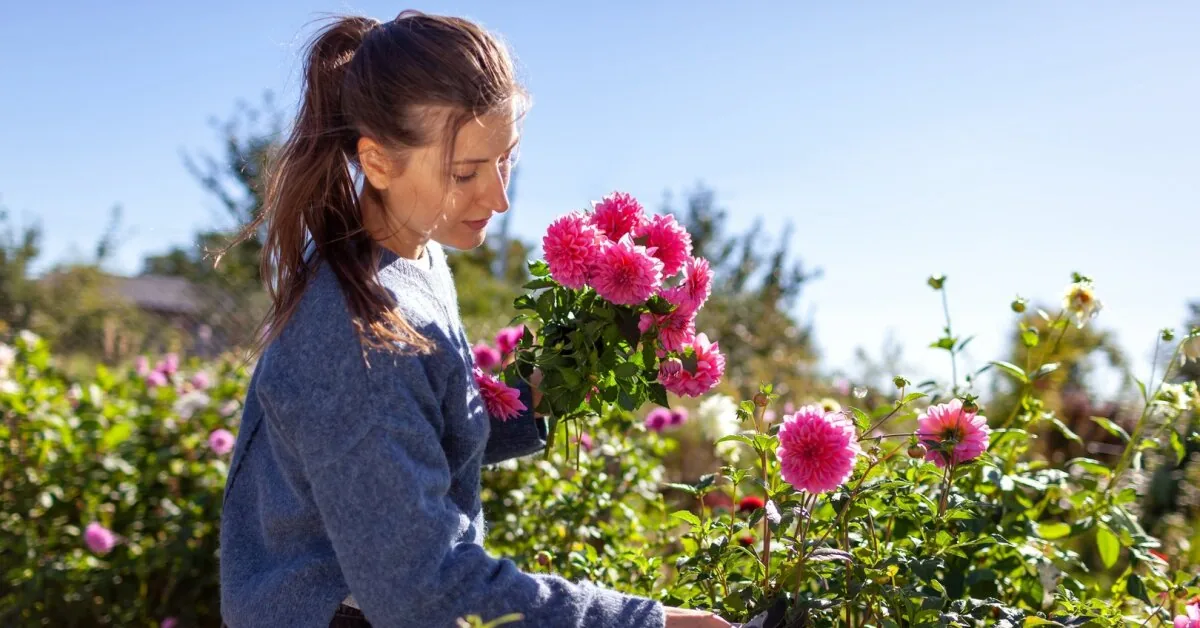
In September, the garden is often still full of colors, especially due to plants originating from warmer regions. Dahlias, cosmos, zinnias, and many other flowers can bloom until the first frosts begin.
Read more The job vacancy rate in the euro area decreased to 2.1%.
To ensure plants produce new flowers for as long as possible, it is important to constantly remove faded blooms. This way, their energy will be directed not to seed ripening but to forming new flowers. When you want to leave seeds for autumn decoration or next year’s sowing, some flower heads can be left.
When removing faded flowers, it is best to cut not only the flower head but also the stem down to the nearest side shoot.
For dahlias, it is important to distinguish a new bud from a faded flower. A rounder bud usually indicates a future flower, while a pointed one is often a faded flower or a deformed bud. It is better to remove the latter so the plant’s energy is devoted to new flowering.
Collecting cosmos seeds is very simple. Remove the petals and sepals from the faded flower, collect the seeds, and keep them in a paper envelope. Don’t forget to label the plant’s name.
Time to plant bulb flowers
In September, most spring-flowering bulb plants can already be planted. Exceptions are tulips and ornamental garlic, which are often recommended to be planted a bit later.
Bulbs planted in September will still have time to develop a stronger root system before winter.
For many bulb plants, well-drained soil is important, especially for early irises. If the garden has heavy clay soil, it is better to grow them in pots with a porous substrate or mix coarser sand or fine gravel into the soil.
However, some spring-flowering plants are not bothered by heavier soil. For example, snowdrops and crocuses can grow quite successfully in clay soil, so they can already be planted.
Harvest and propagation by cuttings
For those who grow their own fruits and vegetables, September is one of the months with the most abundant harvest. Pumpkins, zucchinis, beans, and tomatoes are often at their peak of ripeness at this time.
Many fruit trees also ripen their harvest in September. It is hard to find anything tastier than an apple freshly picked from the tree.
Some varieties of apples and pears can be stored for quite a long time if the fruits are picked completely healthy, undamaged, and regularly checked during storage.
Plums and other stone fruits keep less well, so it is worth considering other preservation methods – freezing, canning, fruit purees, drying, or jams.
September is also a very suitable time to propagate favorite perennials by cuttings. This way, you can get a plant that is essentially a clone of the mother plant.
For example, propagating roses by cuttings is one way to preserve the characteristics of a specific variety.
At this time of year, it is best to take semi-woody cuttings. Their upper part is still green and flexible, while the lower part has already started to woodify. Such cuttings often root more reliably than completely young and soft shoots.
Before cutting, prepare a plastic bag or container with water and a clean, very sharp pruner. The most important thing is not to let the cutting dry out, and a smooth cut increases the chance of rooting.
Read more Minister: 12 tunnels for illegal migrants detected at the border with Belarus in five months
Choose a healthy, non-flowering stem and cut it cleanly. Remove most of the leaves and side shoots, leaving only a few at the top.
The cutting should be about 10 cm long. Its base can be dipped in rooting powder or gel and planted in a porous, sandy substrate, preferably near the edge of the pot.
Water well and keep in a warm, bright place. You will know the cutting has rooted when new shoots appear or roots are seen at the bottom of the pot. When a strong root system forms, the plant can be transplanted into a larger pot, and next spring or summer – into the garden.
Time to trim hedges
September is also a suitable time to prune hedges. Most garden birds have already left their nests, but it is still worth checking for late broods before starting work.
The height and width of the hedge are a matter of taste, but when shaping it, one principle should be followed: the bottom should be slightly wider than the top.
This way, sunlight better reaches the lower branches, so the hedge will not thin out at the base. Also, this shape helps avoid situations where the heavier top part starts to lean or even collapse.
Prepare for next year’s annual flowers
In September, it is worth preparing a few autumn pots or beds. Depending on the size of the container, you can combine 3–5 different plants.
Chrysanthemums, heucheras, and cyclamens will add color, and small conifers – height and greenery. Later, when they outgrow the pot, they can be transplanted into the flower bed.
Now is also a good time to take care of frost-resistant annual flowers for next year.
Some, like cornflowers or Ammi major, can be sown directly into the soil. Others, such as wax flowers or sweet peas, are better sown into pots and kept in a protected place during winter.
If you want less hassle and more color during the cold season, you can plant wall leuconias, forget-me-nots, pansies, or small-flowered pansies – they will delight with colors in autumn, winter, and spring.
Don’t forget indoor plants
If you took some indoor plants outside during the summer, it is worth bringing them back indoors in September.
Although the days can still be warm enough, the light decreases, nights get colder, and the air becomes more humid. This combination of factors is no longer favorable for many indoor plants.
Before bringing plants indoors, it is worth checking for pests on them.
One of the best months to plant trees and evergreens
September is one of the best months to plant trees and evergreen plants.
They will still have time to start rooting before winter, and autumn rains will help them establish more easily. In spring, when active growth begins, such plants will already be better established.
And, of course, don’t forget to simply enjoy the last warmer days in the garden – perhaps with a freshly picked apple or a piece of plum pie.
Read more Animation for the whole family «The Prophecy of the Kirstukas Forest» comes to the cinema theaters