







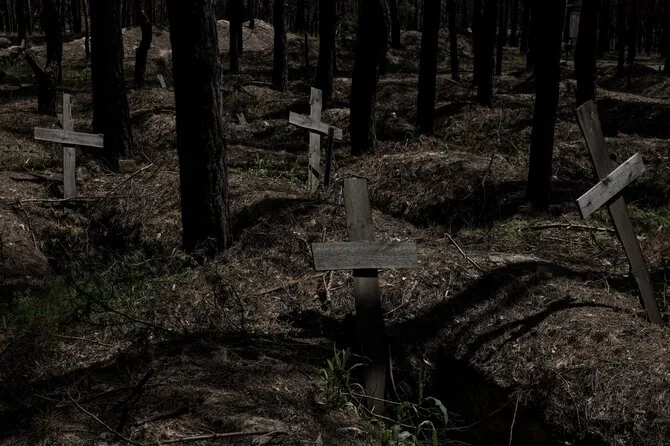
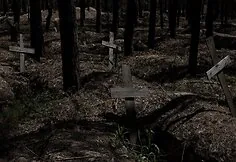
This row of graves is a living and painful reminder of the enduring horror experienced by the Russian-occupied city of Izium in eastern Ukraine four years ago. Now, with Moscow’s forces once again approaching and shelling Izium with guided aerial bombs and drones, local residents fear that a new battle for the city will be incomparably more terrifying than anything they have already endured.
Read more Gvidas Gineitis played a half against the leaders of the Italian championship
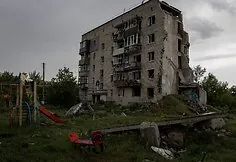
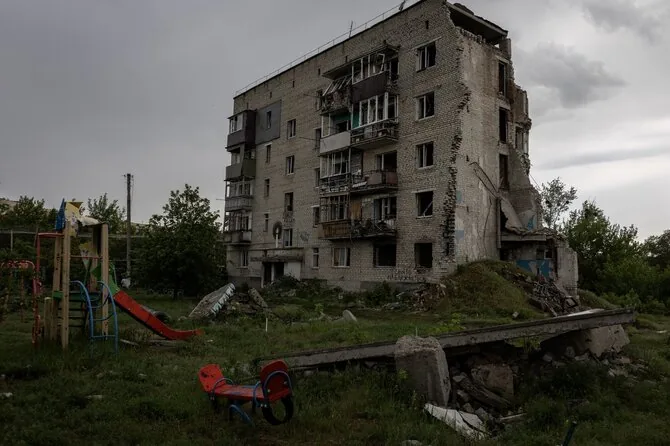
In 2022, after five months of occupation, Russian soldiers left a mass grave and collapsed buildings – wounds that are still fresh. All 447 bodies found in the grave were exhumed and reburied on a hill, including remains that remain unidentified to this day.
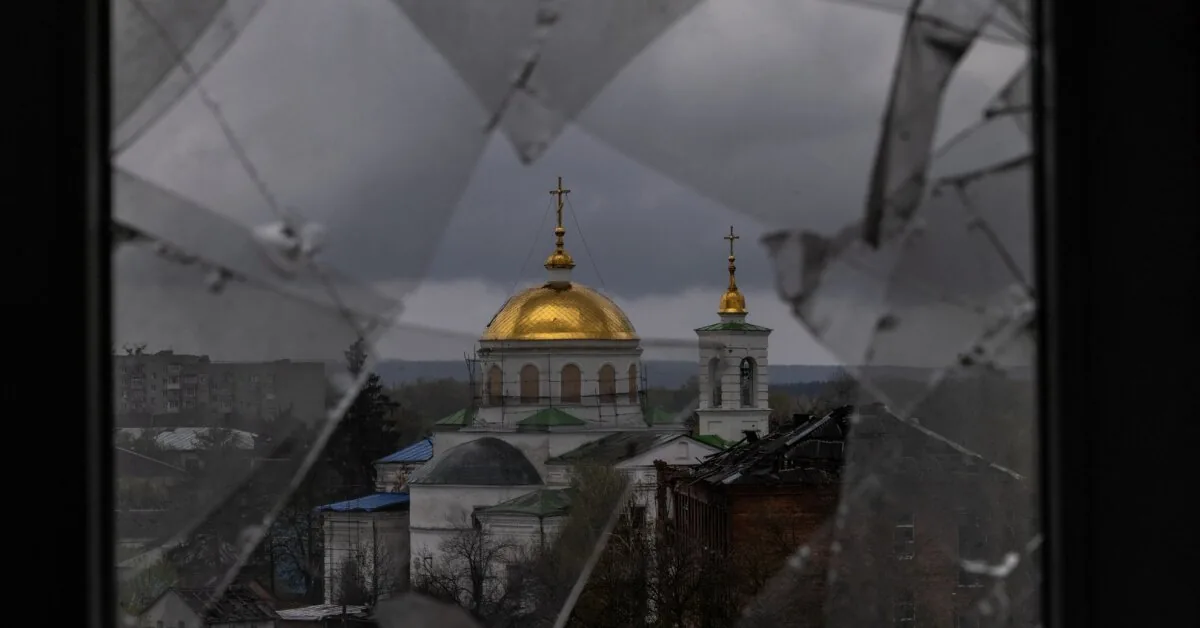
One of the last rainy afternoons after the Russian strike near the place where the bodies were reburied, smoke rose. Locals no longer harbor illusions: according to them, as soon as Russia gets the chance, it will not stop until it completely destroys Izium.
Since the start of the large-scale war, Moscow has not yet retaken control of a single major city it previously captured. Izium is currently not threatened by re-occupation or destruction. However, its residents are preparing for the worst while also nurturing hope that Ukrainian forces will continue to hold the defensive line.
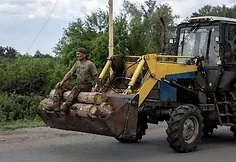
Armed forces soldiers around the city have dug new defensive trenches and conducted exercises to practice repelling a large-scale attack.
“We have to anticipate every scenario,” emphasized a local military commander who, adhering to military protocol, asked to be identified by the call sign “Coach.”
A Bloody History
Izium, situated on a height overlooking the steppes, has been a strategically important fortress for various armies for centuries: from 17th-century Cossacks to the Nazis during World War II.
Journalist Mykola Kaliuzhn has grown up listening to his mother’s stories about life in Izium during the German occupation – a history he believes should never be repeated.
On February 24, 2022, he set out to attend his granddaughter’s birthday party. But he received a call from his editor telling him not to go anywhere. Russia had already invaded.
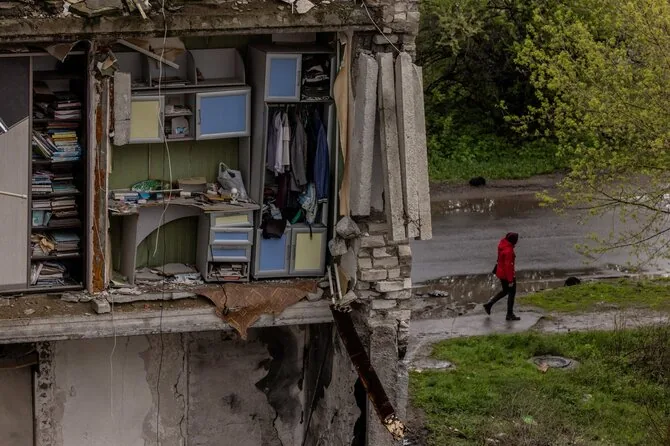
The man vividly recalls the first Russian planes in the sky, the first bombs that fell on Izium’s center, and the first corpse he saw – a mutilated man under the monument to poet Taras Shevchenko.
70-year-old M. Kaliuzhn remembers every detail.
“It was like Stalingrad in 1942,” he recalled, gripping a pen inscribed with “Izium is Ukraine.” “Everything was burning.”
The city’s history museum hosts an exhibition about life during the Russian occupation. Russian cigarette packs and propaganda newspapers are displayed in glass cases. Shattered Russian helmets hang on a stand covered with camouflage fabric, and Russian boots are placed on a shelf next to a black mask that, according to Ukrainian officials, was found in one of the torture chambers.
“We don’t want Izium to be known only as a place of mass graves or torture,” said 56-year-old Deputy Mayor Volodymyr Matsokin.
“The city wants to live, to recover,” he added. But the approaching front line has halted major investment projects, including some plans for underground schools.
Today, about 28,000 people live in Izium. This is almost half the number before the large-scale invasion, when there were over 45,000.
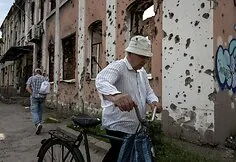
Walking through the city, M. Kaliuzhn held a black satin bag strap in one hand and pointed to the ruins visible everywhere with the other.
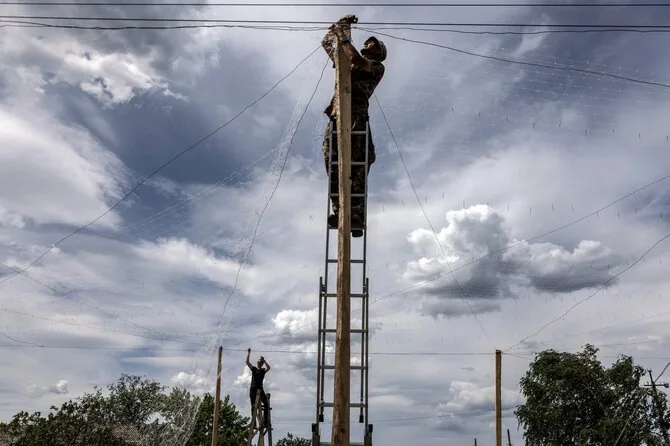
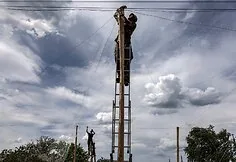
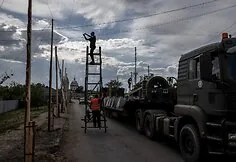
“Here is the cinema, the municipality, the first school – all destroyed,” the man whispered, bending under a net covering the pedestrian path, designed to protect against drones.
Working for the local newspaper, M. Kaliuzhn is now again interviewing residents about whether they think Russian forces will reach the city – just as he did before the large-scale invasion began.
In his mind, the senior said, he cannot even allow himself to think about such a scenario. “I don’t believe it – I don’t want to believe it,” he said. Then he fell silent and looked away.
As we walked, music was playing from a celebration in the main city square.
“How could we believe the enemy will return here?” asked M. Kaliuzhn.
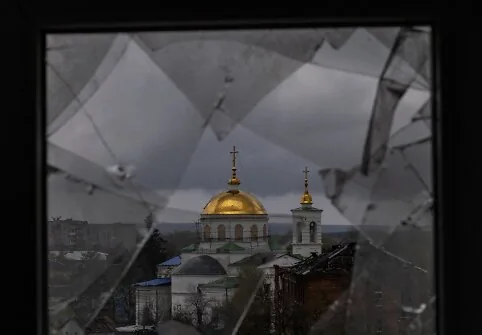
How Izium is Preparing
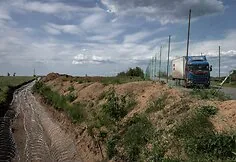
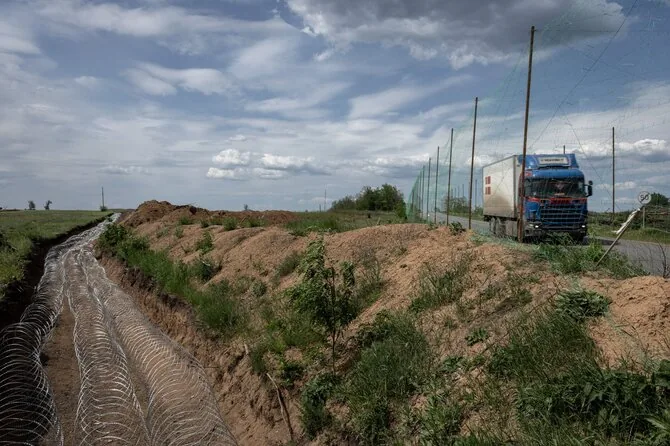
Izium is an important deployment and logistics center for the Ukrainian armed forces. To get there, Russian forces would have to break through continuous rings of defensive fortifications: mines, triple barbed wire barriers, ditches, and concrete pyramids called “dragon’s teeth,” stretching for kilometers.
Recently dug trenches and rows of anti-tank barriers stretch along the highway leading to the city. After passing the checkpoint, a drone protection net hanging over the road forms a kind of tunnel.
Read more Horoscope for September 15: Aquarius and Gemini will have opportunities, Leo – a pleasant surprise
Izium was the first Ukrainian city to proactively install such nets. They became necessary much later when Russian drones began pounding this city as well.
Most of the city’s defensive fortifications were built by the 96th Separate Support Battalion of the Third Army Corps. It is commanded by the 40-year-old “Coach,” who arrived in Izium in April 2024 after fighting in Zaporizhzhia, Bakhmut, and Avdiivka.
The fighter explained that at that time Izium was considered one of the most likely directions for a new Russian offensive.
Now Moscow’s forces are slowly advancing in the nearby Donetsk region. Since the two so-called fortress cities there – Sloviansk and Kramatorsk – are constantly shelled, Izium, serving as the gateway to Donetsk, has gained even greater importance as a key supply hub.
Sitting on a stump in the shade of trees on the outskirts of Izium, “Coach” predicted that Russia will intensify efforts to disrupt the movement of Ukrainian troops and equipment to Sloviansk and Kramatorsk.
The fighter categorically rejected the idea that Izium faces a new occupation.
New trenches and other defensive measures are a matter of preparation, “Coach” noted, not a sign that the Russian army will inevitably reach Izium again.
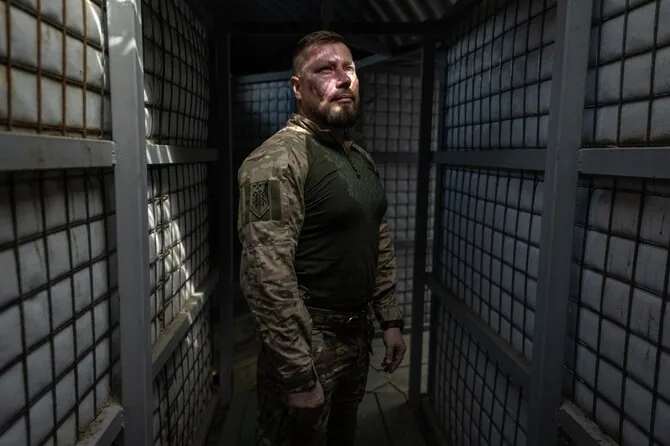
“Just because they are coming doesn’t mean they will get here,” he emphasized. “You can’t go far with torn legs.”
Just a Matter of Time?
However, not all Izium residents are so confident. 18-year-old Yehor Bratishchev and 20-year-old Klym Velychka, sitting on swings in a park, admitted that the threat of another occupation exists.
“The likelihood is high,” Yehor said unemotionally, inhaling from an electronic cigarette. “Have you seen the front line? It is approaching us every day.”
The young man added that Russia has a “huge number” of soldiers, aerial bombs, and drones – far more than Ukraine.
“The defense here is very strong,” he emphasized, “but it’s just a matter of time.”
Natalia Rudenko, who has a vegetable and flower stall at the outdoor market, said that during Russian airstrikes, she and her husband hid in their basement. According to the woman, in 2022, their food reserves grown on their farm and stored in that basement helped them survive.
Recently, she bought a smoker to preserve food longer. Natalia also preserves pork fat and stewed meat. Still, she admitted she fears staying here might become too risky.
“Russian forces are now destroying entire cities,” the woman said. “It’s frightening.”
“We live on packed suitcases,” she added.
Dr. Yuriy Kuznetsov, a surgeon at the main hospital in Izium, said that before the 2022 occupation, the city’s residents were like “little children,” unaware of the approaching horror.
“Now I am more afraid, we are more afraid because we understand the danger,” the man admitted.
According to him, almost all his patients now have some injuries caused by drones. The surgeon believes that an attack now would be even more terrible than in 2022: “This time it would be 100 percent destruction.”
The doctor said that after the occupation, he gradually rebuilt his home and life over several years, “hoping for a better outcome.”
“None of us want to lose everything again,” he sighed.
Deputy Mayor V. Matsokin said people are worried but noted that they “more often talk about hope.” The politician wondered where they draw their strength from. Maybe it’s a defense mechanism, he speculated. Or maybe they have just gotten used to the war.
He pointed to a winter stalk and a hanging bush he had bought at the market that morning.
“People wouldn’t plant flowers,” said the deputy mayor, “if they didn’t want or think they would see them grow.”
This article was published in The New York Times.
© 2026 The New York Times Company