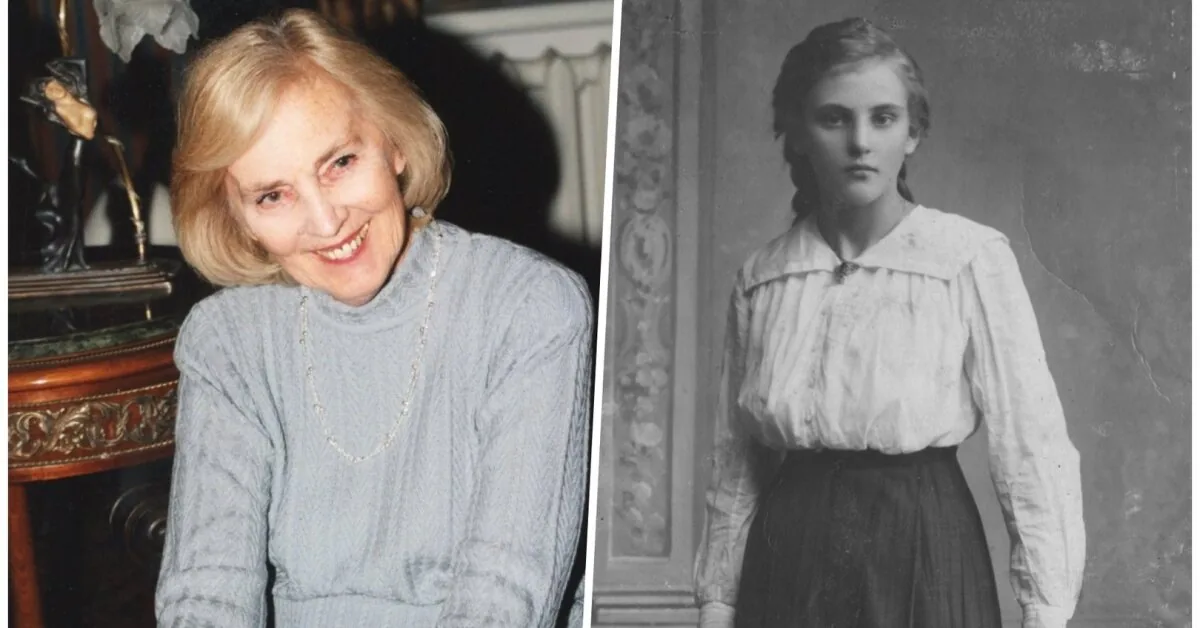



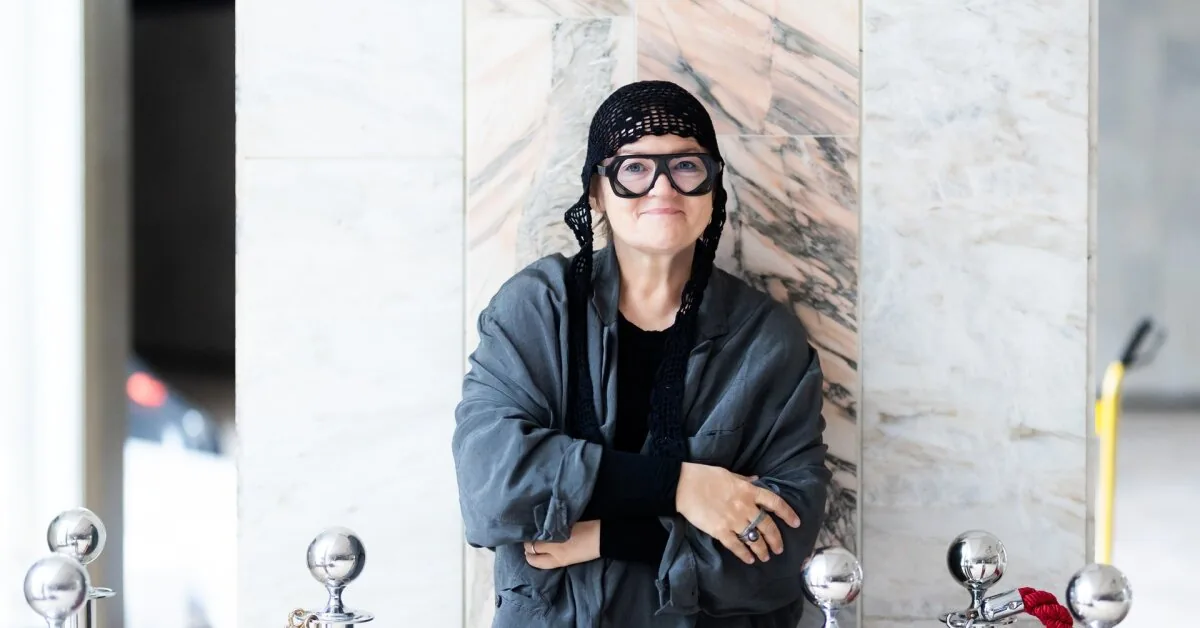
About the first steps in the world of opera, the teachers who shaped her approach to theater, and why you can never sit on two chairs in opera, D. Ibelhauptaitė tells journalist Gražina Michnevičiūtė.
Read more LKL clubs – at the starting line (Part I): budgets, stars, question marks, and predictions
– Dalia, what was your first encounter with opera?
– I have to thank my mother for that, who took me to the theater for the first time when I was about two years old. I only remember a very bright red light on the stage from that time – maybe even from my mother’s story – and how some kind of sword was descending from above. That red light scared me a lot, so I started crying and my mother had to quickly take me out of the hall. That was my first impression of the theater.
Mom loved theater and music immensely, and when she returned to Vilnius after exile, she tried to go to the opera theater at least a few times a month. She would take me to Sunday 12:00 performances. When I turned seven, she started taking me to evening performances as well. Mom was in love with Gegham Grigorian, and the second on her list of favorite soloists was Virgilijus Noreika. I don’t know how many times I saw “La Traviata” in my childhood – I could probably sing half of the opera.
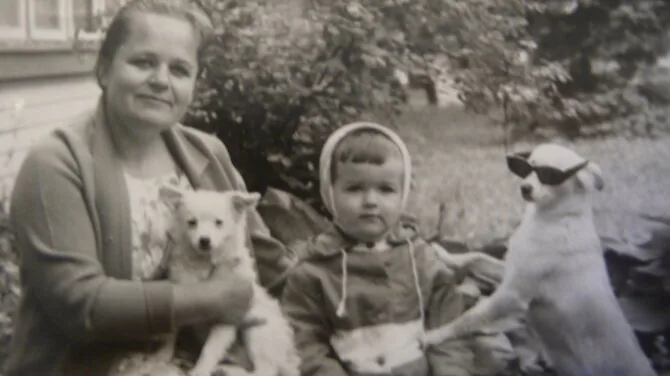
The opera theater came into my life precisely through my mother’s love for theater. We also had a great privilege because my mother’s brother Vytas, a horn player, worked in the opera orchestra and would get tickets for my mother. Our family was not wealthy, so these uncle’s tickets were a great support for us and allowed us to see many more performances, sometimes several times.
Later, there was even more theater. I studied piano at the Balys Dvarionas Music School, so I also went to the theater to hear all the pieces we talked about in music history lessons.
– Along with opera performances and Philharmonic concerts, drama theater quickly joined. What did your acquaintance with two legendary directors – Eimuntas Nekrošius and Dalia Tamulevičiūtė – give you?
– My great youthful passion was Eimuntas Nekrošius’s performances and the Youth Theater. The “top ten” actors of the Youth Theater, gathered by Dalia Tamulevičiūtė (in 1975 at the State Conservatory, the “top ten” actors of D. Tamulevičiūtė’s course: Kristina Kazlauskaitė, Irena Kriauzaitė, Algirdas Latėnas, Dalia Overaitė, Vidas Petkevičius, Violeta Podoskaitė, Kostas Smoriginas, Dalia Storyk, Arūnas Storpirštis, Remigijus Vilkaitis – editor’s note), were like a family. At least from the outside, it seemed so.
That sense of family in the theater made a big impression on me – they had a completely different quality of faith and trust in each other, an ideal environment for creativity, and a deep sense of each other. I really wanted to be part of that world. I think consciously and subconsciously the “bohemians” in my mind formed as Dalia Tamulevičiūtė’s “top ten.” Dalia was my teacher, her theater ethics and work style shaped me.
Dalia Tamulevičiūtė had an insanely strong will, a sharp mind, and could endure a lot. I saw an example of what that looks like. From her, I learned discipline and developed willpower.
She was a Mohican of Lithuanian theater who not only trained many brilliant actors but also gave them the freedom to be themselves. All the “top ten” actors were so different, each individual. Tamulevičiūtė had a lot of strength and power in her; she raised such a great, unique artist as Eimuntas Nekrošius in the Youth Theater. And, of course, Nekrošius became my ideal of directing and theater.
– You started communicating with Dalia Tamulevičiūtė while still in school. Do you remember how your acquaintance began?
– I met Tamulevičiūtė when I was about 15 years old. She, like me, lived in Žirmūnai. Dalia would invite me to her place – she lived one stop below me. I remember we drank tea, she smoked a lot, and told stories about her studies and work. Watching her, I saw an incredibly strong person. Tamulevičiūtė had an insanely strong will, a sharp mind, and could endure a lot. I saw an example of what that looks like. From her, I learned discipline and developed willpower.
I also met Eimuntas Nekrošius while studying at school; I could come to his rehearsals. I don’t know how many times I watched his performances: “Square,” “Love and Death in Verona,” “Uncle Vanya,” “Pirosmani, Pirosmani.”
From six in the morning, my father and I would stand in line at the Youth Theater box office to buy tickets for the next month’s performances. Usually, we bought only one because my parents didn’t have much money.
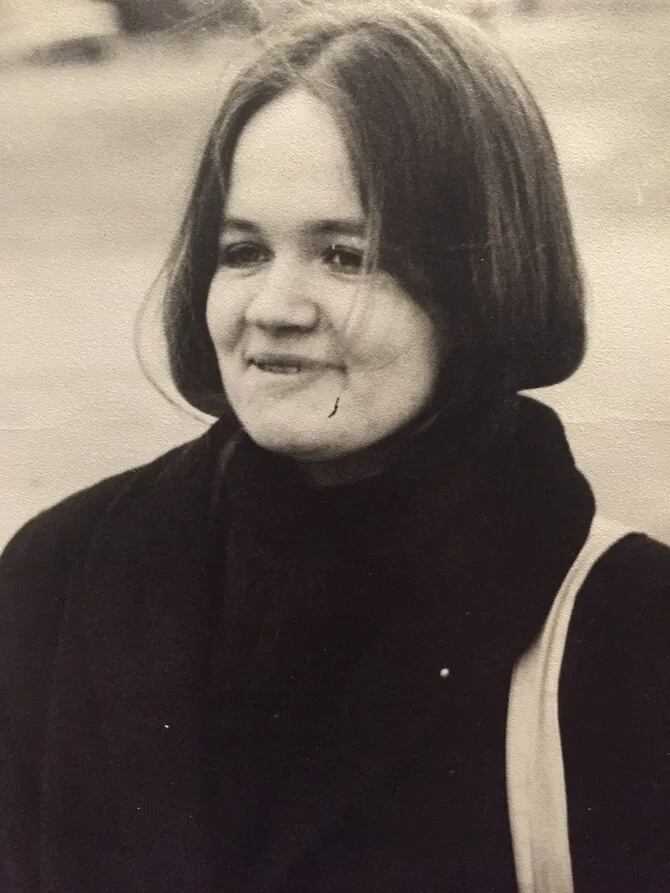
When I finished school, still in Soviet times, there were no theater directing studies in Lithuania. If you wanted to work in theater and study directing, there was only one choice – to go either to Leningrad (now Saint Petersburg – editor’s note) or Moscow. Both Dalia and Eimuntas said – if you want to study directing, you have to go to Moscow.
They didn’t discourage me, only Eimuntas said that directing is a profession that requires great solitude and that it would be brutally hard. He also said that if you can live without it, then live without it. I didn’t get in the first year and when I returned to Vilnius, I absolutely didn’t want other studies, although my mother had prepared another option for me.
– And what was the offer your mother prepared for you?
– Journalism. Since I had been writing for “Moksleivis” and “Komjaunimo tiesa” since I was 13, my mother thought it would be the best choice for me. I participated in writing competitions, wrote many different articles, sometimes under a pseudonym.
– Very interesting, what pseudonym did you have?
– Indrė Girėnaitė. I took Girėnaitė from “Darius and Girėnas.” And Indrė – as a female version of the powerful ancient Indian mythology god of lightning, thunder, and rain, Indra. In my youth, I loved myth stories and was very dramatic (laughs).
– Still, you didn’t choose other studies and got into theater directing in Moscow on the third try, and you graduated. You directed several performances in London, later in New York. How did the path lead to opera?
I wanted to create an alternative and give these young people the opportunity to perform bright leading roles, gain a solid acting foundation, discover stage freedom, and dare to do more on stage than they imagined they could.
– I never thought I would direct opera because there was no personal example. I know there was Vlada Mikštaitė, an opera director, but I didn’t know her (V. Mikštaitė was a director at the Lithuanian Opera and Ballet Theater from 1963–1969 and 1975–1990 – editor’s note).
Actually, the first person who invited me to direct opera was British producer Adam Pollock – founder of the Batignano summer festival “Musica nel Chiostro” (in Italy).
He invited me to stage Wolfgang Amadeus Mozart’s “Don Giovanni” together with Maria Björnson, the most famous English set designer of that time. This opera was my baptism. The year was 1994. In theater, you don’t start directing drama performances with “Hamlet,” so, in my opinion, the first directing work in opera cannot start with “Don Giovanni.” However, Adam Pollock had seen my theater performances in London and thought I managed large scale and many people on stage well, so I could direct opera.
To be honest, Maria Björnson also came to see my directed performance “The Gamblers” at the “Tricycle” theater. It starred Mark Rylance, now an Oscar and three-time Tony Award winner, and famous film star Phil Daniels. Maria saw “The Gamblers,” went to Adam, and said: “I want to work with this woman.” That’s how I ended up at the Batignano festival “Musica nel Chiostro,” which, by the way, brought many serious British opera directors into the opera world, including Graham Vick, Richard Jones, and others.
I was the first female director to stage at this festival, which celebrated its twentieth anniversary in 1994. At that time, there were practically no female directors in the opera world.
– Your first directed opera was a Mozart work, and for your first opera production in Lithuania, you chose Verdi. Conductors often have their favorite composers, but who are your favorites as an opera director?
– Probably, in my youth, my favorite composer was Verdi – because of his musical drama, grand strokes, large scale, and big choruses. It matched my vibe. Verdi was great, and I felt very small before him.
At first, I wanted to stage as much Verdi as possible. Even before coming to Lithuania, I staged Verdi’s “Rigoletto” in London. That’s why my first two operas in Lithuania were Verdi’s “Un Ballo in Maschera” and “La Forza del Destino.”
I had bigger plans for Verdi, but life forced me to open my eyes and see a wonderful truth. We had many young talents who had no place in the then national opera, and those who worked in the theater did not have many leading roles.
I wanted to create an alternative and give these young people the opportunity to perform bright leading roles, gain a solid acting foundation, discover stage freedom, and dare to do more on stage than they imagined they could. I wanted them to be like film actors because I knew that if they ever ended up in the West, they had to be competitive – be excellent actors, excellent singers, and be able to use their bodies as a means of expression.
Read more Will you answer 10 difficult general knowledge questions?
When I first hear soloists singing with the orchestra on stage, I see the characters they have created over many days, I always cry. Alone in the dark.
The best opera ever written for young people is Giacomo Puccini’s “La Bohème.” There was no question about what the first work with young soloists would be, of course, “La Bohème.” We wanted to show all these soloists in one place, enjoy, and watch what this young group could grow into.
After “La Bohème,” unexpectedly, I became like an artistic director myself. In the theater, a director can choose what to stage, but when you have your own company, you are primarily responsible for ensuring that its members have roles, that you use their potential, nurture and cultivate them.
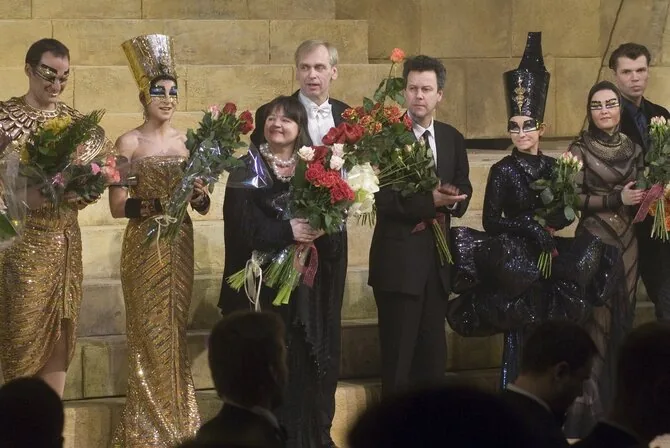
Therefore, the next work we chose was Mozart’s “The Magic Flute,” because the “bohemians” could already prepare roles for this opera. Let’s not forget, Mozart is the complete opposite of Puccini. I wanted the young soloists to grow in diverse music, and the choice of works was not some selfish choice; we did not choose what Ibelhauptaitė liked.
We chose what suited the “bohemians,” their voices, and staged what allowed them to develop professionally and raised them to another level. We took on Verdi’s “Il Trovatore” when we were sure that all our soloists who sang Puccini had now grown to sing Verdi. Exactly ten years after the founding of “La Bohème.”
– Could the soloists also suggest works they wanted to sing?
– Yes, that was another way of choosing works – when our soloists brought some opera they wanted to sing.
Edgaras Montvidas suggested Jules Massenet’s “Werther.” Also, from conversations with Edgaras came Charles Gounod’s “Faust.” We decided to stage “Manon Lescaut” because we had Asmik Grigorian. These were interesting decisions. And, of course, we staged Leoš Janáček’s “Káťa Kabanová” because Aušrinė Stundytė really wanted to work with us. She is an absolute expert on Janáček’s operas in Europe; the best directors in the world who stage these operas chose her.
And together with Gintaras (conductor Gintaras Rinkevičius – editor’s note), we chose composers to have as diverse music as possible. That’s how the French composers Saint-Saëns and Debussy appeared. We wanted rarely heard music, operas never staged before, such as Claude Debussy’s “Pelléas et Mélisande.”
Moreover, it was important to me that the set designer Dick Bird, lighting designer Peter Mumford, costume designers Juozas Statkevičius and Jonathan Morrell, who worked with us, could create different periods and different aesthetics. I am not a one-style director like Calixto Bieito or David Alden, who always create productions in the same style. It is important for me to constantly create new worlds so that the audience can see the most diverse visual styles on stage.
There is one golden rule: you cannot sit on two chairs because then you won’t do either one super well. There will be running around and trying not to fall into the gap between the chairs.
I often think about the theater phenomenon that was born in the Youth Theater from Eimuntas Nekrošius and Dalia Tamulevičiūtė. Nekrošius was a director-builder, and Tamulevičiūtė was a director who nurtured talent, nurtured people, nurtured the audience, nurtured the world. I think I would identify more with Dalia Tamulevičiūtė – I wanted to nurture. If I had wanted another path, I would never have returned to Lithuania. In 2004, when my performance “Šveikas” was nominated for the Drama League Awards in New York as the best performance of the year, I could have stayed there and had a completely different career.
– Did you ever want to return to New York?
– There is one golden rule: you cannot sit on two chairs because then you won’t do super well either one. There will be running around and trying not to fall into the gap between the chairs. I understood this after a couple of years. I had a choice – either I return to New York and then never return to Lithuania, or I stay in Lithuania and invest my best career years in the “bohemians.” And about New York – who knows, never say never.
– I would also like to talk about your directing decisions. Watching some rehearsal recordings, I noticed how you stand next to the actor and quietly say: “Hold this angle, now turn again, come back and hold it once more.” It reminded me of film set principles – as if you transferred film language and working methods to the opera stage. Where did this idea come from and why did you want to introduce this directing style into opera?
– I have always loved cinema very much. I have even made a couple of short films. In 1999, I made my first short film “Let the Good Times Roll,” the script of which was written by Dexter (Dalia’s husband Dexter Fletcher – editor’s note). The main roles were played by Dexter and famous British actor Bob Hoskins. A few years later, I started making another film – “Feeling Good” with Ingeborga Dapkūnaitė and Jason Flemyng. I never finished this film – it’s somewhere in Paris.
In fact, having made these two short films (or rather one and a half), I realized that cinema as a genre is not for me. It doesn’t suit my temperament, although it suits my scale. I don’t have patience. Everything has to happen here and now, quickly; I can’t wait. Sitting for four hours on a film set waiting for lighting changes is death for me. I would get on my own nerves and annoy everyone else. Having realized this, I never, even now when I am a creative producer and work with Dexter, sit on set for 12 hours. I come only when filming is happening. Empty sitting drives me crazy.
Cinema, cinematography, film visuality, acting are very acceptable to me, and I transferred all this to opera. Opera is the perfect genre for me. Everything happens here and now in opera. No need to wait. The only thing you cannot influence when staging opera is the pace of action. In opera, you cannot dictate the rhythm because the rhythm is dictated by the music.
I was very lucky to stage my first opera “Don Giovanni” with Maria Björnson. It was a sign of fate, of God for me.
– How long did preparation before rehearsals take? How long did libretto and music analysis, reading music with text take?
– Together with Gintaras, we listened scene by scene, then read the text of each scene, analyzed, and discussed it from dramatic and musical perspectives. We worked like this with each opera for more than 10 years. We prepared very thoroughly, and only after thoroughly analyzing everything did I decide which period we would choose.
Then I would go to work with set and costume designers. Juozas Statkevičius always asked: tell me the plot and about the characters. And I told him several times. Only after a few productions with Juozas did I understand his very wise working method, ideal for a costume designer. He wanted to know the director’s view of every person on stage and the interpretation of the whole production. This gave him the freedom to create independently and perform miracles on stage, organically blending into the whole performance.
Basically, I spent half a year with the music, libretto, and each character of each opera. Besides, I read many other texts related to the opera I was staging. This is the most beautiful and creative time.
That’s why you can’t sit on two chairs. You have to give yourself completely, give everything if you want to achieve not external but true success. Eimuntas Nekrošius was absolutely right – there is no greater solitude than when you are surrounded by hundreds of people, but your profession separates you from everyone.
– When, at what stage of the creative process, does the opera performance happen for you?
– For me, without exception, the performance happens during the first stage rehearsal with the orchestra. After long work with the piano, when I first hear the soloists singing with the orchestra on stage, I see the characters they have created over many days, I always cry. Alone in the dark.
Opera is the discovery of my whole life, which never ends, the process of discoveries continues, and it will be so until I leave this world.
It is an extraordinary, divine privilege to hear this – when you are alone, without an audience, when everything rises to another level. The feeling is like seeing majestic birds soaring in the mountains. In both cases, something unearthly happens then.
– Famous opera director Sellars says that opera is a place where what it means to be alive and human is deeply revealed, and at the same time trying to touch the boundaries of infinity and the universe. He also emphasizes that opera is not only art but also a certain civic space, a place where people can confront great experiences, great life questions. What is opera to you?
– Opera is a great synthesis of arts where music, drama, scenography, design, lighting, costumes, dance, and more merge. The most important aspiration is that it is polyphony, not just music, that every part of the opera is important and brings its own feeling. Opera is the discovery of my whole life, which never ends, the process of discoveries continues, and it will be so until I leave this world.
In opera, you can discover everything. Words and music emotionally affect a person differently. Opera can reflect the most diverse feelings of yours, answer many of your questions – not only simple but also existential, deep questions.
Read more Former NATO chief Jens Stoltenberg will share the duties of the security conference chairman