








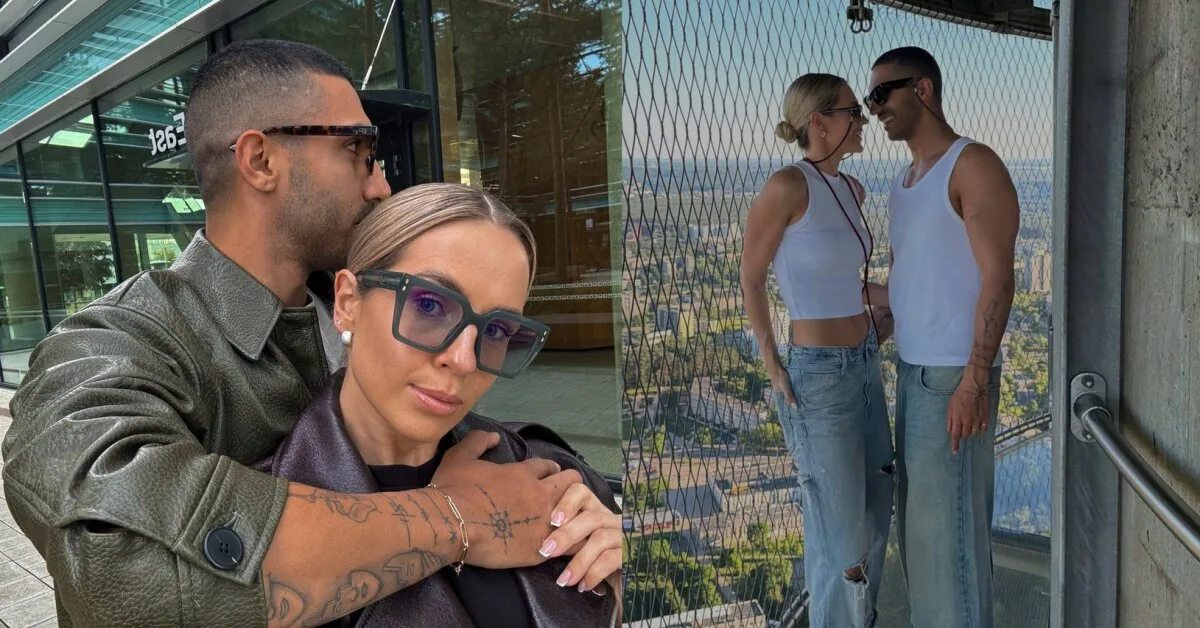
She spoke about this on the social network “Instagram”. She agreed to share her thoughts with the readers of the news portal Žmonės.lt.
Read more The parade of giants of the 39th «Vilnius Jazz» festival will be started by local stars
Giedrė did not hide that opening up on such topics in the public space is not easy, as there is always a risk of being misunderstood.
“There are topics that are difficult for me to talk about and I often avoid touching on them. Especially on social networks, where your words can very easily be distorted, taken out of context, or interpreted completely differently from what you wanted to say,” said G.D. Pilelytė.
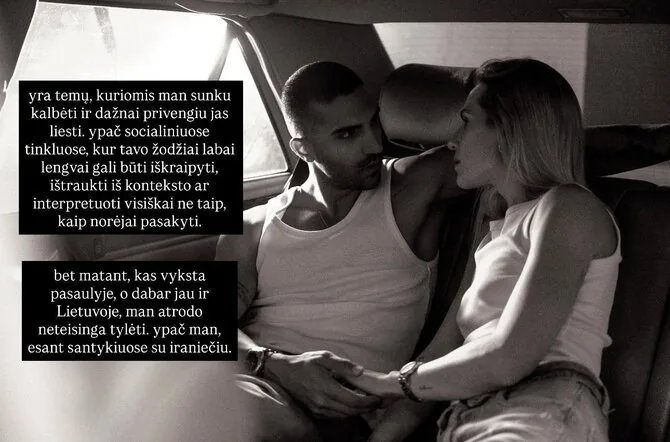
However, according to her, observing the recent days’ events and developments in Lithuania, the tactic of ignoring became impossible. Especially when the fear for the safety of a loved one touched the closest people.
“Seeing what is happening in the world, and now also in Lithuania, I think it is wrong to remain silent. Especially for me, being in a relationship with an Iranian. And especially now, when even my own mother asked yesterday: ‘Won’t Ali have problems? Won’t someone attack him in Vilnius just because he is Iranian, and think he is one of those too?’” shared G.D. Pilelytė from her personal experience.
Seeking to dispel circulating myths, the content creator emphasized that nationality by no means implies blind adherence to one religion or another.
“I understand that probably for a long time we will have to repeat one simple thing: you don’t choose where to be born, and an Iranian is not necessarily equal to a Muslim or a religious person at all. I have said this hundreds of times already, but I will say it again: neither I nor Ali are religious,” Giedrė stressed.
She added that both she and her beloved believe in karma, that every action has a reaction, and simply in the desire to be good people.
Read more Stopped on the way: The US dealt a diplomatic slap to Iran
According to the Lithuanian, they both view religion critically, fully understanding the power it holds in certain parts of the world: “We see how in some countries, for example Iran, it is not only a matter of personal faith but also part of government, control, and life rules.”

Giedrė spoke firmly about those who come to live in Western countries. Although she respects each person’s freedom to believe, the woman has a strict opinion about adapting to the local culture.
“Every person has the right to believe in whatever they want. But living in Lithuania, Europe, or Western society in general, there are also our laws, values, and way of life. If a person chooses to live here, in my opinion, they must respect the country they came to, its laws, people’s freedoms, and societal norms – not try to change them according to their own,” she stated.
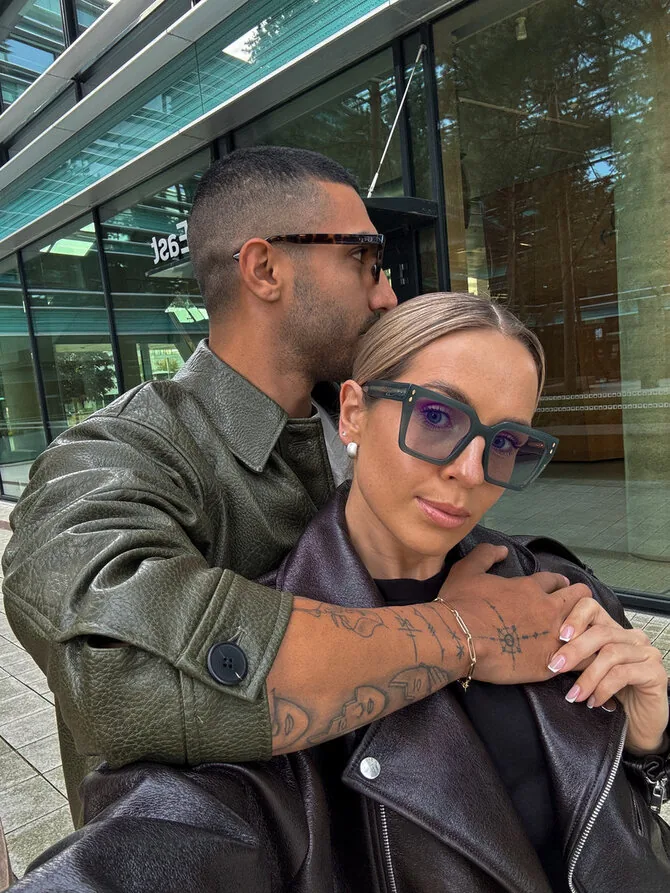
Giedrė supplemented her post with Ali’s own thoughts, which, according to her, perfectly reflect his attitude towards Western freedoms and the place of religion in society. The man from Iran assessed the situation very straightforwardly: “I am Iranian. I did not learn about Islam from the internet. I grew up seeing what happens when it takes over the country’s control and power. I left Iran because Islam there was not just a personal matter. It controlled our laws, our freedom, what women and men could wear, and how people were allowed to live.
So yes, I will always defend European freedom and secular culture. Praying privately is your right. But if you want Islamic laws, Islamic governance, and a society formed according to your religion, then live in a country that already follows this system. Do not come to the West and try to recreate the same system from which many of us, including me, fled.”
She concluded her sensitive but firm appeal by assuring that these words are not directed against any community: “I do not intend to incite hatred with this post in any way. But seeing today’s events, I felt the duty to say our perspective out loud.”
Read more Russia is in debt up to its ears: 3 countries have not paid nearly a trillion