










Many parents experience their child’s first days at kindergarten no easier than the child themselves – feeling guilt, anxiety, sometimes even sadness. Is this normal, and how much does such an emotional state of the parents affect the child?
This is completely normal. When sending a child to kindergarten, parents may feel various intertwined and sometimes even contradictory emotions – guilt, sadness, anxiety, doubt, sometimes relief. Guilt does not necessarily mean you are doing something wrong; it usually just shows that you care about your child, so this stage is emotionally significant for you. In this situation, what helps most is not self-reproach but a clear internal understanding – “my child is having a hard time now because they are experiencing a new experience that naturally brings many different feelings.”
The child is actually affected not so much by the fact of separation itself, but by how the parents behave when saying goodbye. Small children sense parents’ anxiety not from words but from small details – they very sensitively notice adults’ voices, facial expressions, body tension, hesitation. If mom or dad behaves calmly and consistently, it is easier for the child to believe that the situation is safe.
Equally important is the parents’ trust in the people to whom they leave the child, because the little one observes not only whether mom or dad are calm but also how they interact with the teacher and whether they trust them when handing over the child. At “Vaikystės sodas” (Childhood Garden), especially in the first weeks, we try to provide parents with as much clarity as possible about how the child is doing: teachers share how the child felt, whether they calmed down quickly after saying goodbye, what activities they engaged in, how they ate or rested. Such concrete feedback also helps parents go through the adaptation period more calmly.
When adults’ behavior sends the message to the child “I trust this place and these people,” it is easier for the child to gradually build their sense of security at kindergarten. That is why a good relationship between parents and teachers is an equally important part of adaptation.
So how should one properly say goodbye to a child?
A good goodbye is short, calm, warm, and similar each time. It also helps the child when dad or mom fully turns to them during the goodbye, briefly hugs them, tells them when they will return, clearly says “bye,” kisses them, and leaves.
However, certain adult behaviors can complicate adaptation, such as hesitation. Sometimes parents think that a more sensitive goodbye, a longer hug, or one more minute will ease the situation, but in reality, it is usually the opposite – the longer the stay, the harder it is for both the child and the parents.
Also, a bad decision is to disappear unnoticed from the kindergarten while the child is busy with a toy or talking to the teacher. Of course, it may seem that the child will not cry if you do this, but in reality, the child loses trust in the parents, realizing that they can disappear at any time without warning, so the next day, when brought to kindergarten, the child will not let them out of sight. The child needs to know that parents always come back.
Predictability during adaptation is generally one of the most important sources of the child’s security because in a new environment, the child has to face many unknown things – new people, rules, activities, and daily rhythm. Therefore, our teachers at kindergarten tell children in advance what will happen next, and transitions from one activity to another are accompanied by familiar rituals, songs, visual signs, or short playful signals. This helps children understand that one activity will soon end, and after it, lunch, rest, or another daily activity awaits, allowing them to calmly prepare for this change.

What to do when the child still says in the morning “I don’t want to go to kindergarten”?
The best reaction from parents is to acknowledge this feeling of the child but at the same time maintain a clear boundary. For example: “I see you don’t want to go, it’s hard for you to part with me, and I understand you. Now we are going, and after the afternoon nap, I will come to pick you up.” This way, the child feels that their emotions are seen and accepted but also understands that the plan to go to kindergarten does not change.
If the child does not want to go to kindergarten not just on the first day, it is worth calmly finding out what is hardest for them there: maybe it is still hard to part with parents, the morning rush is stressful, noise in the group, sleeping in a different bed, using the toilet at kindergarten, a changed daily routine, or some specific situation.
Often, after talking with the child and the teacher, it turns out that the difficulty lies not where the parents imagined, and knowing the reason, it can be quite simply resolved – for example, waking up earlier so the morning is less stressful or talking to the teacher about a specific situation in the group.
The most important thing is to maintain consistency: if every stronger protest ends with the possibility to stay at home, it will be even harder for the child to create a predictable rhythm of the new daily life. Longer breaks can also complicate the return to kindergarten – this is especially relevant at the beginning when a new routine is interrupted by illness. After a few days or weeks at home, the child has to recreate part of the separation and new routine experience, so adaptation can be prolonged due to illnesses, longer weekends, holidays, or other changes in the usual rhythm.
Can parents do anything even before kindergarten to make it easier for the child to settle in?
The most useful thing is not to persuade the child “not to be afraid” but to make the upcoming situation at kindergarten as familiar as possible. It is easier for the child to enter a new environment when there is at least something recognizable – a familiar building, a met teacher, an understanding of what will happen in the morning and when mom or dad will return. So, if possible, it is worth visiting the kindergarten together with the child before the start – let them see the group, meet the teacher, find out where their locker will be, etc. For example, during adaptation at “Vaikystės sodas,” we suggest the child bring a familiar item from home to kindergarten – a favorite toy, a small blanket, or another item that gives them a sense of security and calm.
It is worth telling at home what the day will look like, for example: “In the morning we will have breakfast, go to kindergarten, I will accompany you, say goodbye, you will stay at kindergarten, and I will leave. You will play, learn new things, eat lunch, take a nap, and I will come to pick you up after the nap.” For small children, the concept of time is still abstract, so such landmarks – “after the afternoon nap,” “after the snack” – are much clearer to children than a specific time by the clock.
About a few weeks before the start of kindergarten, it is worth gradually bringing the home sleep and eating rhythm closer to what the child will experience at kindergarten; short stays without parents with grandparents or other close and safe people for the child can also help. At home, you can read books about kindergarten or role-play the goodbye situation with a favorite toy.
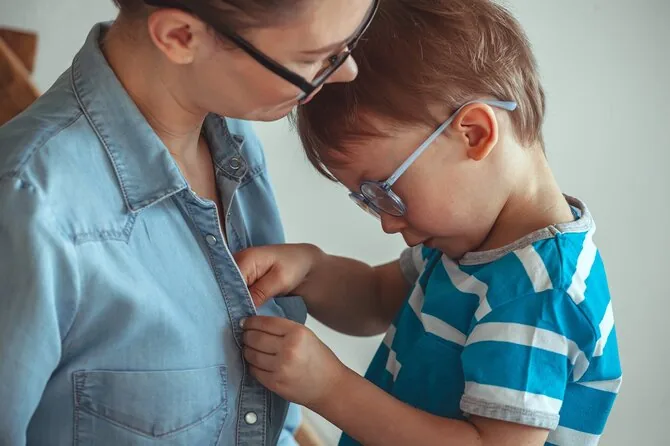
It is important not to idealize kindergarten too much. Promises like “it will be very fun there,” “you will immediately have many friends,” or “you will play all day” may not match the real experience of the first days, so it is better to speak positively but realistically: there will be other children, various activities and toys, but you will also need to wait, share, get used to new people and rules. It is easier for the child to meet reality for which they were prepared than a perfect picture painted in advance.
Another important recommendation is not to burden the child with additional big changes as much as possible in the first weeks. If you can choose the time, it is not the best moment to simultaneously give up diapers or pacifiers, change sleep habits, start many new clubs, or plan intensive trips. The start of kindergarten itself is a big change, so a calmer and more predictable daily life at home leaves the child more internal resources to adapt.
Let’s say the first week went even better than expected – the child calmly goes to kindergarten, says goodbye without tears, but the next week tears and requests to stay home begin. Does this mean something happened at kindergarten?
Not necessarily. Adaptation rarely happens in a straight line – it is more often wavy. After a few calm days, the child’s reactions may intensify, especially if they are tired, haven’t slept well, are hungry, start to get sick, there was a longer weekend or holiday, or the usual rhythm changed. This does not mean that adaptation failed or that the child “went back to the beginning.” When adapting to a big change, better and harder days are natural, so it is more important to observe not just one specific morning but the overall direction over several weeks.
When the child calms down fairly quickly after the morning goodbye, engages in activities at kindergarten during the day, plays, eats, rests, interacts with teachers, and begins to form connections with other children, these are good signs that adaptation is going smoothly. Of course, tears in the mornings may still occur, but they do not last all day and do not necessarily mean the child does not feel good at kindergarten.
Many parents notice a very strange thing – in the evening at kindergarten, they hear how great the child’s day was, but as soon as they cross the home threshold, tantrums or tears start over the smallest things. Why does the same child seem like an angel at kindergarten but turns into a little devil at home?
This phenomenon is so common that it even has a separate name – “after-school restraint collapse.” The term was proposed by Canadian psychotherapist and parenting educator Andrea Loewen Nair, describing a situation where the child tries to control their emotions and behavior all day and, upon returning to the safe home environment, relaxes and releases the accumulated emotions. The child’s daily life at kindergarten is quite different from home: the child has to adapt to the common daily rhythm and new rules, participate in organized activities, wait their turn, share, listen, negotiate with others. All this requires a lot of emotional effort from a preschool-aged child because self-regulation and impulse control skills are still developing at this age.
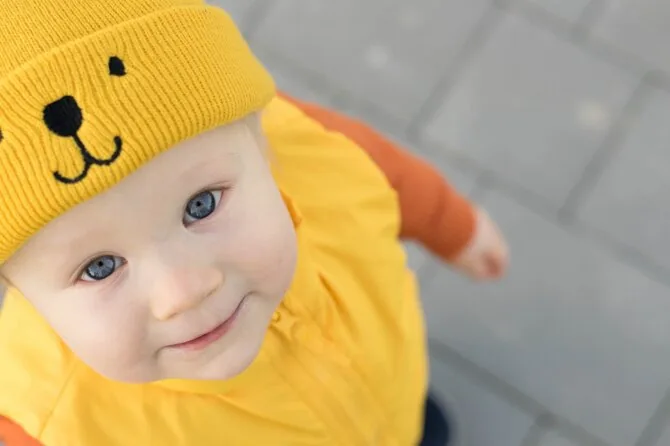
When the child finally finds themselves in the safest place – next to mom or dad – they can release all the tension accumulated during the day. So stronger emotions at home do not mean that the child had a bad time at kindergarten or that they are being raised improperly at home; on the contrary, it shows that home is a safe place for the child where they can release what they held inside all day.
This is also shown by biological stress studies. For example, a study of young children in Norway showed that in the first weeks when children stayed at kindergarten without parents, their cortisol levels increased and then gradually decreased. After three months, it had returned to a low level, and most children were well adapted to kindergarten. Researchers also noticed that in the first weeks, many children were tired and exhausted at home after kindergarten, even if they were well cared for during the day at kindergarten.
Read more What can and cannot slow down aging: a new study provides answers
So how can parents help their child?
The best thing to do in the evening is simply to let the child quietly “recharge.” You can calmly be nearby, hug, listen if the child wants to talk, but it is not necessary to immediately interrogate about every detail of their day. It is also worth reducing various stimuli at home – turn off screens, lower sounds, avoid assigning new tasks or planning intensive activities. A calm evening without additional demands often helps more than a long explanation of why the child is angry.
Such reactions usually decrease as the child gets used to kindergarten and their internal tension lessens, so during the adaptation period, it is worth viewing the child’s evening sensitivity as a signal that they currently need more calm and closeness, not as behavior that must be “fixed” as soon as possible.
One of the most common questions parents ask is how long adaptation generally lasts?
There is no universal term. One child adapts quite well to a new environment in a few weeks; another may need several months. The duration and success of adaptation depend on the child’s temperament, age and developmental stage, previous separation experience, relationship with parents and teachers, kindergarten environment, routine, and cooperation between parents and kindergarten.
The orientation period is often considered to be about four to eight weeks, but it is important not to count days but to observe the direction. Are goodbyes gradually getting easier? Does the child calm down faster? Do they start engaging in activities and forming relationships with teachers and other children? If yes, adaptation is happening, even if some days still have tears.
Especially important during this period is the child’s relationship with the teacher. A warm, sensitive, and predictable adult in a new environment becomes a source of security for the child, so in the first weeks at kindergarten, the most important thing is not to teach the child to adapt to all requirements as quickly as possible but first to build a relationship. In a child-friendly adaptation, the teacher observes the child’s signals, allows gradual involvement, helps transition from one activity to another, and does not expect all children to behave the same from day one.
At “Vaikystės sodas,” we do not expect all children to immediately integrate equally into class life: one child runs to play right away, another needs to observe first, a third needs to stay longer near the teacher. The teacher notices what a specific child needs at that moment and helps them take the next small step.
One important thing to remember is that even if the child’s adaptation takes longer, it does not mean something is wrong because some children are simply naturally more cautious, take longer to get used to changes, and react more sensitively to a new environment. This is a temperament trait, not a problem, so such children especially benefit from a slow, consistent introduction to the new routine and patient adult presence nearby.
Let’s say the child already goes to kindergarten in the morning without tears, the day at kindergarten goes smoothly, but at home, usual skills regress – a child who had long used the potty asks for diapers again, sleeps poorly, gets angrier, and finds it harder to separate from parents. Could this be a consequence of adaptation?
Yes, and it is quite common. Preschool children do not always have the words to precisely express what they feel, so strong emotions may manifest through behavior and body. For example, the child cannot yet say “I had a hard time in the group today, I felt lonely, I got tired of the noise,” so their body speaks instead of words.
In other words, emotionally significant changes can temporarily increase anger, irritability, or hostility, disrupt already established sleep or toilet habits. Due to changes during adaptation, there can also be increased attachment, a need to be very close to parents – the child may not want to let go of mom’s hand even for a minute, “stick” to dad, or demand that you stay in the room while they play.
They may wake up more often at night and ask to come to parents’ bed or require more help with things they already knew how to do themselves. Some children even start speaking “baby talk,” begin sucking their thumb again, ask for favorite blankets or comfort toys they had long put aside.
It is important to understand that such reactions are usually temporary. During adaptation, what helps the child most is not pressure to quickly “regain” previous independence, such as demanding to wear underwear, but rather a gentler, calmer, and supportive adult presence nearby. When the new daily life becomes more familiar, the child’s relationship with teachers and other children strengthens, and they begin to feel safer at kindergarten, signs of regression usually gradually disappear.
How can parents understand where normal adaptation difficulties end and signals that professional help is needed begin?
Normal adaptation difficulties usually have several common features: first, they are greatest in the first weeks and then gradually decrease, even if harder days occur; second, the child struggles in the morning but engages in activities during the day, eats, sleeps during the nap, and begins to form relationships with teachers or other children; third, although there are harder evenings at home, despite increased sensitivity, the child still maintains connection with parents, plays, laughs, and is interested in usual things.
It is worth seeking help when the situation does not improve for several weeks or worsens significantly, for example, the child’s anxiety not only does not decrease but intensifies – they categorically refuse to go to kindergarten, and it becomes a daily battle; also, separation anxiety begins to transfer to other situations – they no longer want to stay even with grandparents or a babysitter, people who previously were liked by the child. It is also worth worrying when the child withdraws into themselves and stops speaking in the kindergarten group, although they speak freely at home – specialists call this selective mutism, and it is already a sign that consulting a psychologist would be advisable.
It is also worth carefully observing changed physical symptoms – if unclear stomach or headache symptoms appear, the child vomits before kindergarten or starts wetting the bed or clothes again and this continues for several weeks, it is advisable to consult a psychologist or family doctor. Consulting a specialist does not mean that some intervention will immediately begin – often one conversation is enough to clarify whether it is necessary just to wait or if additional help should be sought.
What would you like to say to parents preparing for the first days at kindergarten or currently going through adaptation and feeling anxious?
It is important to know that most children successfully overcome adaptation when calm, consistent adults who respond to their needs are nearby, and kindergarten cares not only about the daily schedule but also about the relationship with the child and their family. It is worth keeping in mind – the goal of adaptation is not that the child stops crying completely because separating from parents can be hard for the child even when they feel safe at kindergarten.
The most important thing is that the child gradually understands: “It is hard for me, but I can handle it. I will be taken care of here. Mom or dad always come back.” This is one of the first and most important life lessons – the world can sometimes be uncomfortable, but I can handle it, and my people have not abandoned me. This experience gradually strengthens the child’s sense of security, self-regulation, and self-confidence when facing new situations.
Although the first weeks may require a lot of emotional strength from the child, it is worth seeing the broader perspective. Adaptation is a temporary stage during which the new environment, people, and daily rhythm gradually become familiar and one’s own. And a quality kindergarten gives the child much more than care: here they learn to build relationships, understand themselves and the world, trust others and themselves.
By interacting with other children and sensitive adults, playing, exploring, and learning, the child develops language, social skills, self-regulation, cooperation ability, and emotional flexibility, so the difficulties experienced at the beginning are a natural part of a big change. As the child gradually adapts, kindergarten becomes a safe and familiar place where they can grow, learn, build relationships, and increasingly trust themselves.
And one more thing – do not expect perfection from yourself. Even if one morning the preparation for kindergarten does not go perfectly – you take too long saying goodbye, get nervous, cry in the car – it does not mean you ruined the adaptation. Children are much more resilient than we think, and they need not perfect but good enough, supportive, consistent parents who respond to their needs. Be forgiving to yourself.
Remember, if it is really hard, you can always ask for help – from the kindergarten psychologist, family doctor, colleagues, or friends who have already gone through this stage, because it is just another sign that you care about your child. Adaptation is not a test to pass but a process through which the whole family gradually tames the new daily life and grows.
Read more Baby gender reveal parties are becoming popular: how much do Lithuanians spend on them?


