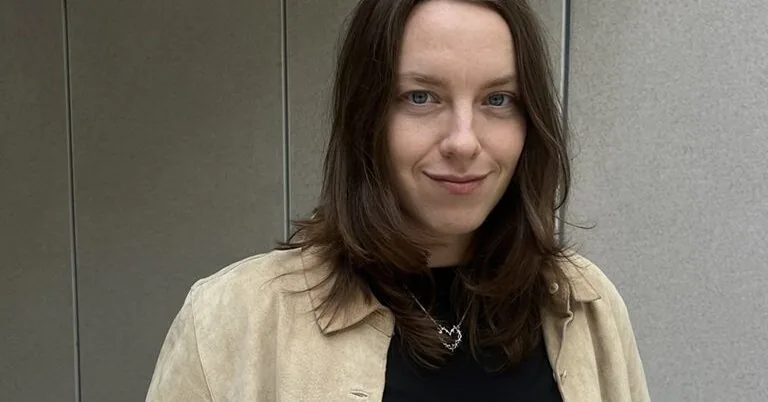
How she feels without important duties in the theater, what differences and similarities she sees between Lithuania and Switzerland, how she looks at her created performances from abroad, and what new works she plans – she tells in the latest interview.
Read more „Unreal – Lithuania can be proud“: what amazes foreigners so much about our country’s pools?
– Less than a year ago, together with Antanas Obcarskas and Kamile Gudmonaite, you finished your term as artistic directors at the Lithuanian National Drama Theatre. You are currently studying in Zurich, Switzerland. How has your time changed?
– It is simply a natural thing that a very intense period is followed by a time when everything calms down. Thinking about the last years, there is not much to tell, but not everything is visible externally. For me, these years are about a certain hibernation.
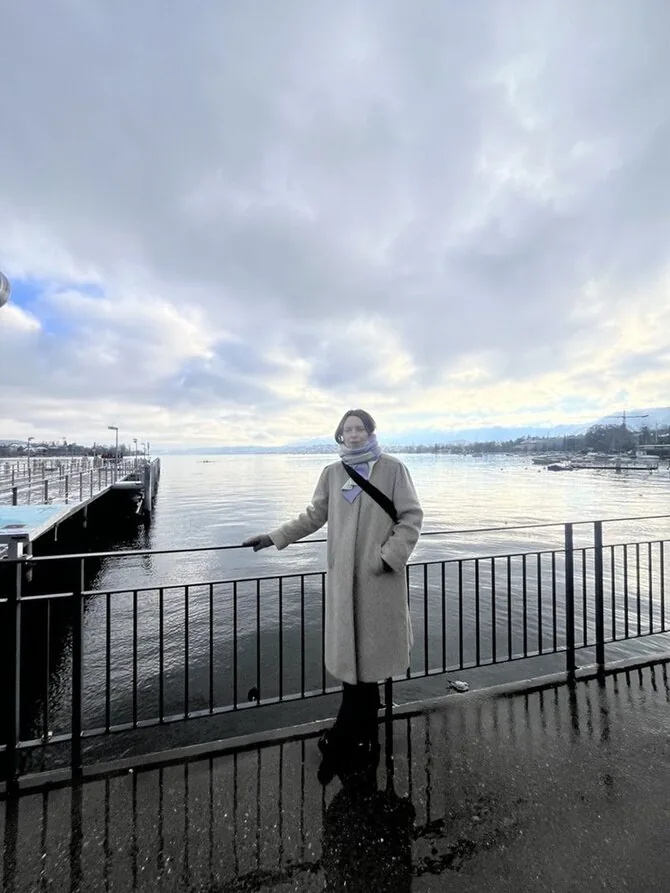
Now there are other experiences – studies and new people met there. Right after leaving, I tried to understand, remember, and feel who I am without any work duties. It may sound funny, but such an opportunity does not come to everyone.
– How do you like Switzerland? Do you think it is very different from Lithuania?
– One of the essential changes is living in a neutral country. And this helps me understand the West’s indifference to the war in Ukraine. Because living in Vilnius, you feel it with your whole body, but in Switzerland, there is no threat.
It is quite easy there to believe in universal security, a high standard of living, which forms a sense of calm. Still, it is a big contrast to Lithuania.
And the similarity is that both Lithuania and Switzerland are agrarian countries. Both have a lot of land, a lot of agricultural work, many cows. Only in Switzerland, there is much more wealth and more diverse nature: mountains, lakes, mountain rivers. And the characters of the people seemed similar to me – the Swiss are also big workaholics. They are ascetic people, Protestants, who are used to working hard and not showing off. They are quite closed, not letting deeper friendships in. But on the other hand, in Lithuania, I miss that strangers greet each other, all neighbors, all bus drivers.
I am very impressed by the Swiss ability to nurture their environment, take care of nature, their meticulousness. Everything there is beautiful, but on the other hand, it is a country that did not have to rebuild after wars or occupations, and that means a lot. For them, it is everyday life, but for me, it seems like a reward.
– Do you tell your classmates about Lithuanian history, occupation, struggles for freedom?
– Yes, I am a very serious ambassador! Still, it is a complex relationship because I quickly realized that I also come from a developed, well-off European country. Lithuanian self-victimization no longer works. I understand that we are neither Ukrainians nor Palestinians – I came from an EU country, receive a state scholarship, my country can afford to send me to such studies, I worked at the national theater of the country, I am definitely not a poor person.
For them, it is everyday life, but for me, it seems like a reward.
One classmate is from Hong Kong, another from New York, from million-people cities, and reaching such studies there is not easy; thinking about it, I feel very privileged.
And telling classmates about the region, about the war in Ukraine, is complicated. The hardest moments for me are when I see works being staged there that would be strictly boycotted in Lithuania because we do not work with Russian literature; I would say there is a prevalent Russian victim narrative there, which they themselves can produce because they are refugees.
Sometimes I think that in Switzerland, I might be perceived as an intolerant person and morally wrong in some sense when I criticize Russians or oppose the dissemination of their culture.
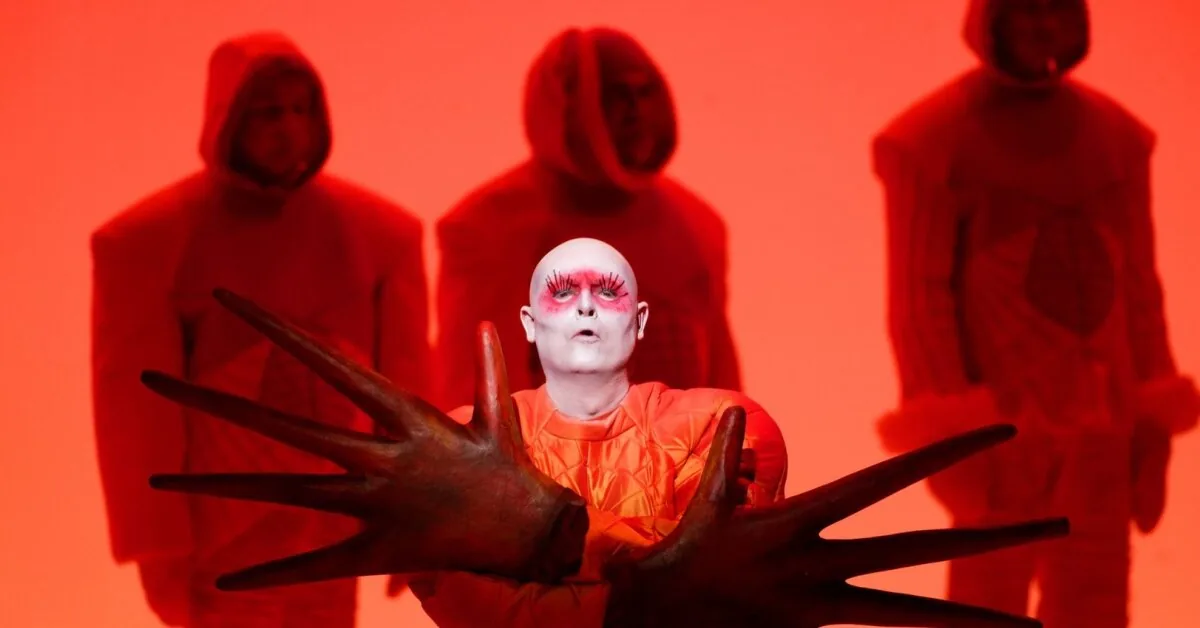
– And do you think your classmates would understand the performance „Fossilia“, which examines exile themes and the transgenerational traumas they cause? Do you now see the meaning of this performance differently?
– In studies, we had to learn how to give feedback, and we specifically examined „Fossilia“, classmates watched excerpts, I told about the contexts. I was glad that they immediately understood the themes of the performance and identified with them because some classmates’ countries had experienced the same: deportation, wars, exile.

If they watched not excerpts but the whole work, I think they would definitely understand it. Of course, „Fossilia“ is a very textual work. So, of course, maybe not everyone is ready to listen a lot… This performance has many references to Lithuanian contexts – maybe foreigners would not understand them.
However, there was a moment when I realized that it is really a good, meaningful performance.
– Could you tell more about your studies, what is the main focus there?
– My studies are called quite abstractly – Master of Theatre (MA Theatre), they combine theater disciplines; it is not just directing or acting or dramaturgy. The program’s goal is to accept students with different professional experiences and representing different disciplines.
In my course, there are people who studied acting, directing, some who switched from architecture to scenography, or from media to performative arts. A diverse international group. Such a meeting of people from different countries and fields seems to me a very strong and academically insufficiently established educational methodology because it is really a good way to help people open their minds and get acquainted with a new worldview.

– How many people study together?
– There are 14 people in the course. The studies have an unofficial subtitle „collaborative master“, where they teach to work collaboratively. The essence is to find like-minded people and create a final project in a group, not starting the process like in an institutional theater, where the idea author, usually the director, comes and implements their concept according to a hierarchical structure. These studies strongly question hierarchy and explore how to work democratically. The aim is to take on the role that interests you now.
Since I am a student after about ten years of break and in another country, I constantly compare what bachelor studies were like and what they are here. What Lithuania is, what Switzerland is, what are the pros and cons.
– So what roles do you take in joint creative projects?
– Since we made four small works in three months, there were various roles, I was on stage, acted, was also a co-author, a bit a dramaturge, director, and a bit a set designer.
– Are you satisfied with the studies? Are the things you learned repeating?
– Now I live with the thought that all experiences teach something. I cannot say that Zurich University of the Arts is a very good school that I recommend everyone to study at because I see shortcomings, mostly due to how studies are organized, how crisis situations are managed, and so on. I especially notice this after working with the LNDT ensemble.
Read more Hungary expels 10 Russian spies – Zakharova promises to cause pain
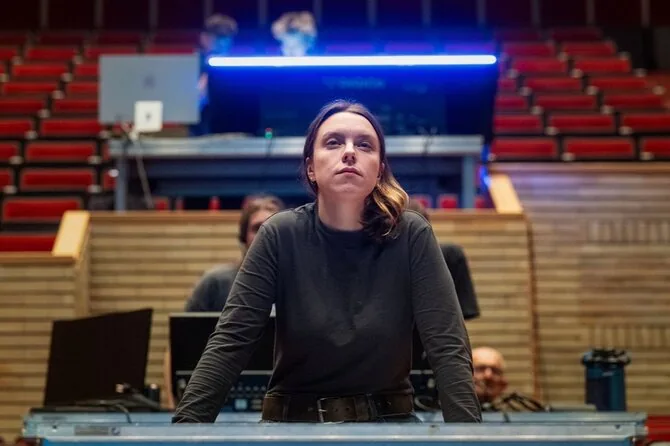
When I see how teachers handle disagreements arising in our group, I think it could be done differently, but I try not to interfere, remind myself that I am just a student and stay in this role. You don’t always have to be in the smartest position – just let things happen on their own, not take responsibility for that process because I am not organizing it.
– And what performances have you seen in Zurich that inspired you?
– To be honest, I have not yet seen very good theater in Zurich. The most interesting works I saw were in smaller theaters because they allow themselves to experiment. Still, culture in Switzerland is a bourgeois society’s place, and works meeting a certain taste are expected there. As with us, there are battles in public that the theater direction is too experimental. At Schauspielhaus Zürich, which would be the equivalent of the Lithuanian National Drama Theatre, I did not see anything inspiring. I was just amazed at how big budgets are used but with very little content.
The biggest impression on me was the performance „The Bride and Good Night Cinderella“ by Carolina Bianchi, who came to Zurich on tour, where she talks about sexual violence and women’s murders after sexual violence, about drugging (spiking), etc. There are quite a few performances in Swiss theater dealing with violence themes, and postcolonial narratives also prevail, which are hard to understand in Lithuania. The stage or microphone metaphorically is really given to voices that have long been oppressed.
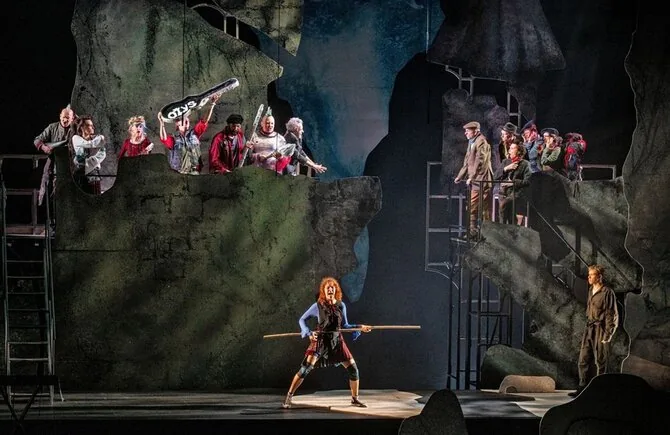
– A year has passed since the premiere of the performance „Ronja the Robber’s Daughter“, how do you see this performance yourself?
– „Ronja the Robber’s Daughter“ really was and is a necessary work. It brought a large number of children back to the Great Hall; it would be nice if their theater visits did not end there.
Generally, I make performances more for adults, but that performance for children teaches to think about what I use stage time for. Because if something seems very beautiful to me, but I feel it is too long a scene – and a child cannot concentrate for long – I understand that I have to give it up.
On the other hand, Ronja’s story continues personally for me – Ronja goes into the forest, goes far from home, where it is unsafe and many things are unclear, but it is very important that she has Birga – it is a reminder of how important it is to create and protect friendship. I feel really similar to Ronja.
– What feedback about the performance „Ronja the Robber’s Daughter“ have you heard from the children themselves?
– After performances, I really try to listen to what the audience says. After the last performance, I followed a family and heard phrases: „Mom, you don’t understand, she wanted freedom!“ It seems that children would not come up with such things, but they say what they felt. I said this to myself before the premiere, during interviews, and to the actors: a child does not consider how to say it more nicely or not to offend – just says it straightforwardly.
There are children who really like Birga, others Ronja, and others really like the fight at the end of the performance. I know children who, inspired by this performance, even started learning to play the bass guitar in a punk band. That’s how we created the performance: if one element does not resonate or interest, there are still many other things that can attract attention or be remembered.
For me, as a creator, sitting next to the audience, it is strange to see when children watch the performance, and parents fiddle with phones and do not engage in the experience. But it is also different – when children are active, and parents watch attentively. We really made the performance for the whole family – that is why the parents’ and robbers’ characters are so developed. I would really like the whole family to engage in what is shown on stage.
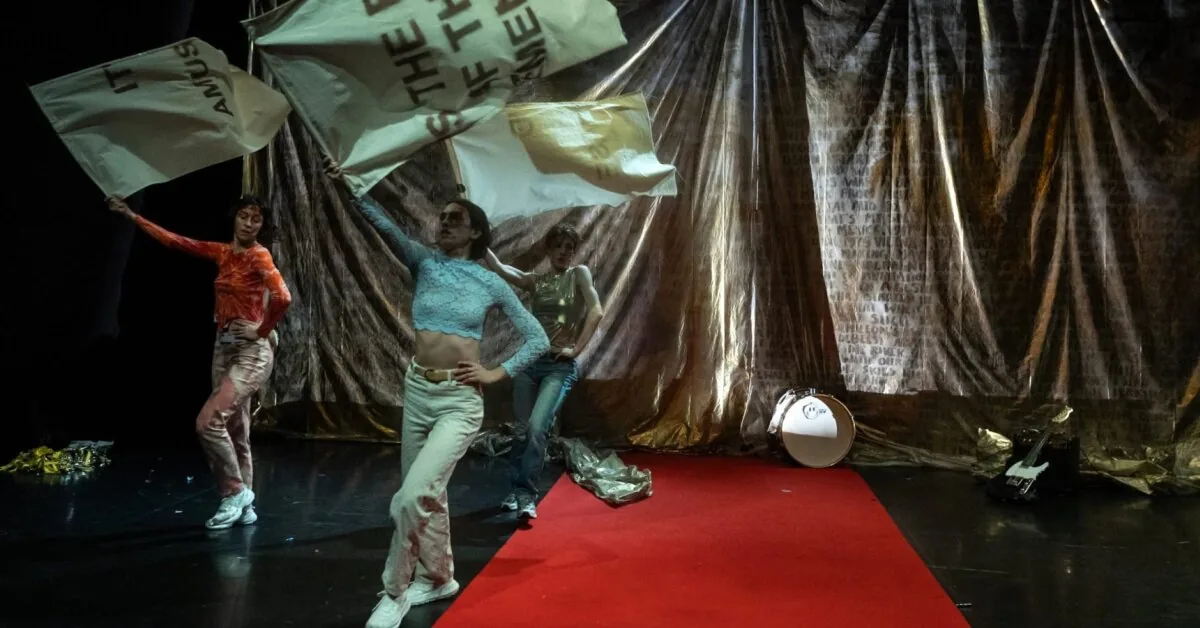
– The first work you created here, „Steel Magnolias“, is still shown at the Lithuanian National Drama Theatre. It is still popular and attended by the audience. What do you think is the secret of its success?
– Definitely a good play by Martin Algus – it was felt from the very beginning – it grows interestingly, has a bit of a detective element, it is fun to follow the plot twists. Also, good roles for actors. When the cast is small, they naturally find their way of being as the performance goes on. I know the actors themselves like playing this performance – that is also one of the secrets why the production is interesting to the audience.
The stage means are minimized there to reveal people’s relationships in very complicated situations (especially moments of care or abandonment). There is also quite a lot of humor. I am glad that this performance is like a playground for actors Dainius Gavenonis, Jolanta Dapkūnaitė, and Ramutis Rimeikis.
– What are your further plans? What do you plan to do after studies and what is most important to you in the future?
– One year of studies left. I am already planning future projects to create in Lithuania, although I do not want to name specific titles yet.
It seems to me that the Lithuanian theater system really lacks feminism – as a thinking principle centered on attention to different social groups, giving space to vulnerable groups. Both in theater and society in general, feminism as a concept is perceived superficially and vulgarly, and the saddest thing for me is when some influential woman in society says „I am not a feminist“, God forbid someone sticks such a terrible label on her now because she has her own opinion.
Why is it so? Maybe that feminist worldview needs to be brought into theater as contraband – because sometimes it seems that calling oneself or one’s work feminist in some theaters is accepted as something radical.
Maybe that feminist worldview needs to be brought into theater as contraband.

I would like there to be more socially investigative but aesthetically interesting theater in Lithuania – for example, now we have really big and important topics, we can talk about birth rates and pressure to create a traditional family, national defense, duty or no duty to the homeland, living next to a terrorist state, but in theater, it seems not reflected through the „here and now“.
Studies in Switzerland have made it even clearer to me how deeply I am connected to the country where I was born, to Lithuania, Lithuanians, and the problems of this region. I think I will continue to look for my way to create about this place. And I will continue to try to give space to the female voice.
Performances directed by Eglė Švedkauskaitė at the Lithuanian National Drama Theatre will be shown soon: „Ronja the Robber’s Daughter“ – September 19, 20, „Stand-up for Meaning and Meaninglessness“ – September 29, „Fossilia“ – October 9, „Steel Magnolias“ – 20.
Read more Prime Minister: searches in the «Aušriečiai» homes show that there are still unanswered questions