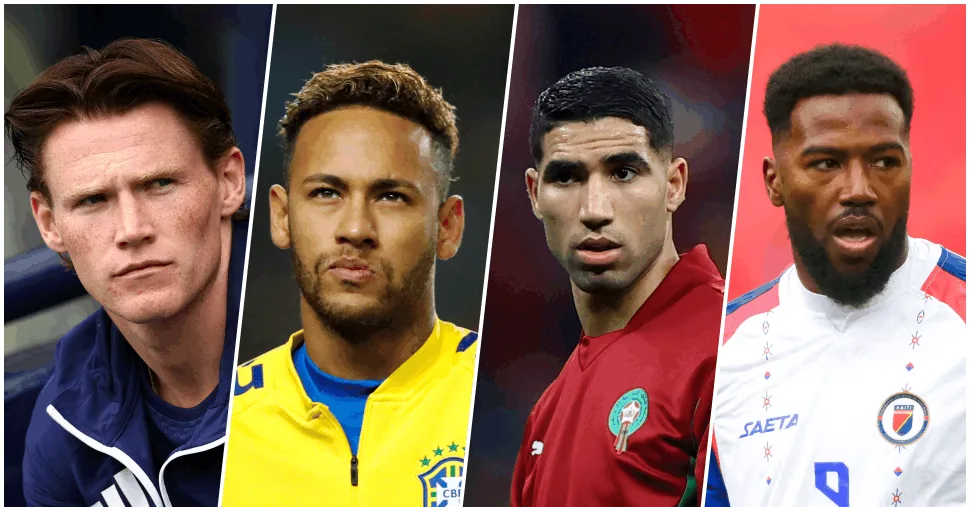
Brazil: 24 years without the sixth star
Brazil is still Brazil. This team, even during crises, has a better technical level than many countries experiencing their golden ages. It is the most successful national team in the history of the World Cup, having lifted the trophy five times.
Read more These urinary symptoms should cause concern: noticing and assessing them is not difficult
But Brazil is also a country that last became world champion in 2002. Since then, its relationship with the tournament resembles an aristocrat who still lives in a palace but increasingly notices that the roof is leaking.
In 2006, 2010, 2018, and 2022, the Brazilians fell in the quarterfinals; in 2014 at home, they reached the semifinals but would have been better off falling one stage earlier. In the semifinals, the country suffered one of the greatest traumas in its history when it lost 1-7 to Germany.
In Qatar four years ago, Croatia sent Brazil home after a penalty shootout.
- Team coach: Carlo Ancelotti (Italy)
- Team star: Neymar (Santos)
- Greatest achievement in the World Cup: four-time world champions (1958, 1962, 1970, 1994, 2002)
- Country population: 213 million people;
- FIFA ranking position: 6
The qualification for the 2026 tournament was also not a Brazilian samba demonstration. In the South American qualifiers, Selecao finished only fifth – with 8 wins in 18 matches. Under the old system, such a campaign would have forced the Brazilians to sweat more, but the expanded tournament this time became a comfortable cushion on which the five-time champions fell rather inelegantly.
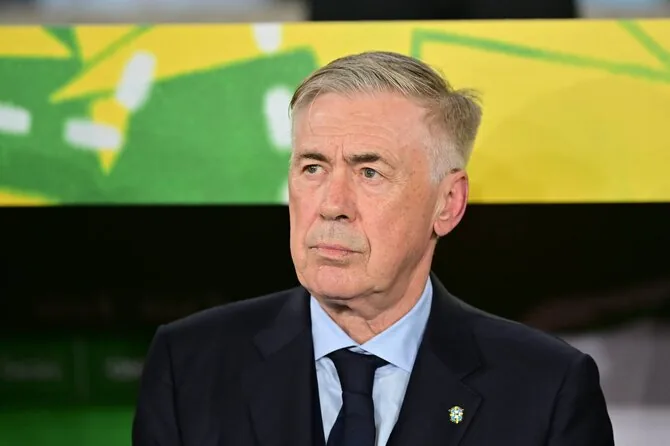
To fix all this, Brazil called in Carlo Ancelotti. It sounds both strange and logical: a country where football emotions often equal religious fervor hired an Italian whose face, even after conceding a goal, looks as if he is just pondering whether to choose fish or pasta for dinner.
C. Ancelotti has five Champions League titles, enormous authority, and a rare ability to manage big egos so that no one feels disappointed or humiliated. But national team football is a different beast. There is no daily work, no months of training, no time for long therapeutic sessions with tactical boards. There are a few windows, a few decisions, and a whole country convinced that the sixth title has been awaited for too long.
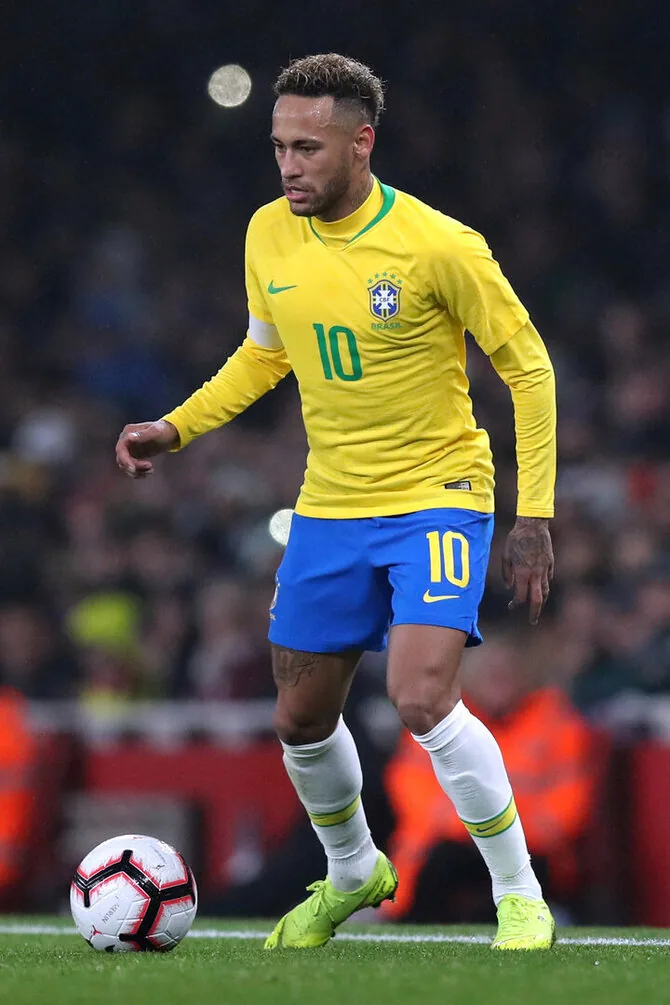
The biggest news before the tournament is Neymar’s return and the injury that followed shortly after. C. Ancelotti included the 34-year-old forward in Brazil’s squad, emphasizing that the decision was made based on the star’s physical condition and sporting form, not sentimentality.
Neymar, Brazil’s all-time top scorer, has not played for the national team since 2023 but is now returning to the big stage. If he recovers in time. Alongside him in attack will be Vinícius Junior, Raphinha, Matheus Cunha, and Endrick, while Rodrygo will miss the tournament due to injury.
The biggest mystery remains Vinícius Junior. At Real Madrid, he can look like a player who causes an identity crisis for opposing defenders on a good day, but he is not always the same in the Brazilian national team. C. Ancelotti knows him better than most coaches, so his task is clear: to make Vinícius not only a bright name on the team poster but also a person who can win matches.
Brazil will be the favorite in Group C. But the status of favorite has never been a gift for this country. It is more of an inherited burden. Brazilians do not go to the World Cup just to perform well; they go to rewrite history.
Morocco: was it a dream?
Morocco in Qatar did what no African team had done before – reached the World Cup semifinals. It was not a fluke. Morocco won the group with Croatia, Belgium, and Canada, then eliminated Spain, and finally Portugal with Cristiano Ronaldo.
This run changed Morocco’s place in world football. It also changed the expectations of the Arab country.
If in 2022 Morocco was just a romantic story, this year it arrives as a team that no one has the right to call a surprise.
- Team coach: Mohamed Ouahbi
- Team star: Achraf Hakimi
- Greatest achievement in the World Cup: 4th place (2022)
- Country population: 38 million
- FIFA ranking position: 8
In the qualifiers, the Moroccans were almost flawless: eight wins out of eight, 22 goals scored and only two conceded. It was a path without much tension, more like consolidating status than a nervous campaign.
However, just before the World Cup, Morocco underwent an important change. Walid Regragui, the architect of the 2022 miracle, resigned after a chaotic end to the Africa Cup of Nations. CAF eventually declared Morocco African champions, stripping the title from Senegal, but this decision left more bitterness than joy.
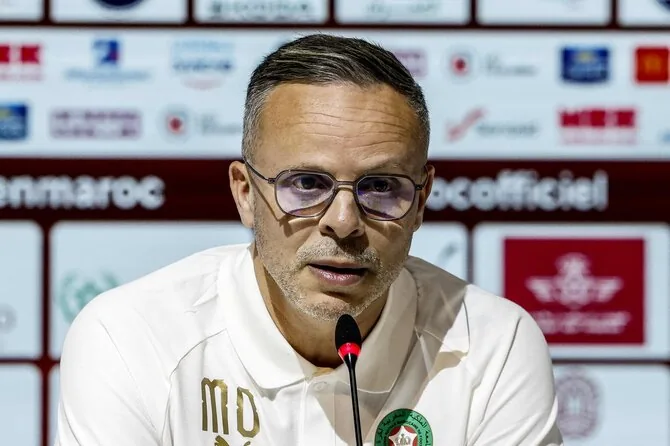
W. Regragui was replaced by Mohamed Ouahbi – the coach who led Morocco’s U-20 team to the world champion title. His team defeated Argentina 2-0 in last year’s tournament final, becoming the first Arab world country to do so.
A bold decision, but Morocco in recent years has not been a country afraid of sudden moves. Together with Spain and Portugal, it will host the 2030 World Cup, and its football no longer looks like a flash of a good generation – it has become a long-term project.
On the field, Morocco has everything needed to be an uncomfortable team. Yassine Bounou in goal, Achraf Hakimi on the flank, Noussair Mazraoui, Brahim Diaz, Sofyan Amrabat, Ayoub El Kaabi – this is no longer an exotic list of talents but a serious international team.
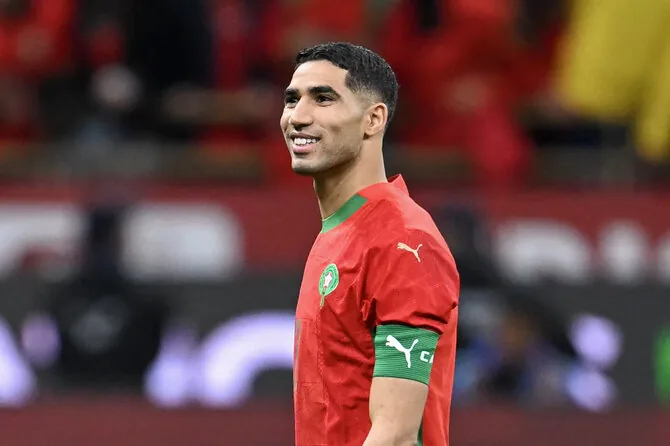
Brahim Diaz’s decision to represent Morocco instead of Spain was one of the biggest victories off the field in recent years. Such decisions show not only patriotism but also that Morocco has become a team trusted even by the world’s greatest talents.
Morocco can defend deeply, press higher, attack through the flanks, play patiently, and be in the opponent’s penalty area within seconds. In Qatar, they showed the football world that well-organized defense does not necessarily mean boredom – sometimes it is just a way to make the opponent gradually lose confidence.
So in Group C, Morocco will not be Brazil’s shadow but a real threat, and the first match between these teams could set the tone for the entire group.
Haiti: homeless but with history
Haiti’s qualification for the 2026 World Cup is one of those stories that sport can still offer even when it seems that everything is long controlled by rankings, money, and algorithms.
This will be only Haiti’s second World Cup and the first since 1974 in West Germany when this Caribbean team lost all three matches — to Italy, Poland, and Argentina.
Fifty-two years have passed, and Haiti is back on the big stage.
- Team coach: Sébastien Migné (France)
- Team star: Duckens Nazon
- Greatest achievement in the World Cup: group stage (1974)
- Country population: 11.7 million
- FIFA ranking position: 83
This time their story is even less convincing. Haiti qualified for the tournament despite having to play all qualifying matches abroad due to gang violence in the country. Since 2024, the team has been coached by Frenchman Sébastien Migné, who did not even visit Haiti during the entire qualification cycle.
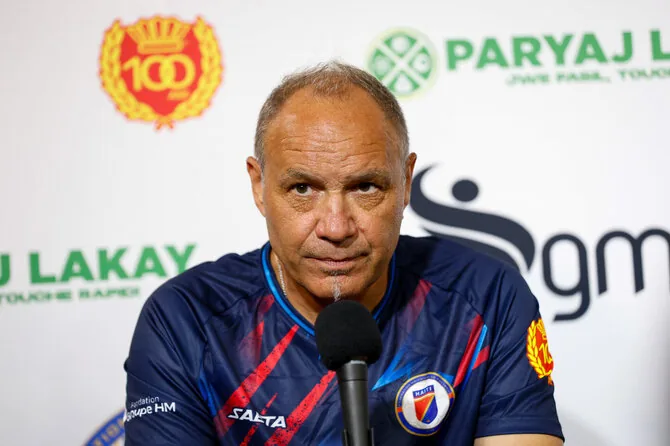
Haiti will most likely play as a team that must play in a group with Brazil and Morocco: low, patient, compact, hoping to survive pressure and strike on counterattacks. It will not be a team that holds the ball for long and explains to opponents how to move between the lines. Their football will be simpler: close up, wait, run, believe.
The most important name on the team is Duckens Nazon. The 32-year-old forward is Haiti’s top scorer.
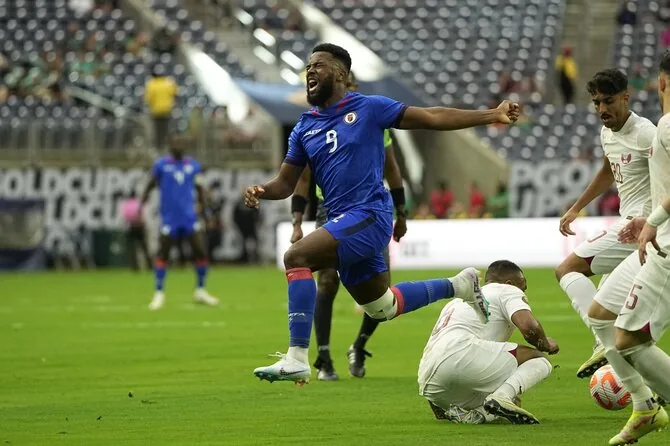
No less important will be goalkeeper Johny Placide – a veteran and team captain who saved Haiti multiple times in qualifiers against stronger teams.
Haiti will be the underdog in Group C. Brazil, Morocco, and Scotland will have more stars, money, and experience, but the Haitians bring a sensitive human story that cannot be measured by ranking, ball possession, or prediction percentages.
Scotland: after 28 years with an old dream
Scotland returns to the World Cup for the first time since 1998. This in itself is an event for a country that was one of football’s pioneers, loved it, suffered, but mostly watched from the sidelines as others enjoyed the big tournaments.
The ticket was won as Scots seem to deserve – nervously. In the decisive match in Glasgow, Scotland beat Denmark 4-2, and Scott McTominay scored a fantastic overhead kick.
Scotland has participated in the World Cup eight times and has never advanced from the group stage.
- Team coach: Steve Clarke
- Team star: Andy Robertson
- Greatest achievement in the World Cup: group stage
- Country population: 5.5 million
- FIFA ranking position: 43
In 1998, the Scots played the opening match against Brazil and lost 1-2. It was an honorable evening, but honorable defeats have been offered to this nation as consolation prizes for too long.
Now coach Steve Clarke will try to do what none of his predecessors managed – lead Scotland out of the World Cup group stage.
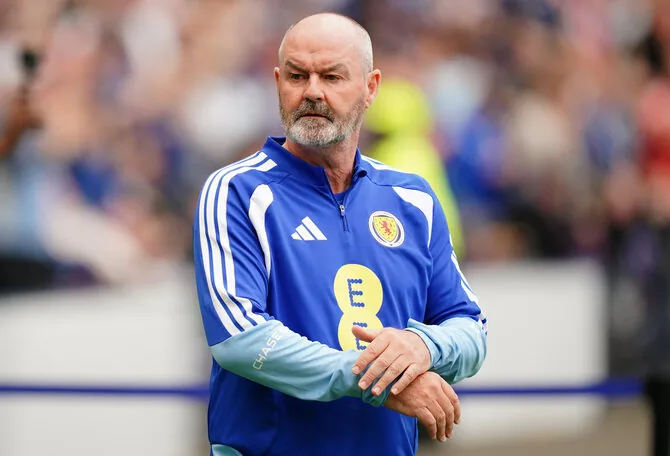
S. Clarke already has a special place in his country’s football history and is the first coach to lead the “Tartan Army” to three major tournaments.
His Scotland’s play is unlikely to be beautiful. This team can be compact, physical, straightforward, and sometimes overly dependent on emotional impulse.
S. Clarke long relied on a five-defender system but recently has sought more flexibility. Ben Gannon-Doak provides speed on the flank, Andy Robertson experience and execution of set pieces, John McGinn Scottish energy.
But the main player of the team for several recent years remains Scott McTominay.
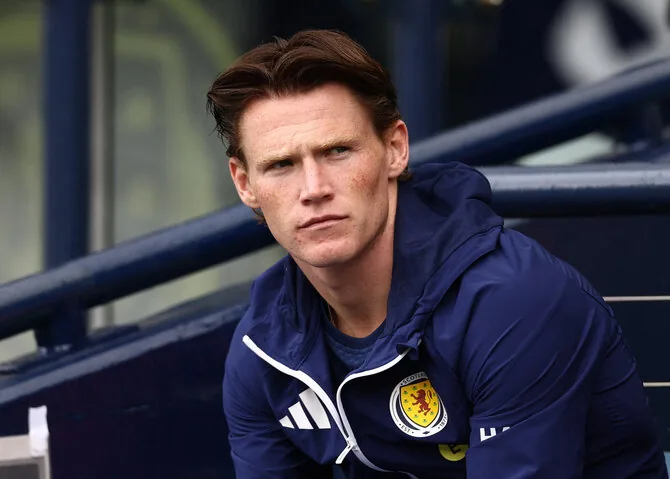
Goalkeeper Craig Gordon is already 43 and will be the oldest goalkeeper in this tournament and one of the oldest footballers in World Cup history. His career, full of injuries and comebacks, is like a Scottish version of this national team: sometimes it seems finished, but somehow still stands on its feet.