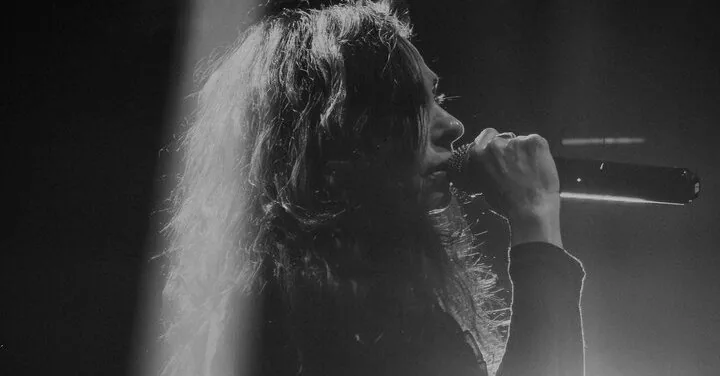
Gabeta, who has accumulated long-term stage experience, devotes more and more attention in her solo work to the inner experiences of a person. Music becomes a space for her not only to express feelings but also to ask questions that are not always easy to answer. The creator, who connects the worlds of psychology and music, says that the inspiration for this song came from her own personal therapy experience.

“For a while in therapy, we explored my desire to be comfortable, pleasant, and to please. I noticed that many times in life, wanting to be good to others, I agreed to things I really didn’t want or gave in. Later, inside, there was emptiness and disappointment that I hadn’t defended myself,” says Gabeta.
An important starting point in her work became one question from her therapist.
“Once my therapist asked me: if I choose others, then who chooses me? These words made me alert and eventually became a starting point for creating the song and exploring this subtle topic,” says the performer.

“Good but Unhappy” is a somewhat darker and more thought-provoking piece than Gabeta’s previous songs. However, this darkness is not meant to oppress – on the contrary, it invites alertness. According to the performer, sometimes a person tries so hard to meet others’ expectations, to be convenient, good, understanding, and suitable for everyone that over time they lose connection with themselves.
Read more Research: a billion tons of ice lie beneath the state of Utah
“I think it’s very easy in life to get lost amid all the external noise – between what we have to do, how we have to look, what others expect from us. And at some point, we may stop hearing ourselves. Gradually, we lose connection with our inner child, who once clearly knew what they wanted,” shares Gabeta.

Together with the song, the performer presents a music video in which childhood and inner child symbolism play an important role. The story of the video becomes a metaphor for what happens to a person’s inner world when we adapt too strongly to others. The childish symbol of freedom, play, and the desire to be oneself gradually becomes like a prisoner until we turn inward.
“By nature, I am very interested in creativity and all its stages, so while creating the video, I had many ideas on how to convey this theme with symbols. I am very happy with the team with whom this time I managed to communicate with half a word. Because of this, I am satisfied not only with the result but also with the creative process itself,” says Gabeta.
You can watch the song and music video here: