Not everything fits into a car or suitcase, so some of the necessary items are sent later by parents and relatives – from clothes and household items to electronics essential for studies. However, the desire to pack as much as possible into one box can end unpleasantly: an improperly prepared shipment can damage not only its contents but also the parcels traveling alongside it.
Read more Žemaitijos Versalis featured on a postage stamp: commemorating the Plungė manor palace
Parcel lockers are the most common delivery location in Lithuania – chosen by 78% of regular e-shoppers, compared to the 27% average in Europe. Therefore, items sent to students usually arrive at a parcel locker, where weight and size restrictions apply. An improperly prepared shipment can damage not only its contents but also the parcels traveling alongside it.
“In the first weeks of the new academic year, relatives often want to send everything a student might need at once – from a warmer sweater and computer accessories to food from home. However, this last part often becomes a problem. One spilled or spoiled food product can ruin the entire box’s contents, and if it seeps through the packaging – also the nearby parcels,” says Tomas Vaišvila, Communications Manager at DPD Lithuania.
Food from home is not suitable for shipment
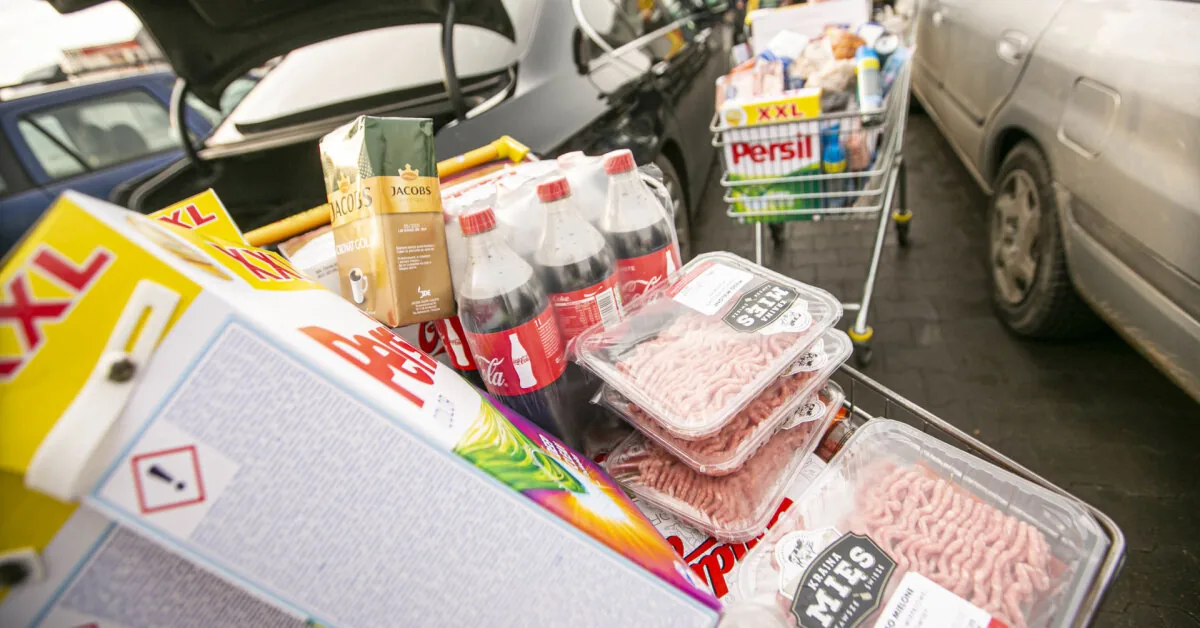
Perishable products, such as meat, fish, or dairy products, should not be sent in shipments. The temperature conditions required for food during transport and storage are not ensured, so products may spoil, emit unpleasant odors, or leak.
“Sometimes it seems that a tightly sealed jar or bottle won’t cause problems, but the shipment is transferred and sorted during the journey, so it can experience shocks. If liquid spills, the damage is not always limited to one box. For this reason, it is worth checking the list of prohibited items before sending, rather than relying on the packaging appearing sealed at home,” emphasizes T. Vaišvila.
Shipments also cannot include alcoholic and soft drinks, tobacco products, and hazardous materials and items – weapons, ammunition, explosives, flammable, toxic or radioactive substances, narcotic and psychotropic substances.
Electronics need more than just a box
Laptops, monitors, or headphones are sensitive to shocks, so it is most important that the item does not move inside the box.
“You should choose a sturdy box that fits the size of the item, and fill all empty spaces with bubble wrap or other shock-absorbing materials. In a box that is too large, the item will move and hit the walls, and in one that is too small, there will be no room for a protective layer,” explains T. Vaišvila.
If several items are sent, it is important to separate them with protective materials so they do not touch each other. It is especially risky to put electronics and potentially leaking packages in the same box without separation – one damaged container can ruin a much more valuable item.
Heavier shipment – more attention to packaging
As weight increases, so does the load on the packaging. Shipments sent via parcel lockers in Lithuania, Latvia, and Estonia can weigh up to 25 kg, but when sending many heavy items, it is safer to distribute them into several separate boxes.
“It will be easier for the student to carry several lighter boxes from the parcel locker than one very heavy one. Also, the likelihood that the packaging will be damaged or fall apart during transport decreases,” says T. Vaišvila.
According to him, before sending, it is worth performing one more simple check – make sure the box is securely taped, nothing moves inside, and if an old package is used, remove previous shipment stickers and barcodes from it. Leaving old codes can confuse automated sorting systems and the shipment may be directed in the wrong direction.