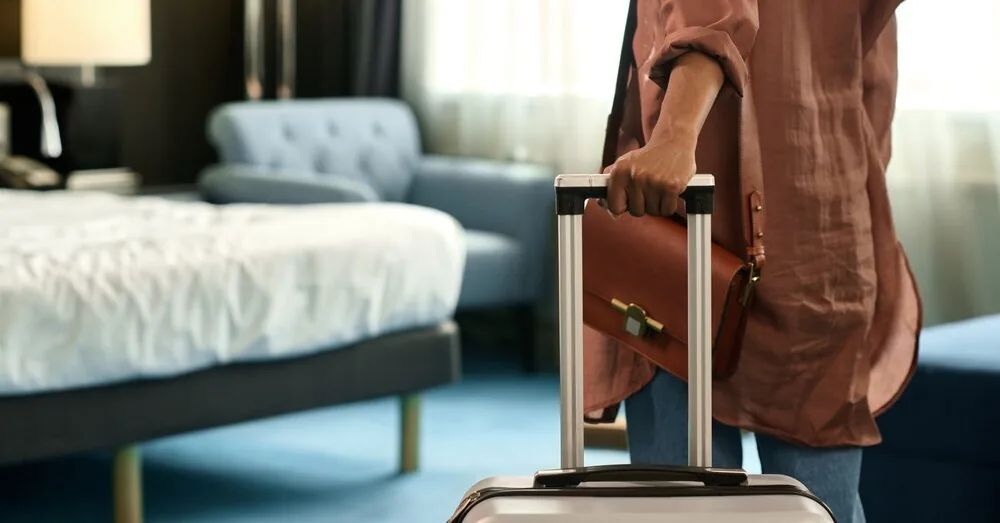
When checking into a hotel, you would probably usually ask for a room with a nice view rather than a specific floor. However, according to security experts, it is worth considering where in the hotel you will be sleeping. The floor the room is on, what is directly below it and around it, as well as the distance to the emergency exit, can also matter.
However, there is no single room location that guarantees a safer stay. “Instead of focusing on a specific room number or floor, travelers should assess the overall hotel security environment,” says Tony Byerly, global president and CEO of Securitas Technology.

Here is what experts advise to pay attention to when choosing a hotel room and what to check upon arrival.
Know which floors are considered safer
There is no universally safest floor because every hotel is different. However, some specialists highlight a certain range.
“Many security and fire safety experts consider the third to sixth floors a practical balance between safety and the ability to reach an exit in an emergency,” says Byerly.
These floors are usually high enough to make unauthorized access from outside more difficult, but low enough that in case of an emergency when elevators cannot be used, evacuation is still possible. Edward Troiano, who has worked in security for over 20 years and now leads Knight Security in New York, takes a similar approach – he chooses rooms “on the fourth floor or higher.”

Of course, for travelers with mobility restrictions, other needs may be important when choosing a floor. The U.S. Department of State recommends calling the hotel before booking to ensure that necessary accessibility features, such as working elevators and ramps, are available.
Be close to an exit
It is also worth considering how close the room is to the stairs. Troiano chooses a room near the stairwell in case elevators do not work during an evacuation. He also pays attention to where those stairs lead and prefers exits to quieter hotel areas.
Wherever your room is, familiarize yourself with the evacuation route upon arrival. The U.S. Fire Administration recommends locating the two nearest exits and counting the doors between your room and each of them. This can help find your way in the dark.
Check the room upon arrival
No matter which floor you stay on, make sure the room is safe upon arrival. Byerly recommends guests “ensure that the room door closes completely and locks with an additional lock when inside.”
Also check the windows and balcony doors. If anything does not work properly, contact the front desk.
Read more In Prienai, a man injured a drunk woman during a drinking session
He also advises not to disclose your room number and to verify with the front desk before opening the door to an unexpected visitor. If someone claims to be a hotel employee but you were not expecting them, call the front desk to confirm that they were indeed sent to your room.
If someone claims to be a hotel employee but you were not expecting them, call the front desk to confirm that they were indeed sent to your room.
Pay attention to what is below your room
Troiano also looks at what is directly below and around the room. He avoids rooms above busy lobbies, first-floor restaurants, garages, loading zones, and places where cars approach the building.
Overall, he chooses quieter hotel areas and hotels with less-used side entrances. His rule is simple: “Quietly enter, quietly exit.”
Assess overall hotel security
“One of the biggest misconceptions is that security starts and ends at the guest room door,” says Byerly.
When evaluating a hotel, he recommends paying attention to whether guest floors are accessible only with a key card, whether entrances are monitored, and whether public areas are well lit.
“The best security systems are often those guests don’t even notice because they are seamlessly integrated into daily operations,” he says.
The bottom line
The location of the room is important, but it is not the only thing to consider.
“Ultimately,” says Byerly, “a well-managed hotel with strong security, fire safety, and life safety systems and trained staff is often more important than the specific room location.”
Read more JAV oil deal Venezuela claims to maintain sovereignty