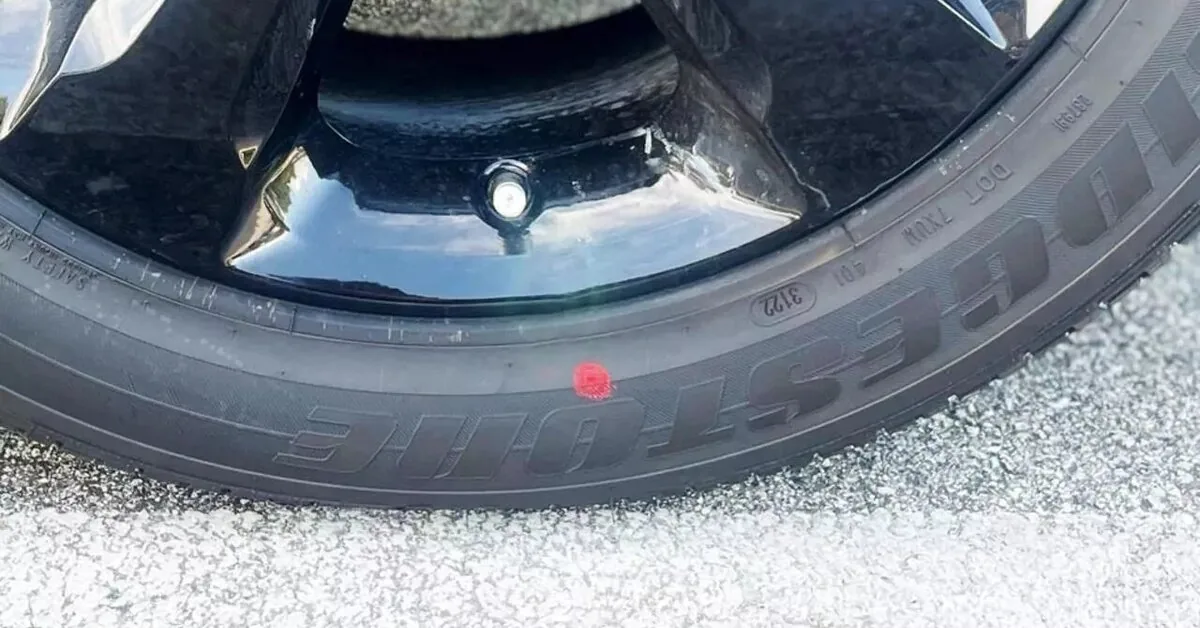
Where are the paint dots marked?
The yellow dot indicates the place where the tire weighs the least – its lightest point. When mounting the tire, the yellow dot should be aligned with the valve location, as this is usually the heaviest spot on the wheel.
Read more «Žalgiris» sports director believes: «We have the most talented team in the club’s history»
The red dot indicates the place where the tire is the “flattest,” in other words, its lowest point. It should be mounted opposite the highest spot on the wheel. This spot is usually marked with a colored dot or a notch on the rim.
If the tire has both a yellow and a red dot, priority is given to the red dot when balancing.
Why are these dots so important?
It is impossible to manufacture a perfectly round and evenly balanced tire during production. The red and yellow dots indicate certain irregularities in the tire’s weight, construction, and shape.
Properly balanced tires and wheels are important not only for driving comfort but also for safety. If the tire is not balanced, vibrations may occur while driving, especially at higher speeds. This can make the car harder to control, increase braking distance, and reduce driving comfort.
A vibrating wheel also does not always maintain optimal contact with the road surface, which can reduce grip when braking. Additionally, an unevenly rotating tire can wear out faster and unevenly.
Read more Iran targets Trump’s youngest son: offers $10 million
What does wheel balancing do?
When balancing a wheel, the tire and rim assembly is rotated on a special device that determines where additional weights need to be attached. This eliminates imbalance and allows the tire to roll evenly.
Improperly balanced wheels can lead to:
- uneven tire tread wear;
- shorter tire lifespan;
- vibrations while driving;
- increased load on suspension components;
- poorer vehicle handling.
The two most commonly used balancing methods are dynamic balancing and matching the tire and rim according to their highest and lowest points.
When mounting new tires, it is worth asking specialists whether their equipment allows for such matching. This is especially relevant if there are no special markings on the rims.
Why does a tire lose balance?
Over time, the weight distribution around the tire and rim can become uneven. This can happen for several reasons:
- the tire’s weight changes as it wears;
- a wheel balancing weight falls off;
- the tire or rim was improperly repaired;
- temporary deformations may form in the tire on a cold morning;
- the car has been parked in one place for a long time.
To extend tire life and ensure more even wear, it is recommended to regularly check tire pressure and rotate the wheels approximately every 8,000–13,000 kilometers, if the specific tire construction and car manufacturer allow it.