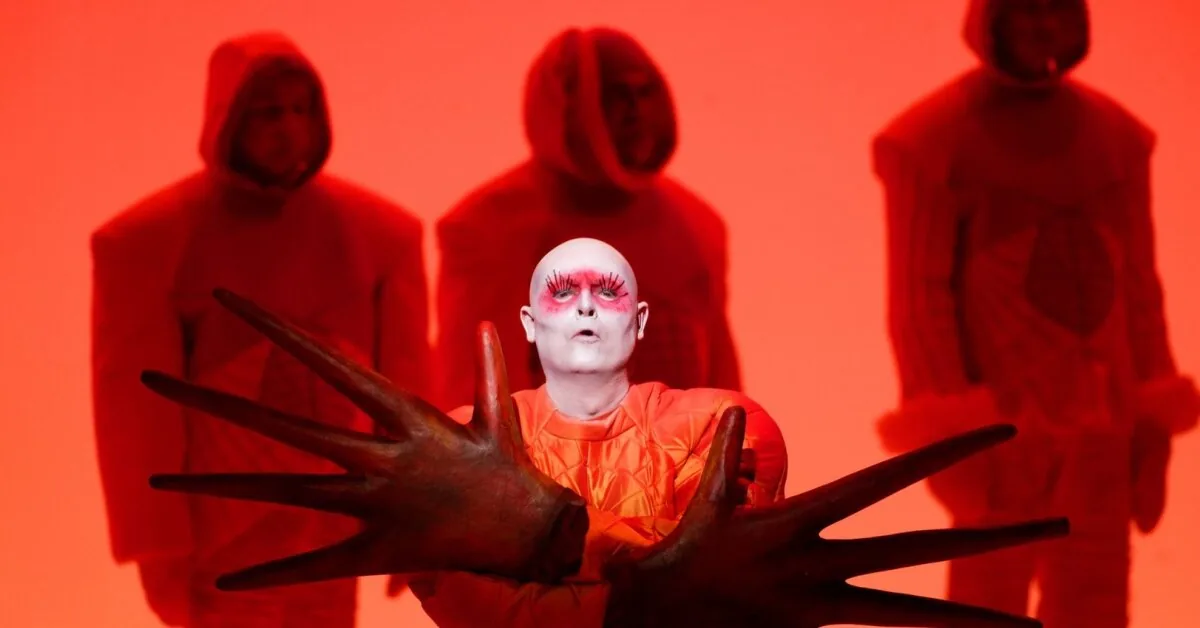
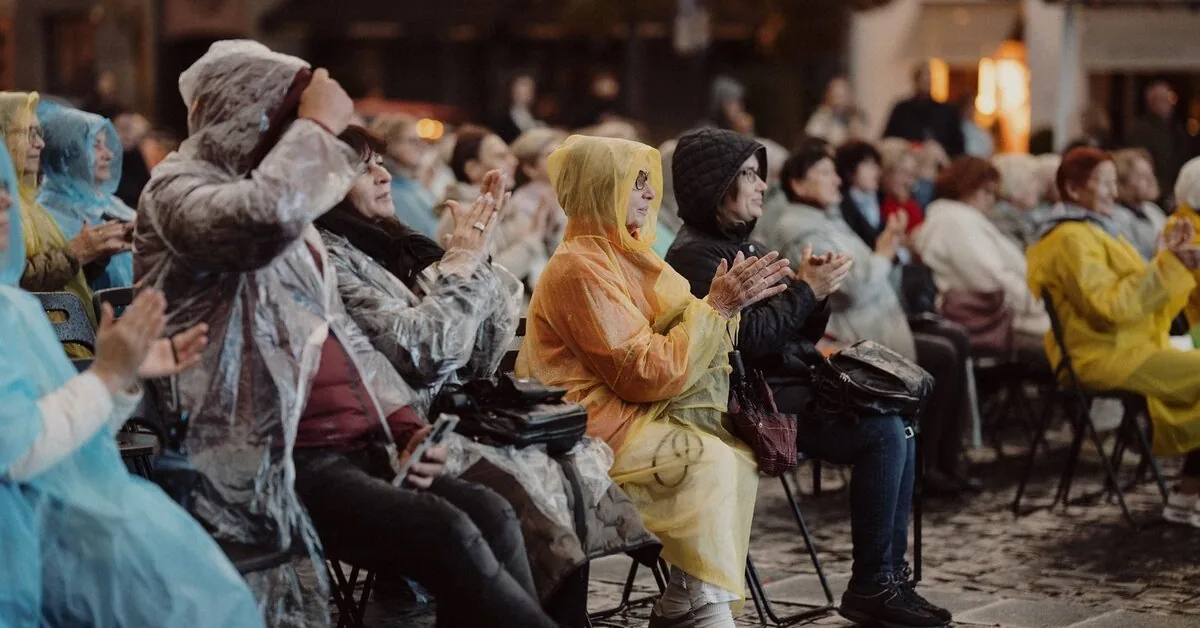
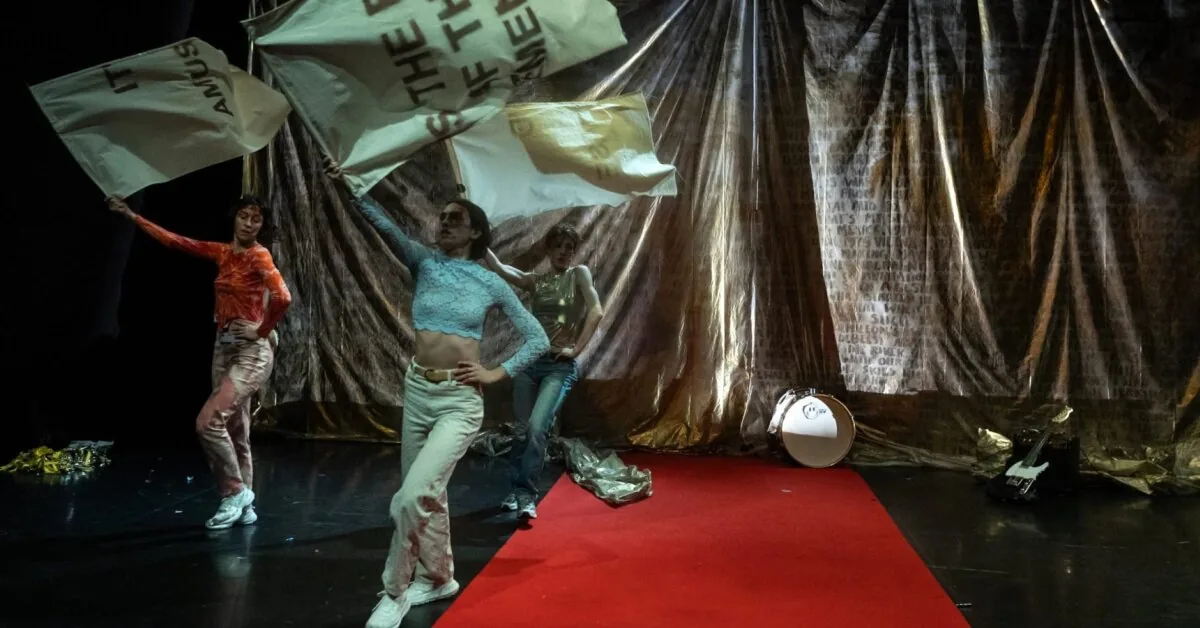
The forces for the opera production will be brought together by KVMT and invited soloists from Lithuania and other countries, performers of historical instruments invited by the early music ensemble “Canto Fiorito” from abroad, the Klaipėda Concert Hall Chamber Orchestra, and the KVMT ballet troupe.
Read more Schools received hundreds of threatening letters: police urge not to cancel classes and exams
The creative team includes world-renowned baroque professionals: “Canto Fiorito” and the music director and conductor of this opera Rodrigo Calveyra from (Brazil/France), director Tristan Braun (Germany), set and costume designer Sebastian Ellrich (Germany), and choreographer Nicola Mascia (Italy). The role of Julius Caesar will be performed by countertenor Christopher Lowrey (USA/England), with leading roles created by Lina Dambrauskaitė (soprano), Renata Dubinskaitė (mezzo-soprano), Ivo Posti (countertenor, Estonia), Wiktoria Wizner (mezzo-soprano), Vilius Trakys (bass), and others.
Rodrigo Calveyra emphasizes the ambition of this production: a fully staged opera “Julius Caesar” with historical instruments is a huge challenge even for major European art institutions with long-standing baroque traditions. However, according to the conductor, this project does not aim to follow Western stage examples – on the contrary, it creates a distinctive, authentic artistic identity.
More about this exceptional production – in a conversation with Rodrigo Calveyra.
– The opera “Julius Caesar” is one of the masterpieces of baroque opera. How would you describe the uniqueness of this work and its relevance in today’s context?
– In my opinion, “Julius Caesar” is one of the highest peaks not only of baroque opera but of the entire opera art. The uniqueness of this work lies in the almost magical balance between refined form and direct emotional power.
We often associate baroque opera with certain conventions – da capo arias, mythological or historical plots, vocal virtuosity, but in G. F. Handel’s opera “Julius Caesar,” these conventions are transcended. Handel creates deeply human characters: Caesar is powerful but also vulnerable; Cleopatra is politically savvy yet emotionally open; Cornelia embodies grief with extraordinary dignity, and Sesto undergoes one of the most compelling transformations in this opera – from a traumatized son seeking revenge to a person who achieves remarkable emotional maturity and courage.
“Julius Caesar” in my opinion is one of the highest peaks not only of baroque opera but of the entire opera art.
The contemporaneity of this work is precisely given by this emotional complexity. The characters face power, manipulation, war, desire, loss, and identity searches – themes that remain highly relevant today. Handel seems to use music as a psychological magnifying glass: he allows us to look into an inner emotional world invisible to the public.
And perhaps that is why this opera remains so impactful today: in a noisy world, baroque opera invites us not to rush but to delve into emotion, to observe and experience it with unusual depth.
– This production involves both Lithuanian and foreign baroque musicians, and historical instruments are also used. How does this affect the orchestra’s sound and the overall musical dramaturgy?
– The use of historical instruments fundamentally changes the sound world! Baroque violins, theorbo, harpsichord, historical wind instruments – they create a much more articulated, transparent, and rhetorical sound. Modern orchestras often form a large symphonic sound mass, while the baroque orchestra sounds more theatrical, rhetorical, as if speaking. This is the essence of Handel’s music because the orchestra here is never just accompanying. It comments, breathes, provokes, entices, mourns.
Historically informed performance – what we call HIP – is often mistakenly understood as an attempt to archaeologically recreate the past. I understand it quite the opposite. For me, it is an attempt to restore the original grammar of this music’s expression: the relationship between text and gesture, improvisation, ornamentation, tempo flexibility, rhetoric.
The collaboration of Lithuanian and foreign musicians in this context is also very meaningful. The Lithuanian early music scene has grown significantly in recent years, and this production becomes a beautiful example of dialogue between local growth and international experience.
Read more Iran’s Ministry of Foreign Affairs: The US continues to violate ceasefires
– In baroque opera, every event is accompanied by an aria, where time seems to stop and emotions unfold. How do you help performers and the orchestra maintain that tension and coherent musical narrative?
– This is one of the biggest challenges of baroque opera. For modern listeners, the alternation of recitative and aria may initially seem static. But in fact, this structure is very refined. The recitative pushes forward the external action, while the aria reveals the inner consequences of that action. The biggest mistake is to treat arias as separate vocal “numbers.” They are not concert interludes in the opera – they are psychological states.
My job is to maintain a continuous dramaturgical architecture: carefully selecting tempos, creating vivid contrasts, ensuring that recitatives remain lively and theatrical, and encouraging singers to understand ornamentation as a dramaturgical language, not just vocal decoration.
Even in moments of pause, dramaturgical tension must pulse.
– In your opinion, what will make Klaipėda’s “Julius Caesar” distinctive in the international context? Can you already reveal what might surprise the audience the most?
– I think the distinctiveness of this production lies in its ambition. A fully staged opera “Julius Caesar” with historical instruments is a huge challenge even for larger European art institutions with long-standing baroque traditions. Therefore, the fact that such a project is realized at the Klaipėda State Musical Theatre is very significant.
The most interesting thing is that this production does not seek to imitate the great Western art institutions – it creates its own identity.
Without revealing too much, I think the audience might be surprised by how physically close this opera is. Many imagine baroque opera as a distant or museum phenomenon. But here one can find a very sensitive, dramatic, and emotionally powerful stage action. And, of course, Cleopatra always delivers surprises.
– What is important for the audience to know before coming to this opera? How could they prepare to have a deeper experience?
– First of all, the audience should not feel that special knowledge is necessary to understand this opera – its emotional language is extraordinarily clear and simple.
However, they would benefit from spending some time reading before attending the theatre, i.e., a deeper acquaintance with historical figures like Julius Caesar and Cleopatra. Georg Frideric Handel and his librettist Nicola Francesco Haym turn a real political event history into a highly refined musical drama, so understanding the historical context – the Roman civil war, Egypt’s political fragility, the alliance of Caesar and Cleopatra – can further enrich the opera experience. On the other hand, it is important to remember that this is not a history lesson. It is a work about human feelings: ambition, temptation, grief, revenge, tenderness, power, and vulnerability.
I would also invite embracing a different sense of time. Baroque opera does not rush – it invites concentration. Arias allow emotions to unfold in a way that modern storytelling rarely permits. If the audience comes with curiosity and openness, they may experience an unexpected discovery: behind the monumental historical background lies an extraordinarily intimate and deeply human opera.
Read more NATO fighters took off twice to identify and escort Russian aircraft
Interviewed by Žaneta Skersytė.