- Where did 50 tons of Russian gold go: such a thing hasn’t happened in a long time
- Near the Kuril Islands – Russian missile tests
- Analysts: Russia will not be able to properly defend against Ukrainian attacks in the near future
All news about Russia’s invasion of Ukraine can be found HERE.
Where did 50 tons of Russian gold go: such a thing hasn’t happened in a long time
10:38

Russia’s central bank’s gold reserves are rapidly dwindling: as of August 1, they decreased to 73.2 million troy ounces (about 2.28 thousand tons), reports Bloomberg. This is the lowest amount in more than six years – since January 2020. In July alone, reserves shrank by 0.2 million ounces, and since the beginning of the year, they have decreased by about 50 tons.
Read more 15 illegal migrants turned back at the border with Belarus
Over seven months, the value of gold in reserves fell by 33.7 billion US dollars.
This decline began after a long period of almost uninterrupted growth. Bloomberg reminds that the Russian bank was previously the largest state gold buyer in the world but stopped purchases at the beginning of 2020.
According to the Russian central bank, at the beginning of 2025, the amount of gold in international reserves was 75 million troy ounces and remained almost unchanged that year. However, in 2026, the figure began to steadily decline: on January 1, reserves held 74.8 million, and by August 1, only 73.2 million ounces.
What happened?
The decrease in reserves is linked to the Russian bank’s operations in the domestic market, reflecting the Ministry of Finance’s transactions with the National Wealth Fund’s resources.
“When oil and gas revenues do not reach the level set by the budget rule or the fund’s resources are directed to domestic investments, the central bank conducts offsetting operations with liquid reserve assets. Here the bank only implements the technical part of the mechanism, not making an independent decision to cover the budget deficit by selling gold,” explained Freedom Global analyst Vladimir Chernov.
Gold has become one of the most convenient assets for such operations because most of it is stored in Russia and remains accessible to the central bank. Meanwhile, the ability to use foreign currency reserves is limited after about 300 billion US dollars worth of Russian assets were frozen abroad.
Reluctant to burn reserves in Chinese yuan
Economists Alexandra Prokopenko and Alexander Koliandras previously wrote that the central bank does not want to “burn” all remaining reserves in yuan.
A decline of this scale in gold reserves is almost unprecedented in Russian history. According to the World Gold Council, a similar drop was recorded only in 2002, when reserves decreased by 36.1 tons over six months.
During the pandemic period, sales were much smaller: from July 2020 to April 2021, the Russian bank sold only 7.6 tons of gold.
Accurate Ukrainian strike in Perm – black smoke over the Lukoil oil refinery
10:28
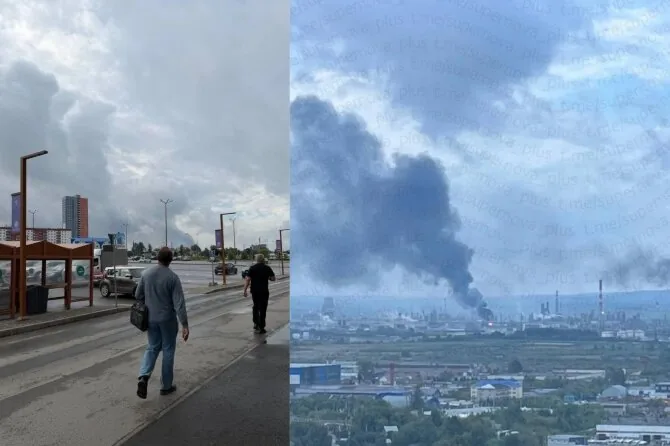
In the Russian Ural city of Perm, where the Lukoil-Permnefteorgsintez oil refinery operates, a drone attack took place on Friday; air defense is active in the city and sirens are sounding.
This was reported by the Ukrainian portal Ukrainska Pravda, citing the Perm Krai Territorial Security Ministry and Telegram channels.
Social media channels report that the target of the attack is the oil refinery in Perm, located more than 1,500 km from Ukraine.
The Perm Krai Territorial Security Ministry confirmed the drone attack.
Lukoil-Permnefteorgsintez is one of Russia’s largest oil refineries, with a capacity of nearly 13 million tons per year. It supplies both the civilian sector and the Russian military needs.
Ukraine conducts long-range drone and missile strikes almost daily, using domestically developed weapons, and has been targeting Russian oil facilities for several months.
This Ukrainian forces campaign has caused a fuel crisis in Russia, which is very unfavorable for the Kremlin.
10:19
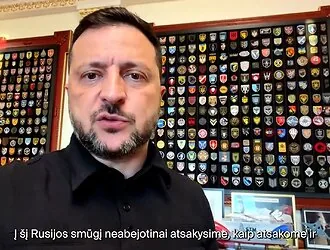
Near the Kuril Islands – Russian missile tests and warships
09:44 Updated 10:41
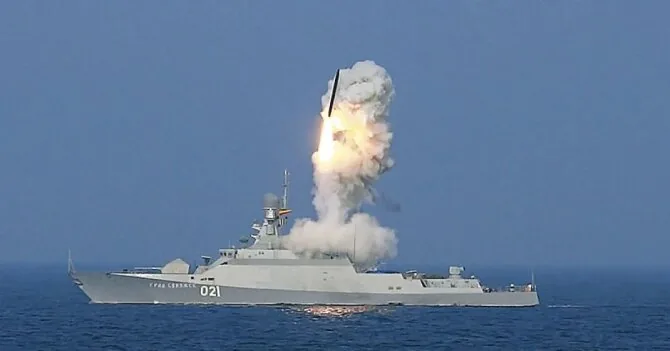
Russia conducted rare missile exercises involving warships and a land-based missile launch system near islands in the Far East, which in recent weeks have become the cause of renewed conflict between Russia and Japan, reports Bloomberg news service.
The Russian Pacific Fleet stated that missiles were launched from a nuclear submarine, a missile cruiser, and the Bastion coastal defense system deployed near the Kuril Islands.
“The report states that missiles were fired at targets more than 300 kilometers away, simulating an enemy attack, and hit them. The Pacific Fleet did not specify the exact location of the exercises, but in 2016 Russia deployed Bastion coastal defense batteries on Iturup Island, known in Japan as Etorofu,” the article says.
The news of the exercises provoked a strong reaction from Japan’s Foreign Minister Toshimitsu Motegi: “Russia’s military buildup on the four Northern Islands contradicts Japan’s position and is unacceptable.”
Russian naval exercises began on August 4, and Japan was informed in advance that live firing would take place. The next day, Tokyo lodged a protest against these large-scale maneuvers.
According to the Russian propaganda news agency TASS, the exercises involved “about 60 warships, submarines, and auxiliary vessels, about 30 aircraft, helicopters, and Pacific Fleet naval aviation unmanned systems, as well as more than 13,000 troops.”
It is recalled that the Kuril Islands have been under Russian control since the Soviet Union took them from Japan at the end of World War II.
Kremlin host Vladimir Putin’s first visit last week to Iturup – the largest of the four islands – sparked a dispute between the two countries: ambassadors were summoned in Tokyo and Moscow.
“Putin’s visit and missile tests took place at a time when Japan joined Western countries in supporting Ukraine’s defense against the Russian invasion, primarily by imposing sanctions on Moscow. Tokyo also provided non-lethal aid to Ukrainian armed forces, including bulletproof vests and vehicles,” Bloomberg noted.
Japan was angered by these Russian actions, to which the country’s foreign minister responded particularly critically.
“The Northern Territories, including Etorofu, are an integral part of Japan’s territory both historically and under international law. Japan strongly protests this visit,” said T. Motegi.
In Japan, they are called the Northern Territories or the Four Northern Islands, while in Russia they are part of the Kuril Islands.
On August 12, V. Putin observed part of the military exercises from the ship Varyag during his trip to the disputed islands and Sakhalin – a large island unquestionably belonging to Russia north of Hokkaido.
“Unfortunately, this region is becoming increasingly prone to conflicts as NATO seeks to establish itself here, and new military and political blocs are emerging,” said the Kremlin host. “Efforts are being made and plans developed to deploy new weapons systems here, which poses a threat to our country.”
It is noted that Russian exercises are expected to continue until August 29.
Kremlin envoy spoke about mobilization: “We’ll see what happens next”
09:21
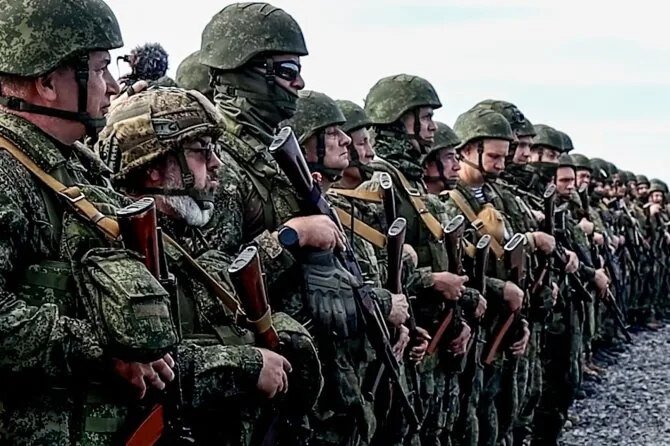
Russia’s ambassador to the United Nations (UN), Vasily Nebenzya, said on Thursday that mass mobilization of troops is not currently planned but did not rule out the possibility after next month’s parliamentary elections.
This was reported by the Ukrainian portal The Kyiv Independent.
“It has been said many times that we do not need mass mobilization at the moment, it is not planned and not foreseen, as far as I know. But we’ll see what happens next,” Nebenzya told journalists at the UN.
These comments came after recent warnings from Ukrainian President Volodymyr Zelensky that Moscow may mobilize hundreds of thousands of troops after the September elections.
“Putin’s plan is not very complicated (…) after the so-called elections, he plans to urgently mobilize several hundred thousand Russians by the end of the year, and the same amount next year,” he wrote on social media.
According to V. Zelensky, these plans are “confirmed by internal Russian documents,” which he discussed in a meeting with intelligence chiefs.
Russian officials have previously denied mobilization plans but later announced call-ups.
The Kremlin denied mobilization plans throughout 2022, and officials publicly dismissed the possibility just days before September 21, 2022, when a “partial” call-up of 300,000 reservists was announced.
Kyiv asks Elon Musk to help strike deep into Russia
09:13 Updated 10:42

Ukraine seeks permission from SpaceX CEO Elon Musk to use Starlink-equipped attack drones for strikes against Russian missile launch sites located up to 200 km deep inside Russian territory, reports the Financial Times, citing sources.
It is noted that Kyiv sees this as one way to compensate for the significant shortage of missile interceptors for Patriot systems.
Kyiv hopes that using Starlink satellite communication will allow drones to maintain a more stable connection with operators over long distances and be less vulnerable to conventional electronic warfare measures, explained the Financial Times.
The article adds that such drones are planned to be used to destroy missile launch sites, command posts, logistics facilities, and other infrastructure related to missile attacks.
Military analyst Franz-Stefan Gady noted that such drones have already proven their effectiveness on the battlefield in Ukraine. He said that if used beyond Ukraine’s territory, they “could be very useful in hunting” Russian missile launch sites.
According to sources, Ukrainian President Volodymyr Zelensky asked US President Donald Trump during a July meeting at the White House to discuss with Elon Musk the possibility of granting Ukraine such permission.
Kyiv proposed limiting the drone usage range to 200 km from the Russian border, but according to people present at the meeting, Trump did not express clear support for this idea.
Earlier this month, The Atlantic magazine, citing sources close to former Ukrainian Defense Minister Mykhailo Fedorov, reported that billionaire Elon Musk has so far refused to grant Ukraine the ability to use Starlink technology for strikes against positions from which Russia launches missiles at Kyiv and other cities.
Fedorov indicated that negotiations with Musk continue regarding the possibility of using Starlink for military purposes inside Russian territory.
At the beginning of the year, radio technology specialist Sergey Beskrestnov reported the possible use of Russian military Starlink terminals in Shahed attack drones. After Ukraine’s side raised the issue, Musk responded and later stated that measures had been taken.
Only 6 avocados left: after Russian ballistic missiles – a new nightmare in Ukraine
08:55
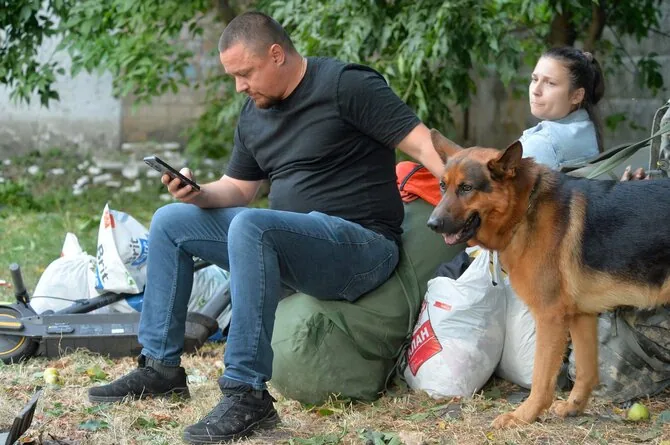
Usually, the shelves of the Silpo shopping center in Kyiv are almost bursting with goods. But this week, it became impossible not to notice an obvious shortage of food products. There were no barley, buckwheat, quinoa, or rice. Where there are usually green onions, packaged salads were also empty: only one wilted bunch of cilantro lay there.
For the first time since the early months of the 2022 invasion, residents of Ukraine’s capital faced shortages of various staple foods. This is a consequence of Russian ballistic missile strikes on key logistics centers.
“It’s a nightmare, a real nightmare,” complained shopper Nina Kirichuk, a 67-year-old senior hairdresser, whose shopping cart contained bread and two types of herring.
Read more HERE.
Analysts: Russia will not be able to properly defend against Ukrainian attacks in the near future
07:49
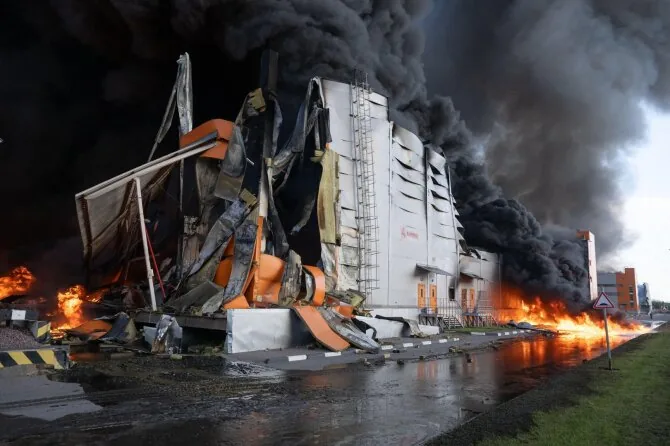
Russia is unlikely to be able to fully defend against attacks carried out by Ukraine in the near future. Neither the Kremlin nor Russian military bloggers believe this, write analysts from the Institute for the Study of War (ISW), assessing the effectiveness of Russian air defense.
ISW notes that Russian officials increasingly shift responsibility for air defense to individual units and regional authorities. However, these structures also face difficulties trying to defend against Ukrainian drones.
Problems are openly acknowledged by Russian military bloggers.
One of them said that Russia is not capable of fully intercepting Ukraine’s long-range drones, so passive defense measures are also necessary – anti-drone nets, shelters, and infrastructure duplication to protect industrial facilities.
At the same time, military bloggers urge the creation of a multilayered defense system that includes adapting air defense to new threats and developing additional defensive infrastructure.
However, ISW analysts believe that Russia’s defense industry capabilities will not be sufficient to meet the growing air defense demand properly. Moscow will also find it difficult to simultaneously protect both the front line and the vast rear territory of the country.
“The multilayered and decentralized approach proposed by Russian officials and military bloggers will require a lot of time and resources and is unlikely to meet Russia’s air defense needs or overcome geographic limitations,” ISW analysts note.
Moreover, building defensive fortifications around key industrial and commercial facilities across Russia may undermine Kremlin efforts to create the impression among the population that life is proceeding normally.
Russia attacked Kharkiv and Sumy regions: two women killed, injuries reported
07:37
On Friday night, Russian forces attacked the village of Lebyazhe in the Chuhuiv district of Kharkiv region with six drones. Two women aged 73 and 66 were killed, reported Oleg Synyehubov, head of the Kharkiv regional military administration.
According to him, two more women aged 41 and 73 were injured. They received necessary medical care.
The attack caused fires in five private residential houses. Three houses were destroyed, and another 20 were damaged. Three farm buildings were also affected.
Meanwhile, Oleksandr Hryhorov, head of the Sumy regional administration, reported that in the evening Russian forces attacked Konotop with high-speed jet drones.
Three targeted strikes were recorded in the city’s residential area, damaging houses.
“By a miracle, there were no casualties or injuries. One woman had an acute stress reaction,” said O. Hryhorov.
At night, the Russian military also attacked Sumy. Strikes were recorded in four locations in the city.
A two-story residential building was at the epicenter of one attack and was heavily damaged.
At least two people were injured. They are receiving medical care.
Officials continue to inspect affected areas and clear the consequences of the attacks.
In Australia, a man with dual Russian and Australian citizenship charged with foreign interference
07:22
Australian police announced on Friday that they charged a man with Russian and Australian citizenship with attempting to carry out deliberate foreign interference.
The 27-year-old man was arrested on Thursday following an investigation by the Foreign Interference Taskforce and will face court in Brisbane, according to a federal police statement.
Federal Police Commissioner Krissy Barrett was scheduled to provide more details to the media at 2 p.m. local time (7 a.m. Lithuanian time).
Deliberate foreign interference in Australia carries a penalty of up to 20 years imprisonment.
Finland suspects Russian aircraft violated its airspace
07:21
Finland’s Ministry of Defense reported on Thursday evening that it suspects a Russian aircraft violated its airspace earlier that day.
“Every suspected airspace violation is taken seriously,” said Defense Minister Antti Kaikkonen in a ministry statement. “An investigation is underway.”
Finland, which shares a 1,340 km border with Russia, has experienced a series of such incidents.
Finland suspects that two Russian military aircraft entered Finnish airspace in May and June and summoned the Russian chargé d’affaires at that time.
The country declared a high level of readiness after the Kremlin sent troops to Ukraine in February 2022.
Due to the war, Finland abandoned its decades-long policy of military non-alignment and joined the NATO alliance in April 2023.
Read more In Finland, a mother is accused of taking children to IS-controlled territories in Syria