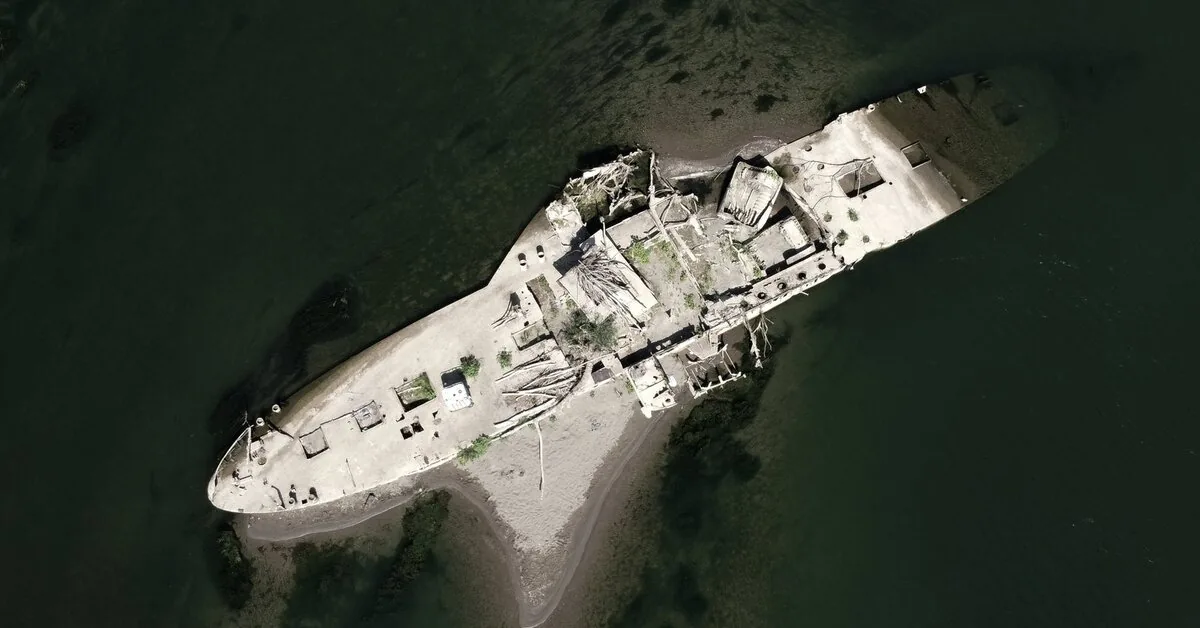
The rusty hull belongs to a once famous ship known as the “Slovenian.” Its remains surfaced earlier this month from the Sava River near the Serbian city of Sremska Mitrovica, about 70 km from Belgrade.
Read more Walmart profit exceeded forecasts despite slower sales growth in the USA
Although some parts of the ship had been visible before, locals said it had never been seen so clearly.
“It has been several years since we last saw it, so there is considerable interest,” historian Andrija Popović, director of the city museum, told the agency.
“This is definitely not an everyday sight,” he added, speaking about the ship that Serbian media dubbed the “Titanic of the Sava.”
It is said that this ship survived two world wars before finally sinking. According to A. Popović, this Slovenian ship was built in 1913 at the Budapest shipyard, which at the time belonged to the Austro-Hungarian Empire.
Its length was about 54 meters. Originally, it was named “Vag” – the Hungarian name for the longest river in Slovakia, the Váh. The steam-powered ship carried heavy cargo between Budapest and other cities along the Danube.
As the Serbian historian stated, during World War I, the ship almost ceased its voyages. After the war ended and the Austro-Hungarian Empire dissolved, ownership of the ship as part of war reparations passed to the newly established Kingdom of Serbs, Croats, and Slovenes – which later became Yugoslavia.
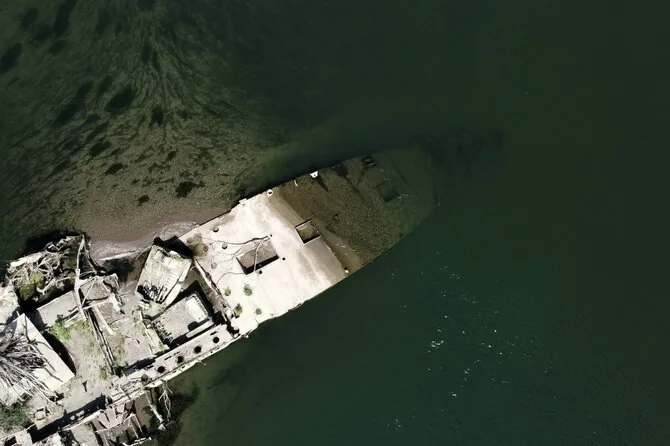
“It was then renamed ‘Slovenian’,” said A. Popović, adding that it remains a mystery “why this particular name was chosen.”
Read more Historic moment: Uber launches the first robotaxi services in Europe in Zagreb
Later, during World War II, the ship, like the entire country, fell under Nazi Germany’s occupation. According to the museum director, in 1944, Yugoslav anti-fascist forces, having liberated Belgrade, used this ship to transport the wounded and equipment, pushing the German army further west.
When in late April 1945 the ship, carrying wounded fighters, struck a German mine, it sank and “has remained in the same place since that day.”
Warships, mammoth bones, and parts of ancient structures – all have surfaced as water levels in the Danube, Rhine, and other European rivers have dropped during droughts, disrupting trade, electricity, and water supply.
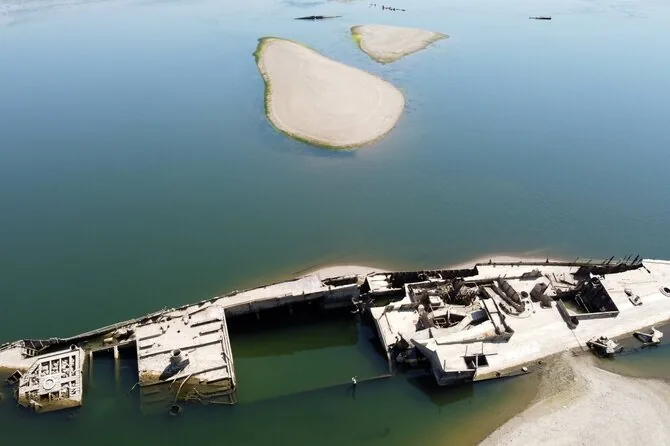
15min reminds that it was previously reported that near Serbia’s eastern border with Romania, as the Danube receded, remains of German ships appeared. Some of them were still loaded with weapons and belonged to Nazi Germany’s Black Sea fleet, which was deliberately sunk at the end of the war when the German army retreated from Romania and Soviet forces advanced deeper into Europe.
In Bulgaria, with a significant drop in the Danube’s water level, scientists discovered and excavated a jaw, tusk, shoulder blade, ribs, and other bone fragments belonging to an extinct mammoth buried deep in the sand.
The record low Danube water level severely affected nuclear power plants in Hungary and Romania and halted traffic on the second-largest waterway in Europe. The months-long drought devastated crops from the Netherlands to Bosnia and caused water shortages reaching even the Alpine region.