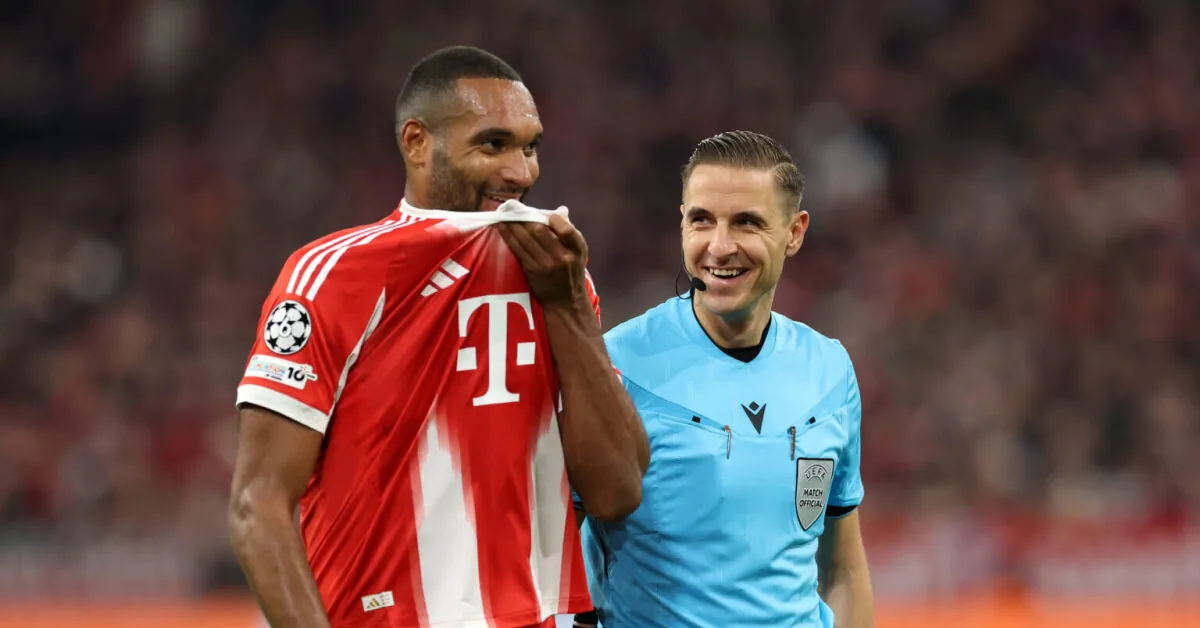
Not only is there a noticeable increase in the number of new active referees (the number of referees has grown by 37 percent), but there are also historic appointments on the international stage.
Read more These signs of knee swelling should cause immediate concern
Growing numbers in Lithuania
Just a few years ago, not only Lithuania but the whole of Europe faced a significant shortage of referees – according to UEFA calculations, about 40,000 referees were needed across the continent to meet the refereeing demands not only in professional but also in lower-level, grassroots football.
To address this issue, UEFA launched a new campaign called “Be a referee,” encouraging young people to choose a career as a referee and thus pursue a career in football and climb the career ladder.
This initiative was also implemented in Lithuania – the Lithuanian Football Federation and the Lithuanian Football Referees Association (LFTA) regularly held seminars for beginner referees, inviting young people to try refereeing.

“We held seminars in different cities across Lithuania, where the best referees in our country participated, sharing their experience and encouraging young referees to join our ranks,” said Sergejus Slyva, president of the Lithuanian Football Referees Association (LFTA).
This led to a significant increase in the number of football referees in Lithuania – the number of licensed Lithuanian referees grew from 310 (summer 2024) to 424 (summer 2026).
For example, the number of licensed male football referees in Lithuania increased from 275 to 399 over two years, while female referees increased from 35 to 37.
“These numbers have become a positive impulse and a sign that young referees see prospects in refereeing and are willing to try themselves in this field,” added S. Slyva.
Along with the number of referees, the level of referee training is also increasing – theoretical and practical sessions are regularly held for the country’s referees, physical standards are implemented, and continuous qualification improvement takes place.
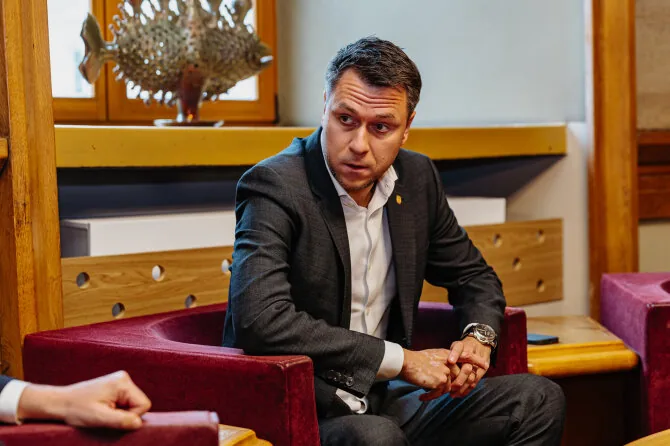
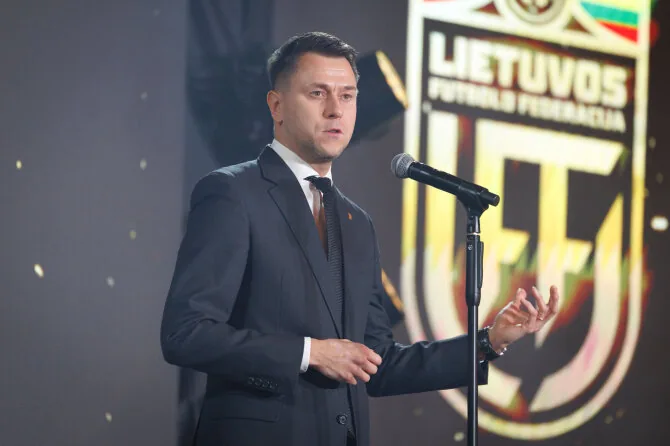
“We devote considerable attention to Lithuanian referees and their development, so naturally, we want to gain experience from the best. Therefore, we want to provide conditions for our referees to improve their competencies and learn from top-level specialists, such as the former legendary English referee Howard Webb, who visited our country some time ago,” emphasized LFF president Edgaras Stankevičius.
In recent years, the number of matches held in our country has also increased, requiring a larger number of licensed referees to officiate.
The number of matches organized in 2024 was 794, and last year this number rose to 936.
From children’s matches to UEFA tournaments
The work of a referee can also be fascinating because successful performances at lower, initial levels later allow reaching the highest, elite level not only in Lithuania but also on the international stage.
Read more Unexpected find in Kaunas opened a time capsule: what trade looked like 30 years ago
First appointments may be delegated to work at children’s or youth championship matches, then the path opens to the LFF I or LFF II leagues, and later to the highest football division in our country.
“We monitor referees working at all levels, so they are evaluated annually, can be promoted to officiate at higher leagues, and all this, in case of success, culminates in obtaining an international referee license, which allows participation in UEFA tournament matches,” explained S. Slyva.
The best Lithuanian referees then gain the opportunity to obtain an international license, which later allows them to work in UEFA tournament qualifiers and main stages.
This list is updated at the end of each year, and for 2026, the ranks of Lithuanian referees holding international licenses grew by as many as nine names.
International categories are obtained by both male and female referees, who officiate important European Championship qualifiers or Women’s Nations League matches.
Currently, however, the Lithuanian football referees’ flag on the international stage is carried by Donatas Rumšas, who at the end of last year also received special recognition and was promoted for the first time in his career to the UEFA Elite group of referees.
Having worked at the highest level for more than a decade, the Palanga native became the first Lithuanian top-level football referee to receive such recognition in our country’s history. Earlier, such recognition was received by futsal referee Dominykas Norkus.
Last spring, D. Rumšas and his team also made history by becoming the first referees to officiate a UEFA tournament quarter-final match. But that was not the end – their good work was further recognized, and Lithuanian referees later officiated in the UEFA Europa Conference League semi-final matches, once again inscribing their names in the history of Lithuanian football referees.
Last year was no less memorable for the Lithuanian women’s refereeing sector, especially for assistant referee Irina Pozdejeva, who also received several exceptional recognitions.
“Perhaps more girls will read this news, watch matches, become interested in the football referee profession, and believe that it is possible to reach such a big event as the European Championship from a small Lithuanian market. I hope these efforts will bring change,” said the referee after returning from the European Championship.
“Refereeing is not just a way to be in football – it is a path through which one can grow, improve, and reach an international level,” urged LFF president E. Stankevičius.
First, she was invited to work at the European Women’s Football Championship held in Switzerland, and then her work was recognized again when she officiated at the U17 Women’s World Cup in Morocco, where she had the honor to work in the final matches.
Read more In the Champions League – Dambrauskas’ frustration and a great opportunity for Lithuanian «Celje»