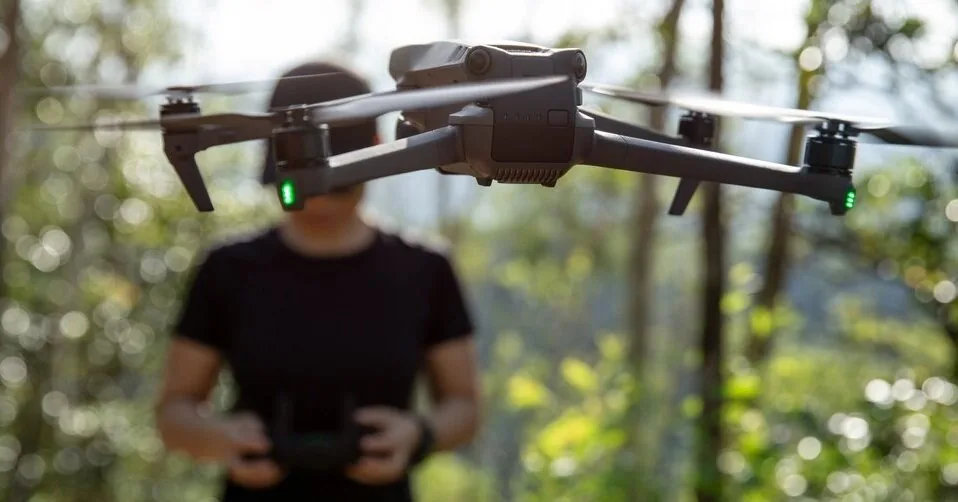
At the beginning of August, a video and publication began circulating on the social network “X,” telling about an unusual incident at the Emari (Ämari) aviation base in Estonia.
Read more Rumors are already circulating in Russia: analysts have named three possible successors to Gerasimov
According to the distributors of the posts, the Ukrainian strike drone An-196 Liutyi violated Estonian airspace, was shot down near the base, and its debris damaged two Portuguese Air Force F-16 fighters.
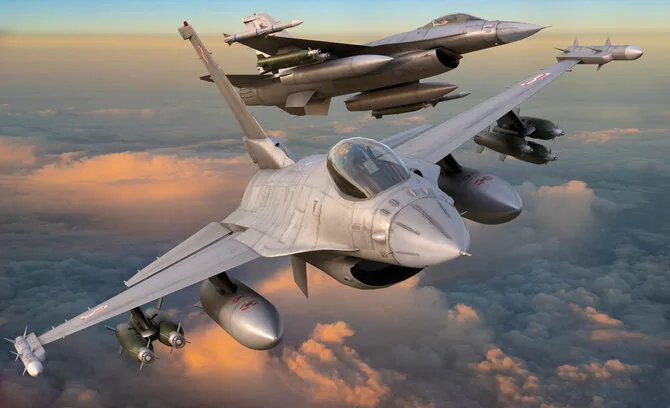
The publication, allegedly published by the international defense news portal “The Defense Post,” claimed that the value of each damaged fighter is about 60 million euros. It was also emphasized that neither Estonian institutions nor NATO publicly reported the incident, and the extent of the damage was not disclosed.
Attempts were made to lend credibility to the story with specific details: it was stated that the Portuguese contingent had led the NATO Baltic air policing mission since April 1 and was supposed to hand over the watch to the Turkish Air Force at the beginning of August.
However, the information is inaccurate – during the alleged incident, the Portuguese fighters were still at the Emari base. Checking the origin of the publication and the claims made revealed more inconsistencies – the circulated story is fabricated.
Spreading fake news
Neither the Estonian Defense Forces nor NATO reported on August 6 about a drone violating the country’s airspace, its shooting down, or damaged fighters.
Moreover, the “news” was published not on the real “The Defense Post” website but on a website imitating it. The video was also manipulated: the footage showing burning debris was generated by artificial intelligence and inserted into an authentic NATO video report.
First of all, the false story is disproved by the NATO mission rotation chronology itself. On July 31, an official ceremony was held at the Emari aviation base, during which the Portuguese contingent handed over the Baltic air policing mission to the Turkish Air Force.
Since August 1, the mission at Emari has been carried out by five Turkish F-16s and 76 soldiers from the 181st squadron deployed in Diyarbakır. Their rotation will last until November 30. So on August 6, when the incident allegedly occurred, Portuguese F-16s were no longer at the Emari base.
Secondly, such news was not published by “The Defense Post” at all. The real publication operates under the domain thedefensepost.com, while the links circulated on social networks led to thedefensepost.eu – a site imitating the original.
According to “Whois” check data, this domain was registered on August 3, just three days before the fake publication appeared.
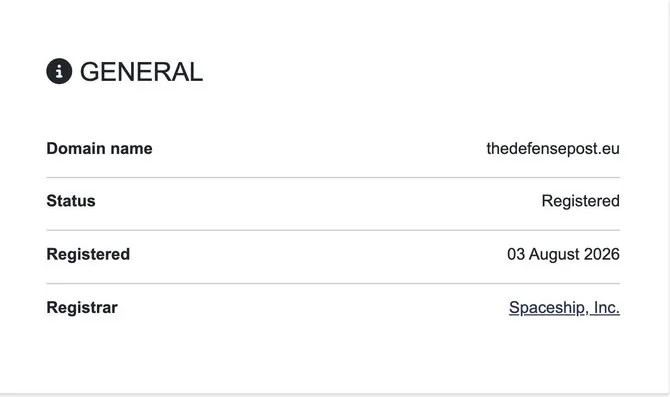
Until August 10, the clone copied the real publication’s content and visually differed from it almost not at all. According to data from August 14, the site was already inaccessible to users, although the domain itself remained active.
The video material used to illustrate the alleged incident was also not authentic. It was edited from a NATO video published on June 11, 2025 – thus footage filmed more than a year before the described events and during a previous Portuguese contingent rotation at Emari.
The original video tells about the Portuguese Air Force’s participation in the NATO Baltic air policing mission: showing F-16s taking off for training missions and an interview with the contingent commander.
These authentic shots were mixed with photos and video inserts showing alleged drone debris near parked fighters – these were supposed to be the “proof” that the incident really happened. However, these images were generated by artificial intelligence.
Although AI content detector results should generally be interpreted cautiously, in this case, all three tools used – “SightEngine,” “DeepAI,” and “ImageWhisperer” – evaluated screenshots of the video and images published on the clone site as highly likely AI-generated.

Copied the website code
Estonian fact-checkers from “Propastop” found out that a real article published on August 6 by “The Defense Post” was used to create the fake publication. Analyzing the source code of the publication circulated on social networks revealed that the authors of the forgery essentially copied the original page and only changed the main text and illustration.
The real publication’s page structure, design, author’s name, and biographical information remained.
Read more Fedorova challenged Zelensky: this is a blow to the president’s weakest spots
The forgery was prepared quite carelessly. The original article’s text about AI-based hydroacoustic system tests remained in the page’s source code, invisible to ordinary visitors.
Sharing links on social networks also remained unchanged – they still contained the original publication’s headline.
Moreover, the clone creators even left the same “Google Analytics” identifier. “Propastop” counted that the original domain thedefensepost.com was mentioned 45 times in the page code, while the fake thedefensepost.eu only five times.
Fact-checkers also traced how this story began spreading on the social network “X.”
Publications with links to the fake portal mostly appeared between August 6–9, and among the first accounts posting them, users related to Portugal dominated.
“Propastop” also noticed that no other publications from this portal were found in searches by the domain thedefensepost.eu – only the fake story about the incident at the Emari base. This allowed fact-checkers to assume that the entire site clone might have been created specifically for this disinformation campaign.
The earliest publication “Propastop” found was on August 6 at 9:51 a.m. It was posted in Portuguese by “X” user Raphael Machado, who claimed that a Ukrainian drone entered Estonian airspace, was shot down, but its debris damaged two Portuguese F-16s.
The post included a link to the fake “The Defense Post” article and a video using real footage filmed by the Estonian Defense Forces, but with AI-generated shots of burning aircraft debris inserted.
Just minutes later, similar content was posted by Lucas Leiroz, and a few minutes after that by Catarina Leiroz. Both posts were also in Portuguese, repeating the same story about the Ukrainian drone and damaged Portuguese fighters, including a link to the clone site and the same fake video.
“Propastop” emphasizes that these were not shares of a single initial post but separate original publications. Later, similar posts began appearing in other languages – Japanese, Spanish, and English.
In the first few days, this story gathered several hundred shares on the “X” platform, with a total view count not exceeding half a million.
Analyzing the first spreaders’ accounts, fact-checkers identified a clear pro-Russian informational direction: they shared posts by Alexander Dugin, anti-Ukrainian content, and material portraying Russia and the Kremlin favorably.
Analysts believe this campaign could have had several goals – to damage NATO’s reputation, weaken support for Ukraine, and influence internal political discussions in Portugal.
Fact-checkers also do not rule out that the Portuguese audience was one of the main targets of this specific disinformation campaign.

15min verdict: false. The story circulated on social networks about a Ukrainian drone whose debris allegedly damaged two Portuguese F-16s at the Emari aviation base is fabricated.
On August 6, Portuguese fighters were no longer at the base because the NATO mission had been taken over by the Turkish contingent. The alleged “The Defense Post” publication was posted on a site imitating the real publication, and the video illustrating the “incident” was edited from older NATO footage and AI-generated images.
The publication was prepared by 15min in cooperation with Meta, aiming to stop the spread of misleading news on the social network. More about the program and its rules – here.