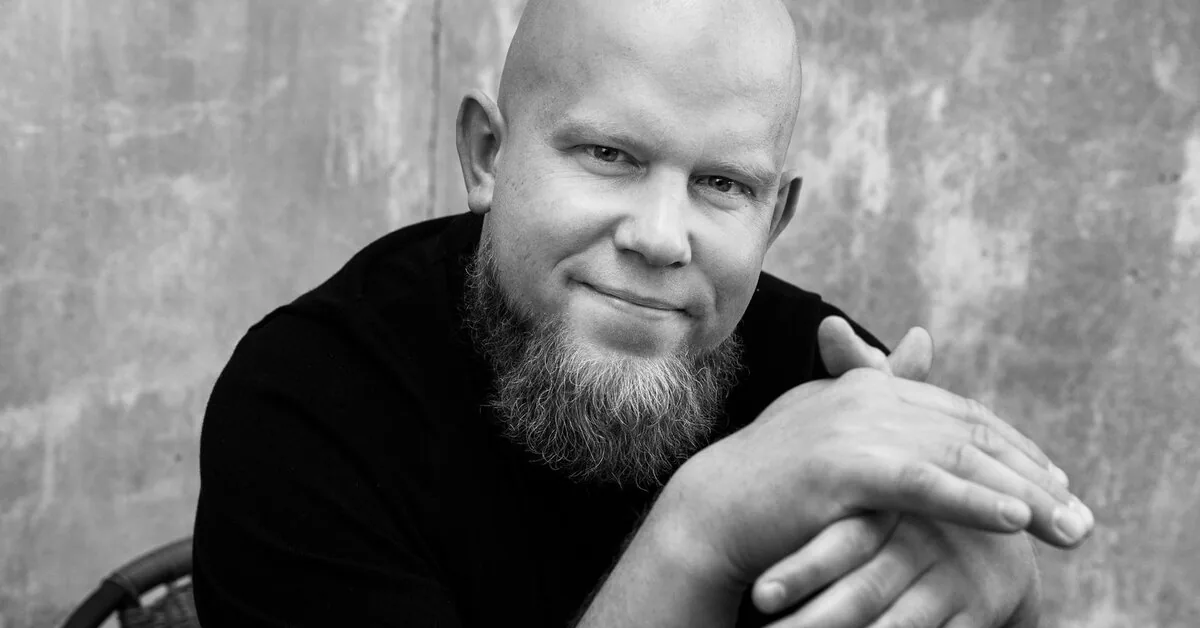
From the young writers’ group “Literatų arka,” which he founded together with like-minded people during his studies, to working with the magazine “Vilnius Review” and the annual literary event “Pož(i)eminiai skaitymai.” So we talk about how literature came into Saulius’s life, what people and experiences shaped his path, how the literary field is changing today, and what else lies behind it.
Read more Royal Palace: King Harald of Norway hospitalized
– Saulius, I have known you for many years and remember one dramatic event that perhaps influenced your choice of professional path. So how did literature come into your life?
– It all probably started with my grandmother Zofija, who taught me to read and whose hard life experiences (including ten years in exile) and stories contrasted with a very bright, positive attitude, humor, and the ability to enjoy everyday life. At school – Širvintos Laurynas Stuoka-Gucevičius Gymnasium (then still a secondary school) – a lot was influenced by the Lithuanian language teacher Rasa Baranauskienė. She was very empathetic and theatrical, read good literature, we learned a lot from her, she introduced us to “Šiaurės Atėnai” and other cultural press. For the books we read, we would perform mini-plays for her at school: I still remember how my classmate, then my best friend Gedas, and I made fishing rods and created a rap piece based on Hemingway’s “The Old Man and the Sea.” Of course, we also wrote essays and interpretations seriously, but those plays were a successful form of encouraging reading and somehow relieved tension during adolescence. The teacher could even motivate students with poor grades – she gave them roles, and they participated, although in other classes they were usually passive. I think this is the talent of a teacher – to reach not only the strongest but also those chewing gum at the back, catch their gaze, establish dialogue, and give meaning.
My mother was a music teacher and organist for a long time, so as a small child, I would sit “on the stools” and watch from above how the Mass was celebrated, and later I served for a while in the Širvintos church. The then parish priest Juozapas Dabravolskas was an intellectual personality, a friend of Juozas Aputis and Albertas Zalatorius, a well-read man. Growing up in the province, where there was little cultural life, encountering such a person made me feel a broader world.
– But I remember you told about a bicycle accident that influenced your becoming a writer.
– I will get to the bicycle soon, but before that, I want to mention a few more things. At the music school, in an old green wooden building by the river (which, unfortunately, no longer exists), I started learning to play the violin at six, but then accidentally dropped the instrument on the ground and broke it. I was very scared, very upset, and could no longer return to lessons.
Later, I played the trumpet for three years. When the call for the trumpet class was announced, I was the only candidate, but the school decided to let me study – the exams were held together with pianists. In adolescence, I started playing basketball more actively, attending training, perhaps also because the image of an altar boy and trumpeter among boys was, to put it mildly, not positively valued, provoking bullying, while basketball was something else. Moreover, basketball was one of the connections with my father, who liked to watch games.
Let’s move on to the mentioned bicycle incident – at that time, I no longer served in the church and visited it less often, but one summer I learned that a Christian youth bicycle tour was being organized, the route seemed interesting, and I decided to join. During the trip, something happened to my bike, and it turned out I could not continue the journey. I had to get into a car following the group and was disappointed. After a few hours, an acquaintance complained that his crotch was chafed and it was uncomfortable to keep pedaling, so he asked to switch. I was full of energy, and with another friend, we started racing, went ahead of the group, and went down a big slope. The speedometer on my friend’s bike showed fifty-five kilometers per hour when a car entered the intersection ahead. Then I realized that the rear brakes on the borrowed bike did not work, only the front ones did, and I could not brake with them in such a situation. I tried to brake with my foot, but the speed was too high: I avoided a head-on collision with the car, but the bike swerved, I went off the road and crashed straight into a tree, probably the only one around… My sternum and three fingers on my hand broke. The left arm protected my head from the impact, but two nerves in it tore. I remember being in shock, feeling no pain, as if I were dreaming, only while riding in the ambulance, I kept repeating my personal code to the doctors.
Because of the sternum fracture, I could not bend or get up for a long time. I spent a week or two in the hospital, then my mother came and took me home.
This happened in the summer before the twelfth grade, and while healing, I spent almost the entire autumn in bed.
– Did you then realize what you wanted to be?
– I wouldn’t want to overemphasize that event; I just had more time for myself, books, and movies. Instead of preparing for the upcoming state exams, I read and watched what I wanted. I was forming myself.
Of course, it did not help with the exams – I passed them quite poorly. I did not have enough points to enter Vilnius University, so I enrolled in the then Vilnius Pedagogical University (Lithuanian philology) and was initially disappointed. There was also a preconceived opinion among some of the public that Pedagogical was some kind of “hole,” less prestigious to study there.
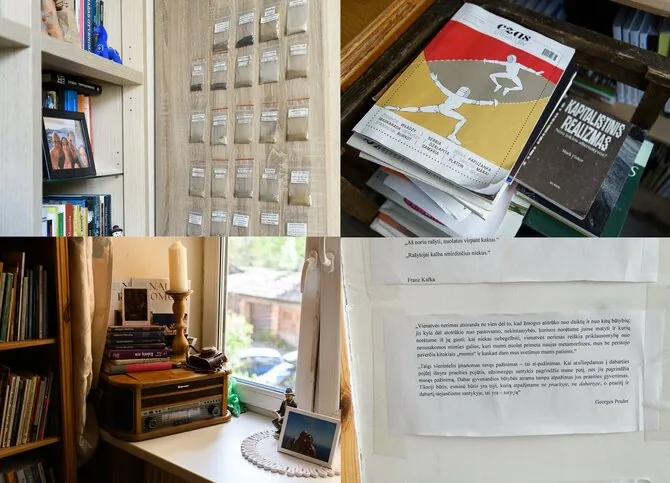
– But many well-known writers graduated from this university. As far as I know, you lived in one dorm room with the poet Ernestas Noreika?
– Speaking about moving to Vilnius, my mother said that if I joined the choir, I would probably get a place in the dormitory (otherwise not, because Širvintos is too close to Vilnius). I called Kastyčis Barisas and soon found myself in his choir “Ave Vita.” He was a charismatic and cheerful person who accepted me quickly – men’s choirs, especially tenors, are always short of members. Singing in the choir got me not only a dormitory and new friends but also the opportunity to travel: from neighboring countries to Portugal and Mexico.
On the way to the dormitory, I was worried about what kind of roommate I would have. When I met Ernestas, he said, “I write.” I said, “I write too. What do you write?” He said, “Poetry.” I said, “I write prose.” That’s how we got to know each other, sharing genres and beds. We lived in a triple room, but the roommates sleeping in the third bed kept changing and almost never got involved in our domestic-literary, student bohemian life.
Ernestas and I quickly felt the lack of a literary movement and, helped and advised by former student Antanas Šimkus, we founded “Literatų arka” – we wanted a group where we could discuss creativity. We had heard that Vilnius University had a “Menų sanatorija,” but if I remember correctly, they mostly watched arthouse films and had a rather loose format, meeting less often.
Gradually, Aušra Kaziliūnaitė, Mantas Balakauskas, Birutė Grašytė, Nerijus Cibulskas joined the ark members, although he studied at Vilnius University. We met once a week, sometimes less often. We read our writings and evaluated them quite critically. Antanas’s role was very important at the beginning: he clearly emphasized that the text is not your baby, you need to be able to look at it from a distance and not take criticism as a personal insult. For some, it was too difficult, and they did not stay long in the group.
Besides creativity, we also revived “Žosmė” – a Lithuanian philologists’ newspaper published by previous generations of university philologists. However, over time, the idea arose that we should go beyond the university: I remember how during the “Poezijos pavasaris” we approached the then chairman of the Lithuanian Writers’ Union Antanas A. Jonynas to see if he could help and allocate a hall for young people in the Union – he gladly agreed. At that time, I had received a Lithuanian Science Council scholarship and, having researched the activities of the young writers’ section during the Soviet era, knew that such a phenomenon existed but disappeared after independence. I thought it was possible to create a somewhat similar format without ideological content – a place where young creative people gather and discuss literature. So, it seems, in 2011, “Literatūriniai refleksai” appeared and operated for a couple of years, attended longer or shorter by several now well-known authors.
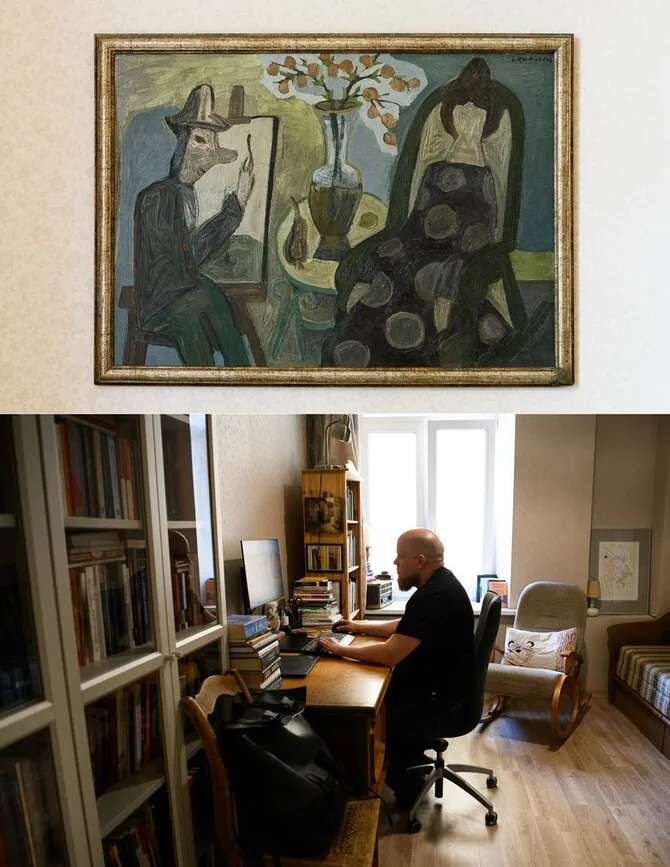
– You always seem to me like someone who tries to unite and gather people.
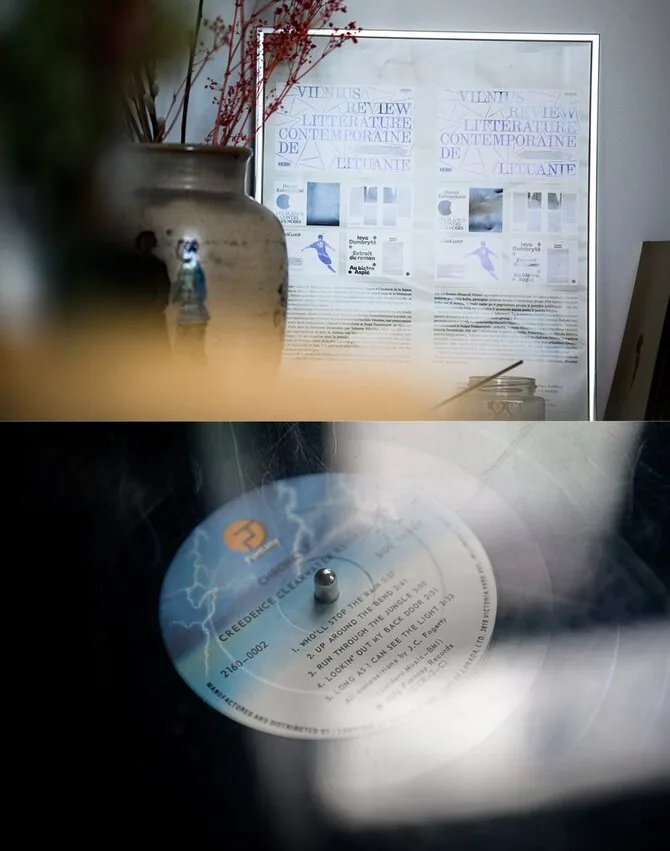
– I probably inherited that organizational impulse from my mother. Gathering is partly related to my current work editing “Vilnius Review.” First of all, it is about translating Lithuanian literature, presenting it, and exporting it abroad, but also about gathering authors and translators themselves, for example, through organized events.
– Did you hesitate long when you were offered to become the magazine’s editor?
– I thought about it; I was very busy, everything was burning, delayed, and it was not very wise to take on additional work in such a context. The dissertation brought a lot of stress; half-jokingly, half-seriously, I can say that I went bald writing it, and after it, other projects, deadlines, and self-exhaustion began. When Marius Burokas offered me to take over his position, I had just left one project, so I had some space and agreed.
– What do you think about the young generation of writers, do you follow them?
– I follow them a bit, both through the work at the Lithuanian Literature and Folklore Institute (selection of the twelve most creative books) and part of “Vilnius Review” – the magazine has a debut section, for which we have to look for new names. As far as I can, I also read cultural press, although not as actively as before.
Since we mentioned specific names, I remember when Austėja Jakas entered the literary field; it seemed that from the first publications, it was a very strong, distinctive debut.
The case of Ieva Dumbrytė is very interesting. She seemed to have appeared out of nowhere, debuted with “Šaltienos bistro,” and I am still glad that after discussions, the prize for the most creative book was finally awarded to her. The situation is exceptional – almost for the first time in the competition’s history, the award went to a debut prose book and an author previously unknown in the cultural field.
At the young philologists’ camp in Panemunė Castle, I met Dominykas Kručkauskas – an interesting, receptive, creative person; his poetry publication in “Šiaurės Atėnai” was quite good.
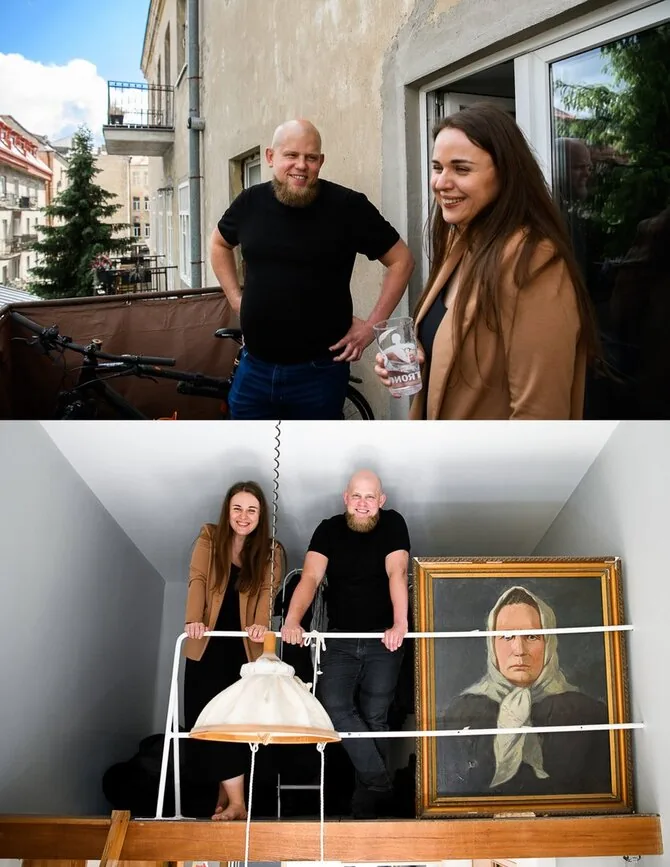
– You talk about a time when literary life was inseparable from community – events, meetings, communication. How do you think the youngest generation’s presence in the literary field looks today?
– I would say that for us, at least part of my generation, it was important to participate in the literary field and literary life – not only to organize something ourselves but also to attend others’ events, read cultural press.
Sometimes it seems that today’s youth care less about this, although it is natural: we live in different times, overloaded with everything, especially media noise. Some things have to change, adapt to new forms and needs.
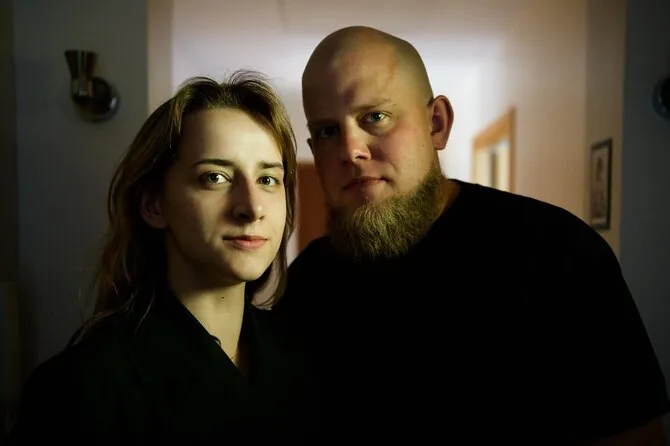
– What do you think about the fact that Lithuania has so many literary prizes?
– We have too many. It seems like everyone wants to be happy, everyone to get some recognition, and finally, the institution or person who established or continues the prize feels more important in the field – in this respect, prizes are necessary and useful not only for the recipients. But here we can also talk about the inertia of the literary field – how much it operates on what we inherited from previous periods, especially the Soviet era.
Another question: how are prize committees formed, how do regional prizes work, what are their goals and meaning? The literary field in Lithuania is small; it is difficult – rather impossible – to form a completely neutral committee. This also applies when writing criticism, when authors are your friends or at least acquaintances.
– How do you manage to stay impartial when you yourself are in the literary field?
– When I take on a new book, I try as much as possible to close any context – whether I like the person or not, whether I liked or was disappointed by their previous books, just focus on the text itself.
There are situations when friends compete for a prize in a competition, and you are on the committee and do not award their book because it does not seem strong enough. Then tension may arise because the person knows you were on the committee (and you yourself, for example, say that his or her book is not a masterpiece).
I have been on various committees, both literary and, for example, art criticism. Preparing for the Art Criticism Awards, I had to read quite different art-theoretical texts, various essays. It was important to feel that although you come from another field, you recognize a quality text similarly to colleagues working in another field – contemporary art, visual arts.
Read more The Lithuanian team participated for the first time in the World Long-Range Shooting Championship
– Do you see literary outsiders – authors who might have been overlooked, deliberately unnoticed?
– I think there are certain shifts in the field, for example, authors coming from the contemporary art field are now more visible and appreciated than before. For instance, Darius Žiūra’s “Diseris” became almost a cult book – it received a bunch of awards, including for the most creative fiction and the best non-fiction book! Perhaps if Darius’s book, although really excellent, had come out much earlier, the number of awards and recognitions might have been smaller. I remember, for example, the books of Valentinas Klimašauskas, especially the novel “Daugiakampis,” which I really liked but did not receive greater recognition in the literary field. There was also Jonas Žakaitis, a gallerist who published a book of prose miniatures “90s.” A few people noticed and appreciated it, but it did not cause a bigger resonance – I still remember discussions about whether these were really (“good”) texts or just “amateur scribbles.” The state of the literary field, the dominant authors, books, and styles at a particular moment partly determine what will be accepted and appreciated as a “good” text and what will be ignored, misunderstood, or rejected.
To put it boldly, Žiūra’s book came out at the right time and seemed to break down some barriers, reducing tension between the contemporary art and literary fields.
– You are the organizer of the literary event “Pož(i)eminiai skaitymai,” which has been held since 2010. How did the idea to hold this year’s readings in a bunker come about?
– This year, although we had no funding, we managed to agree with the local community in Domeikava eldership and hold the event at the “ab” printing house in Kaunas district. The space is unique – the only underground printing house of this type in Lithuania, which was never discovered by Soviet security during its entire operation. In 1980–1990, the printing house established under a greenhouse by Vytautas Andziulis and Juozas Bacevičius printed censored press.
The space simply enchanted me; it has a very strong aura. However, technically – with almost no budget – it was a challenge. For example, long cables had to be brought from the underground to the barn, where the audience was, connecting different cameras, synchronizing, and the musical equipment of composer Andrius Šiurys, who played live between readings.
The authors came out of the barn and were filmed with a moving camera. Each writer, descending into the printing house, seemed to disappear – becoming completely alone. The audience saw everything, but the writers remained alone behind a thick concrete layer, only knowing they were being watched but not seeing the audience – they experienced the printing house’s aura and their relationship with their voice and texts more intensely.
– This year you became a member of the executive board of the European Writers’ Council. Can you tell us more about this organization?
– This old organization in Europe unites more than 50 writers’ and translators’ institutions. Its main goal is to improve the situation of writers: addressing issues related to authors’ rights, royalties, legal protection, social guarantees, and freedom of speech.
The organization’s scale is relatively large – it represents about a quarter of a million creators from 34 countries.
– What do you have to do there?
– You receive a bunch of emails daily, for example, various documents being prepared in the European Parliament, European Commission, and other EU institutions. The Council makes proposals, participates in discussions, representatives travel to conferences, meet with representatives of institutions and organizations (e.g., META), and coordinate issues related to creativity, texts, and authors’ rights. One of the most important topics today is artificial intelligence and related problems relevant to the cultural field.
The Council also implements various projects. One of them was “Free All Words” – an online site where works by Belarusian and Ukrainian authors are translated and published in various languages.
You may ask: how is this council relevant to us in Lithuania? Simply put, if, for example, a law related to literature, culture, or authors’ rights is adopted in the European Parliament, it will affect Lithuania one way or another. The European Writers’ Council has a strong advisory voice and helps ensure that decisions unfavorable to writers are not made.
– How do you manage everything?
– Good question. Honestly, I don’t manage; I postpone some things and try to navigate. This way of being generates a lot of tension, which I try to relieve with active activities, basketball. There is a Facebook group “Basketball in Vilnius,” where they post where, when, and how many players are missing. I often join in – I have tried many sports halls in Vilnius. What surprises and confuses me most are the showers – in some places, not only is it dirty, but there are no showerheads, and clogged sewage causes floods.
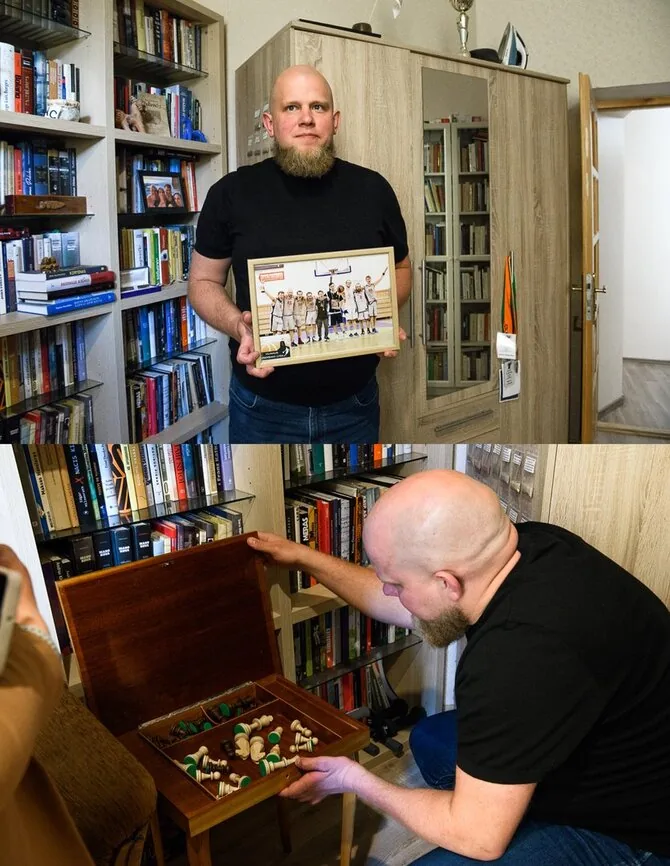
– And what about “Existential Questions”? Have many writers played on the team?
– We no longer participate in tournaments, but we meet on Sundays. Throughout the team’s history, many people have come, although not all have played in official matches. For example, Rimantas Kmita, Antanas Šimkus, Tomas Vaiseta have dropped by. Among the long-time and still attending members are Paulius Norvila, Marijus Gailius, Mykolas Sauka.
I find it interesting to observe how people’s characters reveal themselves on the court. In the literary and cultural community, a person may be one way, but on the court – quite another. Someone very tactful in everyday life becomes fierce and aggressive while playing.
– We talk about different activities, but we haven’t touched on one of the most important – your own creativity. Do you still find time to write prose?
– Currently, it is quite neglected. It’s a cliché, but creativity requires solitude, and my daily life now lacks it or it goes to other (editorial, academic, organizational, bureaucratic) work. I think the fear of war and its possible expansion also affects. I hardly write prose now, but sometimes I create poems. I am starting to think about a poetry collection, but at the same time, a monograph and other activities are waiting in line. Now I mostly want to reduce the workload a bit and not take on anything extra – I am still learning that.
– Probably this is the problem when you are involved in the art and literary field – it’s hard not to overload yourself. I know this very well myself: if you don’t take on this project now, there is anxiety that there may not be such an opportunity again, that you won’t be invited anymore.
– It was similar with “Vilnius Review,” although I agreed mainly because I had already been a member of the editorial board for a long time and felt and still feel the meaning and benefit of this activity for others.
– You conduct many interviews with writers; I imagine there are all kinds of stories behind that as well.
– I think I have prepared almost fifty – far from all of them went smoothly. I remember, for example, an interview with Leonardas Gutauskas. He was preparing for a jubilee – an eightieth birthday – exhibition at the Town Hall, and I had promised to interview him for “Metai.” I kept calling, trying to arrange a time, but when there was very little time left before the exhibition, he cut me off: “I have already said everything.” I was prepared for the conversation, so I said, “Leonardas, but I was seriously preparing.” Then he was silent for a moment and said, “Oh, really? Why didn’t you say so right away?! Then on Friday at such and such an address, at such a time. See you soon.”
I came, he opened the door, and from his look, it was clear he was not very willing to talk. He warned that he would smoke during the conversation; the room was filled with paintings. The beginning was quite difficult, but gradually he relaxed. During the conversation, he became more involved, started asking if I had one or another of his books, gave them as gifts, signing autographs. At the end of the conversation, he said, “Maybe I should give you one of my paintings?” He added that he probably didn’t like mothers – that’s what he called the painted Marijas – so he would look for something else. He gave me one of the larger ones. When I asked how to carry the painting, he said, “Take it and carry it.” So I carried it. I came home with that Gutauskas painting.
In such conversations, emotional comfort is very important – both yours and the interviewee’s. It’s good if the person feels that you really care about them and are not just fulfilling an assignment for some publication.
– What does your daily life, household, and leisure look like?
– The most important thing for me is not to live with a strict routine, to leave at least some freedom, although it has its price. Usually, if possible, I try to have a slower morning, breakfast, and only then start working.
I like cooking. The process reminds me of creativity and gives me pleasure, especially if there is time to cook not according to a recipe, to experiment.
– And what is daily life like with a child?
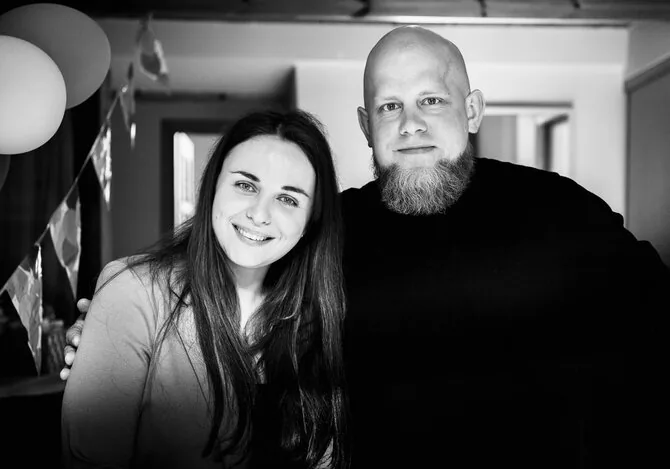
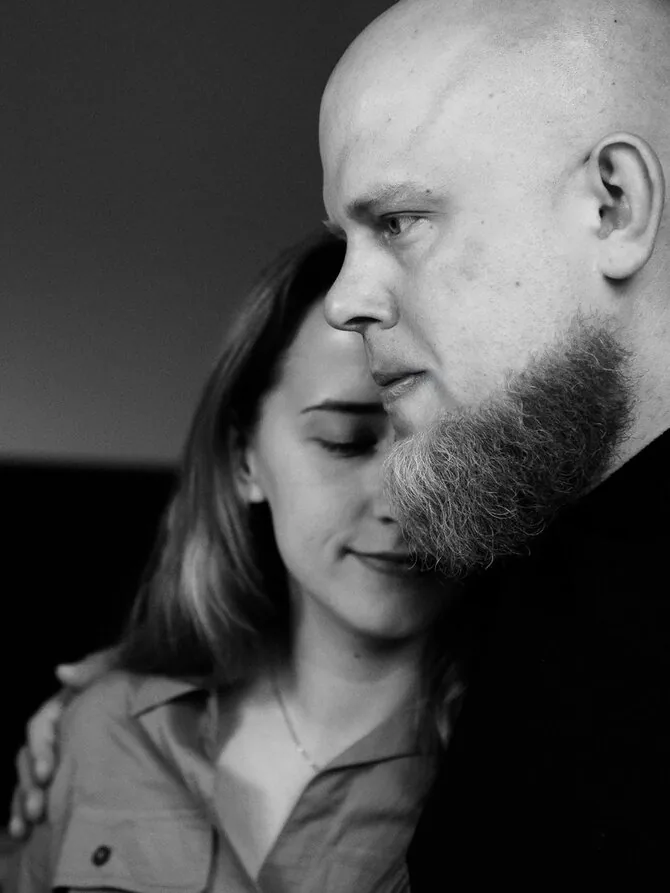
– I am divorced; I share the care of my daughter Migla Ona. Daily life and household are different when together and when she is not. Both have their advantages and complement each other. Both involve and have a significant place for my beloved Eglė.
– It is pleasing that society is finally establishing the understanding that men should also be equally involved in raising children.
– Yes, although even before becoming a father and after becoming one, I encountered certain stereotypes. For example, you wait with your daughter in line at the doctor, you are called in, and then another waiting woman suddenly loudly asks, “Where is the mother, isn’t she coming?” In the hospital, polyclinic, I often faced the attitude that the man is a secondary father, a priori knowing less about the daughter’s health.
It’s hard to judge myself, but I try to be an active father, have spent and spend a lot of time with my daughter. I am happy when I see Migla happy. I smile when she sings. We have a ritual before bed – every time we read two chosen books. Some of them are in French and Polish, languages I don’t know – I create the stories spontaneously.
And now it’s time to go pick her up from kindergarten.
Photos – Laura Vansevičienė.
Language editor Jurgita Radzevičiūtė.
The activities of the Lithuanian Writers’ Union “Viršukalnės ir buitis” are funded by the Lithuanian Council for Culture.
Read more Finally: “Šiauliai” won their first summer victory in the Top League