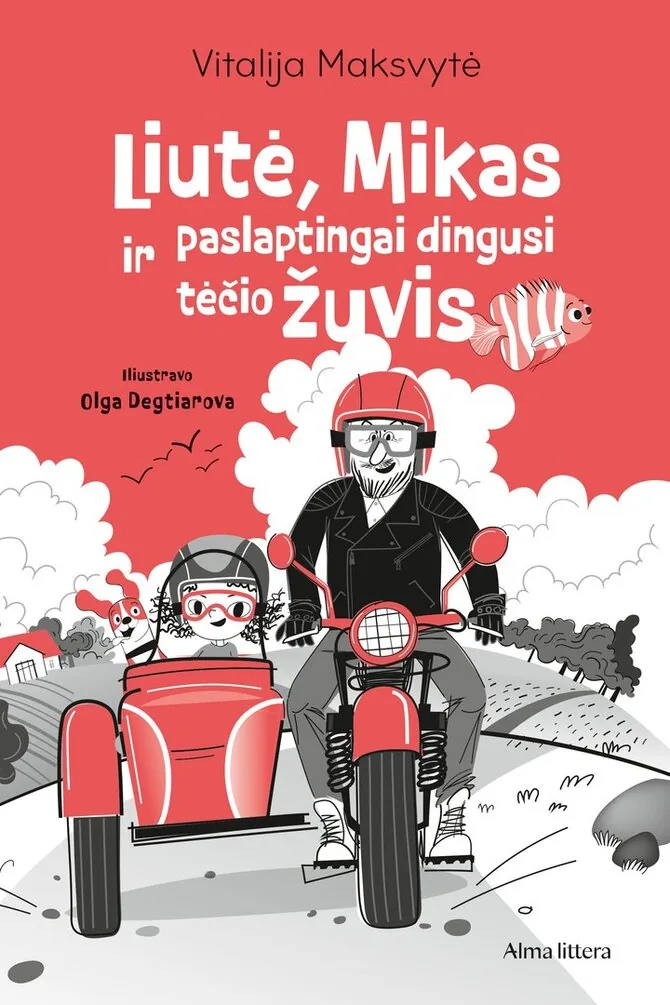
The story for children aged 6 and up tells about a girl named Liutė and her grandfather Mikas. They row across lakes, bake the most delicious pancakes in the world, ride a motorcycle named Braškė Avietė, and spend the night at each other’s homes. The book’s adventures begin when Liutė’s father returns from vacation and no longer finds his greatest treasure in the aquarium – the peppermint sea angel.
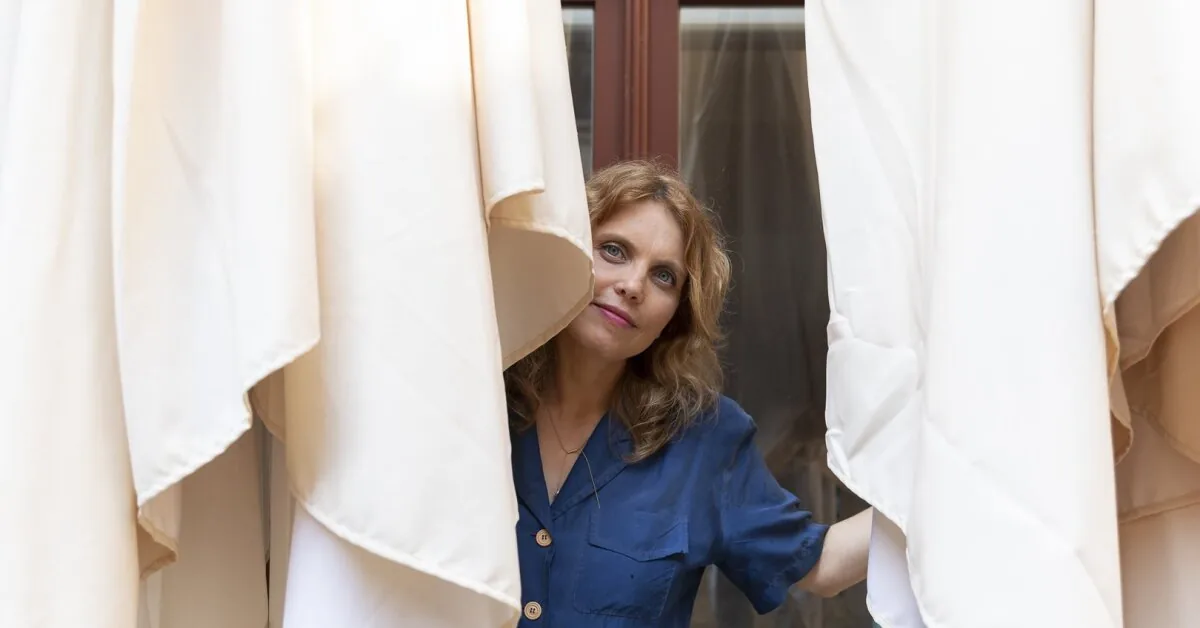
The book was published by the publishing house “Alma litera.” The author, a mindfulness teacher and art therapy practitioner V. Maksvytė, answered questions from Laisvė Radzevičienė.
– It seems you returned from quite drastic poetry themes to the little readers, to children’s literature…
– I have never left children’s literature. Maybe rather I am immersed in it – I am constantly with children. Even now, in the evenings, I read Maria Parr’s books to the little one, and while reading them, I very clearly know what other book I want to write myself. I keep noting certain content dimensions, character sketches, character details. But yes, it is true that my first authorial book for children appears after a poetry book for adults. There is a ten-year gap between poetry books. It was already time for it to appear, so it happened that way. Besides, the book about Liutė is more of an accidental child than a planned one.
– Do stories come when they are ready to be told?
– I want to write and let live what I believe in and what makes me happy. My books are born out of love, only maybe not always on time, because I don’t always find time to write exactly when I want to.
I write a lot also as an art therapist, a creative and therapeutic writing practitioner, so I can definitely do without another text, without another book. This means that my authorial books for children and adults arise not from the desire to write, not from the pressure to realize myself, but from a clear decision to tell and share what seems important to me.
– How did Liutė’s story begin?
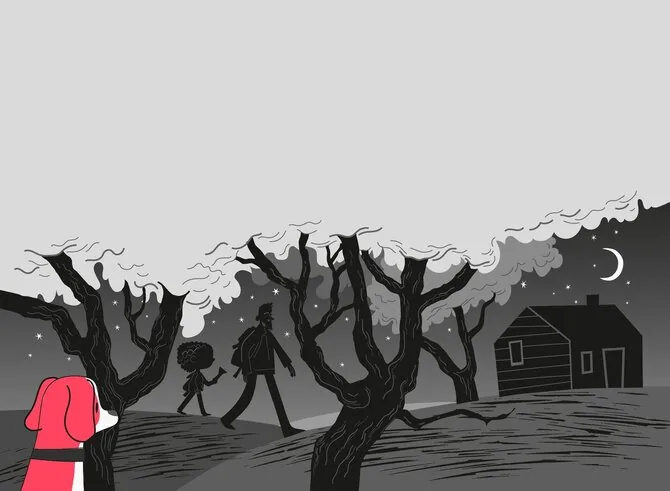
– With joy. I remember it was such a beautiful summer day, such a good feeling in my heart, that while driving in the Molėtai region, over all those hills, past the lakes, I was smiling to myself. I was invited to participate in the Molėtai library residency for creators “Written in the Molėtai region,” I went there hoping to write a novel for adults.
On the way, I realized that those hills and lakes inspire me to experience an adventure. In my mind, I began to arrange the story. Then I remembered an old dream to write a story about a grandfather and granddaughter. I wrote it all down while swimming in the lake, traveling around the Molėtai region, meeting its people.
– Why did you choose the detective genre?
– Because while writing, quite unexpectedly, one of the most precious fish in the world appeared in the text. It also wanted an adventure. I decided that the fish would disappear, and the grandfather and granddaughter would look for it. Thus, the fire protection service and the investigators working there came into the story. There were fires and firefighters in my family, and I have thought that firefighters are also a bit like detectives. But seriously, the detective line connects parts of the text, but for me, the most important thing was not to write a detective story, but to reveal the relationships between people.
– The book has a lot of warmth, humor, adventures, but also highlights quite serious nature themes. Is it important how to talk about this? How do you manage to avoid preaching?
– Both nature themes and not preaching are very important to me. Raising my own children, I also try not to moralize but to guide them in the right direction through example and understanding.
I love nature very much, I want to reveal to children that we are inevitably and inseparably part of nature. It affects us, and we affect it. Liutė’s grandfather Mikas, although he is a wild motorcyclist and a bit of a detective, is first and foremost a man of nature. Liutė also experiences the natural world and its rhythms through him.
– The bond between grandfather and granddaughter in the book is especially vivid. What was your grandfather like?
– Grandfather Mikas, in a way, came from my therapeutic need. I did not have the kind of grandfather I describe. One grandfather died when I was born, and the other, when I was born, was about the age I am now, actively working and still a young father. So, looking at the loving and playful grandfathers of my friends’ children, I created a grandfather for myself with this book.
Read more FC Baseball announced sad news
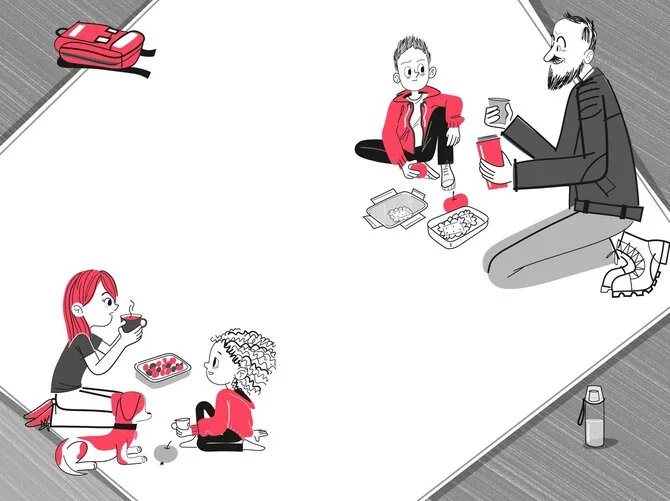
It is known that the brain does not distinguish between reality and imagination worlds, reacting to them the same way. So grandfather Mikas is a gift to me, and Liutė is a bit of me. In this sense, I created the book not only as a writer but also as an art therapist. On the other hand, both my grandfathers were passionate motorcyclists, so they are definitely in the book. But when the illustrator needed an example of how the grandfather I was creating should look, I sent not photos of my grandfathers but, perhaps surprisingly – a photo of Vytaras Radzevičius. I said: something like this, enjoying life, creating a close relationship with children and grandchildren, active and playful.
– The dog plays an important role in the book. Do animals say what people do not say?
– The point is that animals do not say – they show. They are nearby, and we can learn a lot from them. Since childhood, I have been surrounded by animals. Now in our home live a cat, a dog, and there is an aquarium. With the children, we also had rats, gerbils, and a guinea pig. The guinea pig Panda inspired the piglet Ziuzė described by Marius Marcinkevičius and me. While writing about Liutė, Mikas, and the little beagle, I consulted with an aquarium specialist and a cynologist. By the way, also with botanists, because flowers are important in the book: at the end of the book, readers will find the most interesting-looking orchids.
When talking about animals and plants, I did not want to make mistakes. I remember reading a manuscript of a children’s book in a literature competition, which said that a rat does not eat fish heads, only grains and grasses. I could not vote for that manuscript because the author did not understand the peculiarities of the animal to which the book was dedicated. Again, I speak as a therapist – animals helped me survive the hardest moments of life. The positive effect of animals is often mentioned in therapy and rehabilitation processes. If you read carefully, you will find this in this book as well.
– Children hear language sensitively. Do you have a first listener for your texts?
– My first book readers are my children. And my inner child, strange as it may sound. When I write, I always hear the sound of the text. After writing, I read it aloud. If words stumble, if I feel something is wrong, I correct it. I understand that the language and reality of children growing up now, often surrounded by screens and English, are different from what I describe.
But I also understand how sensitive children’s brains are. And that their vocabulary, ability to formulate, their worldview and values are still forming, the books they read can have a big impact. So I care about maintaining a balance so that children understand and find it interesting, but also so that I convey what is important to me. I want not to pander to the reader but to engage them.
– You have worked in the literary world for many years; can you say what children value most in books today?
– From what I see, I understand that the same things formed over generations probably inherent in our nature work – adventure, emotion, challenge, relationship. And illustrations. I really like the illustrations created by Ukrainian artist Olga Degtiarova for this book.
Generally speaking, contexts and details change, but the axes of stories remain the same: the fight against evil, the search for friends, revealed secrets. It is good when it is a little scary and very funny. On the other hand, children are all different. We live in times when understanding neurodiversity becomes natural. One of my children was diagnosed with Asperger’s syndrome – such children often do not need stories, he needs a story: he likes encyclopedic-type books, collects data, delves into it. Clarity and accuracy are important to him, and the world of emotions and subtexts is almost incomprehensible. I remember when he was little, I tried to read Astrid Lindgren’s “Karlsson,” and he really did not like it. He could not accept how Karlsson behaved with the Little Boy, evaluating Karlsson’s behavior as bullying, as wrong and inappropriate.
– Writer, mindfulness teacher, art therapist, mother of four children. How do these areas of your life and being influence your literature?
– Inevitably and inseparably. Writing, like nature and animals, helped me survive the hardest stages of life. Since childhood, it was a tool for me, used intuitively, unconsciously. Mindfulness, discovered fifteen years ago, gave the opportunity to create the simplest and at the same time essential things in everyday life – joy, calm, and a stable foundation. Art therapy explained how and why art works the way it does.
This knowledge and practical skills are part of my personality; I use them not only in everyday life but also when writing or working with people. Because of them, I write the way I do. The detail is important to me, the impact of the text I create is important, the relationship between feeling and mind, which we probably call wisdom. This is also Liutė’s grandfather Mikas – paying attention to details, noticing nuances of the emotional world, active but not rushing to act until he finds a wise solution.